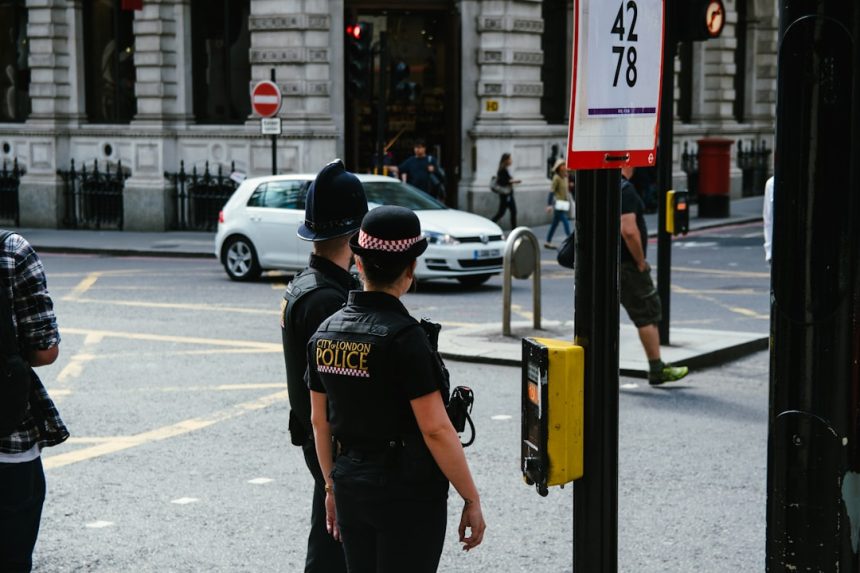

Reform Sparks Enforcement Overhaul (Image Credits: Unsplash)
Las Vegas – Residents and safety advocates question whether a hands-off approach to jaywalking by Metro police has contributed to rising pedestrian risks on the city’s streets.
Reform Sparks Enforcement Overhaul
Nevada lawmakers decriminalized jaywalking in 2021 through Assembly Bill 403. The measure shifted the violation from a criminal misdemeanor to a civil infraction carrying a maximum fine of $100.[1]
Officers previously issued citations more frequently. That changed in 2023 when Metropolitan Police Department Undersheriff Andrew Walsh instructed personnel to cease citing or detaining jaywalkers. Walsh argued in an interview that aggressive enforcement showed little link to improved safety.[1]
The directive reflected broader priorities amid limited resources. Police focused instead on driver behaviors such as speeding, which data linked to most fatal crashes. Still, the policy left a void in pedestrian accountability.
Fatalities Climb Amid Ambiguous Trends
Pedestrian deaths in Las Vegas reached 64 last year, up from prior declines. A report from KURU Footwear ranked the city third among the nation’s most dangerous for pedestrians.[1]
Historical data paints a complex picture. Citations tripled between 2017 and 2018 as fatalities fell from 68 to 53. By 2021, enforcement dropped nearly 90 percent, yet deaths continued to decrease initially.
| Year | Pedestrian Fatalities | Citations Trend |
|---|---|---|
| 2017 | 68 | Baseline |
| 2018 | 53 | Tripled |
| 2021 | Declined | Dropped 90% |
| 2025 | 64 | Minimal |
Studies, including one from Florida, suggest pedestrians bear fault in up to 80 percent of such incidents. Local observations align with this pattern.
Pedestrians Test Boundaries
Erin Breen, director of UNLV’s Road Equity Alliance, observed pedestrians crossing streets provocatively. “I watch pedestrians cross tauntingly because they know they can,” she said.[1]
Incidents persist in areas like Third Street, where people routinely jaywalk outside crosswalks. Reduced deterrence appears to embolden riskier choices. Advocates worry this erodes basic traffic norms.
- Crossings ignore signals and marked paths.
- Pedestrians step into high-speed traffic lanes.
- Drivers face split-second decisions to avoid collisions.
- Enforcement absence signals tolerance for hazards.
- Safety campaigns alone fall short without consequences.
Path to a Middle Ground
Law enforcement leaders acknowledge jaywalking citations should not result in jail time or harsh penalties. Resources remain stretched thin across the valley. However, complete inaction risks normalizing dangerous habits.
A balanced strategy could emphasize warnings and modest fines. Such measures would reinforce laws without overburdening officers. They signal that safety demands shared responsibility from all road users.
Las Vegas thrives on calculated risks, but pedestrian lives hang in the balance. Reviving measured enforcement could curb jaywalking without reverting to outdated practices. What do you think about Metro’s approach? Share your views in the comments.
- Decriminalization aimed to address inequities but coincided with enforcement halt.
- Recent fatality uptick underscores need for review.
- Commonsense penalties promote safer streets for everyone.