Some places in fiction feel so solid that people try to find them on a map. Readers have looked for Hogwarts-style castles, hunted for the real inspiration behind Maycomb, and argued about where Narnia might begin. The setting often outlasts the plot in memory.
This list works like a small gallery. Each entry describes a fictional place, and the novel behind it is named so you can check your guess. The details come from the books themselves and from long-established literary history.
Maycomb, Alabama

This sleepy Southern town sits at the center of Harper Lee’s To Kill a Mockingbird, published in 1960. The story unfolds in the 1930s, when the Great Depression has settled over the community. Courthouse, porches and neighbors’ gossip shape daily life.
Maycomb is fictional, but it is widely understood to draw on Lee’s hometown of Monroeville, Alabama. Monroeville embraces that connection today and has a courthouse museum devoted to the book. The novel remains a staple of school reading lists.
Thornfield Hall

A grand English country house with a hidden secret, Thornfield Hall is where Jane Eyre works as a governess. Charlotte Brontë published the novel in 1847 under the pen name Currer Bell. The house’s creaking corridors and locked upper rooms drive much of the tension.
Thornfield belongs to Mr. Rochester, whose past is tied to the mysterious laughter Jane hears at night. The setting works almost like a character, because the building both shelters and traps the people inside it. Its fate late in the book is one of the most memorable turns in Victorian fiction.
Pemberley

Mr. Darcy’s estate in Derbyshire appears in Jane Austen’s Pride and Prejudice, first published in 1813. Elizabeth Bennet visits it on a tour, expecting to avoid its owner. The visit changes how she sees him.
Austen presents the house as a mark of taste as much as wealth, with its grounds and rooms reflecting its owner’s character. Many film and television adaptations have used real English stately homes to stand in for it. The place is fictional, though it has become a shorthand for romantic literary estates.
Wuthering Heights
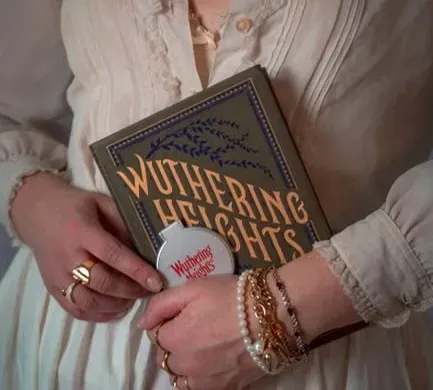
The windswept Yorkshire farmhouse that gives Emily Brontë’s novel its name was published in 1847. It stands on the moors, exposed to harsh weather, and the book uses that bleakness to match its turbulent relationships. Heathcliff and Catherine’s story is bound to the land around it.
The house contrasts with Thrushcross Grange, a gentler home nearby. Brontë uses the two houses to set wildness against refinement. The book’s name is also a dialect reference, tied to the stormy conditions the house endures.
Manderley

Few opening lines about a house are as famous as the dream of returning to Manderley in Daphne du Maurier’s Rebecca, published in 1938. The Cornish estate is grand, elegant and shadowed by the memory of its first mistress. The narrator, never named in the book, feels dwarfed by it.
Manderley’s story ends in fire, a fitting close for a house haunted by the past. Du Maurier lived in Cornwall, and its coast shaped her imagination. Alfred Hitchcock’s 1940 film version helped cement the image of the house for later generations.
Narnia

Narnia is reached through a wardrobe in C. S. Lewis’s The Lion, the Witch and the Wardrobe, published in 1950. Four siblings, sent away from London during the Second World War, find a snowy forest behind the coats. It is permanently winter under the White Witch’s rule.
The book began a seven-volume series, The Chronicles of Narnia. Lewis blends talking animals, mythic creatures and Christian symbolism. Narnia remains a standard example of the portal fantasy, where an ordinary house opens into another world.
Middle-earth

J. R. R. Tolkien built an entire world for The Lord of the Rings, published in three volumes in 1954 and 1955. Its geography includes the Shire, Mordor, Rohan and Gondor. Maps are part of the experience, and readers often trace the journey of the Fellowship across them.
Tolkien also created languages, histories and legends for the setting. The Hobbit, from 1937, introduced the world first. The detail of the place is a big reason the books are still read so widely.
Macondo

This fictional town is the heart of Gabriel García Márquez’s One Hundred Years of Solitude, first published in Spanish in 1967. It is founded by José Arcadio Buendía and followed across several generations of his family. Magical events are treated as ordinary parts of life.
Macondo rises, thrives and fades, mirroring themes in Latin American history. The author was Colombian and won the Nobel Prize in Literature in 1982. The novel is often seen as a defining work of magical realism.
Yoknapatawpha County

William Faulkner invented this Mississippi county, with its seat at Jefferson, and set many of his works there. Novels such as The Sound and the Fury, from 1929, and Absalom, Absalom!, from 1936, belong to this landscape. It lets him explore family, race and memory in the American South.
Faulkner reportedly drew on the area around Oxford, Mississippi, where he lived. He won the Nobel Prize in Literature in 1949. The county is a classic case of a writer returning to one invented place across many books.
Here are the answers in order: To Kill a Mockingbird, Jane Eyre, Pride and Prejudice, Wuthering Heights, Rebecca, The Lion, the Witch and the Wardrobe, The Lord of the Rings, One Hundred Years of Solitude, and the novels of Yoknapatawpha, including The Sound and the Fury.