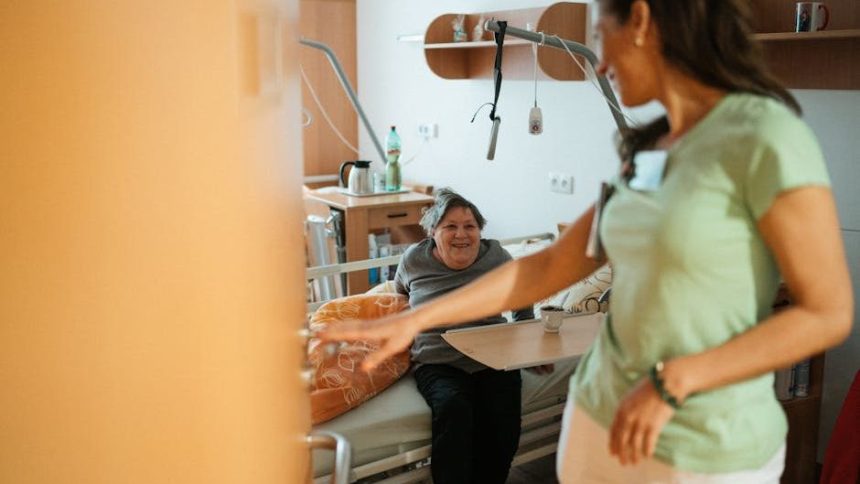
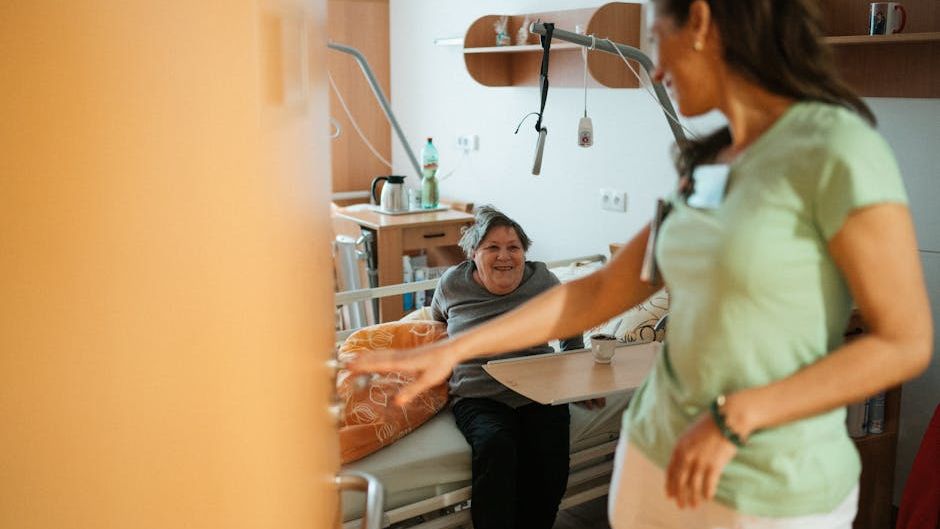
Penalties in Context: A Tiny Slice of Revenue (Image Credits: Pexels)
More than 1.2 million Americans depend on nursing homes for daily care, placing their trust in facilities regulated by federal standards. Yet persistent reports of substandard conditions raise doubts about enforcement strength. A recent Rockefeller Institute analysis examined civil monetary penalties – the primary sanction for violations – and found most fines represent a tiny fraction of facility revenues, prompting questions about their power to drive real change.
Penalties in Context: A Tiny Slice of Revenue
The report, authored by Patrick Schumacher, reviewed over 8,500 civil monetary penalties issued in 2023 across 3,745 nursing homes. These facilities make up about a quarter of the roughly 15,000 U.S. nursing homes certified for Medicare and Medicaid participation. Regulators from the Centers for Medicare and Medicaid Services (CMS), working with states, impose penalties during annual inspections when health and safety violations surface.
Crucially, Schumacher contextualized dollar amounts against each facility’s net patient revenue from annual cost reports. For more than half of penalized homes, fines equaled less than a quarter of one percent of revenue. About 70 percent fell below half a percent. This relative scale suggests many penalties may fail to register as significant costs.
Outliers and Extreme Cases
While most penalties stayed modest, extremes highlighted variability. Two hundred twenty-five facilities absorbed fines exceeding 2 percent of annual revenue. Twenty-one others faced penalties between 5 and 10 percent – a much heavier burden.
Per diem penalties, which accrue daily until violations are fixed, can escalate quickly. One documented case during the COVID-19 pandemic drew a $600,000 penalty for failing to safeguard residents. Such instances underscore CMS’s capacity for stern action, yet their rarity leaves the overall deterrent effect unclear.
Partner offer
| Penalty Range (% of Net Patient Revenue) | Number of Facilities | Share of Total Penalized |
|---|---|---|
| Less than 0.25% | More than 50% of cases | Majority |
| Less than 0.5% | About 70% | Prevalent |
| Over 2% | 225 | Minority |
| 5-10% | 21 | Rare |
The For-Profit Dominance and Ownership Blind Spots
For-profit operators control about 70 percent of nursing homes, with nonprofits and public facilities filling the rest. Studies consistently link for-profits to higher violation rates, amid trends like private equity acquisitions. CMS standards apply uniformly, regardless of ownership, but calls grow for targeted scrutiny of profit-driven chains – many boasting over 200 facilities each.
Schumacher analyzed penalties at the individual facility level, using unique CMS identifiers tied to cost reports. These reports reveal thin margins for many homes, complicating penalty calibration. “Penalties that are less than half a percent of annual net patient revenue may not be enough to deter future regulatory noncompliance,” he wrote, drawing parallels to environmental enforcement where fines must outstrip violation savings.
Balancing Deterrence Against Stability
Health advocates view financial hits as essential, arguing an “honor system” fails vulnerable residents. Industry voices counter that diverted funds undermine care amid tight budgets. CMS deploys alternatives like added monitoring or payment bans for new admissions, muddying impact assessments.
“There is some evidence that beyond a certain threshold, large penalties could harm the financial stability of nursing homes,” Schumacher noted. He called for deeper probes, including administrator and regulator interviews, to gauge behavioral shifts. Finding the sweet spot – firm enough for compliance, measured enough for solvency – remains elusive.
- Key enforcement tools beyond CMPs: State monitoring, payment denials.
- Stakeholders affected: Residents, families, operators, taxpayers funding Medicare/Medicaid.
- Next steps: Fidelity checks on CMS manuals for serious harm cases.
As Schumacher eyes further studies on enforcement consistency, the human cost lingers for those 1.2 million individuals. Stronger calibration could safeguard care without crippling providers, but until research clarifies optimal levels, nursing homes – and their residents – navigate an uncertain regulatory landscape.
Partner offer
Planning a trip to Vegas?
Compare hotel rates and show tickets on VEGAS.com.