There’s a particular kind of movie magic that happens when a supporting actor walks into a scene and quietly rearranges the entire film around themselves. The hero might still get the credits, but everyone walks out of the theater talking about someone else. This is a look at ten performances where the villain didn’t just support the story, they became the reason people remember it at all.
10. Jack Nicholson as the Joker in Batman (1989)

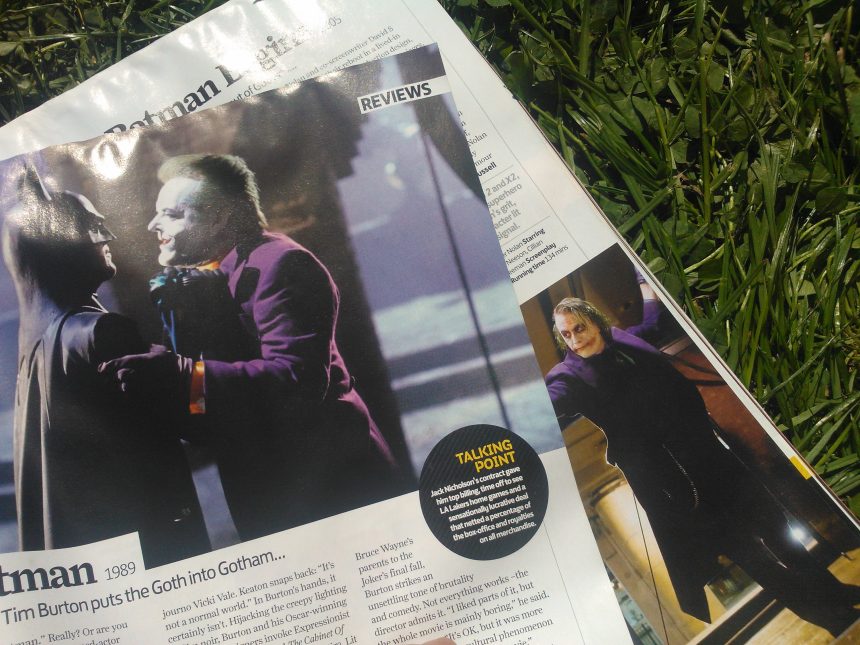
Before anyone talked about grim and grounded superhero films, Tim Burton’s Batman gave Jack Nicholson free rein to turn the Joker into a gleeful, theatrical menace. Nicholson leaned into the character’s showmanship, treating violence like a punchline and every scene like a stage. His green hair and purple suits became instantly iconic, and the performance set a template for how comic book villains could dominate a frame without needing much screen time.
What makes the performance hold up decades later is how much personality Nicholson injected into a character that could have easily become a cartoon. He played the Joker as a man who found his own cruelty hilarious, which made him unpredictable in a way audiences hadn’t seen from a comic book villain before. Batman was Michael Keaton’s film on paper, but Nicholson’s Joker is often the first thing people mention when the movie comes up.
9. Gary Oldman as Dracula in Bram Stoker’s Dracula (1992)

Gary Oldman’s take on Dracula in Francis Ford Coppola’s gothic romance is a masterclass in physical transformation. He moved through multiple versions of the character within a single film, from a decrepit ancient count to a young, seductive nobleman, and made each version feel like a distinct performance rather than a costume change. The makeup and prosthetics were extensive, but Oldman’s voice and posture did as much work as any visual effect.
Coppola’s film is visually dense and stylistically bold, yet Oldman never gets lost in it. His Dracula is tragic and menacing in equal measure, which gives the film its emotional center even as Keanu Reeves and Winona Ryder handle the more conventional romantic leads. It remains one of the more ambitious villain performances of the early 1990s precisely because Oldman refused to play the character as a single, static idea of evil.
8. Cate Blanchett as Hela in Thor Ragnarok (2017)

Marvel films have had plenty of forgettable villains, which makes Cate Blanchett’s Hela stand out even more. She played the Asgardian death goddess with a dry wit and physical menace that matched the film’s newly comedic tone under director Taika Waititi. Blanchett committed fully to the character’s theatrical cruelty, crushing Thor’s hammer with barely a glance and treating Asgard’s throne room like her personal runway.
Part of what made the performance memorable was how Blanchett balanced camp with genuine threat. She never winked at the audience in a way that undercut Hela’s danger, even as the film around her leaned into humor. Thor Ragnarok is remembered as one of the more entertaining entries in the Marvel Cinematic Universe, and Blanchett’s performance is a significant reason it holds up on rewatch.
7. Tom Hardy as Bane in The Dark Knight Rises (2012)

Following Heath Ledger’s Joker was never going to be easy, but Tom Hardy found a different register entirely for Bane in Christopher Nolan’s final Batman film. With most of his face covered by a mask, Hardy had to build the character through his eyes, his posture, and a distinctive muffled voice that became one of the most parodied elements of the film. The physicality of the role, including the brutal fight with Batman in the sewers, gave Bane a sense of raw, grounded power rather than theatrical menace.
Hardy’s performance also carried surprising emotional weight once Bane’s backstory unfolded later in the film. He wasn’t simply a wall of muscle breaking Batman’s spine, he was a character shaped by loyalty and suffering that recontextualized everything that came before. The Dark Knight Rises had a massive ensemble cast, yet Hardy’s Bane remains one of the most talked about elements of the trilogy’s conclusion.
6. Daniel Day Lewis as Bill the Butcher in Gangs of New York (2002)

Daniel Day Lewis rarely does anything halfway, and his performance as Bill the Butcher in Martin Scorsese’s Gangs of New York is no exception. He played the nineteenth century gang leader with a booming voice, a glass eye, and an unsettling mix of charm and violence that made him feel like he’d walked directly out of the era. Day Lewis reportedly stayed in character for much of the shoot, and that commitment shows in every scene he’s in.
Leonardo DiCaprio anchors the film as the protagonist, but critics and audiences alike often point to Day Lewis as the performance that carries the movie. He earned a Golden Globe nomination and significant awards attention for the role, and it remains one of the more theatrical, larger than life villain turns of the early 2000s. Bill the Butcher is proof that a well written monologue delivered with total conviction can outshine an entire film’s plot machinery.
Partner offer
5. Denzel Washington as Alonzo Harris in Training Day (2001)

Denzel Washington spent much of his career playing principled, heroic figures, which made his turn as the corrupt detective Alonzo Harris in Training Day all the more jarring and effective. He brought a magnetic, almost seductive quality to the character’s corruption, making Alonzo’s manipulation of his rookie partner feel disturbingly believable rather than cartoonish. The role won Washington the Academy Award for Best Actor, a rare instance of a villainous performance taking the top acting prize rather than a supporting nod.
What sets the performance apart is how Washington never lets Alonzo become a simple bad cop archetype. He’s funny, charismatic, and genuinely frightening within the same scene, which keeps the audience uneasy about how far he might go. Training Day is often remembered as an Ethan Hawke film by title, but it’s Washington’s performance that gives the movie its lasting reputation.
4. Christoph Waltz as Hans Landa in Inglourious Basterds (2009)

Christoph Waltz’s introduction as SS officer Hans Landa in Quentin Tarantino’s Inglourious Basterds is one of the most tense opening sequences in modern film, and it’s built almost entirely on Waltz’s calm, meticulous delivery. He played Landa as polite, multilingual, and terrifyingly patient, a character who could dismantle someone’s composure with a smile before revealing his true intentions. Waltz won the Academy Award for Best Supporting Actor for the role, and it remains one of Tarantino’s most celebrated villain creations.
The performance works because Waltz never resorts to shouting or obvious menace to convey danger. Landa’s threat comes from his intelligence and his enjoyment of the game he’s playing with his victims, which makes every conversation in the film feel like a held breath. Inglourious Basterds has an ensemble full of memorable characters, yet Waltz’s Landa is consistently cited as the film’s defining performance.
3. Javier Bardem as Anton Chigurh in No Country for Old Men (2007)

Javier Bardem’s Anton Chigurh in the Coen brothers’ No Country for Old Men is one of the more unsettling villains in modern American cinema, largely because he’s given almost no backstory or clear motivation. Bardem played the hitman with a flat, affectless delivery and a distinctive bowl haircut, making him feel less like a person and more like an inevitable force moving through the film. His famous coin toss scene has become a touchstone moment in contemporary thriller filmmaking.
Bardem won the Academy Award for Best Supporting Actor for the role, and it’s easy to see why the performance resonated so strongly with audiences and critics alike. He rarely raises his voice, yet every scene involving Chigurh carries a dread that the rest of the film’s more grounded characters simply can’t match. No Country for Old Men won Best Picture that year, and Bardem’s performance is frequently credited as one of the film’s most enduring elements.
2. Anthony Hopkins as Hannibal Lecter in The Silence of the Lambs (1991)

Anthony Hopkins appears in The Silence of the Lambs for a relatively small portion of the film’s total runtime, yet his performance as Dr. Hannibal Lecter is so precise and unsettling that it defines the entire movie. Hopkins played Lecter with an eerie stillness, using slow blinks and calculated pauses to suggest a mind that was always several steps ahead of everyone around him. The role earned him the Academy Award for Best Actor, a remarkable achievement given his limited screen time.
What has kept the performance so enduring is how Hopkins found humanity, even a strange kind of charm, in a character capable of horrific violence. Lecter’s interactions with Jodie Foster’s Clarice Starling crackle with a tension that goes beyond simple menace, hinting at mutual respect and curiosity that complicate the audience’s reaction to him. The Silence of the Lambs remains one of the few films to win the top five Academy Awards, and Hopkins’s brief but towering performance is central to why it’s remembered so vividly.
1. Heath Ledger as the Joker in The Dark Knight (2008)

Heath Ledger’s Joker in Christopher Nolan’s The Dark Knight has become the benchmark against which most modern villain performances are measured. Ledger reworked the character entirely, trading theatrical camp for chaotic, anarchic menace, complete with smeared makeup, a rasping voice, and a habit of licking his lips that made the character feel genuinely dangerous rather than simply eccentric. He died before the film’s release, which added a somber weight to the performance’s reception, but the acclaim it received was based purely on the work itself.
Ledger won the Academy Award for Best Supporting Actor posthumously, one of the most widely discussed acting wins in recent Oscar history. The Joker’s philosophy of chaos, delivered through some of the film’s most quoted dialogue, gave The Dark Knight a thematic depth that elevated it beyond a typical superhero sequel. Christian Bale’s Batman anchors the trilogy, but it’s Ledger’s Joker that most people picture first when The Dark Knight comes up in conversation, nearly two decades after the film’s release.
Partner offer
Planning a trip to Vegas?
Compare hotel rates and show tickets on VEGAS.com.