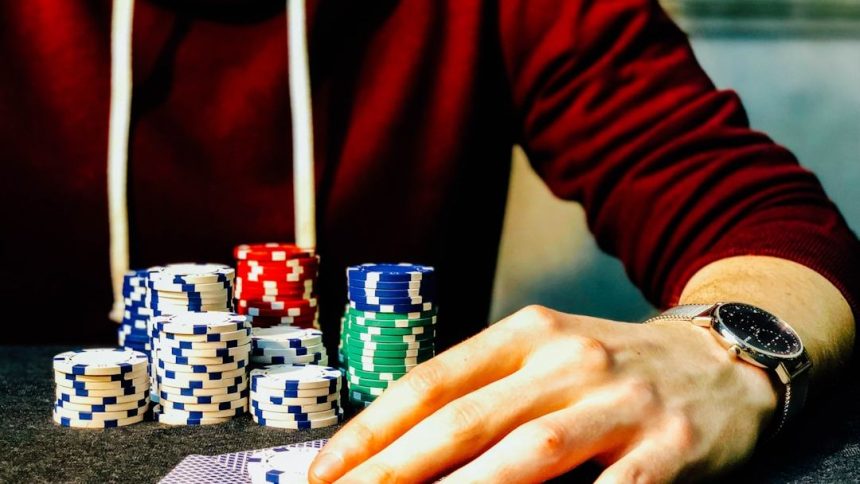
There’s a question that has followed poker for generations: is it a game where skill wins, or simply one where luck decides everything? Most card games fall cleanly to one side of that divide. Poker doesn’t. It lives in the complicated middle ground, and that’s exactly what makes it so scientifically fascinating. Poker has both randomness and imperfect information. That combination creates a playing field unlike almost anything else in structured games, and it has drawn the attention of statisticians, behavioral economists, psychologists, and AI researchers who see it as far more than a gambling pastime. It’s a controlled environment for studying how people actually think, risk, bluff, and break under pressure.
The Short Game and the Long Game: Two Very Different Realities
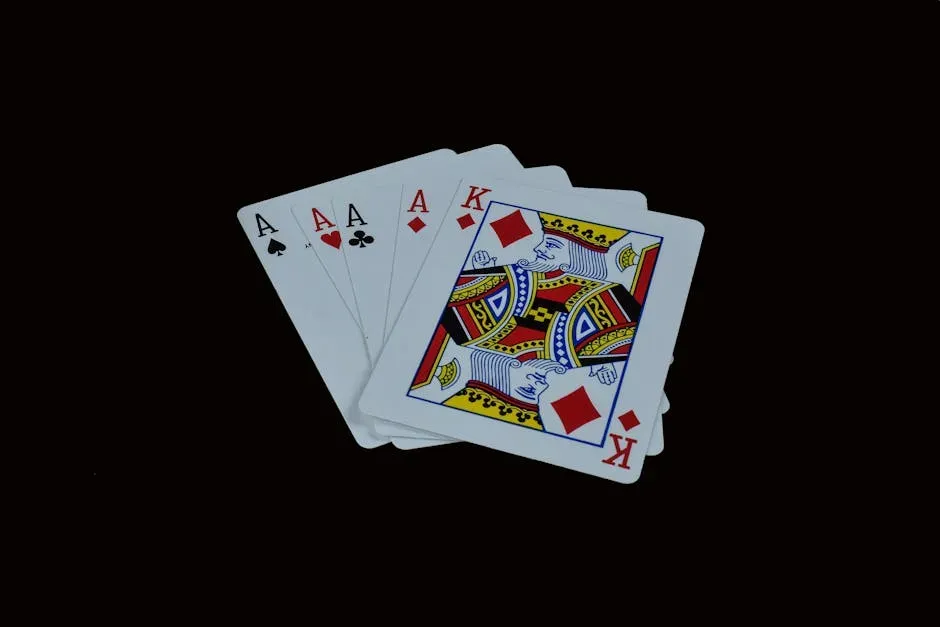
Ask anyone who has played poker for more than a few sessions, and they’ll tell you that a single night at the table can feel almost random. A beginner pulls a miraculous river card. A seasoned player loses five hands in a row with the statistical favorite. This isn’t an illusion. Short-term Texas Hold’em poker comes down to the luck of the draw. The math simply reflects that a small sample of hands doesn’t contain enough data to drown out variance.
The picture shifts dramatically over time, though. When does luck become eclipsed by skill in poker? At just under 1,500 hands – 1,471, to be exact – which is usually between 19 and 25 hours in live poker. Cross that threshold consistently over months and years, and the randomness begins to average out. In the long run, when looking at a good versus a bad poker player, it is evident that the good poker player will win more. However, no matter how good a poker player is, this is not a golden guarantee that they will win every time.
What the Data Actually Shows About Skilled Players
Evidence from large-scale studies is persuasive. Players identified a priori as being highly skilled achieved an average return on investment of over 30 percent, compared to negative 15 percent for all other players. That gap isn’t the product of a lucky run. It’s the signature of a persistent, measurable ability operating over hundreds of real tournament decisions.
Some economists have worked with poker data and found that past performance in poker tournaments was predictive of future performance, affirming that game outcomes are not determined purely by luck. Researchers have even developed formal rating systems to quantify the degree of skill involved. Using data from more than four million online games of chess, poker, and skat, they developed a rating system for poker based on the Elo method for chess, which calculates the relative skill levels of individual players. The results confirmed what experienced players have long argued: skill exists, it’s real, and it’s measurable across large enough samples.
The Role of Expected Value in Every Single Decision

Expected value (EV) is the most fundamental metric in poker. At its core, it’s a framework for answering one question before every decision: does this action make money over the long run, even if it loses right now? The concept pulls poker sharply away from pure gambling and closer to fields like finance and operations research.
If the odds of winning the pot are greater than the odds offered by the pot’s size, calling becomes a positive expected value move. Calculating expected values of different actions helps in making rational decisions based on mathematical rather than emotional factors. This is not abstract theory. It’s the practical logic that separates players who consistently profit from those who consistently lose. Over the past decade, there has been an increased reliance on computer-based simulations and outputs in real-life scenarios, poker included. Game theory simulates and predicts the action of an opponent and chooses the optimal play to generate the highest expected value play.
Game Theory Optimal: When Poker Meets Higher Mathematics
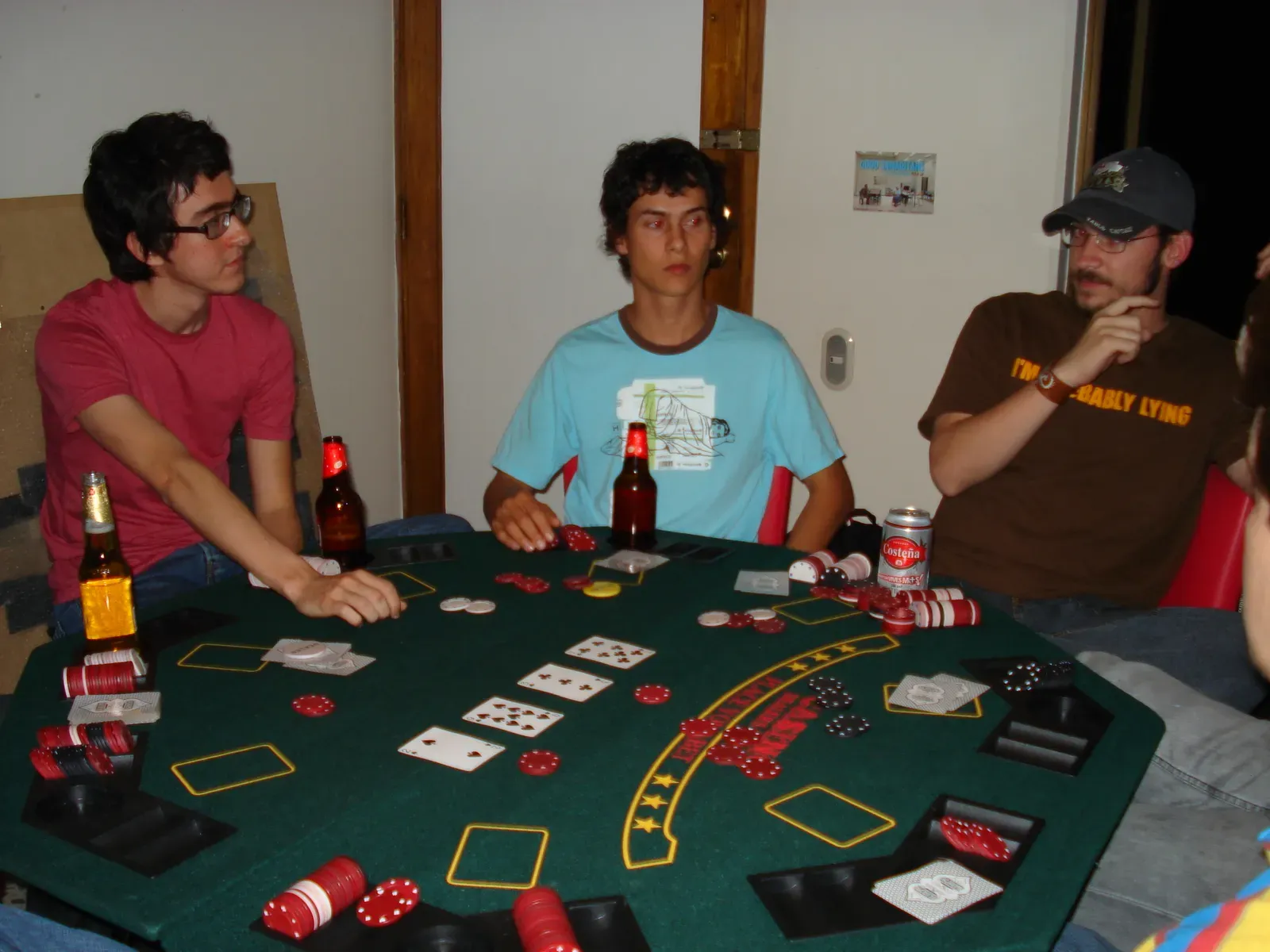
GTO Poker is rooted in non-cooperative game theory, which was pioneered by John von Neumann and Oskar Morgenstern in “Theory of Games and Economic Behavior,” published in 1944. The idea that a poker hand can be approached with the same mathematical rigor as an economic model fundamentally changed how professionals think about the game. It turned intuition into a framework that could be tested, refined, and replicated.
Game Theory Optimal is best understood not as a rigid set of rules but rather as a framework for thinking about poker, predicting your opponent’s actions, and improving your own decision making. Its objective is to avoid strong assumptions about the opponent’s mistakes, and instead build strategies that will be robust no matter how opponents play. The complexity involved is staggering. Completely solving GTO strategies for poker is extremely computationally challenging, as there exist around 10 to the power of 161 possible states, more than the number of atoms in the observable universe. That scale alone illustrates why poker continues to captivate researchers in artificial intelligence and decision science.
Emotion, Tilt, and the Psychology of Collapse
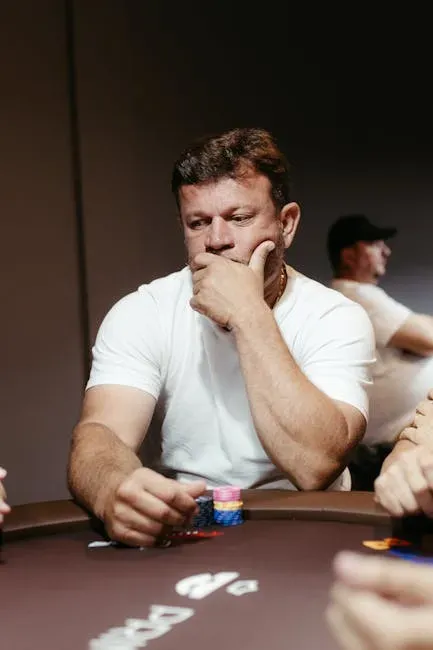
Poker is a social game where success depends on both game strategic knowledge and emotion regulation abilities. It provides a productive environment for studying the effects of emotional and social factors on micro-economic decision making. The concept known as “tilt” – a state where frustration or overconfidence begins to override rational judgment – is perhaps the most well-documented example of emotion derailing otherwise competent players.
Partner offer
Research indicates that experiencing negative emotions, such as moral anger, reduces mathematical accuracy in poker decision making. Furthermore, various social aspects of the game, such as losing against “bad players” due to “bad luck,” seem to fuel these emotional states. The study of tilt in poker has direct parallels to emotional decision-making in finance, negotiations, and management. Experienced poker players made mathematically more accurate decisions than inexperienced ones, which suggests that emotional regulation, not just card knowledge, is a core part of what separates winning players from losing ones.
Poker as a Window Into Bluffing, Deception, and Human Personality
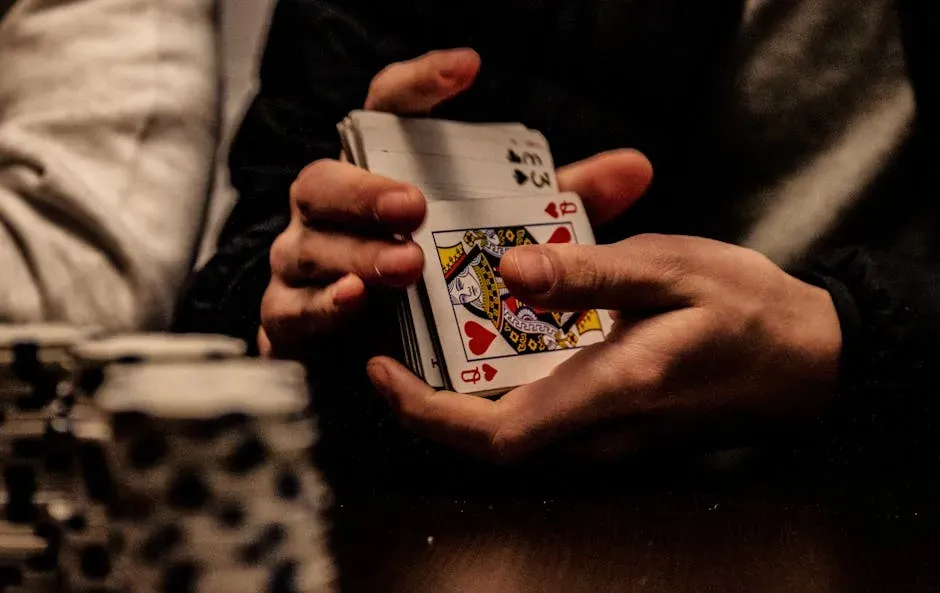
Bluffing isn’t simply lying about your cards. It’s a calculated act rooted in probability, opponent modeling, and personality. Research has explored whether individual personality traits actually predict bluffing behavior – and the results are telling. Online poker can be utilized to investigate the psychology of deception. The structured but unpredictable nature of the game creates conditions where deceptive tendencies that might be masked in everyday life become observable and measurable.
Previously, players had intuitively thought they should bet mainly good hands and bluff only a bit. Game theory showed this approach was wrong, particularly in the early stages of hands. In game theory models, the optimal ratio of “bluff bets” to “value bets” was usually about 2:1 on the flop. That finding runs counter to most people’s instincts and illustrates one of poker’s deeper lessons: what feels right is often statistically wrong. The gap between intuition and optimal play is itself one of the game’s most studied research topics.
Poker as a Research Tool in Behavioral Science and Economics
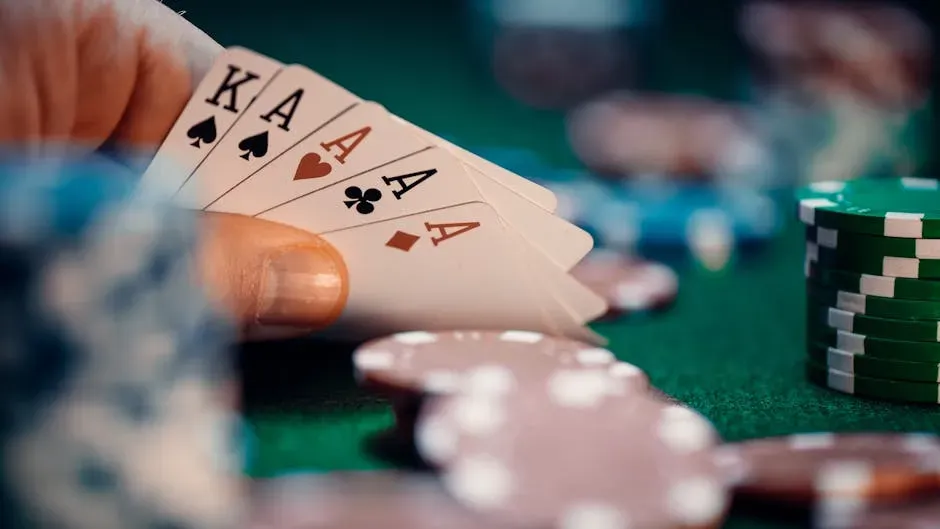
Poker has strong, but as yet untapped, potential for research on social and cognitive psychology, decision-making, and expert performance. What makes it particularly valuable to researchers is a combination of real-money stakes, measurable outcomes, and the presence of incomplete information – all features that are hard to replicate in controlled lab settings without sacrificing authenticity.
Poker has strong potential as a model system for studying high-stakes, high-risk expert performance. It has been increasingly used as a tool to study decision-making and learning, as well as emotion self-regulation. Academics in economics have used it to study rational choice theory, loss aversion, and risk tolerance. The complex interplay between risk assessment and strategic decision-making underpins a wide range of human activities, from financial investments to everyday choices. Research utilizes the structured yet uncertain environment of Texas Hold’em poker as a novel experimental setting to examine these phenomena. Texas Hold’em, characterized by incomplete information and strategic interaction among players, provides an apt metaphor for the uncertainty inherent in real-world decision-making.
The Scale of Online Poker and What It Means for Research
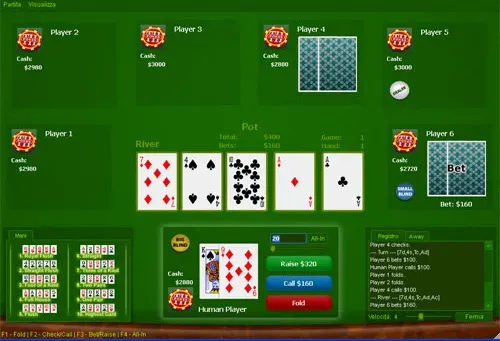
Poker is a competitive, social game of skill and luck, which presents players with numerous challenging strategic and interpersonal decisions. The adaptation of poker into a game played over the internet provides the unprecedented opportunity to quantitatively analyze extremely large numbers of hands and players. Research has analyzed roughly twenty-seven million hands played online across small-stakes, medium-stakes, and high-stakes games. That volume of behavioral data is extraordinary. No traditional lab study could ever approach it.
With more than 500 active platforms and 100 million players worldwide, the online poker industry is strengthening its position in the global iGaming ecosystem. The sheer scale of the market adds a research dimension that simply didn’t exist two decades ago. Online play has eclipsed live games in volume due to convenience and pace. Online tables deal roughly 75 to 90 hands per hour, compared to just 25 to 30 hands at live tables. That accelerated pace means years of behavioral data can be collected in months, giving researchers an increasingly detailed picture of how humans behave under conditions of uncertainty, pressure, and financial risk.
Conclusion
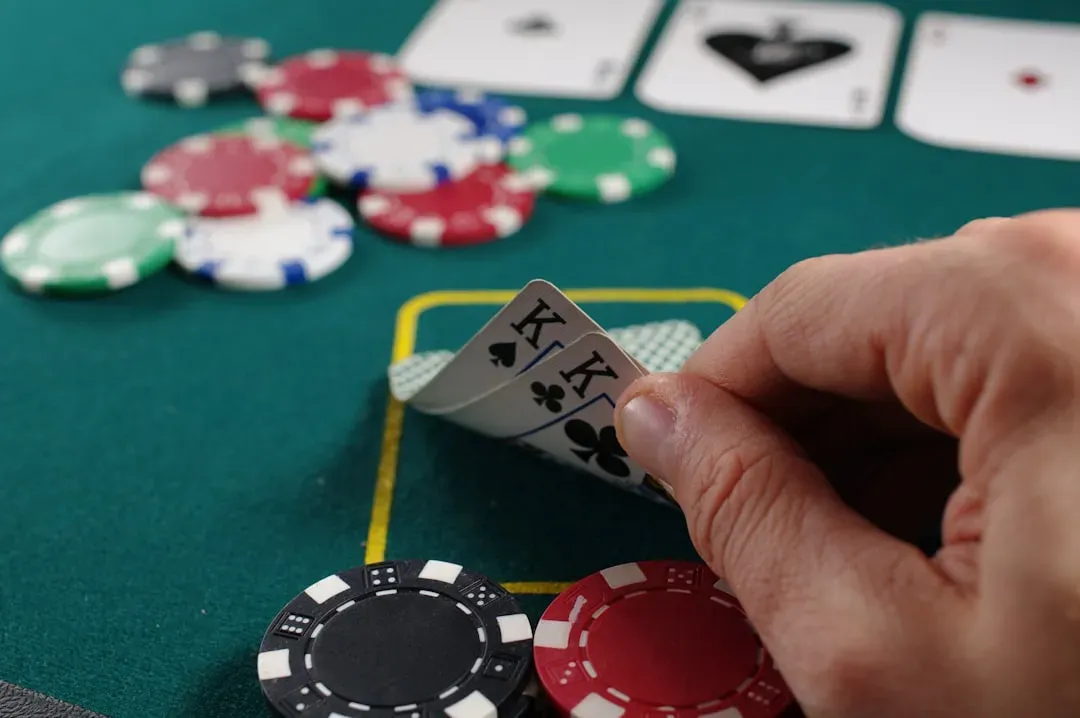
Poker’s enduring relevance to science isn’t accidental. It sits at an exact crossroads where randomness, strategy, emotion, and social dynamics intersect – and that intersection turns out to mirror an enormous range of real human challenges. Trading floors, boardrooms, negotiations, even medical triage operate under similar conditions: incomplete information, time pressure, uncertain outcomes, and the constant temptation to let emotion override reason.
What poker teaches researchers, and what it teaches players, is the same underlying truth. Luck shapes individual moments, but decisions shape everything that matters in the long run. The green felt table, it turns out, has always been one of the best classrooms around for understanding how people actually think – not how they think they think.
Partner offer
Planning a trip to Vegas?
Compare hotel rates and show tickets on VEGAS.com.