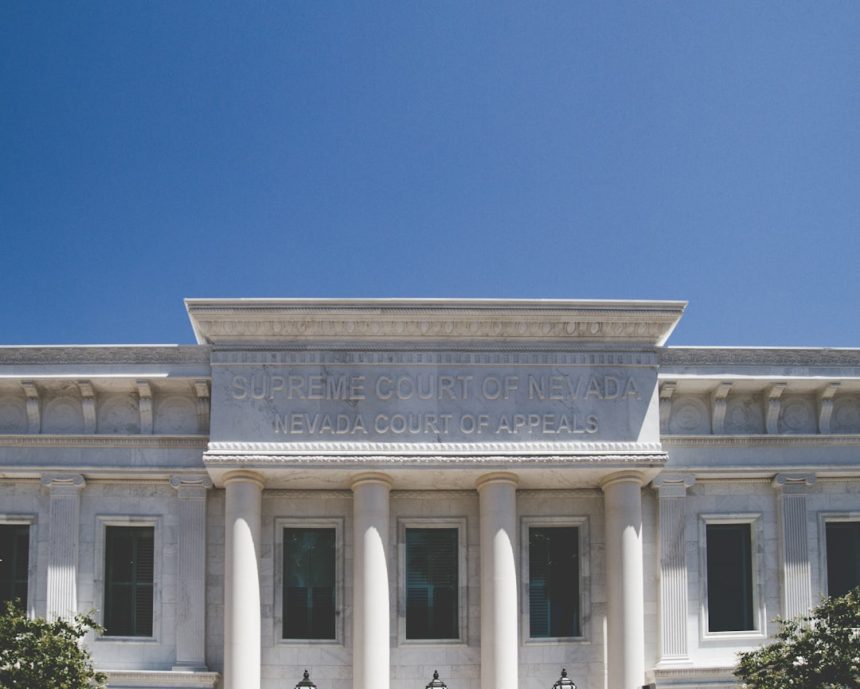

A Storied Property Draws Battle Lines (Image Credits: Unsplash)
Las Vegas – Clark County commissioners unanimously approved an appeal to the Nevada Supreme Court in a escalating feud with the city over property tax refunds linked to the shuttered Badlands golf course.[1][2]
A Storied Property Draws Battle Lines
The Badlands golf course, a 250-acre site in Las Vegas’ west valley, sat at the center of a protracted legal saga that began in 2017. Developer Yohan Lowie, through his company EHB Cos. and subsidiary 180 Land Co., sought to transform the defunct course into housing. City officials blocked the project, prompting lawsuits that alleged inverse condemnation – a government taking of property without just compensation.
Courts repeatedly ruled in Lowie’s favor, culminating in a 2025 three-party settlement worth $636 million. The city paid EHB $286 million to resolve the claims, then transferred the land to Lennar Homes for $350 million. Lennar now plans 1,480 housing units under the name The Reserve, with construction slated for 2028.[1][3]
During the dispute, from 2017 to 2025, Lowie’s entities paid roughly $1 million annually in property taxes to Clark County – totaling over $8 million. The developer argued these levies were improper, as Nevada law exempts government-taken property or public parks from taxation.[2]
District Court Sides with Developer and City
In a January ruling, Clark County District Judge Tierra Jones denied the county’s motion to dismiss and granted summary judgment for 180 Land. She declared the tax collections, fines, and penalties illegal, ordering the county to refund more than $8.2 million.
“The collection of the taxes, fines, and penalties was illegal,” Jones wrote. “Property taxes collected … must be returned.”[3]
The city joined the suit as a plaintiff after a court order, bolstering the case against the county. Las Vegas officials hailed the decision, noting it aligned with prior precedents on public land taxation.[4]
County Fires Back with Supreme Court Appeal
On March 3, commissioners authorized District Attorney’s Office lawyers to file a writ of mandamus with the Nevada Supreme Court. They contend Judge Jones abused discretion by ignoring earlier high court rulings that pinned tax responsibility on the city.
County leaders emphasized the stakes. “It is disappointing that both the City of Las Vegas and the District Court have sought to shift this responsibility to the County and take properly levied taxes from the entities, which include schools, law enforcement, and first responders,” officials stated.[1]
Commission Chair Marilyn Kirkpatrick clarified the move during the meeting. “I wanted the general public to understand that this agenda item, and it’s not us picking a fight one more time. This is preserving their revenue source that they’ve come to rely on,” she said.[1]
| Party | Position on Liability |
|---|---|
| Clark County | Cites prior Supreme Court rulings; taxes already distributed to public services |
| City of Las Vegas | County liable for improper collections; confident in Supreme Court affirmance |
| 180 Land Co. (Lowie) | Taxes exempt due to government taking; seeks full refunds plus fees |
Timeline of Key Events
- 2017: Lowie proposes housing on Badlands; city intervenes.
- 2017-2024: Developer pays ~$1M/year in taxes.
- 2025: Courts rule for Lowie; $636M settlement closes.
- 2025: 180 Land sues county; city joins.
- January 2026: Judge Jones orders county refund.
- March 3, 2026: County approves Supreme Court appeal and counterclaims.
The standoff highlights tensions between local governments, with already-collected funds dispersed to schools and emergency services complicating any reversal.[4]
Key Takeaways
- The $8.2 million refund stems from taxes on land courts deemed effectively public during the dispute.
- Clark County’s appeal could redefine tax liability in inverse condemnation cases.
- Taxpayers face ongoing costs as county-city friction persists.
This latest chapter in the Badlands saga underscores how development dreams can spiral into multimillion-dollar government showdowns, potentially reshaping fiscal responsibilities for years. What do you think about the county’s appeal – fair fight or taxpayer burden? Tell us in the comments.