Hollywood has always had an appetite for ready-made stories, and the modern era of streaming has only accelerated the hunger. Books have been the primary source of inspiration in the film industry for decades, but quite a few great novels have yet to be brought to the big screen and gain a new audience. The reasons vary wildly: estates that refuse to sell rights, novels so structurally unusual that studios run away, or simply the terrifying risk of disappointing devoted readers. Whatever the cause, the result is the same – some of the most magnificent works of fiction ever written remain trapped on the page.
The books below aren’t obscure. They’re assigned in universities, debated in literary circles, and cited as influences by working novelists all over the world. Many of the best and most cinematic books remain unadapted because they’re formally challenging, politically sensitive, or so interior that studios avoid the risk. Those books represent rich opportunities for limited series, art-house films, anthology formats, or hybrid documentary approaches that preserve voice, complexity, and cultural specificity. The list that follows makes the case for ten of them.
1. The Catcher in the Rye by J.D. Salinger
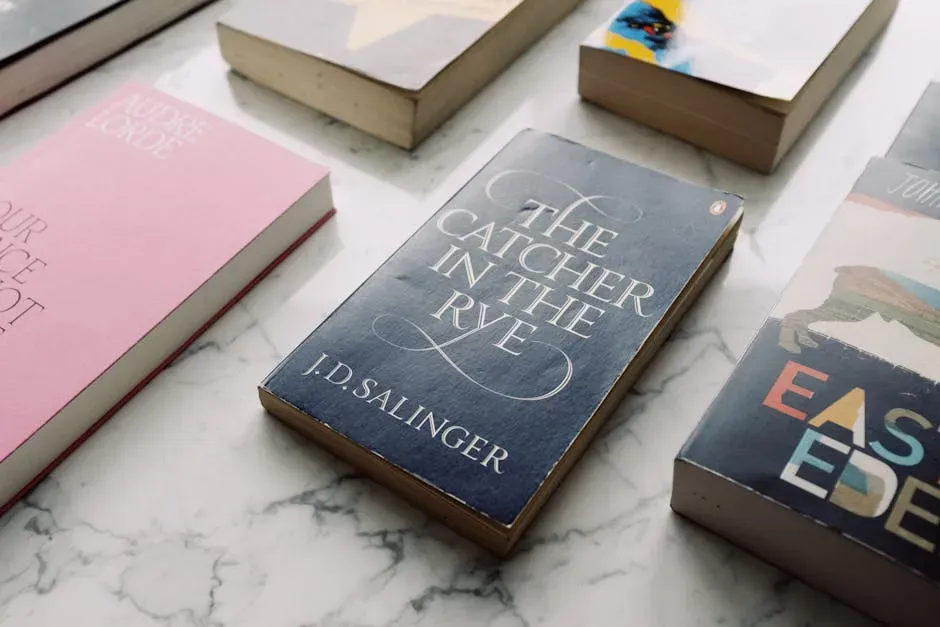
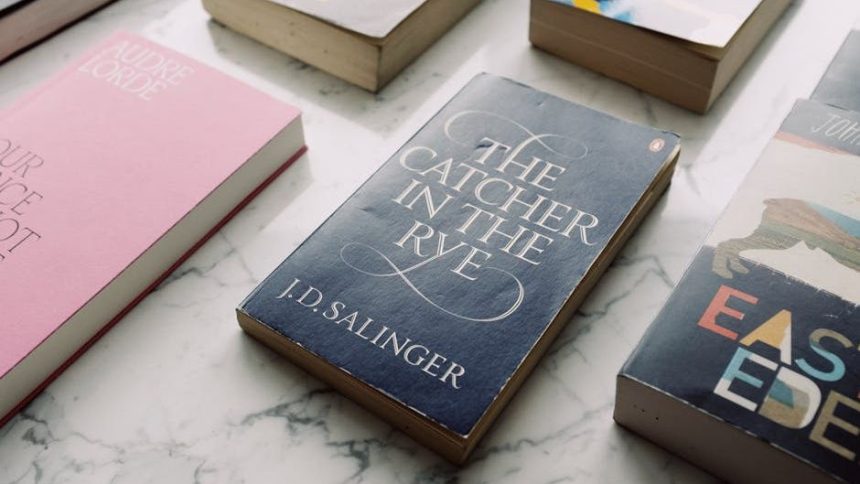
The Catcher in the Rye may very well be the most famous example of a classic work of literature that’s never been adapted to screen. This is partly because, with its coming-of-age story full of teenage angst, it seems like such an obvious choice, especially given its huge popularity with teenagers of all generations. The story of Holden Caulfield wandering a wintry New York City, alienated and acidly observant, is in many ways more cinematic than most things that actually get filmed.
The novel’s author, J. D. Salinger, famously rejected offers for The Catcher in the Rye to make the jump to the big screen, and since his passing in 2010, his estate has similarly blocked the notion of it happening. That’s the situation. Plenty of people would make official adaptations, if they could, but the author was outspoken about none coming to fruition, and his wishes have continued to be upheld since he passed away. Salinger’s own novel features Holden ranting about Hollywood phonies, which makes the whole situation feel almost designed by irony.
2. Blood Meridian by Cormac McCarthy
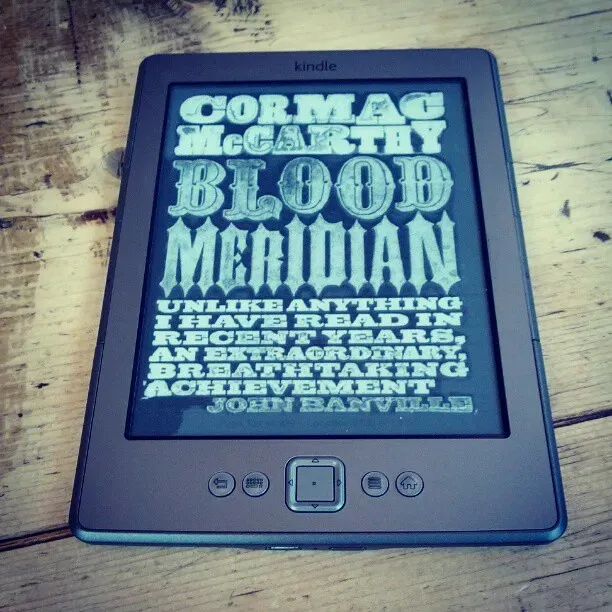
Cormac McCarthy’s 1985 western has seen its reputation gradually grow to the point where, today, it’s considered to be an example of the great American novel. For as vivid as McCarthy’s famously minimalistic use of prose can be, its sheer level of violence has often left film studios shying away from it for fear of it ending up being unsellable. The novel follows a teenage boy swept into a gang of scalp hunters along the Texas-Mexico border in the 1850s, guided by the terrifying, philosophical figure of Judge Holden.
Everyone in Blood Meridian is cold-blooded and cruel. It’s a harsh look at the human condition under the guise of what’s often called an “anti-Western.” It doubles down on the most horrifying aspects of the genre, while also turning it into a gross over-the-top spectacle. What makes Blood Meridian truly great is McCarthy’s use of language, something a film can never fully live up to. Still, a bold director with the right cast and enough nerve could make something genuinely unforgettable out of it.
3. Invisible Man by Ralph Ellison
Ralph Ellison’s novel Invisible Man, published in 1952, is a seminal work in American literature that explores themes of identity, race, and social invisibility. The narrative is presented through the eyes of an unnamed Black protagonist who feels marginalized in a society that refuses to see him as an individual, instead defining him by societal labels and racial stereotypes. The novel moves across the American South and Harlem with the sweeping force of a great social epic.
Upon its release, Invisible Man garnered critical acclaim and won the National Book Award in 1953, securing Ellison’s position as a pivotal figure in American literature. The novel’s exploration of existential themes and its innovative narrative style influenced a generation of writers, enabling them to transcend the confines of the protest novel and engage with broader questions of existence and identity. Director Spike Lee has purportedly been trying to make a movie from the novel for years. However, some people feel that the book is too intellectual to be made into a movie. That argument feels less convincing now than ever.
4. The Secret History by Donna Tartt
Donna Tartt has a long history of canceled The Secret History adaptations under circumstances as gruesome as the novel itself. The book tells the story of six classics students at Hampden College, focusing on the murder of one of them, everything that led to it, and the aftermath of the traumatic event. The Secret History is the perfect inverted detective story, but it would take a genius of a director to do it justice on the screen.
In 2019, Donna Tartt’s Pulitzer Prize-winning novel The Goldfinch received a misfiring adaptation. That only serves to make us more enthusiastic for a film based on The Secret History, the author’s debut novel, and widely considered her best. Set in a privileged New England college, the story is told from the point of view of Richard, a disaffected Californian who falls in with an enigmatic group of classics students. Coached by the erudite and well-to-do Julian, the misfits fashion themselves in the romantic mode of the revered scholars in their books. One day, their lives change forever, and they come to realise that academic knowledge does little to prepare one for an actual tragedy. The book’s cinematic language and intriguing characters would make an excellent fit for a movie, but with the rights currently resting in Tartt’s hands, it’s unclear if we’ll get one.
5. One Hundred Years of Solitude by Gabriel García Márquez
Gabriel Garcia Marquez’s masterpiece of magical realism is still considered by many to be the finest work of Latin American fiction ever created. And if you read it for yourself, it’s not hard to see why. Telling a sprawling multi-generational story that covers the history of not only the Buendia family but also the town of Macondo in which they live, One Hundred Years of Solitude feels like it touches upon everything that life has to offer.
Partner offer
100 Years of Solitude recounts the story of seven generations of the Buendia family who founded the town of Macondo, believing it to be a kind of utopia. Soon, and over generations, the town befalls a series of extraordinary and unfortunate events, which the family appear to be unable to escape from. Although the book has rich themes that are perfectly suited to a cinematic interpretation – and is the author’s best-selling work – Gabriel Garcia Marquez had so far refused to sell the rights during his lifetime. Netflix has announced a series adaptation, though its arrival has been long anticipated. A faithful, ambitious limited series remains the only format that could do it proper justice.
6. Gravity’s Rainbow by Thomas Pynchon
The work of Thomas Pynchon in general is widely considered to be unfilmable, to the point where only one filmmaker has really been willing, or been allowed, to try. Paul Thomas Anderson adapted Pynchon’s later-career, surprisingly conventional novel Inherent Vice in 2014; his 2025 Best Picture winner One Battle After Another is loosely based on Pynchon’s Vineland. Pynchon’s best work, like his 1963 debut V., or 1973 masterpiece Gravity’s Rainbow, remain “white whales” for Hollywood.
Even though much of Gravity’s Rainbow takes place (seemingly) around the closing days of World War II, it at one point “quotes” the U.S. President from 1969 to 1974, Richard Nixon, saying “What?” That word followed by that punctuation mark summarizes all 760 pages of this absolutely bizarre and intentionally scattershot novel by the elusive Thomas Pynchon. It is impossible to summarize or even comprehend in the traditional sense. The right director – someone willing to embrace paranoia and digression as formal tools – could turn it into something revelatory. No one has tried yet.
7. A Confederacy of Dunces by John Kennedy Toole

When it comes to the idea of adapting A Confederacy of Dunces to the big screen, the notion of it being something of a cursed idea is prominent, because various actors and filmmakers have been attached to it at some point, but for various reasons, it’s never worked out. Even a biographical film about Thelma Toole, the mother of A Confederacy of Dunces’ author, John Kennedy Toole, seems stuck in its own sort of development hell, having been announced in early 2022 but still being nowhere to be seen.
The book follows Ignatius J. Reilly, a vastly overweight 30-year-old man living with his mother. Seeking employment in New Orleans, he suffers a series of misadventures in his one-man battle against the modern world. There have been repeated attempts to make a film version, most notably with Harold Ramis in 1982, with John Belushi linked to the project. John Candy and Chris Farley were also touted to play Ignatius before their premature deaths, giving the adaptation a reputation for being cursed. The novel itself won the Pulitzer Prize posthumously in 1981, making its absence from screens all the more baffling.
8. The Sirens of Titan by Kurt Vonnegut
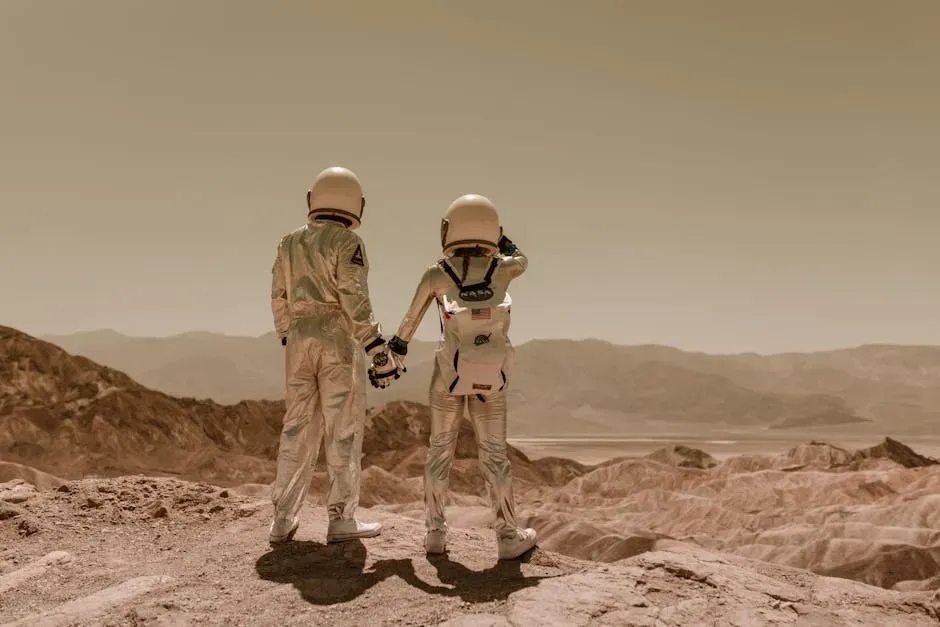
The Sirens of Titan is a comic science fiction novel by Kurt Vonnegut Jr., first published in 1959. It involves issues of free will, omniscience, and the overall purpose of human history, with much of the story revolving around a Martian invasion of Earth. The story follows Malachi Constant, a wealthy playboy who is drawn into a cosmic journey orchestrated by Winston Niles Rumfoord, a man who exists across space and time due to a phenomenon known as the chrono-synclastic infundibulum. As the narrative unfolds, Constant is guided to Mars, Mercury, and ultimately Titan, where he encounters profound revelations about himself, his relationships, and the nature of reality.
Vonnegut sold the film rights to Sirens of Titan to Jerry Garcia, guitarist and vocalist for rock band The Grateful Dead. Garcia began working with Tom Davis in early December 1983 and finished their first draft in January 1985. After Weide, screenwriter James V. Hart reportedly secured Vonnegut’s approval on a Sirens of Titan script draft shortly before the author’s death in 2007, but it never went into production. Fast-forward a decade to Harmon’s unsuccessful attempt, and now, nine years later, here we are, still with no movie version of the beloved novel. Few books this rich in spectacle and satire have been passed over so stubbornly for so long.
9. At the Mountains of Madness by H.P. Lovecraft

H.P. Lovecraft is one of the foundations of modern horror, but as much as traces of his work are all over 20th and 21st-century scary movies, his bibliography itself remains woefully underrepresented on celluloid. That is, except for the Re-Animator films and their thematic cousin, From Beyond, and a few other scarce examples. One of his novellas in particular, At the Mountains of Madness, has been in developmental hell for decades.
It’s essentially a fact that Guillermo del Toro would be able to do such a story justice, and he’s expressed interest in doing an At the Mountains of Madness film time and again, but it’s continued to elude him. In 2021, del Toro suggested he might do it as an animated, or even stop-motion feature. However, during the press tour for Frankenstein, del Toro revealed work on the Lovecraft adaptation is once again dead in its tracks. The novella follows a scientific expedition to Antarctica that uncovers an ancient and deeply disturbing civilization – a premise that deserves the full cinematic treatment it has never received.
10. The Corrections by Jonathan Franzen
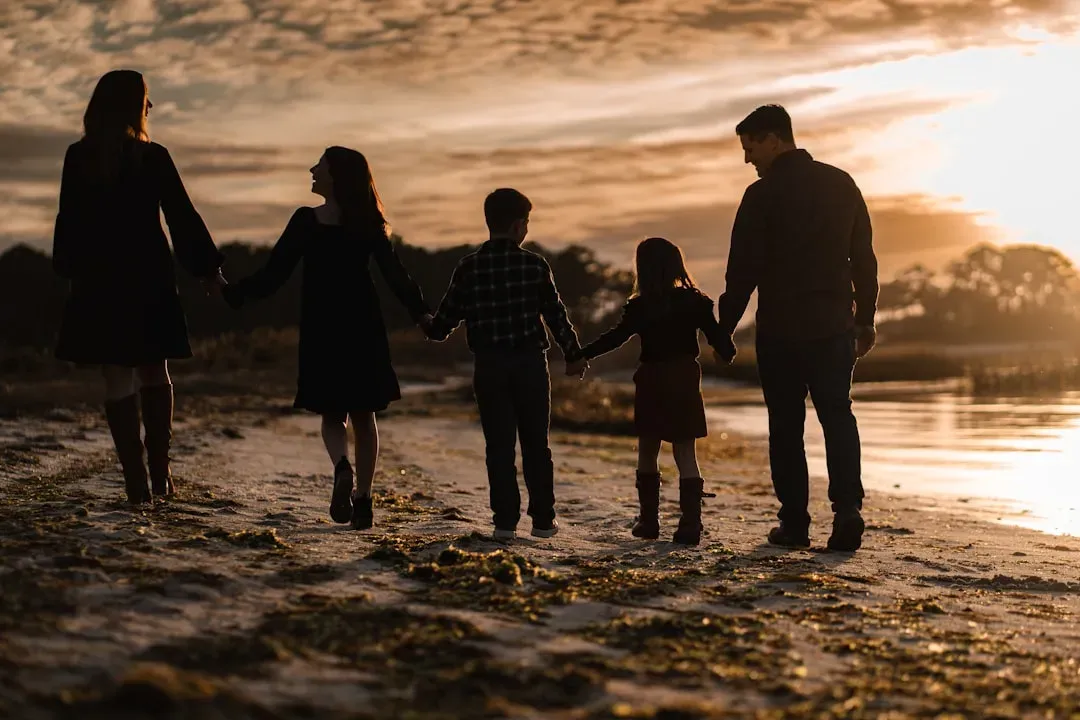
Jonathan Franzen’s National Book Award winner about a dysfunctional family is funny, heartfelt and contains a great deal of truth to it. With so many other family-centered books being adapted into movies, one would assume that The Corrections would also make it to the big screen. Not yet. HBO had been working to adapt the book into a television series starring Anthony Hopkins as the family patriarch, but unfortunately that never worked out.
Published in 2001, the novel follows three adult children and their aging parents through a bitterly funny and emotionally precise portrait of American family life in decline. The material is perfectly suited to a prestige limited series format, the kind that streaming platforms have been producing throughout the 2020s. The 2020s are filled with remakes and revivals, but the film industry should pay attention to amazing novels that deserve adaptation with respect to the authors’ original vision. The Corrections is exactly the kind of literary novel that a ten-episode arc could honor faithfully, given the right showrunner and the courage to let its darkness breathe.
Partner offer
Planning a trip to Vegas?
Compare hotel rates and show tickets on VEGAS.com.