Every decade has its canon, the handful of records that get replayed in every retrospective until they start to feel more like wallpaper than music. The ’90s canon is especially crowded, dominated by a small rotation of grunge landmarks and hip-hop classics that show up on nearly every list. Somewhere behind that wall of familiar names sits a stack of records that critics loved at the time, or should have, before they quietly slipped out of the conversation.
This list isn’t about obscurity for its own sake. Each of these albums had real critical attention, real artistic ambition, and in some cases real commercial traction, yet they’ve faded from the general music conversation in a way that feels unfair. Here are ten that deserve another listen.
1. Grant Lee Buffalo – Fuzzy (1993)

Grant Lee Buffalo’s debut arrived at an odd moment, right as grunge hit its commercial peak, yet it sounded like nothing else on rock radio. Californian trio Grant Lee Buffalo released a strange, alluring, literate album named Fuzzy that owes more to Hank Williams, Bob Dylan and Johnny Cash than to what was once termed college rock. Frontman Grant-Lee Phillips built vivid, dusty Americana out of songs that felt closer to short stories than singles.
The album earned serious critical goodwill on release. It was met with rave reviews on both sides of the Atlantic and briefly cracked the UK Top 75, and Michael Stipe famously called it the best album of the year, which led to Grant Lee Buffalo opening for R.E.M. Despite that early praise, Fuzzy rarely comes up now, even in conversations about alt-country’s origins.
2. The Breeders – Pod (1990)

Kim Deal’s pre-Last Splash project gets overshadowed by her own later hit record, which is a strange fate for an album this influential. Though The Breeders could never be described as an underrated band, their debut album Pod never quite gets the acclaim it deserves, and it’s the album that allegedly made Kurt Cobain nervous to meet Kim Deal for the first time. That detail alone tells you how seriously it was taken inside the scene that mattered most.
Musically, Pod stripped things down to something starker than anything Deal had done before. It took elements of what Deal’s other group, Pixies, had been doing but made them barer, starker, and far more eerie. The lineup itself was a quiet supergroup, and the record still sounds unsettling and original more than three decades later.
3. Kristin Hersh – Hips and Makers (1994)
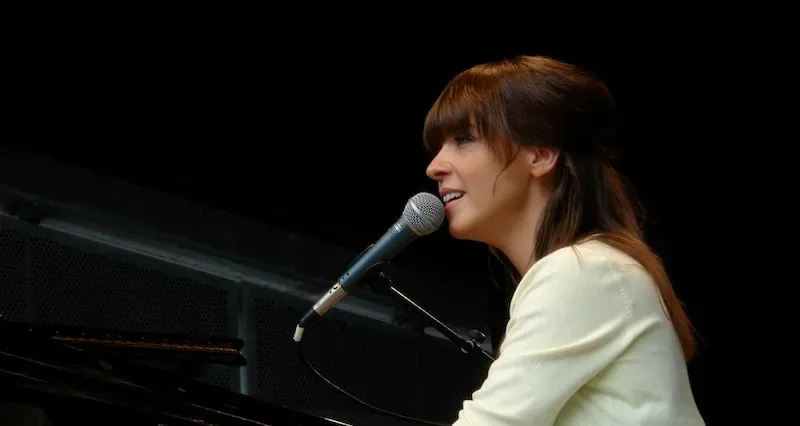
Hersh had already built a reputation with Throwing Muses, but her solo debut showed a completely different side of her songwriting. Her 1994 solo debut Hips and Makers operates on an entirely different level, gone is the brash art-rock of the Muses, and in its place sits a mostly acoustic album built on storytelling rather than dynamics. It’s a quieter, more intimate record than anything she’d released before.
The album never got the mainstream attention that her band work did, despite being arguably more distinctive. It fits into a broader pattern of the era, where female singer-songwriters working outside conventional pop structures often got filed under “difficult” rather than “essential.” Revisiting it now, the songwriting holds up remarkably well against records that got far more airplay at the time.
4. Swell – 41 (1994)
San Francisco’s Swell never broke beyond a devoted cult following, but their mid-90s run produced some genuinely distinctive slowcore. Built around David Freel’s acoustic guitar strums and stoned drawl, and Sean Kirkpatrick’s boxy, inventive drumming, Swell blended slowcore with left-field rock, and their best records were 1992’s …Well and 1994’s 41. The band’s sound sat somewhere between the hazier corners of shoegaze and the sparse minimalism that would later define a whole subgenre.
Neither record made much commercial noise, and Swell’s name rarely surfaces even in deep-dive genre retrospectives today. That’s a shame, because 41 in particular captures a mood of understated melancholy that few bands managed as convincingly. It’s an album for late nights rather than road trips, which may partly explain why it never crossed over.
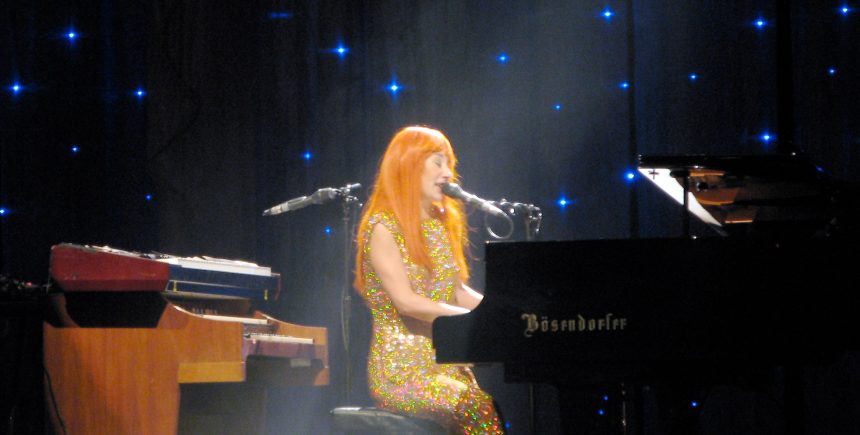
5. Tori Amos – Boys for Pele (1996)
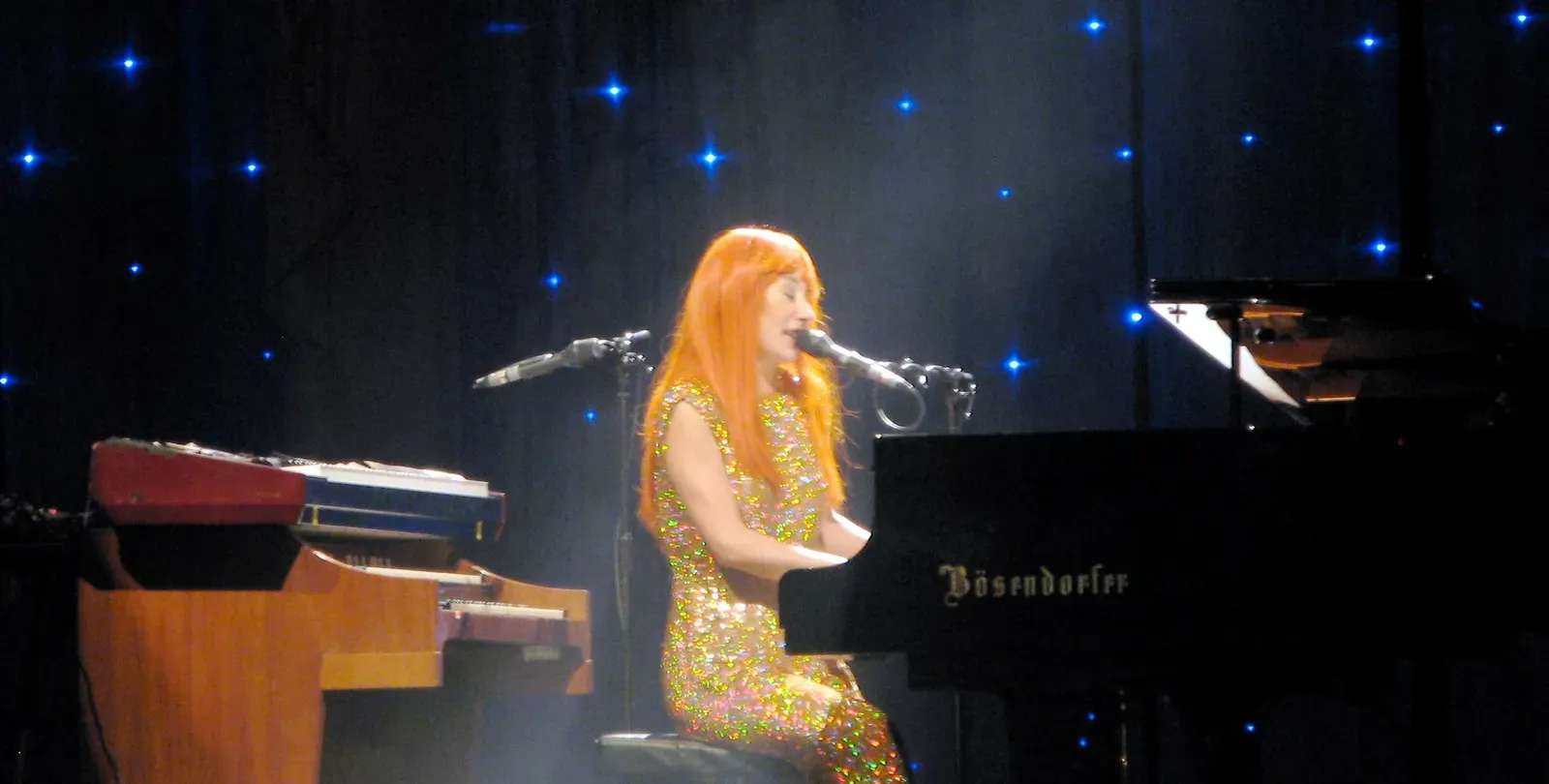
Tori Amos’s third album gets consistently passed over in favor of her debut, even though many fans consider it her most ambitious work. This record is often overlooked simply because Amos’s brilliant Little Earthquakes is one of the only records in her catalog chosen for inclusion in most “Best of the 1990s” lists, yet Boys for Pele is her sonic novel, a truly inspired masterpiece. Its density and strangeness worked against it commercially, but that same quality is what makes it rewarding now.
The record covers heavy emotional ground without flinching. Boys for Pele begins with the stark Beauty Queen/Horses and gallops through various heavyweight themes such as blood sacrifice, suicide, adultery, religion, and the South. It demands patience in a way that a lot of ’90s pop-rock didn’t, and that demand is probably why it never became a staple of casual retrospectives.
6. Fugazi – Steady Diet of Nothing (1991)
Fugazi’s second album tends to get squeezed out of the conversation by the records on either side of it. Their 1991 second album is often overlooked by critics in favor of its follow-up, In On the Kill Taker, or 2001’s The Argument, even though it showed the band finding their character and contains some of their most memorable material. It’s a transitional record in the best sense, capturing a band figuring out how far they could push their own formula.
Part of the reason it gets overlooked comes down to production choices that split opinion at the time. The record was the first the band would mix by themselves and has been criticised for its chaotic production. Listened to now, that rawness feels more like a feature than a flaw, and tracks like the album’s mid-section highlights hold up as some of the tightest post-hardcore songwriting of the era.
7. R.E.M. – New Adventures in Hi-Fi (1996)
It’s strange that an R.E.M. album could count as underrated, given the band’s stature, but this one genuinely slipped through the cracks. R.E.M.’s tenth album never received the acclaim or airplay in the ’90s that its predecessor, Monster, did, although many might claim that New Adventures is the better album. Recorded largely on tour, it has a looser, more spacious feel than the band’s more polished mid-90s output.
Its lack of a singular sonic identity actually works in its favor on repeated listens. What the album lacks in coherence and singularity of vision, it makes up for in variety. Three decades on, it plays like a quiet transitional statement from a band that had already given the world several genuine classics and didn’t feel the need to repeat itself.
8. The God Machine – Scenes From the Second Storey (1993)
San Diego’s The God Machine never found an audience at home, so they relocated to London chasing a scene that seemed more receptive to their sound. Ignored in their native land, the band wound up chasing their rock and roll dreams in London, and despite press acclaim for their debut album, Scenes From the Second Storey, they remained resolutely underground. The band’s story took a tragic turn shortly after, which only deepened how little attention their work ultimately received.
Partner offer
Musically, the album occupies a bleak, intense middle ground rarely explored with this much conviction. It occupies sonic territory between Jane’s Addiction, Nick Cave and Nine Inch Nails at their most introspective. It’s a heavy, uncomfortable listen in places, but one that rewards anyone willing to sit with its mood rather than skim past it.
9. Toadies – Rubberneck (1994)
Rubberneck occupies a strange space in the underrated conversation because its lead single became genuinely famous while the rest of the album stayed relatively unknown. It might be the most popular underrated album of all time, an eleven-track, Southern Gothic descent that’s up there as one of the most disarmingly frightening things to come out of the ’90s. Most casual listeners know the hit and stop there, missing an album that sustains its dark, tense atmosphere from start to finish.
Deeper cuts on the record reveal a band capable of more than one memorable riff. Songs later in the tracklist push the same unsettling energy into different textures, proving the album’s reputation as a one-song record is undeserved. It’s a rare case of an underrated album hiding in plain sight, propped up by a hit single that somehow overshadowed everything around it.
10. Morphine – Cure for Pain (1993)
Morphine built a sound so specific that it’s genuinely hard to compare them to anyone else from the era, which may be part of why they never quite broke into the mainstream conversation. Morphine perfected their characteristic sound with 1993’s Cure for Pain, best known for its track Buena. Built around a two-string bass, baritone saxophone, and Mark Sandman’s low, conversational vocals, the record feels like nothing else released that year.
The band’s minimalist instrumentation gave the album a noir, late-night atmosphere that still sounds distinctive decades later. It never chased trends, which likely limited its commercial reach at the time but has helped it age unusually well. Cure for Pain remains a strong entry point for anyone curious about the more atmospheric, jazz-inflected corners of ’90s alternative rock.
Why These Records Faded From the Conversation
Most of these albums share a common thread: they demanded more patience than the era’s biggest hits, or they arrived at moments when louder, more marketable sounds were dominating attention. Some were critical darlings that never translated into sales, while others built cult followings that simply never expanded. None of them lacked quality; they lacked the right timing or the right push.
Streaming and reissue culture have brought some renewed interest to records like these, but algorithm-driven playlists still tend to favor the familiar over the forgotten. That makes lists like this one worth revisiting every so often, if only as a reminder that the ’90s produced far more interesting music than the standard highlight reel suggests. The albums above are proof that being overlooked has never been the same thing as being unworthy.
Partner offer
Planning a trip to Vegas?
Compare hotel rates and show tickets on VEGAS.com.