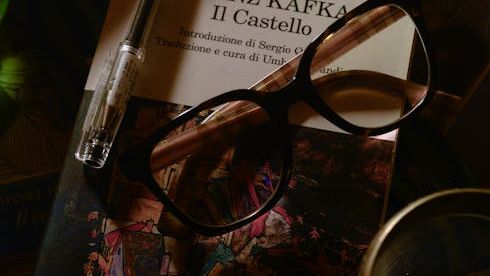
Some books reach the world long after their authors leave it. The manuscripts get tucked into drawers, burned in fits of doubt, locked in trunks, or simply handed off to a publisher hours before a fatal heart attack. The result is a strange and enduring category of literary history: writers whose most important work only existed in print once they were gone. These aren’t minor footnotes. Several of the most celebrated books ever written belong to this group. Their stories say something uncomfortable about how talent gets recognized, and how often it simply doesn’t in time.
Franz Kafka: The Man Who Wanted Everything Burned

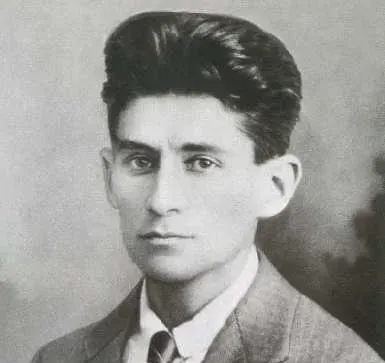
Kafka died in June 1924 at the age of 40 from laryngeal tuberculosis. By the time of his death he had published three collections of short stories, but he left behind a vast collection of manuscripts, notes and sketches, including the drafts of three book-length novels. His instructions about what to do with that archive could not have been clearer. Knowing he was dying, Kafka appointed his best friend, the successful literary journalist Max Brod, as his executor and asked him, verbally and in writing, to burn every scrap of his notes and manuscripts.
Brod ignored the request and went on to meticulously organise and edit the often unfinished manuscripts, arranging for their publication, thus ensuring that Kafka went on, after his death, to ultimately become one of the most famous authors of the twentieth century. The first posthumous publication, in 1925, was Kafka’s second novel, The Trial, followed a year later by The Castle and then by Amerika in 1927. Albert Camus, Gabriel García Márquez, and Jean-Paul Sartre are among the writers influenced by his work, and the term “Kafkaesque” has entered the English language.
What Kafka Actually Thought of His Own Writing

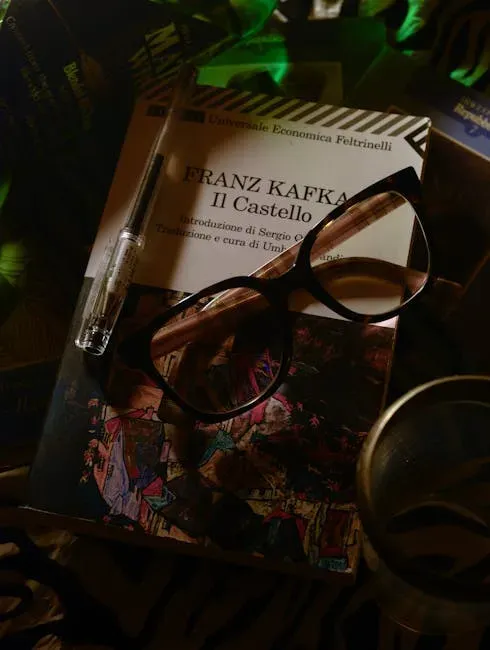
Kafka instructed his friend Max Brod to destroy all of his unpublished manuscripts because he was highly critical of his own writing and believed that his works were not fit for publication. This was not false modesty performed for an audience. For the maximalist that Kafka was, writing represented his struggle for achieving the highest possible goals, a struggle against the impossible. This is the source of Kafka’s incessant dissatisfaction with almost everything he had written, why there are so many short and longer opening passages that he never followed up, and why his work is so fragmentary.
In 1939, as the Nazis occupied Prague, Brod immigrated to Mandatory Palestine, taking with him a suitcase of Kafka’s papers, many of them unpublished notes, diaries, and sketches. The physical survival of those manuscripts was itself a near thing. The survival of his papers and the posthumous publishing of his works has cemented Kafka’s legacy as a global icon. It remains one of the most consequential acts of literary disobedience in history.
Emily Dickinson: 1,800 Poems in a Locked Chest

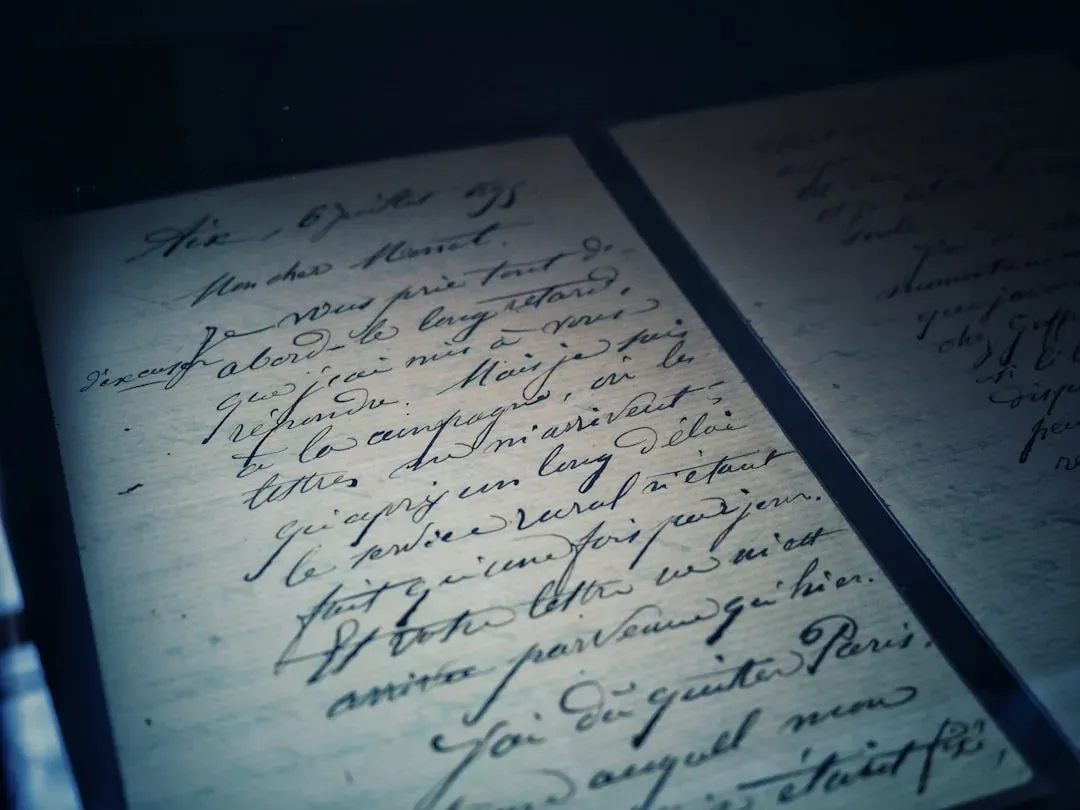
Despite Dickinson’s prolific writing, only ten poems and a letter were published during her lifetime. She lived quietly in Amherst, Massachusetts, rarely leaving her family’s property in her later years, writing constantly and sharing almost nothing with the reading public. Few in Dickinson’s circle were aware of her writing until after her death, when her younger sister Lavinia discovered the poems in her desk.
After her death, her family members found her hand-sewn books, or “fascicles.” These fascicles contained nearly 1,800 poems. After finally enlisting Thomas Wentworth Higginson as co-editor, Mabel Loomis Todd completed Poems of Emily Dickinson in 1890, just four years after the poet’s death. When the first volume of her poetry was published in 1890, four years after her death, it met with stunning success, going through 11 editions in less than two years.
The Long Road to Dickinson’s True Texts

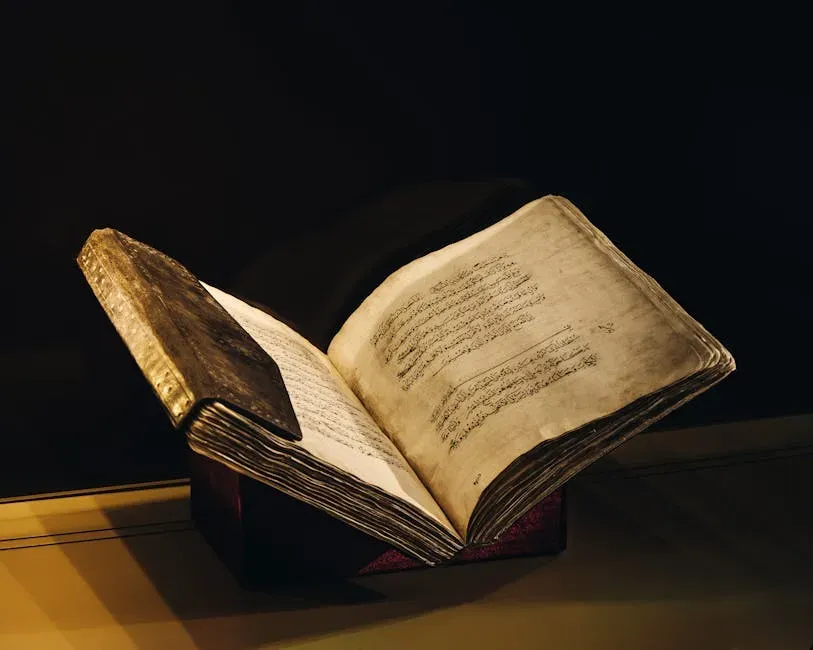
The two editors made changes to the poems, regularizing punctuation, adding occasional titles, and sometimes altering words to improve rhyme or sense. What readers first encountered was a tidied, softened version of Dickinson, her distinctive unconventional dashes replaced with standard punctuation. Not until 1955, when Thomas H. Johnson compiled a complete collection, “The Poems of Emily Dickinson,” was Dickinson’s work restored closer to her original intention.
It was not until R.W. Franklin’s version of Dickinson’s poems appeared in 1998 that her order, unusual punctuation and spelling choices were completely restored. So in a real sense, the world didn’t read the actual Dickinson until more than a century after her death. Dickinson, along with Walt Whitman, is lauded as one of the founders of the American poetic voice.
John Kennedy Toole: A Mother’s Crusade

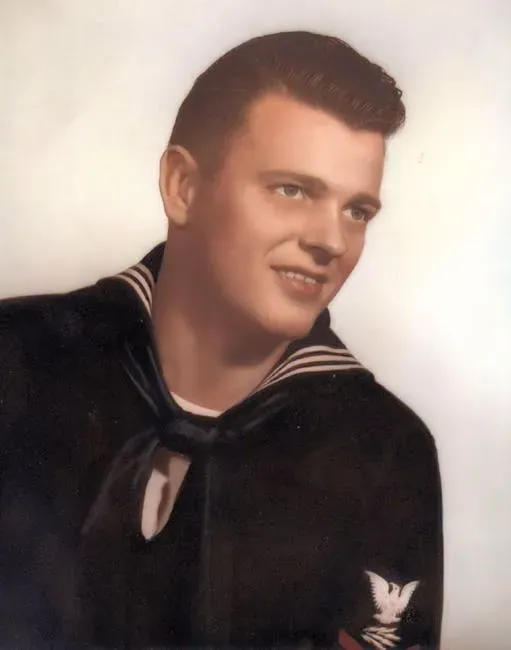
John Kennedy Toole was an American novelist from New Orleans, Louisiana, whose posthumously published novel, A Confederacy of Dunces, won the Pulitzer Prize for Fiction in 1981. He never saw any of it. Written by John Kennedy Toole in the early 1960s, the novel was published posthumously in 1980, more than a decade after the author’s death by suicide at age 31.
After his death, his mother brought the manuscript of A Confederacy of Dunces to the attention of novelist Walker Percy, who was crucial in the book’s publication. Toole’s mother Thelma spent years after her son’s death trying to get the novel published, eventually convincing author Walker Percy to read the manuscript. A Confederacy of Dunces went on to become a cult classic, with translations into 18 languages and more than 1.5 million copies sold.
Partner offer

Why Publishers Kept Saying No to Toole


Toole submitted A Confederacy of Dunces to publisher Simon and Schuster, where it reached editor Robert Gottlieb. Gottlieb considered Toole quite talented, but did not regard the book’s themes and conflicts as sufficiently meaningful, or culminating in a unified end. That rejection, combined with others, pushed Toole toward depression and eventually his death at 31. Toole completed the book in 1963, but after extended negotiations with one publisher came to nothing in 1966, he made no further attempt to publish it.
A Confederacy of Dunces was published by Louisiana State University Press in 1980, and Percy provided the foreword. At his recommendation, Toole’s first draft of the book was published with minimal copy-editing and no significant revisions. The book became a best-seller, an almost unanimous success with critics, a nominee for the PEN/Faulkner Award, and the winner of the 1981 Pulitzer Prize. It has been praised for its comic structure, its brilliant use of dialogue, and its evocation of the setting and language of New Orleans.
Stieg Larsson: Manuscripts Delivered on the Day He Died

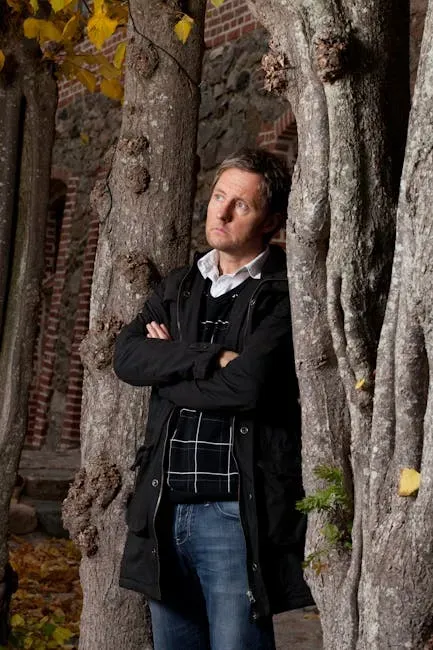
Born in 1954, Larsson spent much of his career as a journalist documenting and exposing right-wing extremist and racist organizations in Sweden. He served as editor-in-chief of the magazine Expo and was considered a leading expert on anti-democratic groups. Fiction was something he wrote largely in private, almost as a side project. Larsson died suddenly of a heart attack in 2004 at age 50, shortly after delivering the manuscripts for the trilogy to his publisher.
At the time of his death in 2004, only three novels had been completed, and although accepted for publication, none had yet been printed. These were published posthumously as the Millennium series. The novels – The Girl with the Dragon Tattoo, The Girl Who Played with Fire, and The Girl Who Kicked the Hornet’s Nest – were published posthumously starting in 2005. They became international sensations, with over 80 million copies sold worldwide.
The Phenomenon Larsson Never Witnessed

Larsson was the second-best-selling fiction author in the world for 2008, owing to the success of the English translation of The Girl with the Dragon Tattoo, behind Afghan-American novelist Khaled Hosseini. The scale of that success is hard to overstate for someone who died before a single book had gone to print. Larsson had conceived of ten books in the series; the publisher commissioned David Lagercrantz to write the next trilogy, and Karin Smirnoff to write the third trilogy in the series.
Stieg Larsson was a successful journalist in life, but few people knew he wrote fiction. After he had a heart attack in 2004, someone discovered a complete trilogy of novels he had written, now known as the Millennium Trilogy. Larsson would become the second best-selling author in the world in 2008, and the final novel in the trilogy, The Girl Who Kicked the Hornet’s Nest, would become the best-selling book in the United States in 2010.
Mikhail Bulgakov: Decades in the Drawer
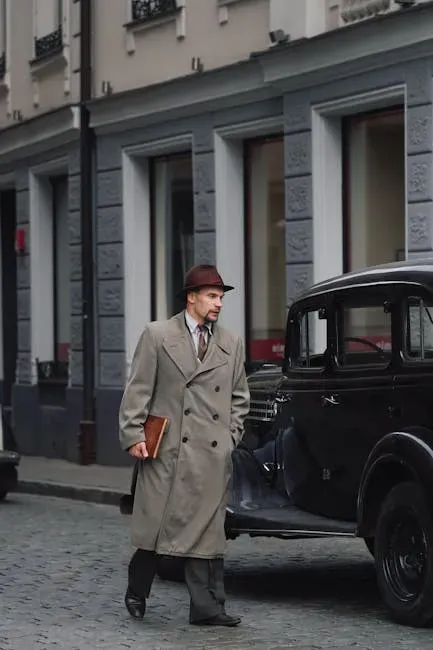
The first draft of Mikhail Bulgakov’s The Master and Margarita ended in flames: He began writing in 1928, but burned the manuscript two years later when he perceived himself as having no future as a writer in the Soviet Union, due to Stalin’s policies of censorship and oppression. By 1931, he had started again, and wrote multiple drafts before he died in 1940. It would be more than two decades before The Master and Margarita saw the light of day.
The novel was initially published in two heavily censored parts in the Russian magazine Moskva in 1966 and 1967. Bulgakov had died 26 years before his masterpiece reached readers, even in that truncated form. A successful writer during her lifetime, Bulgakov is now best known for this unfinished posthumous work. Notably, the two novellas that make up the book described life during circumstances that Bulgakov experienced firsthand in the Soviet era. The Master and Margarita is now widely regarded as one of the greatest novels written in the Russian language.
What These Five Writers Share
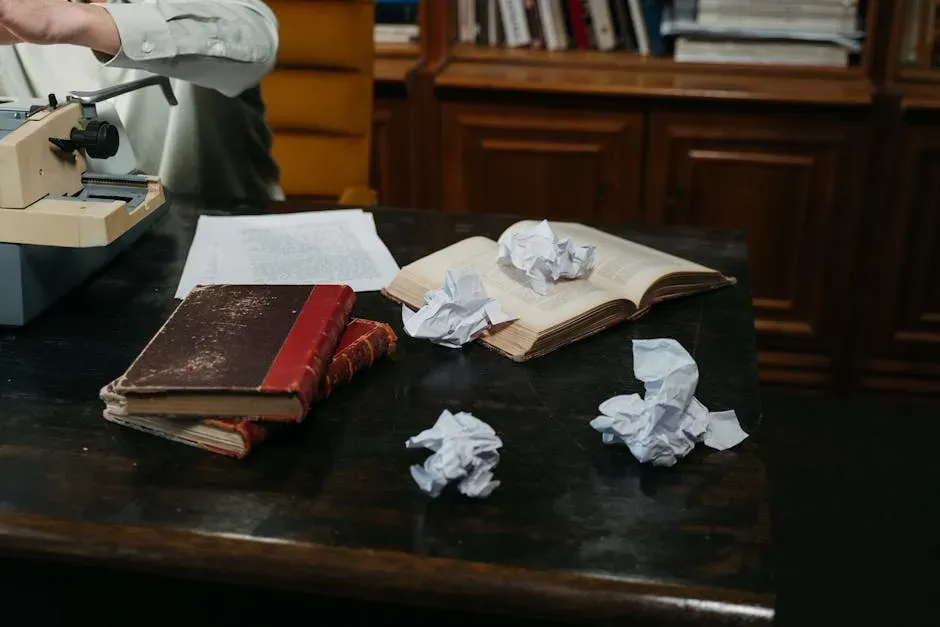
Each of these writers was, in their own lifetime, either ignored, rejected, suppressed, or simply unable to see their work reach the public in any complete form. Dickinson kept writing anyway, in private. Kafka kept doubting. Toole eventually stopped trying. Larsson died before the ink had dried. Bulgakov burned his own drafts and then started over. None of them got to hold the finished book in their hands as a recognized author.
There is something quietly unsettling about how certain those rejections seemed at the time, and how utterly wrong they turned out to be. Virtually every artist dreams of making an impact with their work, and writers are no different – but in some cases, authors don’t live to see their works become classics. The books survived. The writers didn’t get to see why that mattered.
Partner offer
Planning a trip to Vegas?
Compare hotel rates and show tickets on VEGAS.com.