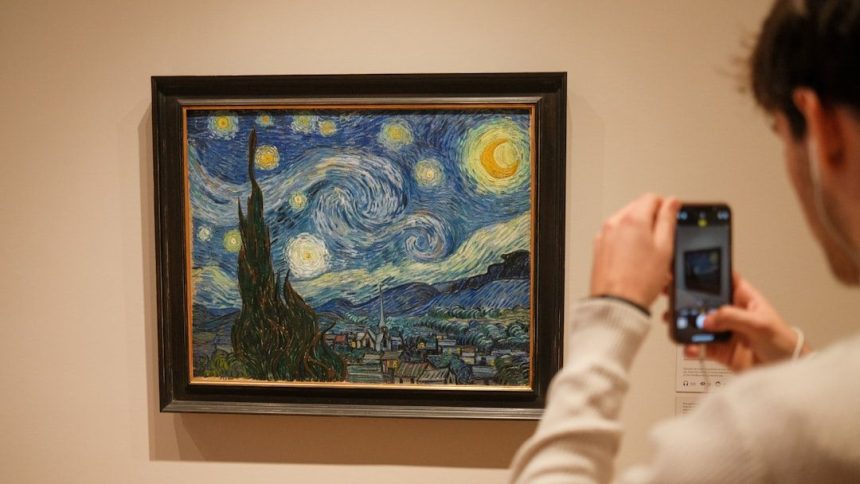
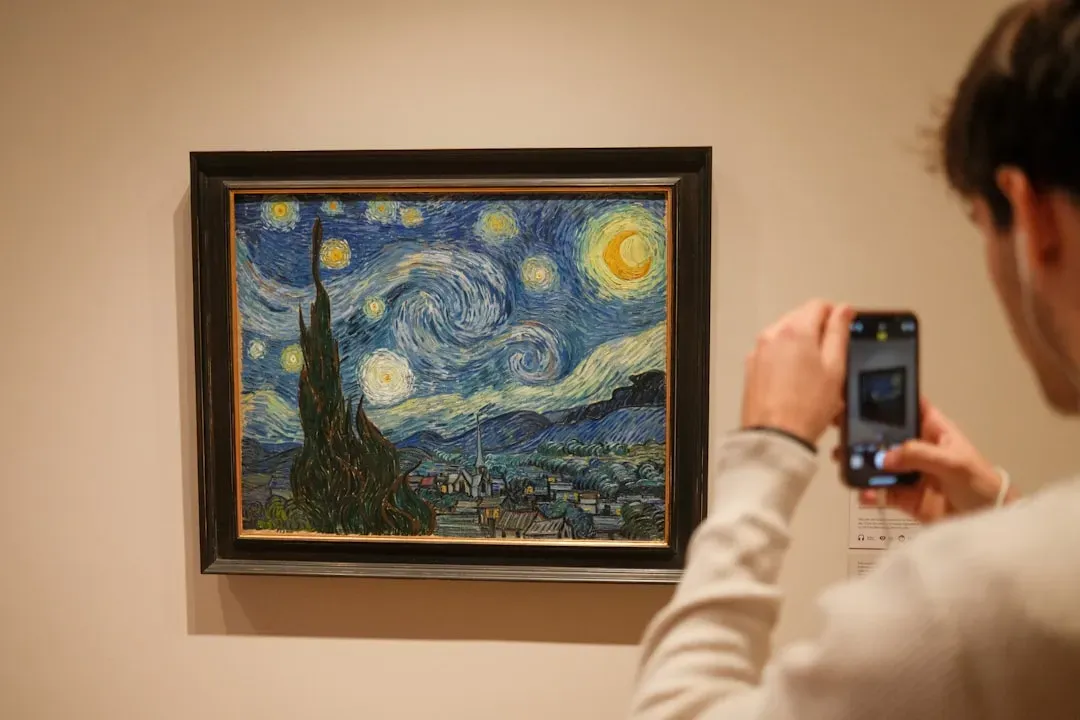
Few paintings in the entire history of Western art stop people in their tracks the way The Starry Night does. It is an oil-on-canvas painting by the Dutch Post-Impressionist painter Vincent van Gogh, painted in June 1889, depicting the view from the east-facing window of his asylum room at Saint-Rémy-de-Provence, just before sunrise, with the addition of an imaginary village. Described as a “touchstone of modern art,” The Starry Night has been regarded as one of the most recognizable paintings in the Western canon. What most viewers never realize, though, is how many deliberate, almost scientific decisions went into every inch of that swirling sky. Behind the beauty lies a set of techniques so precise they have kept physicists, art historians, and neuroscientists busy for decades.
1. The Impasto Method – Paint as Sculpture

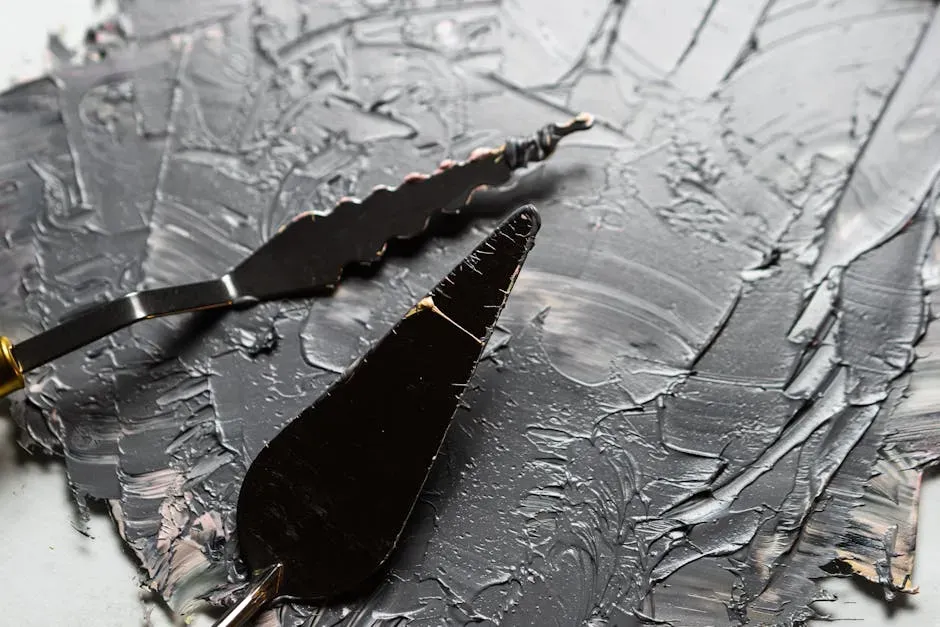
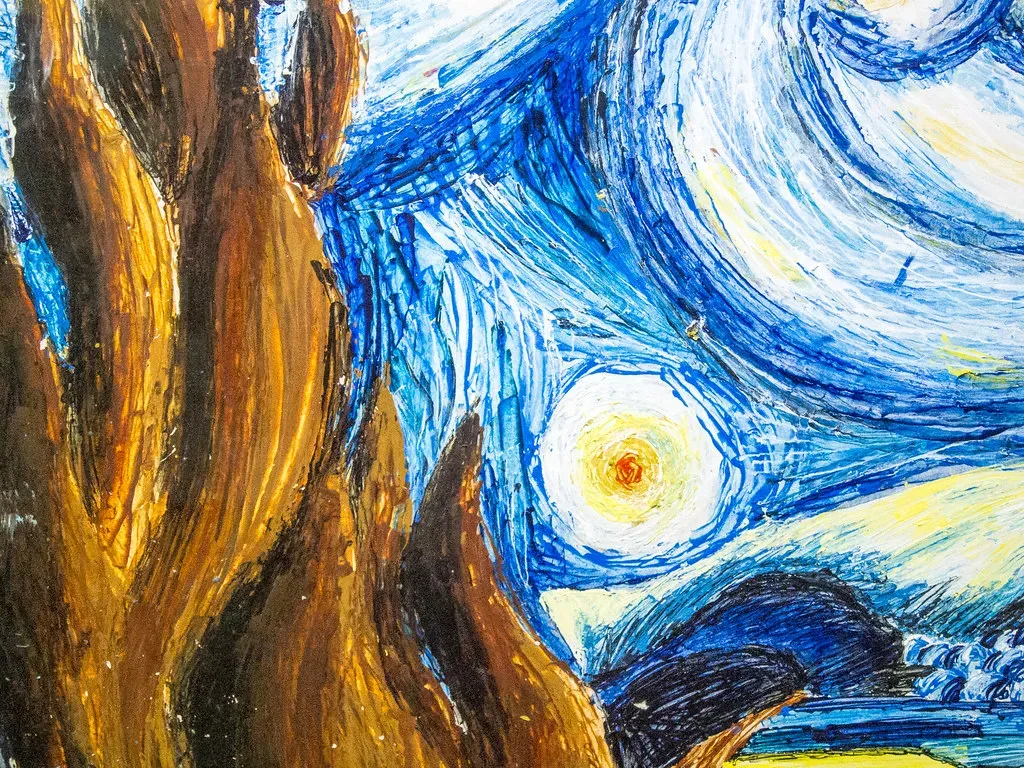
Impasto is a painting term that refers to the use of thickly textured, undiluted paint that appears almost three-dimensional on the canvas. When an artist uses the impasto technique, they usually leave visible brush strokes on the finished painting, applying the undiluted color to the canvas, frequently with a palette knife, and mixing colors on the canvas to attain the desired color. Van Gogh didn’t merely use this approach as an aesthetic preference – he understood what it did to light. The appearance of an impasto painting is greatly impacted by the lighting in the room. Due to the raised surface on the canvas, light is reflected and shadows are created based on the natural light in the space.
Modern pigment analysis reveals the paint is sometimes over a millimeter thick in places, making the artwork almost sculptural. The impasto technique lets light play vividly across the canvas, enhancing the sense of movement and drama. Van Gogh used impasto not just to add dimension to his paintings but to add emotion and movement – we see this movement in the swirling clouds of Wheat Field with Cypresses and Starry Night. In numerous letters, Van Gogh mentions his use of impasto. In a letter to his brother Theo on September 2, 1882, he wrote: “Sometimes the subject calls for less paint, sometimes the material, the nature of the subjects themselves demands impasto.”
2. Directional Brushwork – Motion Built Into Every Stroke

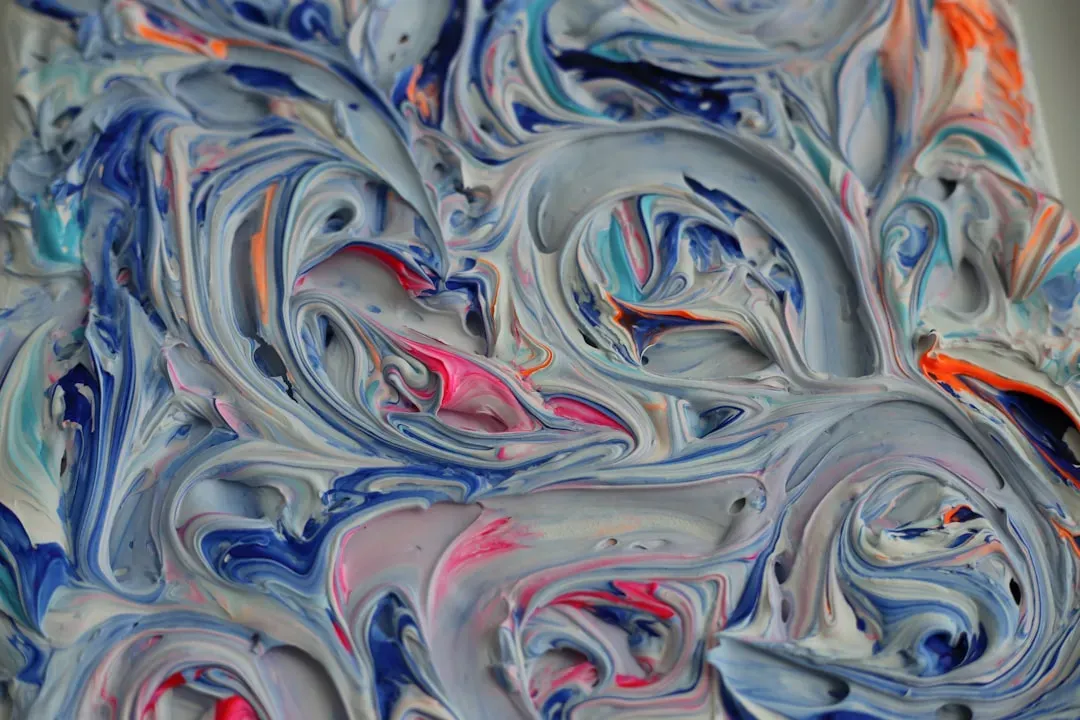
The swirling brushstrokes of Starry Night are instantly recognizable and deeply evocative. Van Gogh didn’t just paint lines – he created visible motions that mimic wind and turbulence, giving the sky an electric, almost living quality. Each circular sweep of his brush captures not only the movement of air but the restless energy that pulsed through his mind. Directional brushwork can be used to create a sense of movement and turbulence in a painting, and Van Gogh deployed this with extraordinary intention across every section of the canvas.
The directional brushwork serves a purpose beyond aesthetics. Each swirling motion guides the viewer’s eye, drawing them deeper into the painting. The sky moves not against the viewer but with them, creating a shared experience of both wonder and unease. Every brushstroke in Starry Night serves a purpose, guiding the viewer’s gaze across the canvas. The sky’s spirals and curves naturally draw the eye toward the largest star and the glowing moon, then lead it on a journey around the swirling heavens. This sense of direction is intentional, not accidental. Van Gogh used the movement of his brush to create a rhythm, like a conductor guiding an orchestra.
3. Complementary Color Theory – The Science of Visual Electricity
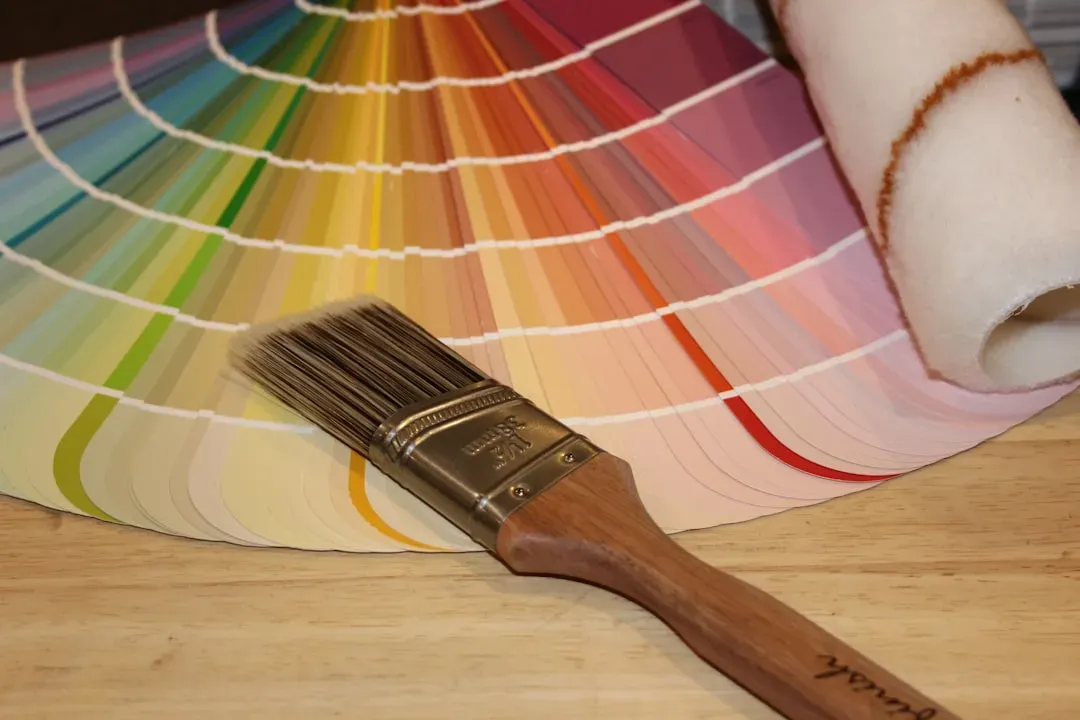
To understand The Starry Night‘s blue color palette, it is essential to know a little about Van Gogh’s color theory. He believed that colors could evoke emotions and used them to convey his feelings and ideas. Van Gogh chose complementary colors, such as blue and orange, to create a visual contrast that intensifies the painting’s overall effect. This was not accidental decoration – it was a deliberate, studied strategy. The painting uses mainly blue and yellow color schemes. These colors sit nearly opposite on the color wheel, creating strong visual contrast.
Deep blues contrast with vibrant yellows and oranges, creating a sense of conflict and duality. By avoiding blending and laying down colors in stark contrast, Van Gogh created a vibrating, pulsating effect. The close juxtaposition of complementary colors adds an electric feel to the painting. Van Gogh was also particularly preoccupied by the challenges of painting a night landscape and wrote about it not only to his brother, Theo, but to a fellow painter, Émile Bernard, and to his sister, Willemien. In a letter addressed to the latter, he alleged that night was more colorful than day and that stars were more than simple white dots on black, instead appearing yellow, pink, or green.
Partner offer

4. The Absence of Black – Darkness Reimagined
A lesser-known fact is that Van Gogh refused to use black paint in Starry Night. Instead, he created shadows using rich blues, greens, and purples. This decision was both technical and philosophical – Van Gogh believed that true darkness was never just black, but full of color and life. Modern analysis of the painting confirms the absence of black pigment. The result is a night scene that glows with vibrancy, even in its darkest parts. This approach to shadow was radical for its era and remains one of the most studied aspects of the work.
The deep blues and purples dominating the sky give a sense of mystery and infinity. The bright yellow of the stars and the moon stands out against this dark backdrop, creating a powerful visual impact and evoking a feeling of hope and light in the midst of the nocturnal scene. As Van Gogh wrote to his younger brother Theo, “It often seems to me that the night is much more alive and richly colored than the day.” We can see a similar fascination in Starry Night Over the Rhône (1888), which features a near-identical dark blue palette with bright yellow stars, yet is nevertheless calmer and less energetic in its brushstrokes. This contrast suggests that by the time he painted The Starry Night, Van Gogh was no longer simply depicting the night as he saw it, but as he felt it.
5. Turbulence Encoded in Paint – The Hidden Physics

Van Gogh’s brushstrokes in The Starry Night create an illusion of sky movement so convincing it led researchers to wonder how closely it aligns with the physics of real skies. Marine sciences and fluid dynamics specialists analyzed the painting to uncover what they call the hidden turbulence in the artwork. They used brushstrokes to examine the shape, energy, and scaling of atmospheric characteristics, and used the relative brightness of the varying paint colors as a stand-in for the kinetic energy of physical movement. In the painting, 14 visible swirling structures, or “eddies,” can be identified, with diameters ranging from 4.2 cm to 27.6 cm.
Researchers found that 14 of the swirling shapes in the painting align with Kolmogorov’s theory. Measurements of the small brush strokes also matched up with a concept called Batchelor’s scaling, which describes how energy moves in small-scale turbulence. Van Gogh couldn’t have known about Kolmogorov’s theory when he created The Starry Night, as he died 13 years before the mathematician was born. Instead, the researchers think he was able to successfully capture the sky’s turbulence because he was a talented artist and a meticulous observer of nature. As lead researcher Huang states, The Starry Night “reveals a deep and intuitive understanding of natural phenomena,” and “Van Gogh’s precise representation of turbulence might be from studying the movement of clouds and the atmosphere or an innate sense of how to capture the dynamism of the sky.”
6. Symbolic Composition – The Cypress, the Village, and the High Horizon

The horizon in Starry Night sits unusually high, squeezing the village below and giving most of the canvas over to the dramatic sky. This compositional decision shifts the viewer’s attention upward, making the heavens the true subject of the painting. The high horizon also creates a sense of intimacy, as if the viewer is looking out from a hidden vantage point. Art critics argue that this technique reflects Van Gogh’s fascination with the infinite, and his desire to capture something beyond the ordinary. The village below, rendered with calm and linear strokes, plays directly against that cosmic energy above.
The towering, flame-like cypress tree in the foreground is more than a compositional device – it’s a powerful symbol. Art historians interpret it as a bridge between earth and sky, connecting the spiritual and the physical. Cypress trees have long been associated with death in European culture, though the question of whether Van Gogh intended for them to have such a symbolic meaning in The Starry Night is the subject of an open debate. In Mediterranean culture, cypresses are often linked to death and eternity, and Van Gogh’s own letters suggest he saw them as “tall, dark flames.” The tree’s upward sweep echoes the swirling motion of the sky, reinforcing the painting’s sense of movement. The village itself is an imaginary component of the picture, not visible from the window of the asylum bedroom, which makes the entire scene a masterful blend of observed reality and interior vision – a gallery of one man’s extraordinary mind.
Partner offer
Planning a trip to Vegas?
Compare hotel rates and show tickets on VEGAS.com.