Walk into almost any major government building, cathedral, or financial district in the world and something ancient is looking back at you. It might be staring from a pediment, curling through a column capital, or woven quietly into the proportions of a doorway. Most people pass right by without a second glance. That, honestly, is the whole point.
Ancient civilizations did not just build for shelter. They built to communicate, to awe, to encode meaning into stone for generations who might not yet speak their language. What’s remarkable is how stubbornly those symbols have survived, migrating through centuries, continents, and completely different belief systems, landing right in front of us in the 21st century. Here’s what you’re really looking at.
1. The Obelisk: Solar Worship in the City Center
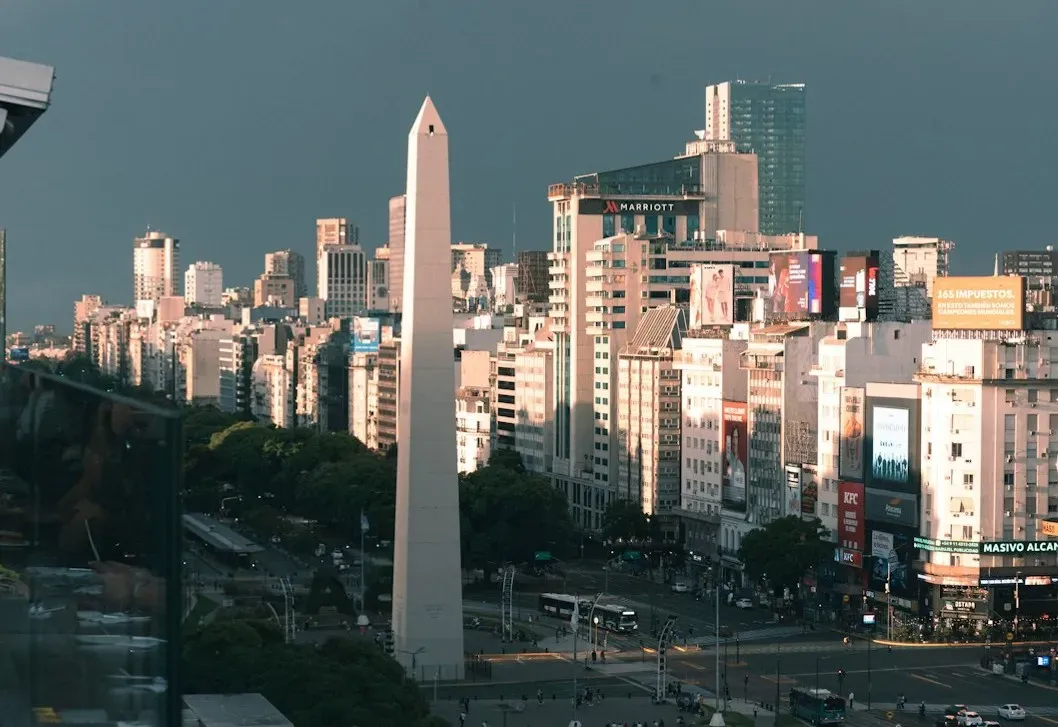
The Egyptian obelisk was carved from a single piece of stone, usually red granite. It was designed to be wider at its square or rectangular base than at its pyramidal top, which was often covered with an alloy of gold and silver called electrum. All four sides of the shaft were embellished with hieroglyphs that characteristically included religious dedications, usually to the sun god. That is a ritual monument, not a decorative one. Obelisks symbolized the sun god Ra, and they were most commonly erected in pairs at the entrance of a temple. The Ancient Egyptians believed that a tower denoted height, as well as a rising up above common levels of life or society.
Today those same solar symbols dominate secular city centers. The Washington Monument in Washington, D.C., at 555 feet tall, holds the title of world’s tallest obelisk. Part of the reason for choosing an obelisk to honor the first president was Egyptomania, a period of renewed interest in the culture of ancient Egypt. For ancient Egyptians, the obelisk was a reverential monument, representing their kings and honoring their gods, in particular the sun god Ra. Genuine Egyptian obelisks also stand in London, Paris, and New York’s Central Park. The sun god traveled far.
2. The Dome: Power Borrowed from the Cosmos
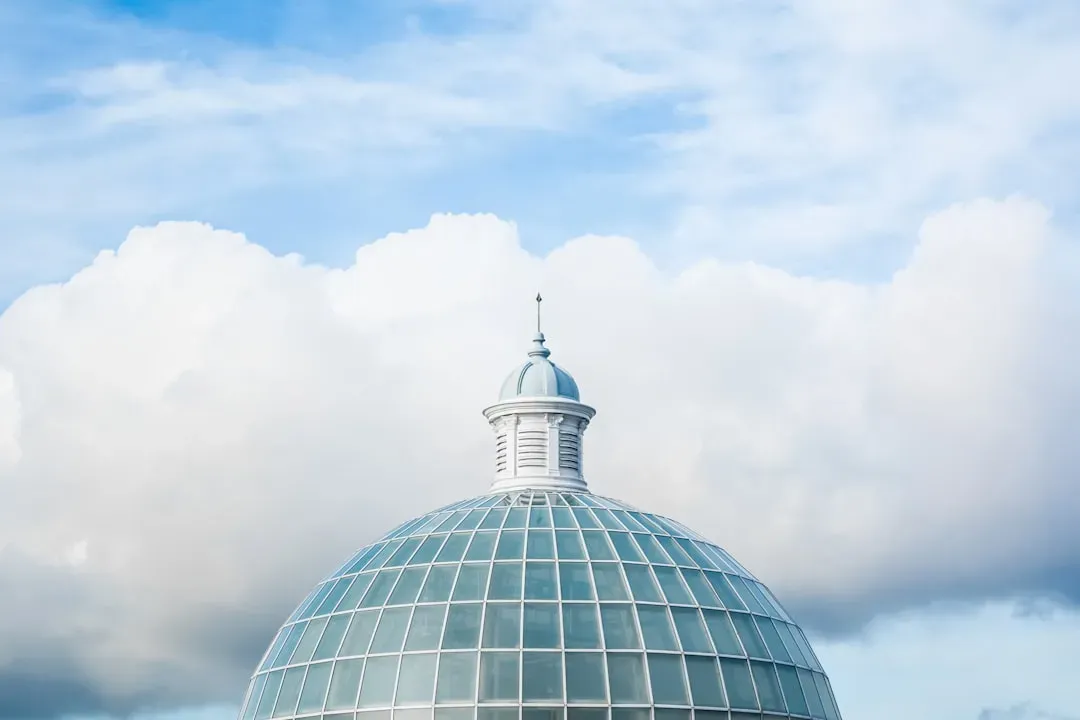
In ancient Rome and among Christians and Indian Buddhists, the dome came to mean universal power. During the Renaissance it spread from religious structures to palaces and government buildings, retaining some of its implications of power. Think about that for a moment. The same symbolic language that once crowned Roman temples was simply picked up and placed atop Christian cathedrals, then parliaments, then banks. The meaning traveled with the shape.
In the United States the national capitol is domed, and there are few state capitols without domes; the symbol has survived the loss of its original meanings. One of the key functional symbols of the Pantheon is its dome, which was the largest in the world for over a millennium. The dome’s design allowed light to enter through the oculus at the top, symbolizing the sun and the heavens. The oculus also served as a symbolic connection between the temple and the gods. Modern architects inherited all of this, often without fully realizing it.
3. The Eye of Providence: The Symbol That Would Not Stay in Church
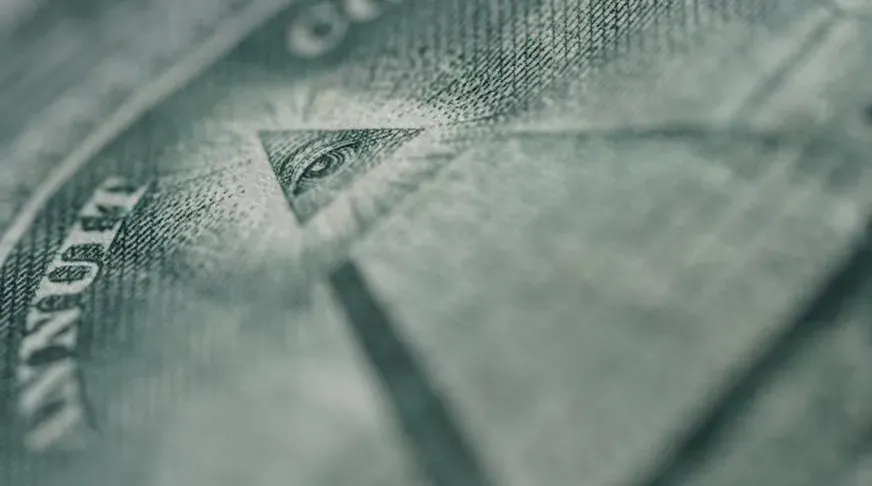
The Eye of Providence or All-Seeing Eye is a symbol depicting an eye, often enclosed in a triangle and surrounded by rays of light or a halo, intended to represent Providence, as the eye watches over the workers of mankind. Its roots are older than Christianity. The concept of an all-seeing divine eye predates the formal Eye of Providence by millennia. Ancient civilizations recognized the eye as a powerful symbol of divine protection and omniscience. The Eye of Horus in Egyptian mythology served as a protective symbol, while similar motifs appeared in various cultures across the Mediterranean and Near East.
A well-known example of the Eye of Providence appears on the reverse of the Great Seal of the United States, which is depicted on the United States one-dollar bill. In 1782, the Eye of Providence was adopted as part of the symbolism featured on the reverse side of the Great Seal of the United States. It was first proposed as an element of the Great Seal by the first of three design committees in 1776, and it is thought to be the suggestion of the artistic consultant Pierre Eugene du Simitiere. At the time, it was a conventional symbol for God’s benevolent oversight. The Eye of God in a triangle is still used in church architecture and Christian art to symbolize the Trinity and God’s omnipresence and divine providence.
4. The Sacred Portal: From Temple Pylons to Grand Entrances
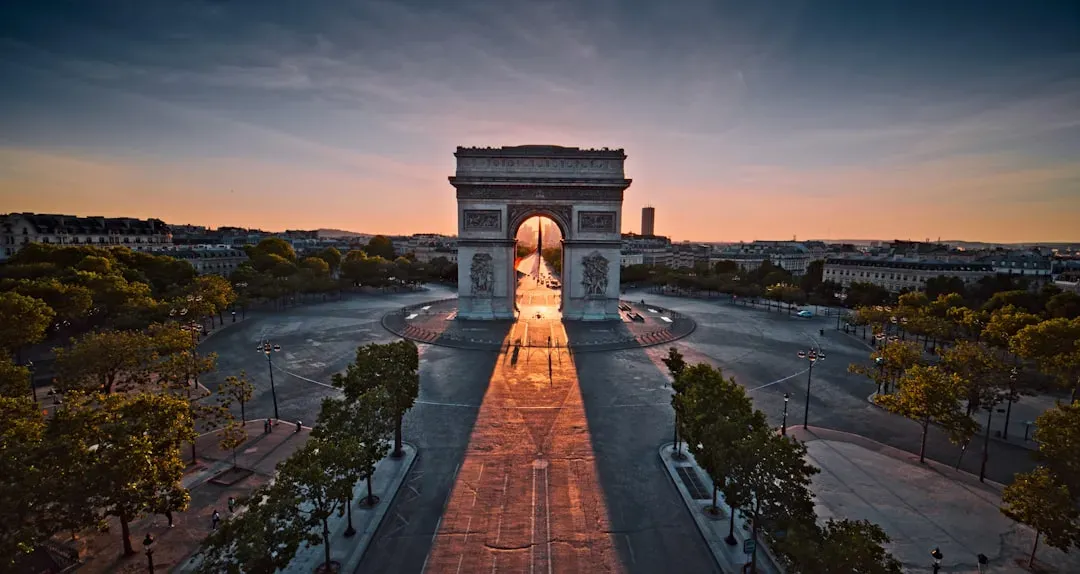
Portals, from the time of ancient Egyptian temple pylons and Babylonian city gates, became monuments in themselves, used to communicate a heightened significance to what lay behind them. In the Gothic cathedral they became the richest element of the facade, a translation of biblical doctrine into stone. Here’s the thing about a doorway: it has never been just a doorway. The act of passing through a grand entrance was meant to trigger something in the person crossing the threshold, a sense of transition from the ordinary into something grander.
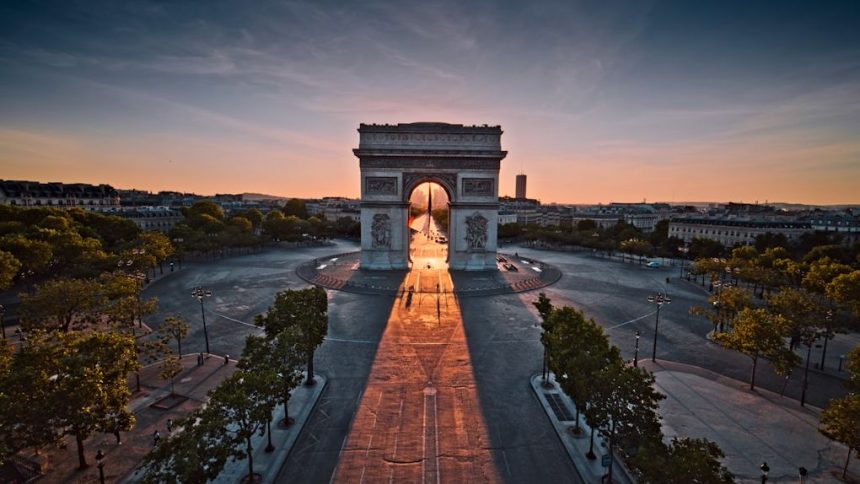
The Arc de Triomphe, a pivotal Parisian landmark constructed in the Neoclassical style, integrates numerous pagan symbols, particularly through its triumphal arch design. Originating in ancient Rome, such arches glorify military victories and the might of the state, echoing rituals of Roman pagan ceremonies. Government buildings, court houses, and banks across Europe and North America still use monumental entrances as a direct echo of this ancient language of authority. You are being told something before you even step inside.
5. The Golden Ratio: The Universe’s Proportion Hidden in Plain Sight
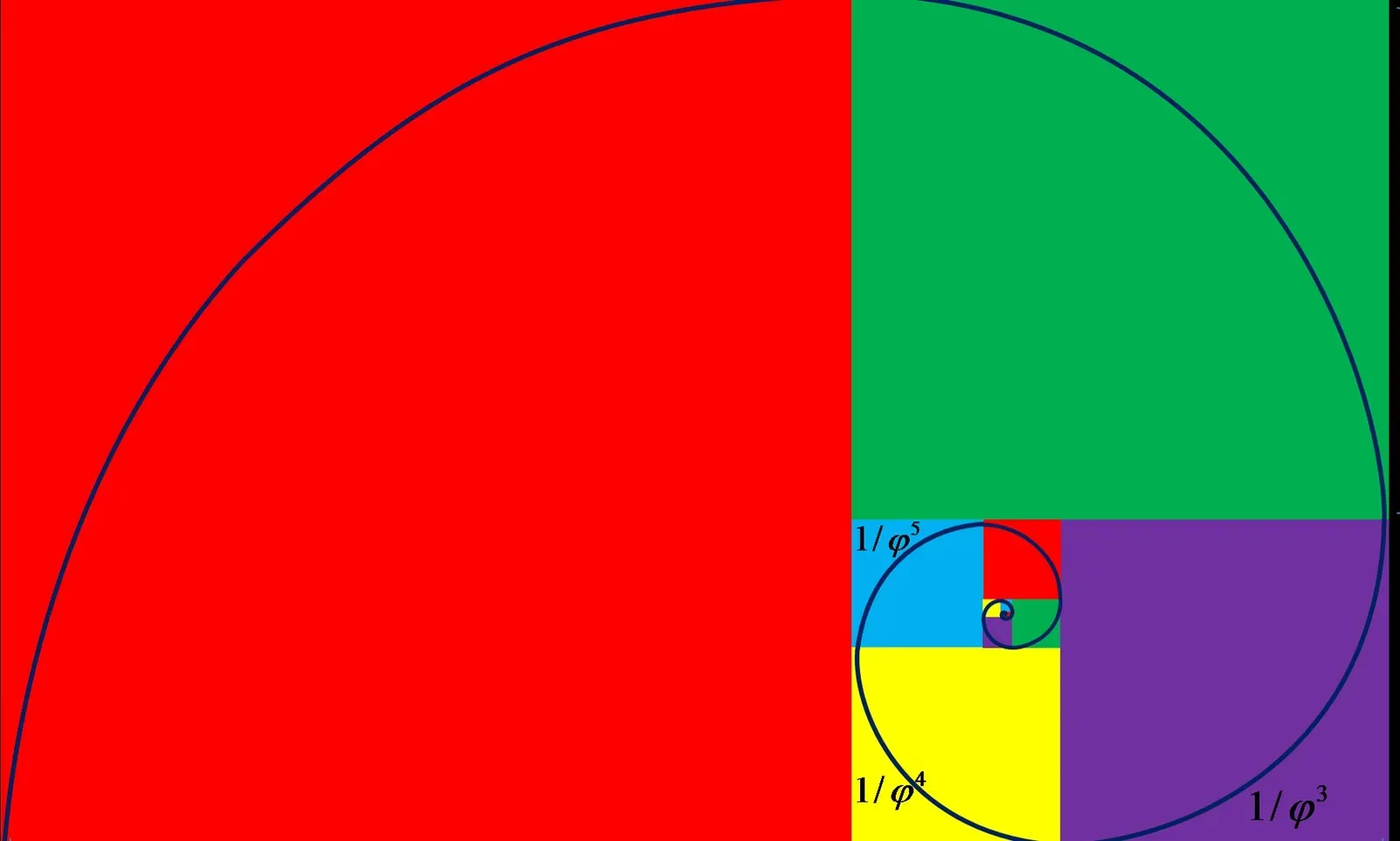
In mathematics, the golden ratio is an irrational number approximately equal to 1.6180339887, represented by Phi. The formula states that a/b equals (a+b)/a, approximately 1.618. It appears in algebra, geometry, and number theory, and has deep connections to the Fibonacci sequence and various patterns in sacred geometry. Ancient peoples did not stumble onto this number by accident. They considered it divine. In 1509, the friar and mathematician Luca Pacioli published a treatise referring to it as the divine proportion. The text was illustrated by Leonardo da Vinci, who used the ratio to create an elegant balance in many of his compositions.
The Swiss architect Le Corbusier, famous for his contributions to the modern international style, centered his design philosophy on systems of harmony and proportion. Le Corbusier’s faith in the mathematical order of the universe was closely bound to the golden ratio and the Fibonacci number. The golden ratio in architecture continues to influence modern architecture. Notable contemporary examples include the CN Tower in Toronto, the Sydney Opera House, Apple Park in Cupertino, and the Sagrada Familia in Barcelona. It is worth pausing on that. An ancient sacred number is quietly embedded in structures that define the 21st century skyline. Not accidentally, either.
6. The Column: Greek Divinity in the Lobby of Every Bank
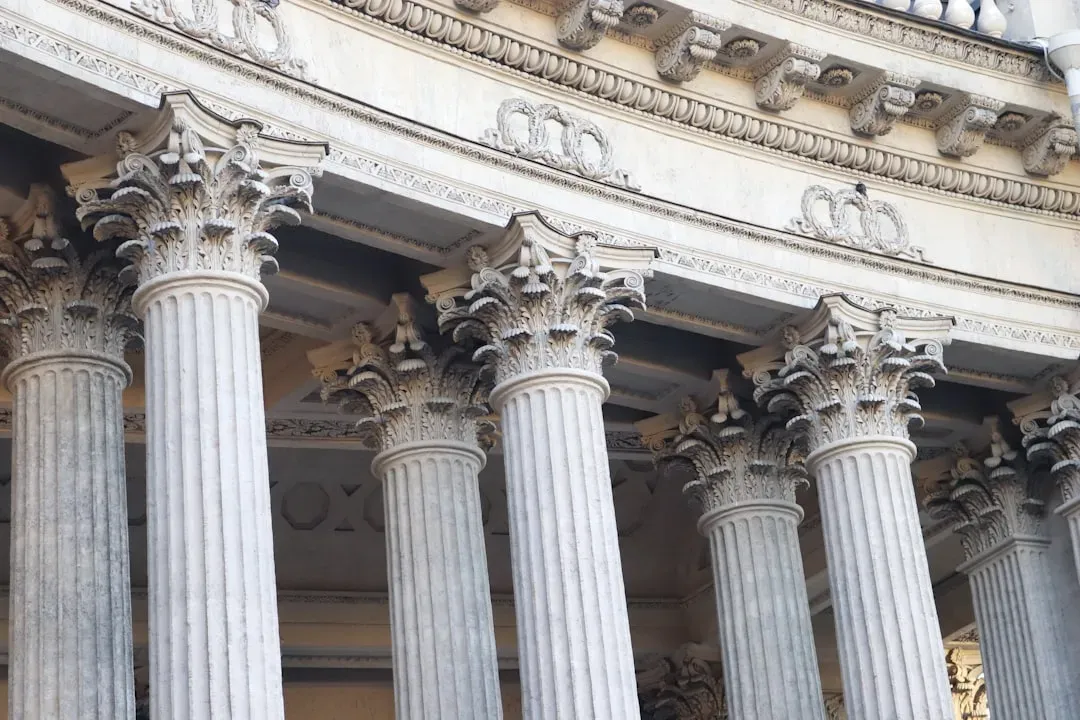
Since the development of the classical Greek temple, the colonnade on the exterior of buildings has borne symbolic implications. Such symbols have become archaic in modern culture and appear as a sign of resistance to new forms. Let’s be real: when a bank wraps its facade in giant Corinthian columns, it is not doing that for structural reasons. It is borrowing authority from ancient Greece, wrapping itself in the visual language of temples dedicated to gods. Freemasonry, a fraternal organization with roots in medieval stonemasons’ guilds, has a long history of constructing impressive architectural wonders replete with symbolic meanings. Freemasonic architecture is heavily influenced by the neoclassical style, which emphasizes the use of classical orders, Doric, Ionic, and Corinthian, and perfect geometric proportions.
The architectural elements used decoratively, such as the classical orders, usually originate in technique and in time lose their structural significance to become symbols. In ancient Rome and from the Renaissance to the 20th century, the formal Grecian orders were applied to buildings of many different techniques as expressions of the continuing influence of Greek institutions. Walk down Wall Street, or through central London, or past virtually any 19th-century government building in the world and you see exactly this. The column is everywhere. Its divine origin, mostly forgotten. Its authority, fully intact.
7. The Pyramid: Resurrection Geometry That Refuses to Retire
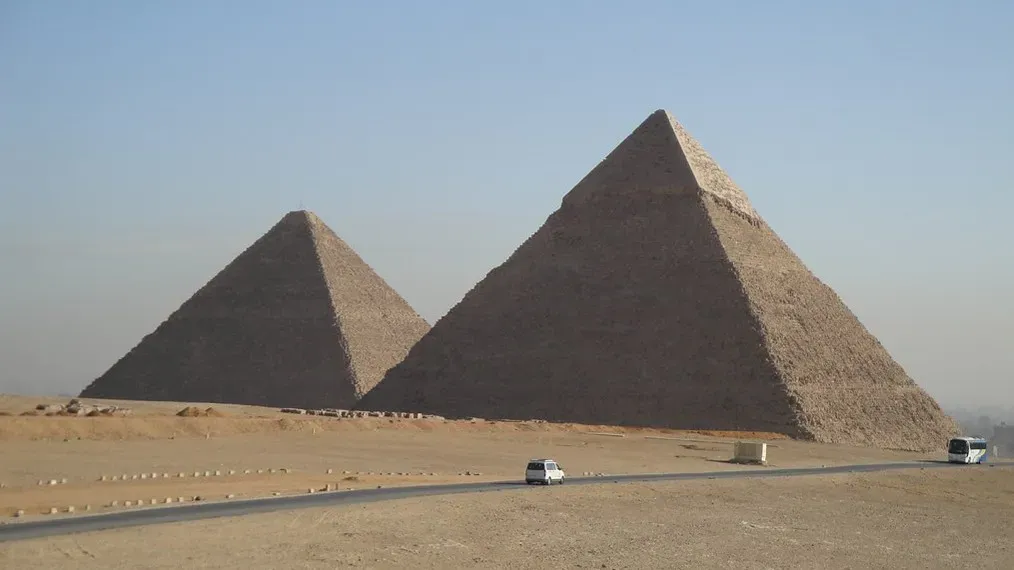
In Cairo, the Grand Egyptian Museum is a testament to Egypt’s rich historical legacy. The building’s dominant triangular shape is reminiscent of the Pyramids of Giza, establishing a direct visual and emotional link with the past. The design includes large, imposing surfaces and embossed facades that recall ancient temples and tombs. The pyramid shape carries extraordinary symbolic weight. It is not just an engineering solution. The Sun temples of the Fifth Dynasty incorporated a mound of earth resembling a small pyramid in their courtyards, and likewise, obelisks are topped by a small pyramidion. Both the obelisks and the pyramids are regenerative icons rooted in the symbolism of the Primordial Hill and the Benben stone.
The Louvre Pyramid in Paris, designed by I.M. Pei and completed in 1989, stands as one of the most striking modern uses of this ancient form, deliberately placing a glass pyramid at the entrance of one of the world’s great museum complexes. On the version of the Great Seal of the United States that was eventually approved, the Eye is positioned above an unfinished pyramid of thirteen steps, symbolizing the original States but also incorporating the nation’s potential for future growth. Millennia separate ancient Giza from modern Washington, D.C. The symbol bridges both without effort.
8. The Tower: Ancient Power Language in the Skyscraper Age
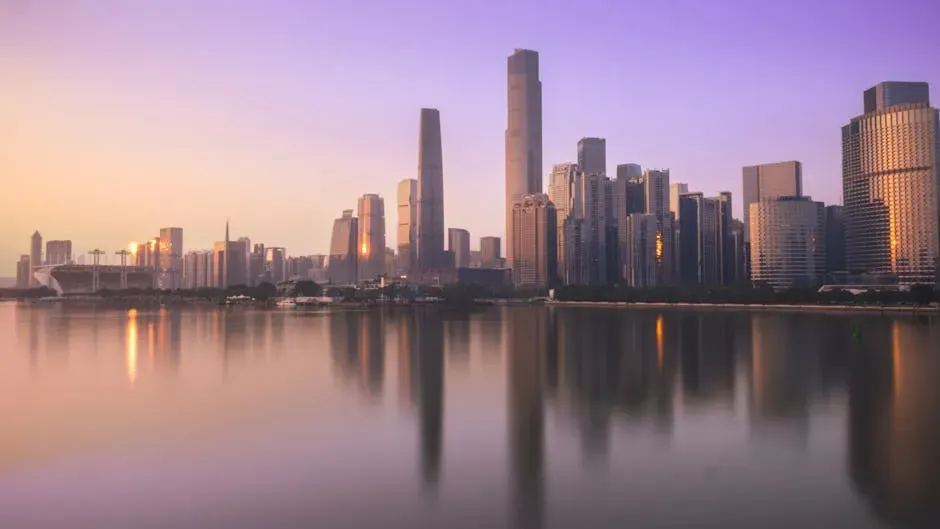
The tower, with origins in early nature rites, has consistently symbolized power. The Chinese pagoda extends central-plan symbolism into towers; many towers and spires rose from the northern European Gothic cathedral, and the medieval Italian city was a forest of towers erected by nobles in constant competition to express their supremacy. Honestly, nothing about that has changed. We have simply swapped stone spires for steel and glass. The competitive logic is identical. This meaning survives in modern skyscrapers; their height is more frequently boasted of than their efficiency or beauty.
While some symbols are openly embraced, others remain deliberately concealed, reflecting a dynamic tension in human communication strategies. The use of hidden symbols in art and architecture echoes the principles of secret communication, using indirect, layered, and coded messages to convey truths inaccessible to outsiders. The tower is perhaps the most naked of all these ancient symbols because it does not hide at all. It shouts. Buildings are not silent; they narrate the characteristics of an era, an architectural movement, and an entire civilization. They reflect the psyche of the people, their national peculiarities, their way of life, the economy of a state, and the genius of its citizens. Every record-breaking skyscraper being announced in 2026 is, at its symbolic core, a medieval Italian noble’s tower built taller and faster. The ancient competition for the sky never really ended.
The next time you look up at a building, consider what it is actually saying. The dome above a courthouse, the columns flanking a bank entrance, the triangular glass pyramid reflecting the Paris sky – none of it is coincidence. Ancient civilizations encoded their cosmologies, their fears, and their aspirations into stone, and the world never quite stopped using the same vocabulary. What ancient symbol would you least expect to find in a building you visit every day?