
You probably don’t think twice when stepping into an elevator. It’s just there, ready to whisk you up to your hotel room on the 30th floor of a Vegas casino or down to the underground parking garage. But the story of how this everyday marvel came to be? Let me tell you, it’s wilder than you’d think. We’re talking life-threatening demonstrations, public spectacles that would make modern insurance companies weep, and one man willing to literally put his life on the line to prove his invention worked. So buckle up – this ride goes way beyond just pushing buttons.
Before Elevators: A World of Dangerous Hoists

Before the modern elevator, buildings rarely went above five or six stories. Why? Because climbing stairs gets exhausting fast, and the primitive lifting platforms people used were downright terrifying. These early hoists relied on ropes and pulleys to haul freight – and occasionally brave souls – up and down mine shafts, factories, and the rare tall building. The problem was simple and horrifying: if the rope snapped, whatever was being lifted would plummet straight down.
People died. Often. These contraptions were fine for moving crates of potatoes or coal, but nobody in their right mind trusted them for regular human transport. The technology existed, sure, but the safety didn’t. That’s the crucial point most people miss when they think about elevator history.
Enter Elisha Graves Otis: The Unlikely Hero
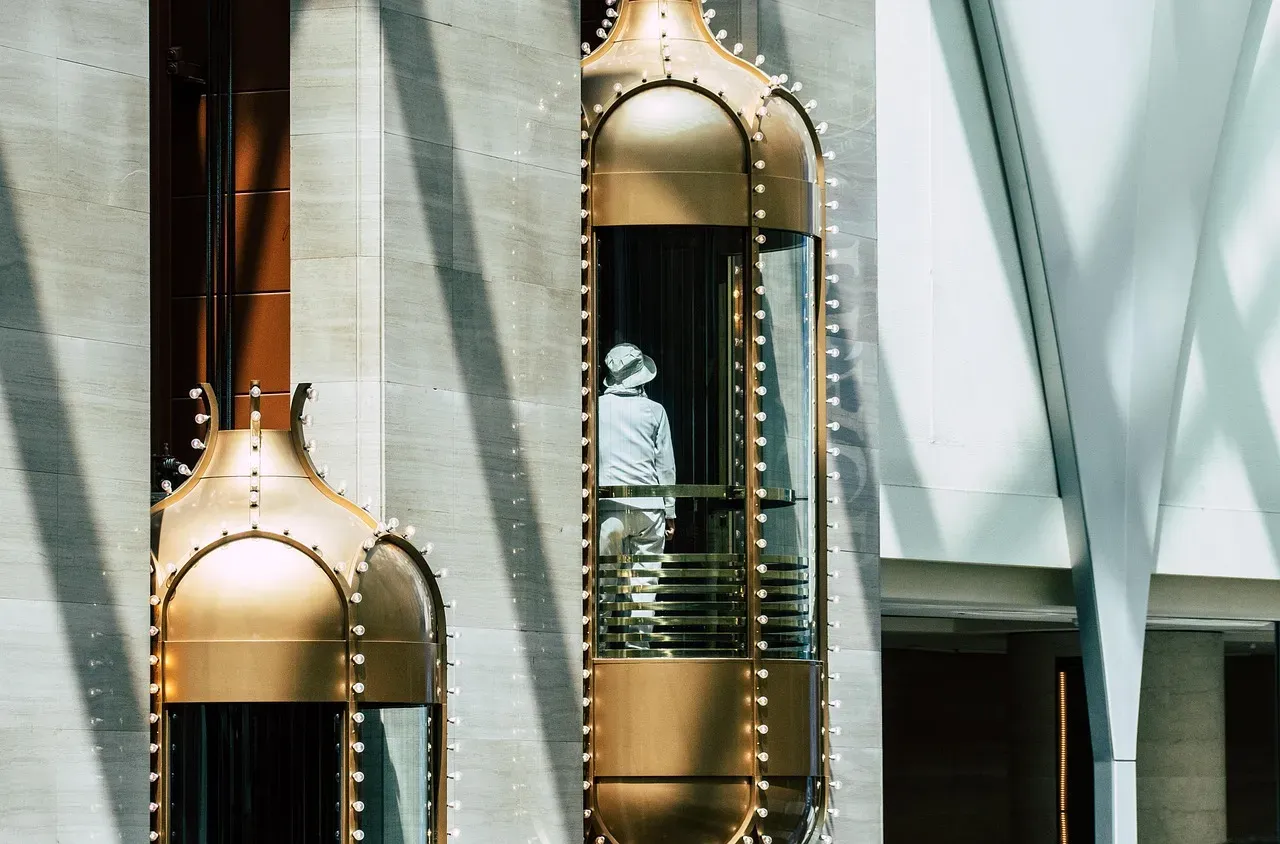
Our story really begins with a guy named Elisha Graves Otis. He wasn’t some fancy engineer or wealthy inventor – he was a mechanic working at a bedstead factory in Yonkers, New York, around 1852. The factory needed a better way to lift heavy equipment between floors, and Otis got tasked with solving the problem.
Instead of just building another rope-and-pulley system, Otis got creative. He designed a safety mechanism that would automatically engage if the hoisting rope broke. His device used a spring-loaded mechanism with toothed guide rails – if tension was lost, a wagon spring would force metal teeth to grip the rails, stopping the platform mid-fall. Honestly, it was brilliant in its simplicity. But nobody cared. Nobody believed it would actually work when it mattered most.
The Most Dramatic Product Demo in History
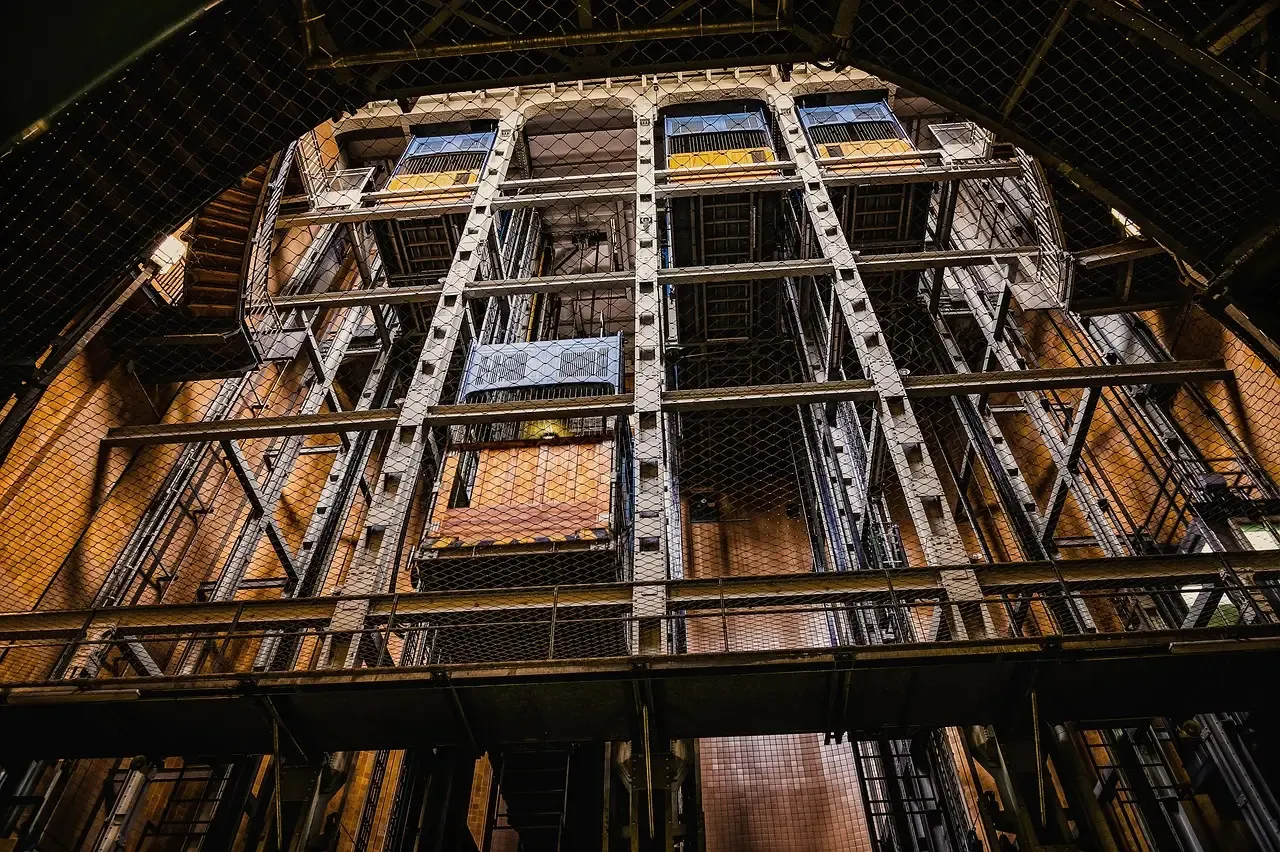
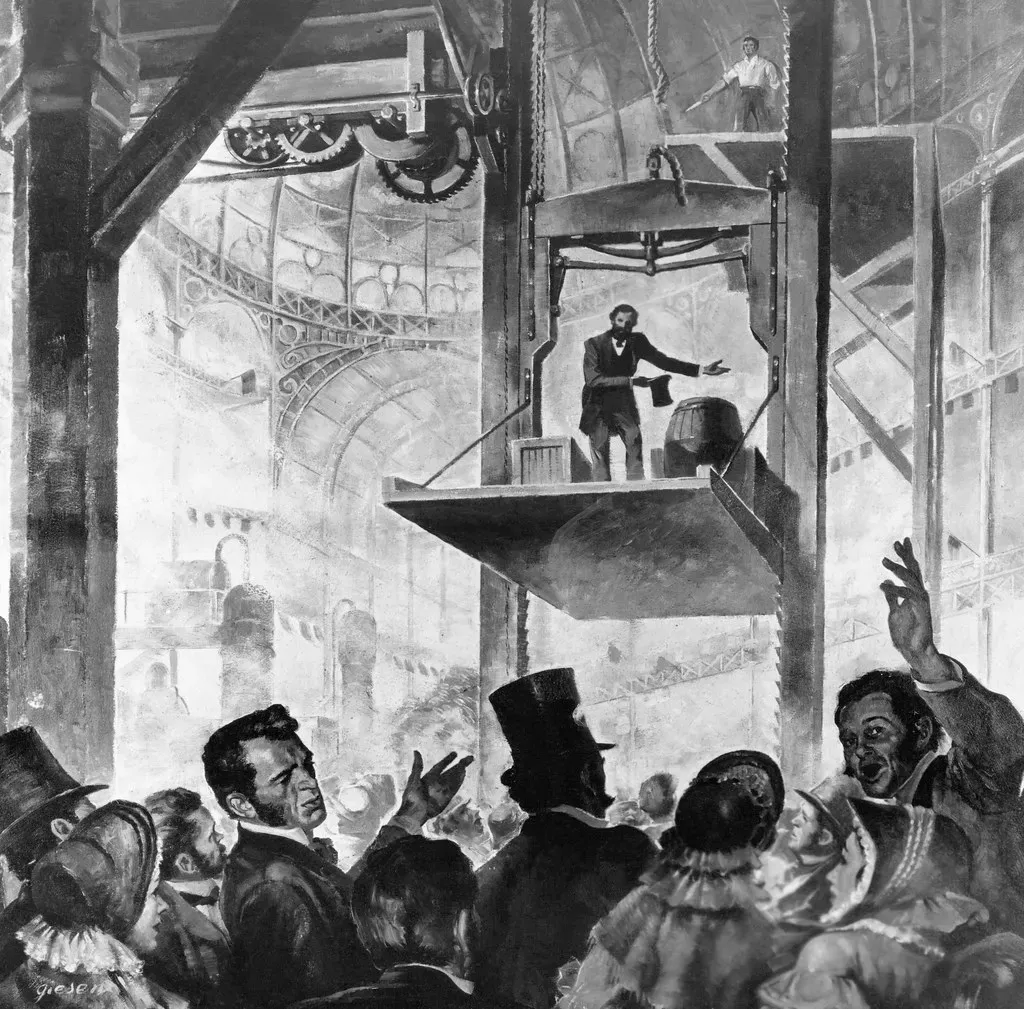
This is where things get absolutely wild. Otis knew he had something revolutionary, but convincing people required more than technical drawings and polite explanations. So in 1854, at the Crystal Palace Exposition in New York City, he staged what might be the most audacious product demonstration ever conceived.
Picture this: Otis stood on an open elevator platform hoisted high above a crowd of spectators. Then, while everyone watched, he ordered an assistant to cut the rope with an axe. The rope snapped. The platform lurched. Women probably gasped. And then… nothing. Well, not nothing – the safety mechanism kicked in, the platform stopped dead in its tracks, and Otis calmly announced, “All safe, gentlemen.”
Can you imagine? The sheer guts it took to stand on that platform, knowing your entire future – and possibly your life – depended on a mechanism you’d invented in a bedstead factory? That moment changed everything.
How Vegas Wouldn’t Exist Without This Invention

Here’s something to consider as you ride up to your suite at The Cosmopolitan or Caesars Palace: modern Las Vegas is literally built on Otis’s invention. Those towering casino resorts, those massive hotel complexes rising dozens of stories into the desert sky? They’d be completely impractical without safe, reliable elevators.
The famous Las Vegas Strip would look entirely different – probably more like the old downtown area, with low-slung buildings sprawling outward instead of upward. The entire concept of a mega-resort with thousands of rooms stacked vertically simply wouldn’t work. Guests aren’t going to climb twenty flights of stairs to reach their room, no matter how luxurious it is.
Modern Vegas depends on vertical construction in ways most visitors never think about. Every elevator ride you take connects directly back to that bizarre moment in 1854 when one man put his life on the line.
The Elevator’s Slow Rise to Acceptance
Even after Otis’s dramatic demonstration, adoption was gradual. The first passenger elevator wasn’t installed until 1857, in a five-story department store in New York. It crawled along at about 40 feet per minute – you could probably walk faster. But it was safe, and that mattered more than speed.
Partner offer
The real explosion came after architects figured out they could build taller structures using new steel-frame construction methods. Suddenly, buildings could reach ten, twenty, even thirty stories. But only if people could get to the upper floors without collapsing from exhaustion. The elevator transformed from a novelty into an absolute necessity. Cities began growing upward instead of just outward, fundamentally reshaping urban architecture worldwide.
The Man Behind the Machine
Elisha Otis died in 1861, just seven years after his famous demonstration, from diphtheria. He never lived to see the massive impact his invention would have on cities around the world. His sons took over the business, and the Otis Elevator Company became – and remains – one of the largest elevator manufacturers globally.
It’s kind of bittersweet when you think about it. Otis solved a problem that had stumped engineers for decades, risked his life to prove it worked, and then died relatively young, never witnessing the skyscrapers and modern cities his invention made possible. He was 49 years old.
Modern Elevators: Standing on Otis’s Shoulders

Today’s elevators are technological marvels compared to Otis’s original design, but the core safety principle remains unchanged. That fundamental idea – a fail-safe mechanism that engages automatically if the cable breaks – still protects millions of people every single day. Modern systems use multiple steel cables, electronic monitoring, and sophisticated braking systems, but they all trace their lineage back to those toothed guide rails and wagon springs.
The fastest elevator in the world, located in Shanghai, travels at over 45 miles per hour. Some buildings in Asia and the Middle East have elevators that travel over 100 floors. The technology has advanced beyond anything Otis could have imagined, yet his 1854 demonstration remains the pivotal moment that made it all possible.
What This Means for How We Live

Think about your daily life for a second. If you work or live in a building above a few stories, you probably ride an elevator multiple times per day without a second thought. That casual trust – stepping into a metal box and letting it carry you hundreds of feet into the air – exists entirely because one guy was willing to stand on a platform and cut the rope holding him up.
We’ve become so accustomed to vertical transportation that we forget how remarkable it is. Cities like Las Vegas, New York, Hong Kong, and Dubai literally couldn’t function in their current form without this invention. The entire shape of modern urban life depends on feeling safe in an elevator.
The Weird Legacy Nobody Talks About
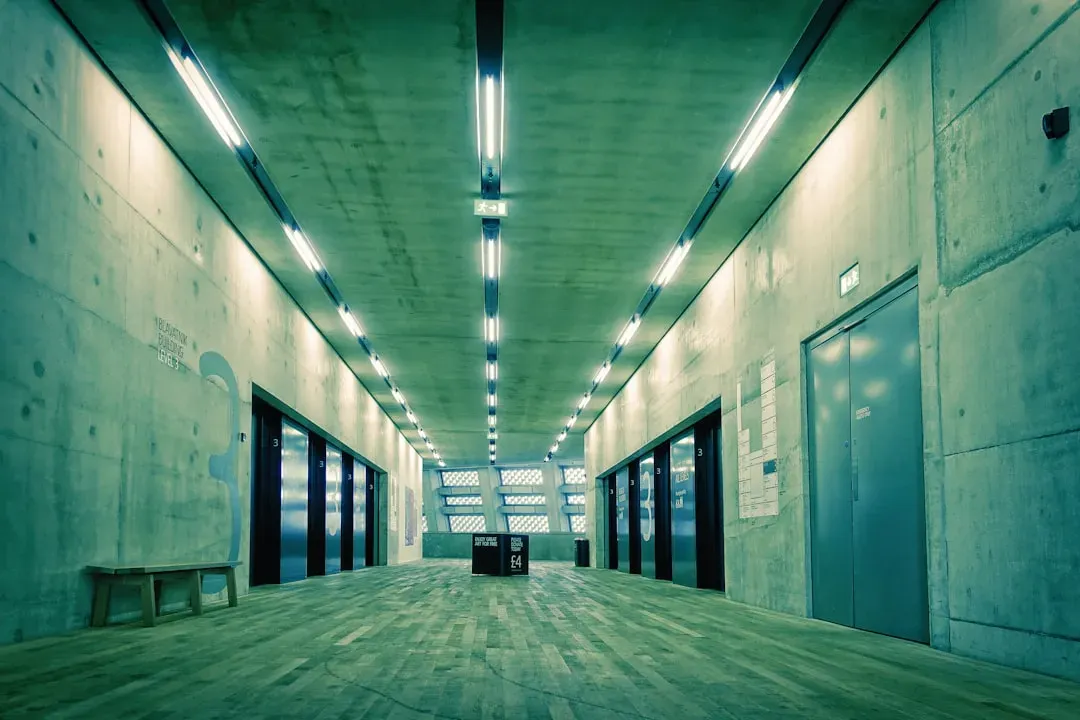
Here’s something I find fascinating: the elevator also dramatically changed social interactions and building design in ways that have nothing to do with safety. Before elevators, the most desirable apartments were on lower floors – less climbing meant higher rent. Elevators flipped that completely upside down, making penthouses and top-floor suites the most expensive and prestigious.
Elevators also created those awkward moments we all know: standing in a small box with strangers, nobody quite sure where to look or whether to make small talk. That’s a uniquely modern social situation that literally didn’t exist before the 1850s. Some historians argue elevators helped democratize buildings too – suddenly, the wealthy and working-class might share the same vertical space, even if temporarily.
Conclusion: One Moment That Changed Everything

The next time you step into an elevator – whether it’s in a Vegas casino, an office building, or an apartment complex – take just a second to appreciate the bizarre chain of events that made that moment possible. It all goes back to a mechanic from Yonkers who built a safety device in a bedstead factory and then proved it worked in the most dramatic way imaginable.
One man, one moment, one audacious demonstration. That’s all it took to unlock vertical cities and transform how humanity builds and lives. Pretty wild when you think about it, isn’t it? What other everyday technologies are we taking for granted that have equally strange origin stories? Makes you wonder what you’re not noticing.
Partner offer
Planning a trip to Vegas?
Compare hotel rates and show tickets on VEGAS.com.