
There’s a certain ritual that happens when you revisit an old favorite from the 1970s or 1980s. You settle in, feeling nostalgic, and then about twenty minutes in, you find yourself shifting uncomfortably in your seat. The movie is still funny, or thrilling, or genuinely moving. It’s also, by almost any contemporary standard, completely unmakeable. That gap between cultural eras is wider than many people realize. These weren’t fringe films or exploitation quickies. They were studio releases, box-office hits, and in several cases, award-season darlings. What’s striking in 2026 is not just that their content feels dated, but that their core premises, their actual selling points, would today be considered legally or ethically untenable. Here are nine of the most iconic offenders.
Blazing Saddles (1974): The Comedy That Burned Every Bridge

Blazing Saddles is a 1974 American satirical Western comedy directed by Mel Brooks, who co-wrote the screenplay alongside Andrew Bergman, Richard Pryor, Norman Steinberg, and Alan Uger. The film is stacked with racial slurs delivered rapidly and repeatedly, a creative choice that was entirely deliberate. What Brooks and his screenwriters were really skewering in Blazing Saddles was racism itself, using exaggeration and absurdity to expose the stupidity of bigotry rather than celebrate it.
Still, the intent wouldn’t survive today’s development process intact. If it were made today, the jokes in that movie are not well advised, even for those who understand the satirical intent. The film remains beloved and important, yet no major studio would greenlight a script containing its language in 2026, no matter how artistically justified the argument might be.
Sixteen Candles (1984): The John Hughes Blind Spot

Despite all the controversy, Sixteen Candles is still considered an iconic example of 1980s teenage movies, with an 84% approval rating on Rotten Tomatoes and is frequently cited as one of director John Hughes’ best creations. The film put Molly Ringwald at the center of a recognizable, emotional teenage world and helped define the coming-of-age genre for a decade. That legacy, though, is complicated by what else the movie contains.
No film today would get made with an Asian caricature like Long Duk Dong. The subplot involving Ted and an obviously drunk Caroline carries the unmistakable specter of date rape. What’s apparent watching Sixteen Candles nowadays is that everyone in 1984 was strikingly insensitive when it came to the subject of consent. The sweetness in the film is real. The problems are equally real, and far harder to overlook five decades later.
Revenge of the Nerds (1984): When the Heroes Were the Problem


When Revenge of the Nerds hit theaters in 1984, it was seen as a triumph for the underdogs, tapping into an emerging cultural shift that allowed the marginalized to strike back against the jocks. Made on a reported budget of around six to eight million dollars, it grossed approximately forty million dollars in the United States and Canada, making it a genuine commercial hit. The underdog premise felt fresh and empowering at the time.
Ironically, in the journey from bullied to empowered, the heroes of Revenge of the Nerds cross ethical and legal lines time and again, committing actions that wouldn’t just be frowned upon today, they’d land these characters in court. About three decades after the film’s release, commentators have considered the scene where Lewis pretends to be Stan and has a sexual encounter with Betty to be rape by deception and a misogynistic remnant of a male-dominated culture. Even the film’s own director later expressed regret about it.
Manhattan (1979): Woody Allen’s Most Uncomfortable Film

Manhattan was already a controversial film when it debuted; in a story that disturbingly parallels Allen’s life, he stars as an aging comedy writer who forms a romantic relationship with the teenager Tracy, played by Mariel Hemingway. The film was shot in luminous black-and-white, set to Gershwin, and received widespread critical acclaim on release. It was treated as a masterwork of American cinema.
The issue with Manhattan, and it is not a minor one, is its tacit approval of Isaac Davis’ relationship with a 17-year-old character played by a 16-year-old actress. In 2026, that relationship would not be framed as romantic melancholy. It would not get financed, cast, or distributed by any serious studio. The film’s technical brilliance doesn’t make that central dynamic easier to sit with.
Breakfast at Tiffany’s (1961): The Scene That Refuses to Disappear


Breakfast at Tiffany’s is regularly listed among the most stylish and beloved American films ever made. Audrey Hepburn’s Holly Golightly remains one of cinema’s most iconic characters, and the film’s visual elegance is genuinely hard to fault. No one is saying Breakfast at Tiffany’s was a bad movie. On the contrary, it is probably one of the best movies of all time. What wasn’t good was Mickey Rooney’s interpretation of I. Y. Yunioshi, in which he wore fake teeth and pretended to be a Japanese man.
The character is played entirely for broad comedic effect, built on exaggerated physical and vocal caricature. Clearly it was never going to go well, but they still rolled with it. Asian Americans have had plenty to say on the matter over the decades, with criticism largely falling on deaf ears. Today, that character would never survive a single script note meeting, let alone make it to the screen.
Animal House (1978): The Campus Comedy That Invented Its Own Rules

National Lampoon’s Animal House essentially created the template for the R-rated college comedy and spawned an entire generation of imitators. The genre was dominated by films like Animal House and Porky’s, but many of the films of the 1980s leading up to Sixteen Candles were very much male-dominated, featured female characters that functioned mainly as conquests for the male leads, and contained a large dollop of bawdy humor. They were essentially sex comedies.
Animal House specifically includes a scene where a male character, faced with a passed-out underage girl, has a visible moral debate. The fact that he chooses not to act is played for comedy. No contemporary script could treat that scenario as a comedic beat, full stop. The film’s anarchic, anything-goes energy was part of its appeal, and also precisely what makes so many of its scenes impossible to recreate today.
Heathers (1989): Too Dark for the World That Followed

The cult classic Heathers tackles the deeply disturbing premise of a troubled teen plotting to kill his classmates by blowing up his school. Though considered edgy and risky even in its original era, the film’s subject matter has become increasingly controversial in light of the tragic frequency of real-life school shootings. When it was released, school violence of that scale still felt distant and improbable. The film’s pitch-black humor played as outrageous satire.
A recent attempt to adapt the movie into a TV series was met with pushback, particularly due to its timing following several mass shootings, ultimately leading to its cancellation. Heathers opened in 1989, when mass murders in a school setting still felt like a hard-to-believe and extremely rare occurrence. The film remains a genuinely sharp piece of dark comedy. Its subject matter, however, is no longer a subject that modern studios can treat as comic material.
Borat (2006): Satire That Outran Itself

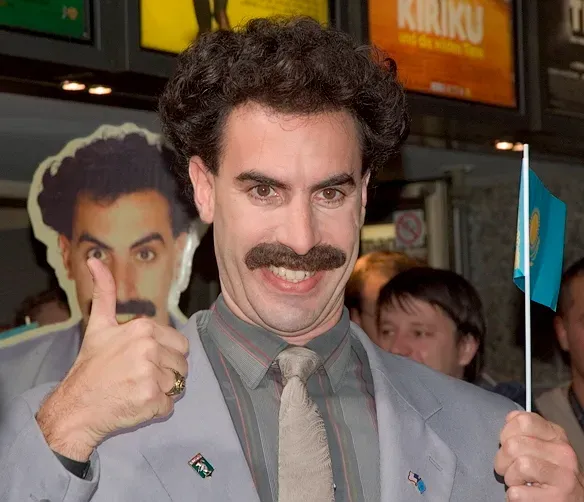
Few comedy films get as big as Borat. It made over 260 million dollars at the box office and became a bonafide cultural phenomenon. Sacha Baron Cohen’s mockumentary was designed as satire, aiming to expose real prejudices by baiting real people into revealing them on camera. It worked brilliantly, and the film landed like a cultural grenade.
Borat is openly misogynistic and makes fun of feminists, dresses and acts like a stereotypical Black gang member, and absolutely detests Jews, believing them responsible for 9/11 and having the ability to shapeshift into woodlice. It is satire, but in today’s political landscape, satire seems to be lost on a lot of people. The film’s thesis depended on audiences understanding the distinction between the character and the critique. That shared understanding is far harder to guarantee now than it was in 2006.
The Toy (1982): A Premise That Never Should Have Passed
Given how many wonderful and thrilling films Richard Donner made throughout his career, one wants to give him the benefit of the doubt with The Toy, in which a rich white kid named Eric purchases an out-of-work Black man named Jack Brown. The film tries to frame this as a heartwarming story about an unlikely friendship and a child finding a surrogate father figure. On paper, that might sound defensible. On screen, it isn’t.
Despite some throwaway lines from various characters, the film never accounts for the optics of a white child owning a Black man, nor does it deal with the fact that it infantilizes an adult. The film’s central theme, which reduces a human being to a commodity to be bought and sold, is not only deeply offensive but also perpetuates harmful racial stereotypes, making it impossible for a remake to be green-lit. The Toy is perhaps the clearest case on this list where the problem isn’t in a scene or a line, it’s baked into the entire concept.
A Shifting Standard, Not a Cancellation

What connects all nine of these films isn’t a lack of craft or even a lack of intention. Several were made by genuinely talented people trying, in their own way, to say something meaningful. In most cases, the observation that these films couldn’t happen today implies that mores and standards have changed so much that certain movies couldn’t exist anymore, and that observation often comes with an air of resignation, as if shifting social acceptance somehow harms great art.
Looking closer, one often finds that the offensive material never made the movies in question great. The Gershwin score in Manhattan is stunning regardless of Isaac Davis’s romantic choices. Blazing Saddles is genuinely subversive comedy underneath its most inflammatory language. The craft was real. The cultural permission that allowed those specific choices to exist is simply gone, and that isn’t necessarily a loss worth mourning.