



Something strange is happening in suburban driveways across America. The minivan that once hauled soccer cleats and forgotten lunchboxes is being replaced by a converted Sprinter. The four-bedroom colonial with the unused guest rooms is going up for sale. Generation X, born between 1965 and 1980, is quietly staging what might be one of the most radical lifestyle reversals in modern housing history.
They raised the kids. They paid the mortgage. They showed up for every school play and every boring HOA meeting. Now the last child has finally packed up their room, and a growing number of Gen Xers are asking themselves a genuinely surprising question: Why do we still need all of this? Let’s dive in.
The Giant, Empty House Problem Nobody Wants to Talk About

Here is the thing about large family homes: they don’t shrink when your kids move out, but the bills sure don’t either. As of 2022, the United States had nearly 21 million empty nest households – defined as homes with at least two empty bedrooms, no children present, and owned and occupied by people aged 55 and older for over a decade – making up roughly 16% of all U.S. households. That is an almost incomprehensibly large number of oversized homes being heated, cooled, and maintained by people who no longer need the space.
The kids have moved out, and suddenly the home feels too big. Extra bedrooms sit unused, the yard takes more effort than it used to, and you’re heating and cleaning spaces you no longer need. It sounds almost funny when you describe it that way. But for millions of Gen Xers right now, it is their daily reality.
As the children become adults and move out, the second floor can feel deserted and maintaining the lawn and pool can become a burden. Like many members of Generation X facing an empty nest, the decision to look for a home better suited to their needs – where they could eventually live in retirement – becomes increasingly hard to ignore.
Gen X Is the “Forgotten” Generation Facing a Very Real Financial Squeeze

While there’s no question that Millennials and Baby Boomers garner most of the attention from marketers and researchers, sandwiched between those two behemoth cohorts is Generation X: people born between 1965 and 1980. It is estimated that there are 62 million Gen Xers in America. Yet their financial situation heading into their 50s and early 60s is, honestly, alarming.
Gen Xers are the least financially prepared generation for retirement by nearly every measure, according to a research paper by Alliance’s Retirement Income Institute. The so-called “sandwich generation” is the most likely to be supporting both children and aging parents at the same time. They’ve experienced eight recessions over their lifetimes and witnessed soaring education, healthcare, and housing costs.
Research suggests Gen Xers may be financially unprepared for retirement: a survey of individual investors found that the median Gen Xer had saved just $150,000 for retirement, nowhere near the amount needed to fund a retirement that could last as long as 30 years. The National Institute for Retirement Security found that 40% of Gen Xers had saved nothing in a private retirement account. Selling the big family home starts to look less like a quirky lifestyle move and more like a genuinely smart financial decision.
Reason 1: Unlocking Trapped Home Equity to Fund Freedom

Among those aged between 45 and 60 years old, a striking 78% plan to take advantage of high house prices and use the equity from their familial home to supplement their pension by selling their property and downsizing. That is an overwhelming majority. For a generation sitting on significant home equity but modest retirement savings, the math is almost irresistible.
Downsizing provides significant financial benefits, allowing Generation X to reduce mortgage payments and invest in retirement. Urban and walkable locations are becoming popular among Generation X downsizers, providing convenience and access to amenities. The family home, in this sense, becomes less a place to live and more a retirement account you can actually spend.
Living in a home that’s too large doesn’t just cost physically; it costs financially, often silently. Downsizing can unlock the value in your home that’s otherwise locked up in walls and ceilings, turning it into usable retirement funds. Think of it like finding a savings account you forgot you had. Only it’s worth hundreds of thousands of dollars, and it has a yard that needs mowing.
Reason 2: The Retirement Crisis Is Making Radical Moves Necessary

Generation X, defined by those born between 1965 and 1980, is rapidly approaching retirement age. At the same time, a growing body of financial data reveals this is a generation at risk of falling short. Now in their prime earning years, Gen Xers face a perfect storm: diminished access to defined-benefit pensions, rising healthcare costs, inflationary pressures, and the impact of multiple economic downturns.
During its working years to save for retirement, this generation “endured economic recessions, higher education and healthcare costs, declining access to pensions, and the dual pressures of supporting both children and aging parents.” As a result, they are among the least financially prepared for retirement, with limited savings, lower confidence in their ability to generate lifetime income, and heavy reliance on Social Security. Only 41% of Gen Xers believe their savings will last a lifetime, versus 62% of Boomers.
Gen Xers should start by creating a new budget that reflects a more modest and sustainable way of living, cutting back on luxury or nonessential expenses. Downsizing – whether it’s moving to a smaller home, relocating to a lower-cost area, or selling unused assets – can free up cash and reduce ongoing costs. Equally important is a mindset shift: redefining retirement to focus less on material comforts and more on health, relationships, and purpose. A van, it turns out, fits neatly into all three of those categories.
Reason 3: The Maintenance Burden Becomes Unbearable

Let’s be real: a four-bedroom house is a part-time job nobody applied for. Overall, downsizing homes helps Generation X families exchange extra bedrooms and large yards for spaces that better fit their current lifestyles, improving their quality of life. When it is just two people rattling around a 2,500-square-foot home, every leaking gutter and aging HVAC unit feels personal.
As Generation X approaches retirement age, many individuals seek low-maintenance living options. A single parent might downsize from a large home with a sprawling yard to a small townhouse. This move could allow them to avoid the tasks of mowing the lawn and maintaining a garden. Instead, they could enjoy a small patio and access to common areas. This low-maintenance lifestyle enables more time with people instead of worrying about home repairs.
A well-converted van has exactly what you need and nothing you don’t. There is no guttering to clean, no lawn to mow, and no furnace to mysteriously break at midnight in December. There is also a growing demand for sustainable travel options, leading to the adoption of electric power systems, solar panels, and lithium batteries in van conversions, reducing reliance on fossil fuels and minimizing environmental impact. Practical and low-maintenance. That feels very Gen X.
Reason 4: Van Life Is No Longer a Young Person’s Game

If you still picture van life as a twenty-something in a tie-dye shirt free-camping near a national park, it’s time to update that image. If the 2010s saw van life adopted by digital nomads on flexible hours, the 2020s have opened people’s eyes to the realities of living on the road for those that don’t fit the young mold. Seniors make up a large chunk of those going off-grid: grandparents, empty nesters, and retirees are finding freedom in “grey gap years,” and whilst their online presence might be zero, their mileage is in the six figures.
The 2024 Overland Expo event series attracted more than 80,000 attendees, up 35% from 2021. More than 12 million Americans are expected to overland in 2025, up from 8 million in 2024, according to the Overland Expo’s 2025 Overland Industry Report. That is a massive, surging movement. It is not a fringe lifestyle anymore.
According to van life survey data, 86% of van lifers say they chose this lifestyle for the freedom to travel, and 67% say they were tired of paying high rent or mortgages. Meanwhile, 90% report feeling happier and less stressed after transitioning to van life. Those are not numbers you can easily dismiss, especially if you are a 54-year-old Gen Xer who has been commuting to an office for three decades.
Reason 5: Remote Work Made the Whole Thing Possible

Here is the thing: the van life dream used to have a very practical ceiling. You still had to show up somewhere for work. The remote work revolution – massively accelerated by the pandemic but now deeply entrenched in 2026 – blew that ceiling clean off. The rise of remote work has made it feasible for individuals to live and work from a converted van, turning it into a mobile office and home.
Both having a remote job and living the nomadic life provide freedom, independence, and the ability to have control of your schedule and explore new places. You can set up at a local coffee shop with your laptop, park by the ocean and work with a view, or create your own office space somewhere. For a Gen Xer who has spent years grinding through rush hour traffic, this genuinely sounds like science fiction. The good kind.
In 2024 alone, we saw two new iterations of Starlink, redefining connectivity on the road. Reliable satellite internet in a converted van is no longer a luxury gadget for tech enthusiasts. It is a straightforward tool that means the van is no longer just a vacation vehicle. It is a fully functional workspace. The last real practical barrier to full-time mobile living has essentially been removed.
What the Housing Market Thinks of All This
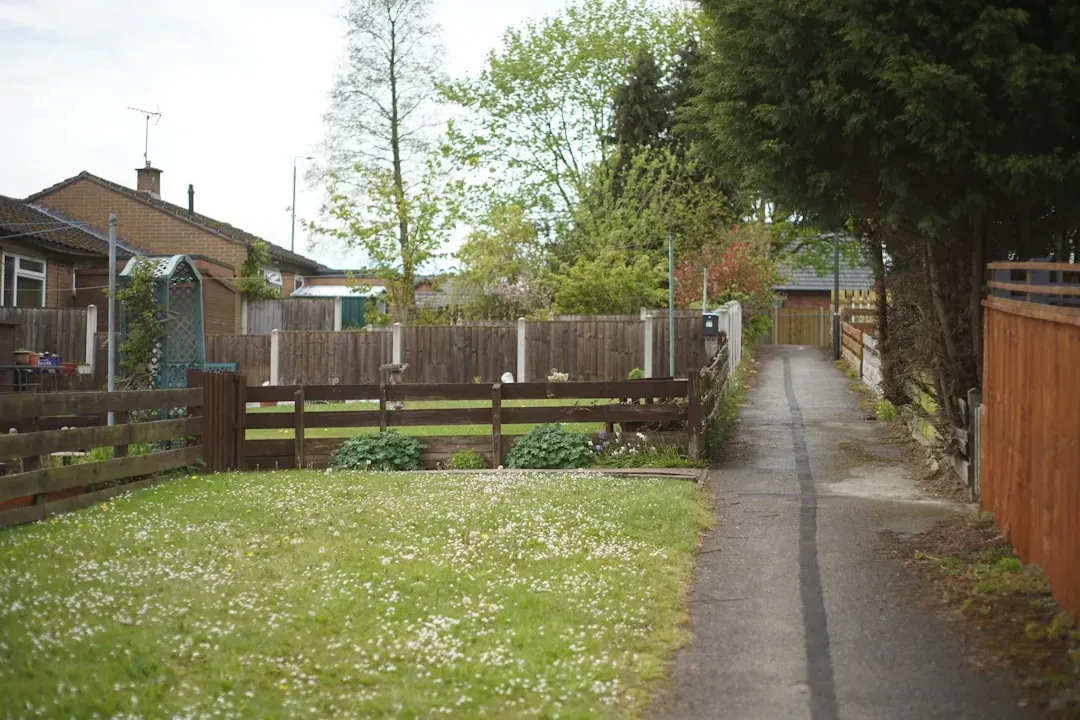
When empty nesters hold onto large three- and four-bedroom homes, it creates a logjam on the housing ladder. When older households remain in homes they no longer fully need, younger families get stuck in starter units or rentals longer, delaying their family plans. Every Gen Xer who decides to sell the family home and hit the road is, whether they think about it or not, helping to free up a critical piece of housing inventory.
Logically, empty nesters are the most likely group to sell big homes and downsize. They no longer have children living at home and don’t need as much space. The problem for younger families who wish their parents’ generation would list their big homes is that there is not much motivation to do so. That reluctance is slowly changing, especially among Gen X, where the financial pressure is most acute.
Those looking to sell their larger homes may be more open to negotiating, as property owners offered buyers concessions at near-record rates in the first quarter of 2025. It is a buyer’s moment in many markets. For Gen X empty nesters weighing whether to pull the trigger on the family home, the conditions are arguably better now than they have been in years.
The Emotional Side Nobody Really Talks About

Selling the house you raised your children in is not just a spreadsheet decision. It is deeply, stubbornly emotional. The main disadvantage of downsizing is that you have to move from the family home you have probably spent many happy years filling with memories. Selling a property and moving home is always stressful, and more so if you have lived in the property for a long time.
It’s hard to say for sure, but the emotional weight of letting go of that house seems to be the single biggest reason Gen Xers hesitate. Every scuff on the doorframe, every measurement penciled in on the kitchen wall, carries the full weight of a life already lived. Others choose to stay, cherishing memories and community ties. This decision often depends on emotional attachments, finances, and the desire to age in place. Many empty nesters have low mortgage rates, making it financially sensible to stay put.
Yet for those who do make the leap, there seems to be a profound sense of release. The van represents not just mobility but permission. Permission to stop maintaining a museum of your previous life and start actually building the next one. Traditional models of homeownership, centered around large, fixed assets, are being replaced by more dynamic and flexible approaches. Modern retirees view their homes not just as physical structures, but as integral components of their broader retirement strategy.
The Real Risks of Trading Keys for Keys

Honestly, it would be irresponsible not to mention the challenges. Even with attractive characteristics such as a small living space, minimalist functionality, and a nomadic lifestyle, the positives of full-time van living can be offset by significant negatives. Cramped living quarters and the unsustainability of permanently living on the road have proven to be an immense undertaking that most people don’t have the time and money for.
About 70% of van lifers say finding free and legal parking is their biggest challenge, and while apps have made this easier, good spots are becoming harder to find as van life grows in popularity. Meanwhile, roughly 1 in 3 van lifers say they underestimated the costs of repairs and maintenance. A van is not a home that sits still on a stable foundation. Things break on the road, and they break inconveniently, sometimes in the middle of nowhere.
As older homeowners enter new life phases, some are beginning to downsize, though this trend has been slower than anticipated. High moving costs, emotional attachments, and favorable property tax treatments for long-term homeowners discourage moves. Emotional attachment, moving costs, and disruption make downsizing challenging. Additionally, downsizing often doesn’t generate expected savings if purchasing smaller homes in desirable retirement locations. The van has to be a genuine calling, not just a reaction to panic or boredom. There is a real difference between those two things.
Conclusion: The Road Is Not for Everyone, But It Is for More Gen Xers Than You’d Think

Generation X did everything they were supposed to do. They bought the big house in the suburbs, raised the kids, weathered the financial crises, and kept showing up. Now, with empty rooms behind them and an uncertain retirement ahead, a growing number are making a choice that would have sounded completely insane twenty years ago: selling it all and living in a van.
The data backs this up. Generation X, born between 1965 and 1980, is increasingly opting to downsize to homes that are smaller, more comfortable, and easier to manage. Several factors influence this trend, including shifting lifestyle priorities, financial planning for retirement, and the desire for simpler, low-maintenance living. For some of them, “smaller and easier to manage” means a 70-square-foot Sprinter with solar panels and a killer view out the back doors.
It’s not a perfect solution. It requires planning, realistic expectations, and a genuine tolerance for uncertainty. Strategic downsizing isn’t about sacrifice; it’s about prioritizing what truly matters. For Gen X, that means building a retirement that’s not just secure, but also rich in freedom and opportunity. Whether that freedom lives in a condo, a cottage, or a converted van parked next to a mountain lake, the underlying impulse is the same. This generation has earned the right to ask: what do I actually want? What would you choose?


