In early 2026, the Las Vegas Metropolitan Police Department made headlines by announcing Project K.V.N., an AI system it calls its “brain.” The idea is simple enough on its face: connect internal databases, crime trends, and suspect histories so that detectives can work faster and smarter. What it signals, though, is something considerably bigger. Las Vegas is not just adding software. It is handing a growing share of its operational logic over to machines. That shift raises a question that cities across America are now quietly wrestling with: when an algorithm tells officers where to go, who exactly is in charge?
What Predictive Policing Actually Means

At its core, predictive policing involves the use of algorithms to forecast when and where crimes are likely to occur, with predictions generated by machine-learning models sifting through reams of historical crime data. The inputs are rarely limited to crime reports alone. Woven into the process are various other inputs, including data points drawn from social media content, closed-circuit television footage, biometrics, demographic indicators, socio-economic metrics, and even weather and traffic patterns.
Predictive policing generally falls into two different categories: location-based and person-based. The former harnesses big data to pinpoint particular sites or specific time windows where crime is likely to occur. In contrast, person-based methods use arrest histories and established theories of criminal behaviour to identify individuals or groups with a high likelihood of involvement in crime.
Advocates claim using these tools isn’t just a matter of data-driven efficiency but also a way to overcome the human biases and limitations that plague traditional policing. That argument, compelling as it sounds, has proven more complicated in practice.
Las Vegas Builds Its AI “Brain”

Central to the Las Vegas modernization effort is Project K.V.N., an AI-based “brain” designed to link internal databases, prison data, crime trends, and suspect histories in real time, with investigations to be greatly accelerated by analyzing modus operandi patterns and correlating suspect timelines. Sheriff Kevin McMahill announced the plans in February 2026, describing it as one of the department’s most consequential technology investments.
McMahill offered an example of a suspect released from prison years after committing a series of robberies, only for similar crimes to start happening again, noting that those connections can get lost when original detectives have moved on, but that new integrated systems would allow investigators to cross-reference details such as the suspect’s operating method, vehicle, and prison release records to identify repeat offenders much faster.
The department is starting with administrative tasks, such as processing public records requests, with investigators eventually set to use AI to parse databases and construct event timelines – work that currently takes hours but could be completed in minutes. The ambition is real. So are the concerns that come with it.
Drones Already Patrol the Skies
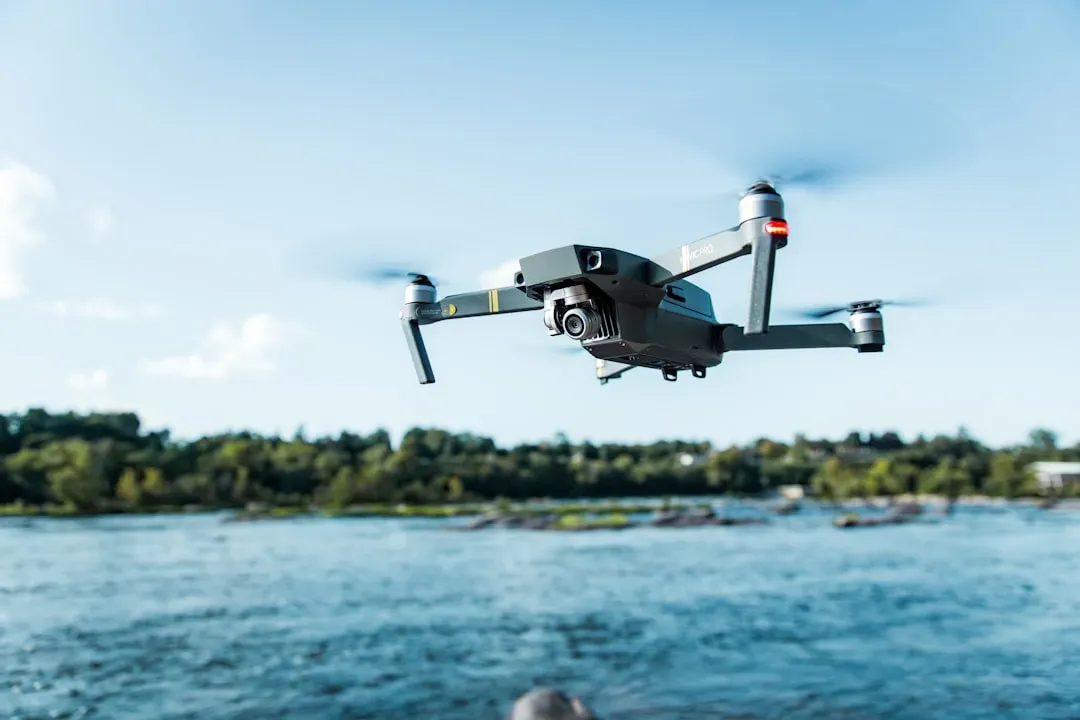
Even before the permanent Skyport infrastructure was in place, LVMPD flew more than 10,000 drone missions in 2025, the highest annual mission volume of any public agency in the nation, with those flights being active responses to calls for service rather than training exercises. The scale of this program is striking for a single city department.
With additional Skyports now operational, LVMPD is averaging approximately 1,700 flights per month and expects to double that pace, with projections of up to 20,000 yearly missions in 2026, with the docked drone fleet equipped with advanced features including AI-based collision avoidance and thermal imaging.
A loophole has allowed LVMPD to massively increase its drone deployments, with the exception permitting law enforcement to fly over residents’ property without a warrant in “exigent circumstances,” and Metro’s new first responder program dispatching camera-equipped drones to scope out 911 call scenes and transmit footage to a central command station even before human officers arrive, with the department considering its thousands of flights per year as exempt from the privacy rule.
The Privacy Alarm Grows Louder

While police departments across the U.S. increasingly are incorporating AI tools to assist in law enforcement, privacy advocates and observers worry the Metropolitan Police Department’s newly announced “AI brain” could erode Nevadans’ right to privacy. Those concerns are not abstract.
Writing in the American Bar Association’s 2024 State of Criminal Justice report, researcher Beryl Lipton argued that AI can enable police to facilitate “mass privacy invasion” and that the widespread use of AI could make inequalities and abuses in policing more routine, especially as departments like Metro have successfully expanded general surveillance through drone programs and real-time crime centers, with many of these technologies requiring infrastructure such as an array of video cameras that could infringe on the privacy of innocent bystanders.
Chris Peterson, legal director of the American Civil Liberties Union of Nevada, has said the deployment raises fundamental questions about what data Metro collects and how it uses that information, adding that LVMPD should be concerned about the constitutionality of what they’re doing. That is a pointed warning from a credible legal source.
The Feedback Loop Problem

Predictive policing presents a notable risk: it uses crime trends to deploy officers strategically, but it can reinforce existing patterns, since if a neighborhood has been over-policed, the AI will identify it as a crime hotspot and send more officers there, perpetuating the cycle. This is one of the most documented structural flaws in the technology.
If data is mishandled during processing, or if it reflects the biases often present in current policing activities and practices, then algorithm-guided policing is also likely to be biased, pointing to the inherent limitation that predictive policing does not always produce rational and legitimate outcomes but is essentially just a way of reflecting existing data with the additional application of predictive technology.
The historical crime data that an algorithm uses to produce its forecast can be riddled with racial and socio-economic bias, and biased data leads to biased predictions that enhance the impact of systemic inequities. The machine does not invent the prejudice. It scales it.
Racial Bias: What the Data Shows

A well-known example comes from Chicago’s Strategic Subject List, which used historical arrest records to identify individuals at risk of being involved in gun violence, either as victims or offenders, with critics finding that the list overwhelmingly targeted Black and Latino men, many of whom had never committed a violent crime, showing how predictive policing can label minorities not because of what they have done but because of who they are.
A study of NYPD data found that 2024 saw the highest number of stop-and-frisks since 2014, a roughly fifty percent increase from the previous year, with nearly nine of every ten people stopped being Black or Latino. That figure emerged during a period when AI-assisted policing tools were in active use.
Partner offer
Analysis published in the journal Legal Studies in Digital Age demonstrates that algorithmic bias can reinforce racial profiling, socioeconomic disparities, and spatialized over-policing, raising concerns about compliance with equality principles, due-process protections, and human rights standards. These are not fringe critiques. They are peer-reviewed findings.
The Accountability Gap

Another pressing concern is that many predictive policing systems are created by private companies rather than public institutions, increasing the risk of biased motives and improper handling of data, with these companies often treating their algorithms as trade secrets, meaning neither law enforcement nor the public can see how the tools work or what assumptions they rely on.
The accountability problem runs deep: it is straightforward to hold an individual officer responsible for a biased report, but there is no clear mechanism to hold a department accountable for arrests or stops initiated by an AI system. That gap is not simply a legal technicality. It strikes at the heart of democratic oversight.
The opacity of these algorithms contributes to accountability complications and makes it difficult to challenge decisions, supporting the case for more transparency and explainability, with strong calls emerging for standardized collection and auditing practices, the formation of independent oversight boards, and legal requirements for algorithm transparency.
Europe Takes a Harder Line

In Europe, Article 5 of the EU Artificial Intelligence Act, which came into effect in February 2025, prohibits the marketing or use of AI systems to predict the probability that someone will commit a crime. The vote in the European Parliament was decisive. The Act was approved with a 523 to 46 vote.
The EU AI Act prohibits AI systems that predict a person’s risk of committing a crime, bans systems that scrape facial images from the internet or CCTV footage, and restricts emotion recognition AI in workplaces and educational institutions, though some exceptions are made for law enforcement purposes such as searching for missing persons or preventing terrorist attacks.
Critics of the Act’s design warn that loopholes risk reducing the ban on predictive policing to a symbolic gesture rather than substantial protection of fundamental rights, and that there is an inherent tension between these limitations and the overarching goals of the Act, including its commitment to safeguard humanity and develop AI that benefits everyone. The United States, by contrast, has no equivalent federal framework in place.
What the Numbers Say About Crime and AI in Las Vegas

According to police reports, homicide rates in Las Vegas dropped by 21.7% between 2024 and 2025. The department has pointed to this as evidence that its approach is working. Among the accomplishments McMahill cited was a 58 percent decrease in police shootings from 2024 to 2025, and the department saw 90 homicides last year, which McMahill described as Metro’s lowest on record.
Drone pilots located suspects in 169 incidents, and intelligence gathered from drone missions directly contributed to 386 arrests. These are tangible results. However, the critical question is not whether crime went down but whether AI tools were the decisive factor, and at what cost to civil liberties.
A 2025 survey revealed that roughly nine in ten law enforcement officials support using some form of AI technology in their practices, yet research on public perceptions of these technologies in policing remains limited. The enthusiasm within departments and the skepticism among communities they serve have rarely been so misaligned.
Who Should Have the Final Say?

A report from the Citizen Lab at the University of Toronto examining algorithmic policing offers more than a dozen policy suggestions to serve as guardrails, recommending that before AI systems are ever deployed by a police force, officials should engage in extensive consultations with independent experts and vulnerable and marginalized communities, and that a judge must always sign off on the use of such systems.
A 2025 National Conference of State Legislatures report emphasizes the need for policies governing AI use in law enforcement to protect civil liberties. In the absence of federal guidance in the U.S., individual departments are largely writing their own rules, which is a fragile foundation for something this consequential.
Because the algorithms are often secret and shielded from scrutiny, they lack transparency and accountability, making it nearly impossible for communities to challenge unjust outcomes, and from a human rights perspective, predictive policing is dangerous because it shifts law enforcement from responding to actual wrongdoing to punishing people for what they might do. That distinction is not semantic. It is the difference between policing and prediction.
Conclusion: The Algorithm Cannot Be the Last Word

Las Vegas is moving fast. The drone numbers, the K.V.N. project, the real-time crime centers – these are not pilot programs anymore. They are operational infrastructure. The efficiency gains are real, and the department’s recent crime statistics are hard to dismiss.
Yet efficiency and justice are not the same thing. While predictive policing is often illustrated as a futuristic and efficient method for crime prevention, the data that operates the whole system stems from racially discriminatory practices, and these systems risk resurfacing the same inequalities they aim to solve, creating harmful feedback loops that unfairly affect marginalized communities.
No algorithm yet invented can weigh human dignity against crime statistics and return a clean answer. That judgment still belongs to people – elected officials, courts, communities, and the officers walking those streets. The question is whether Las Vegas, and the rest of the country, will insist on keeping it that way before the handover goes too far to undo.
Partner offer
Planning a trip to Vegas?
Compare hotel rates and show tickets on VEGAS.com.