There’s a reason editors obsess over opening lines. A reader in a bookstore, thumb resting on the first page, decides in seconds whether to keep going or slide the book back onto the shelf. Some novelists understood this instinctively, crafting sentences so sharp or strange that turning the page felt inevitable rather than optional.
What follows is a look at eight novels whose opening lines did exactly that. Each one earned its reputation not through gimmick but through precision, tone, or a single unforgettable image planted in the first breath of the story.
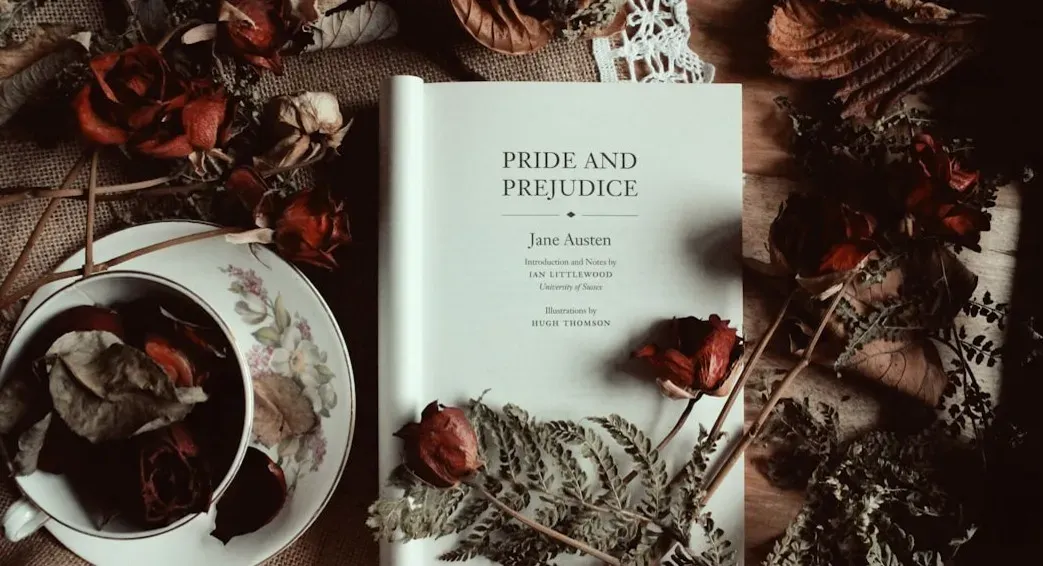
Pride and Prejudice sets its tone with a single ironic observation
Pride and Prejudice sets its tone with a single ironic observation (Image Credits: Unsplash)
Jane Austen opens her 1813 novel with a wry generalization about marriage and fortune, delivered with a straight face that immediately signals satire rather than sincerity. The sentence tells readers exactly what kind of narrator they’re dealing with: sharp, observant, and quietly amused by the social rules she’s about to dissect. It’s a masterclass in voice, established before a single character even appears on the page.
That opening also works because it promises a specific kind of story, one concerned with courtship, class, and the gap between appearance and truth. Readers who pick up on the irony know they’re in for social comedy with teeth. Nearly two centuries later, the line remains one of the most quoted in English literature, still taught in classrooms as an example of how tone can carry as much weight as plot.
1984 announces a wrong world with one small detail
1984 announces a wrong world with one small detail (Image Credits: Pexels)
George Orwell’s dystopian novel begins with an ordinary description of weather and time, except the clock strikes an hour that doesn’t exist on a normal timepiece. That tiny wrongness does enormous work. It tells readers, without any exposition, that they’ve entered a world where something fundamental has been altered.
The unsettling calm of the sentence is part of its power. There’s no shouting, no dramatic reveal, just a quiet detail that makes the ordinary feel slightly off. Published in 1949, the novel’s opening still gets cited by writing instructors as proof that a single strange fact can do more than pages of world building.
Moby-Dick introduces a narrator through a nickname
Moby-Dick introduces a narrator through a nickname (Image Credits: Unsplash)
Herman Melville’s 1851 novel opens with the narrator inviting readers to call him by a simple, almost casual name. It’s an odd way to begin an epic about obsession and the sea, but that casualness is deliberate. The line suggests intimacy, as though the narrator is speaking directly to the reader across a table rather than performing for an audience.
That informal tone contrasts sharply with the philosophical weight the book eventually carries. Scholars have long pointed to this opening as an early example of a narrator establishing trust before diving into darker material. The simplicity of the address has made it one of the most recognizable openings in American fiction.
Anna Karenina makes a universal claim about family life
Anna Karenina makes a universal claim about family life (Image Credits: Flickr)
Leo Tolstoy begins his 1877 novel with a broad statement contrasting happy families with unhappy ones, suggesting that misery has more variety than contentment. It’s a philosophical opening, more essay than narrative, yet it works because it frames everything that follows as an exploration of that idea. Readers arrive expecting insight into human relationships, and the novel delivers exactly that across its many subplots.
The line’s staying power comes from its universality. It doesn’t describe a specific character or setting, which means it applies just as easily to modern readers as it did to nineteenth century Russian society. Literary critics still reference this opening when discussing how a novel can announce its central theme in a single stroke.
The Bell Jar opens with a jarring historical anchor
The Bell Jar opens with a jarring historical anchor (Image Credits: Unsplash)
Sylvia Plath’s 1963 novel begins by placing the narrator’s summer alongside a real and disturbing historical event, immediately grounding the personal story in a specific, uneasy moment in time. The juxtaposition between a mundane season and a grim public execution creates tension before the plot even starts. It signals that this narrator notices things other people might look away from.
That unflinching honesty becomes the novel’s defining quality. The opening line doesn’t explain the narrator’s state of mind directly, but it hints at the detachment and dread that will follow her throughout the story. Decades later, the sentence is still discussed as an example of how period detail can double as emotional foreshadowing.
One Hundred Years of Solitude blends memory with anticipation
One Hundred Years of Solitude blends memory with anticipation (Image Credits: Unsplash)
Gabriel García Márquez opens his 1967 novel by folding past, present, and future into a single sentence, referencing a moment years ahead while describing a memory from childhood. This structural trick, later imitated by countless writers, immediately establishes the novel’s loose relationship with linear time. Readers understand within one sentence that they’re entering a story where memory and prophecy blur together.
The specific detail mentioned in that opening, involving ice, becomes a small emblem of wonder that recurs throughout the book. It’s a quiet image, but it carries the seed of magical realism that defines the entire novel. Literary historians often point to this sentence as one of the clearest examples of how a single line can establish an entire narrative technique.
A Tale of Two Cities builds rhythm through contradiction
A Tale of Two Cities builds rhythm through contradiction (Image Credits: Unsplash)
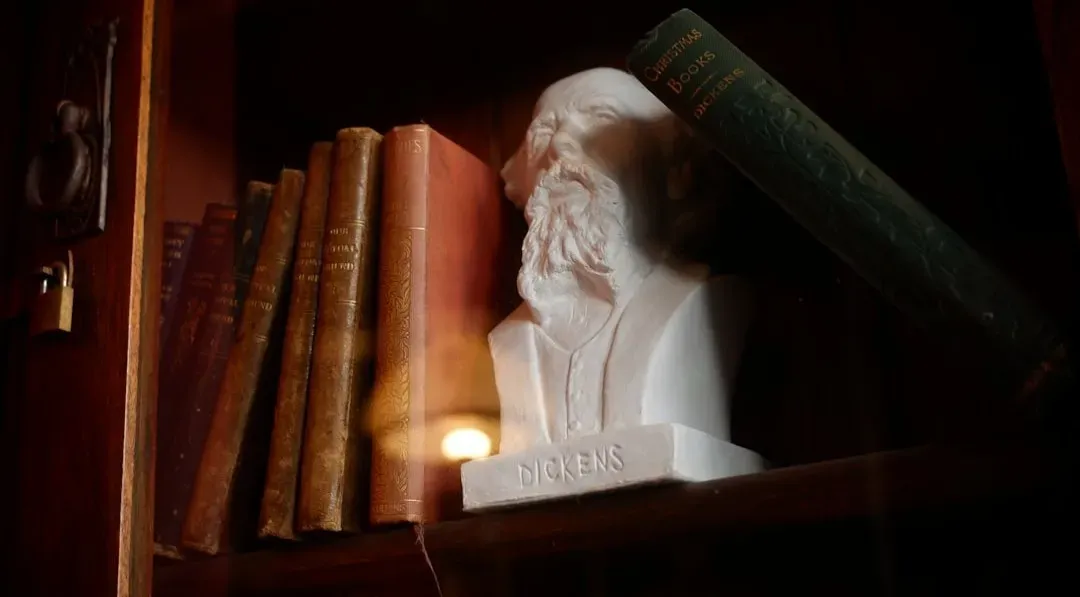
Charles Dickens opens his 1859 novel with a series of paired opposites, describing an era that was simultaneously the best and worst version of itself. The rhythmic repetition creates a kind of incantation, pulling readers forward through sheer musicality even before any plot details emerge. It’s less a description of setting than a mood being conjured through structure.
That structure also prepares readers for a story built on duality, contrasting cities, revolutions, and characters who mirror one another throughout the narrative. The opening has become so embedded in popular culture that fragments of it get quoted even by people who’ve never read the novel itself. Its longevity says something about how rhythm alone can make a sentence memorable.
Rebecca lingers on a half remembered place
Rebecca lingers on a half remembered place (Image Credits: Rawpixel)
Daphne du Maurier begins her 1938 gothic novel with the narrator recalling a dream about returning to a grand estate called Manderley. The dreamlike quality of the line immediately establishes distance and longing, suggesting that whatever happened at that house left a permanent mark on the narrator. There’s no plot revealed yet, just atmosphere thick enough to make readers curious about what they’re missing.
That sense of unresolved longing carries through the entire novel, which unfolds as a slow unearthing of secrets tied to the house and its previous mistress. The opening line has become shorthand in literary discussions for how setting can function almost like a character. Readers who’ve never finished the book often still recognize that opening image, a testament to how effectively it lodges itself in memory.
Fahrenheit 451 turns destruction into pleasure
Fahrenheit 451 turns destruction into pleasure (Image Credits: Flickr)
Ray Bradbury’s 1953 novel opens with a description of fire and burning framed not as violence but as satisfaction, immediately unsettling readers by attaching pleasant language to something destructive. That inversion is the entire point of the novel, a world where burning books has become a socially accepted, even enjoyable, act. The sentence does the difficult work of making readers uncomfortable without a single explicit statement of what’s wrong.
This technique, planting dread inside seemingly positive language, became one of Bradbury’s signature moves throughout the book. The opening also foreshadows the protagonist’s eventual disillusionment with the very act the sentence describes. Nearly seventy years after publication, the line remains a frequently cited example of tone doing more narrative work than exposition ever could.
What these openings have in common
What these openings have in common (Image Credits: Pexels)
None of these eight lines rely on cliffhangers or dramatic action to earn attention. Instead, each one establishes voice, tone, or a single unsettling detail that makes the surrounding world feel specific and real. That’s a harder trick than it sounds, since restraint usually communicates more confidence than spectacle.
Publishers and agents still describe the opening page as the most scrutinized real estate in any manuscript, and these examples explain why. A strong first line doesn’t need to summarize the plot. It just needs to convince a reader that the person telling this particular story is worth trusting for the next three hundred pages.
Partner offer
Partner offer
Planning a trip to Vegas?
Compare hotel rates and show tickets on VEGAS.com.