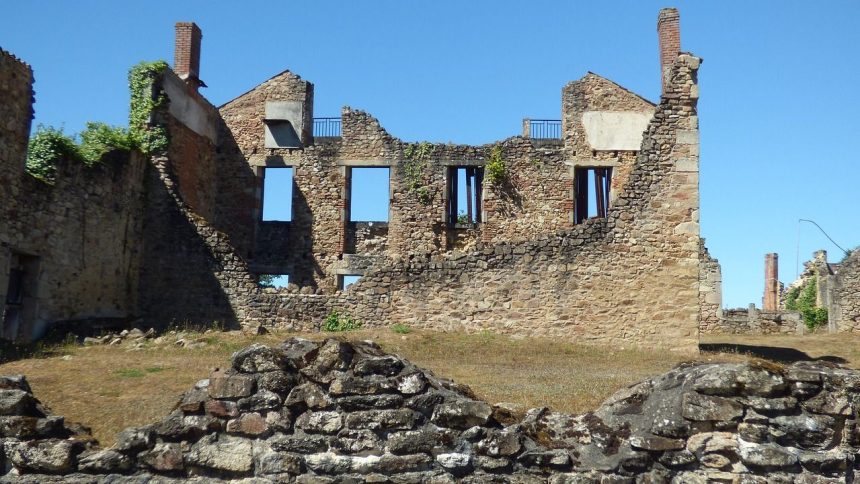
There is something deeply unsettling about a place frozen mid-breath. Dinner tables left set. Classroom books open to pages no child ever finished. Cars parked in streets no one ever drove again. Ghost towns are not just creepy backdrops for horror movies. They are real, breathing wounds in the landscape, each one hiding a story of loss, disaster, or sheer human tragedy that most of us never hear about.
Some of these places disappeared because of greed. Others because of war. A few because of the kind of industrial catastrophe that rewrites history. What unites them all is silence where there was once laughter, emptiness where there was once life. Let’s dive into nine of the most haunting ghost towns on Earth, and the heartbreaking stories behind each of them.
1. Pripyat, Ukraine: The City That Died Overnight
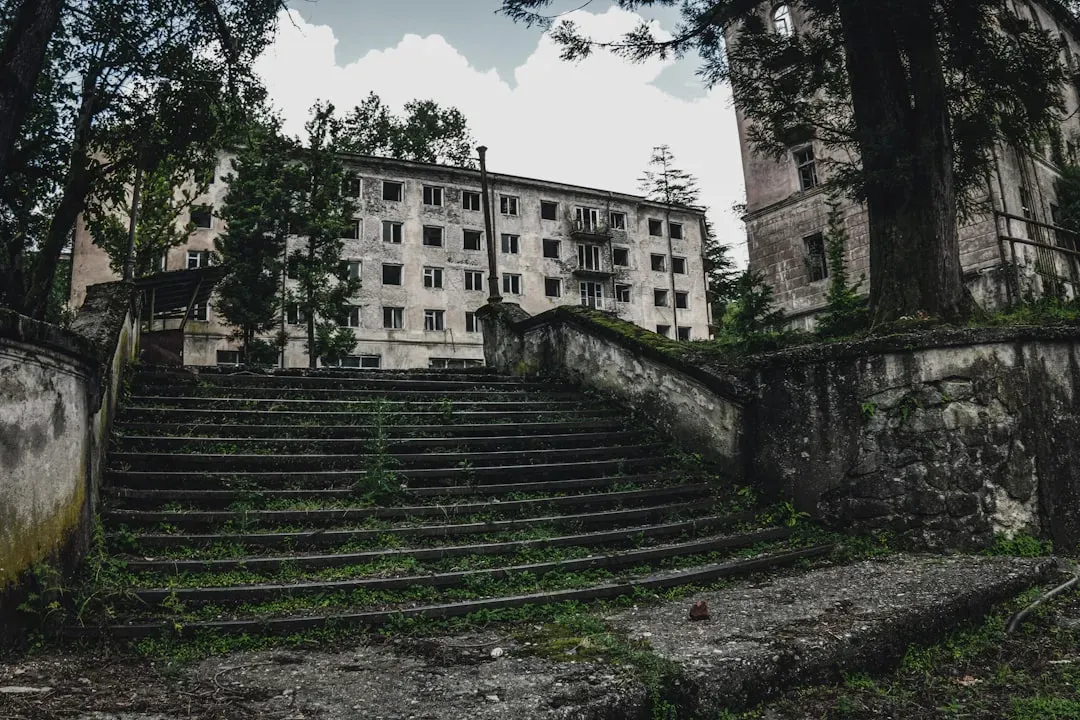
Few abandoned places carry the kind of weight that Pripyat does. Founded in 1970 as one of the Soviet Union’s atomgrads, specialized cities built to house nuclear workers and scientists, Pripyat sat just 3 kilometers from the Chernobyl Nuclear Power Plant. It was a genuinely modern, vibrant city, designed to show off the best of Soviet progress.
On the night of April 25 to 26, 1986, engineers at Reactor 4 conducted a safety test that required shutting down crucial safety mechanisms. This reckless experiment led to a catastrophic explosion that ripped through the reactor, sending radioactive material into the atmosphere. In an instant, Pripyat became ground zero for one of the worst nuclear disasters in human history.
Despite the massive release of radiation, Soviet authorities did not immediately warn the city’s residents. For 36 hours, life in Pripyat continued as normal. Children played outside, people went to work, and residents prepared for the upcoming May Day celebrations, completely unaware of the invisible death cloud descending upon them.
The population was 49,400 people. The average age was about 26 years old. The city had 13,414 apartments across 160 apartment blocks, plus 15 kindergartens and elementary schools for nearly 5,000 children, and five secondary schools for over 6,700 students. Today, the city and the surrounding exclusion zone will remain uninhabitable for thousands of years, and the abandoned amusement park, with its rusting Ferris wheel that was meant to open for May Day celebrations, has become a global symbol of a life abruptly and tragically interrupted.
2. Centralia, Pennsylvania: The Town on Fire for Over 60 Years
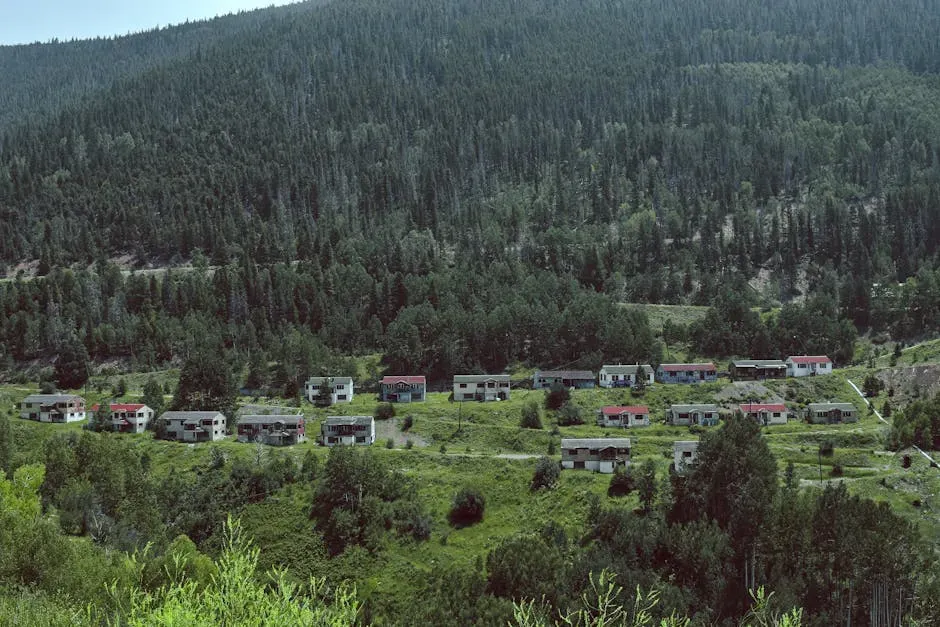
Here is the thing about Centralia, Pennsylvania. It is a ghost town that is still technically on fire right now, as you read this. According to federal census records, the town of Centralia reached its maximum population of 2,761 in 1890. At its peak, it had seven churches, five hotels, 27 saloons, two theaters, a bank, a post office, and 14 general and grocery stores. It was a real, bustling community.
In May 1962, the Centralia Borough Council hired five members of the volunteer fire company to clean up the town landfill, located in an abandoned strip-mine pit next to the Odd Fellows Cemetery. This had been done before in prior years, but this time, the fire was not fully extinguished. An unsealed opening in the pit allowed the fire to enter the labyrinth of abandoned coal mines beneath Centralia. Nobody could have imagined what that single mistake would cost.
Attention to the fire escalated dramatically after a 12-year-old boy fell into a four-foot-wide by 150-foot-deep sinkhole that had suddenly opened in his backyard. Though the boy was saved, the plume of hot steam billowing from the hole was tested and found to contain a lethal level of carbon monoxide.
In 1983, the U.S. Congress allocated more than 42 million dollars for relocation efforts. Nearly all of the residents accepted the government’s buyout offers. More than 1,000 people moved out of the town, and 500 structures were demolished. Honestly, what makes this story so maddening is that it did not have to happen at all. Fueled by an estimated 25 million tons of coal, the fire is projected to burn for at least another 250 years, and the flame heat has caused cracks in the ground, releasing toxic gases like carbon monoxide.
3. Oradour-sur-Glane, France: A Village Massacred by War
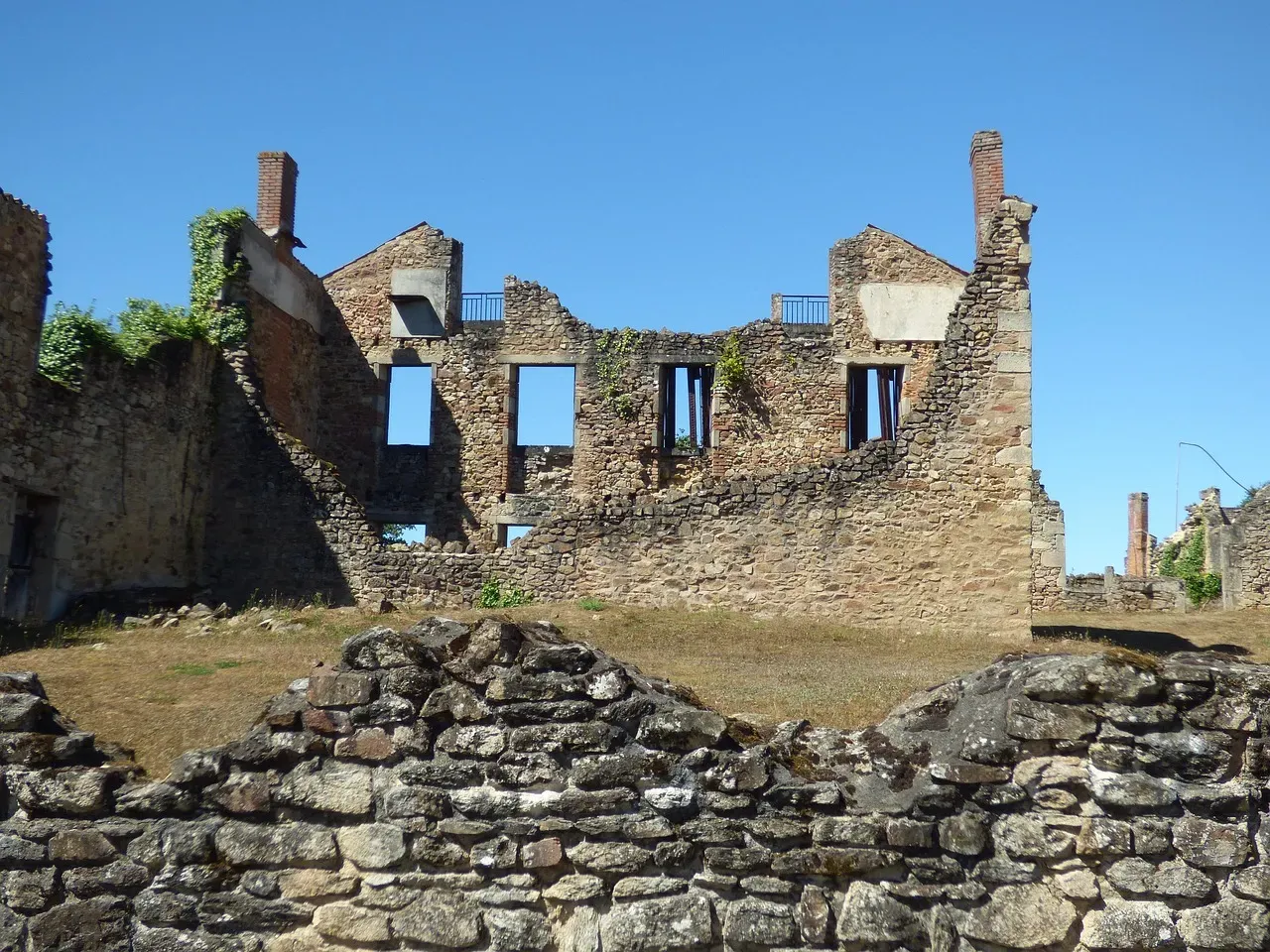
Some ghost towns are born not from economic collapse or industrial accident, but from pure, deliberate human cruelty. The history of Oradour-sur-Glane, a village in the Nouvelle-Aquitaine region of west-central France, is of a far darker and more tragic nature. On June 10, 1944, this quiet farming community became the site of one of the most heinous Nazi war crimes. In an act of senseless retaliation against local Resistance efforts, Waffen-SS troops razed the village.
The “Village des Martyrs,” as it is now known, was machine-gunned and burned by Nazi troops on June 10, 1944, four days after D-Day. With chilling attention to detail, the Nazis methodically rounded up the entire population of 642 townspeople, of whom about 200 were children. The women and children were herded into the town church, where they were tear-gassed and machine-gunned as they tried to escape the burning chapel. Oradour’s men were tortured and executed. The town was then set on fire, its victims left under a blanket of ashes.
In the church alone, 247 women and 205 children died in the attack. The only survivor was 47-year-old Marguerite Rouffanche. She survived by hiding in pea bushes overnight. One person. Out of hundreds.
Following the war, President Charles de Gaulle ordered that the ruins remain untouched as a memorial to the victims and a stark reminder of crimes against humanity. While a new village was built nearby, the skeletal remains of the original Oradour stand as an open-air museum, where a commemorative ceremony is held every June 10 to honor the fallen.
4. Kolmanskop, Namibia: The Desert Swallowed a Diamond Empire
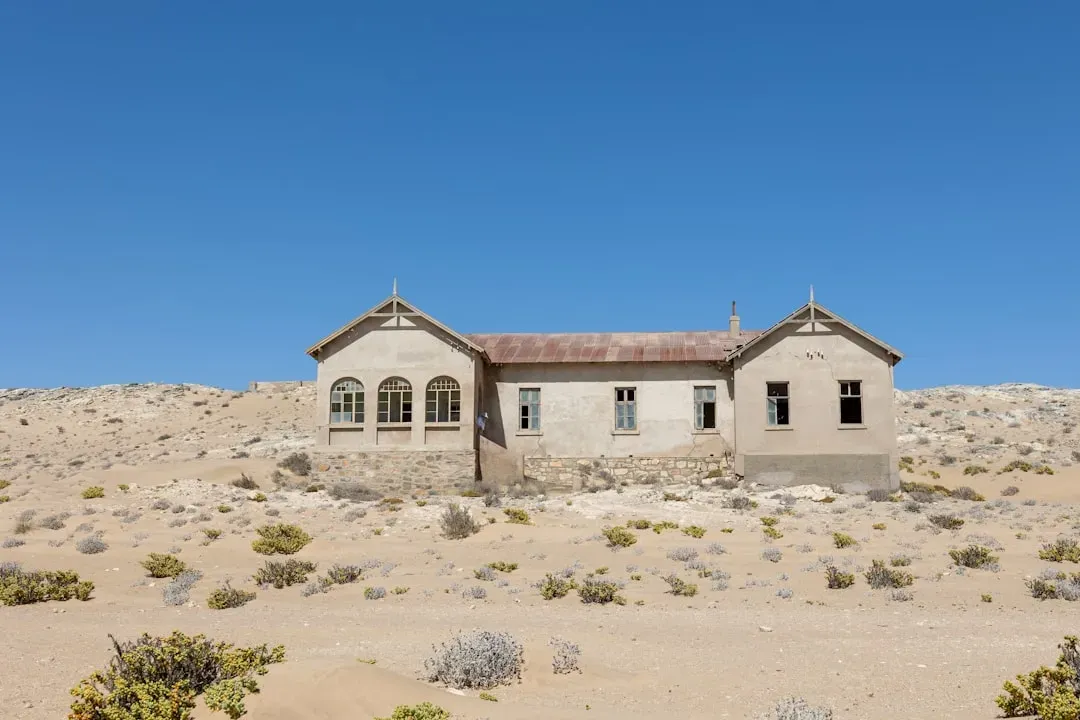
I know it sounds crazy, but there is a town in the Namibian desert where rooms are filled to the ceiling with sand and the architecture is still recognizably elegant. In 1908, in what was then German South-West Africa, a railroad worker named Zacharias Lewala found a diamond while working in the area. Realizing the region was rich in diamonds, German miners settled, and soon the German Empire declared a large area a “Sperrgebiet,” or prohibited area, and began exploiting the diamond field.
Within a few years, the settlement became one of the wealthiest on the entire continent, an incongruous, German-style luxury oasis nestled among the dunes. It boasted amenities virtually unthinkable for the time and location, including a state-of-the-art hospital featuring the first X-ray machine in the southern hemisphere, a power station, a theater, a ballroom, a seawater swimming pool, and even an ice factory to produce chilled beverages in the desert heat.
Lewala, the man who found the original diamond, was not paid or rewarded for his find. Soon, hordes of prospectors descended on the area. By 1912, a town had sprung up producing a million carats a year, roughly about twelve percent of the world’s total diamond production. Wealthy Kolmanskop became a well of luxury in the barren desert.
The town started to decline during World War I when the diamond field slowly began to deplete. By the early 1920s, the area was in severe decline. Hastening the town’s demise was the discovery in 1928 of the richest diamond-bearing deposits ever known, on the beach terraces 270 kilometers south of Kolmanskop, near the Orange River. Many of the town’s inhabitants joined the rush to the south, leaving their homes and possessions behind. The town was ultimately abandoned in 1956. Today, as many as 35,000 tourists visit the site every year.
5. Bodie, California: Sin City of the Gold Rush
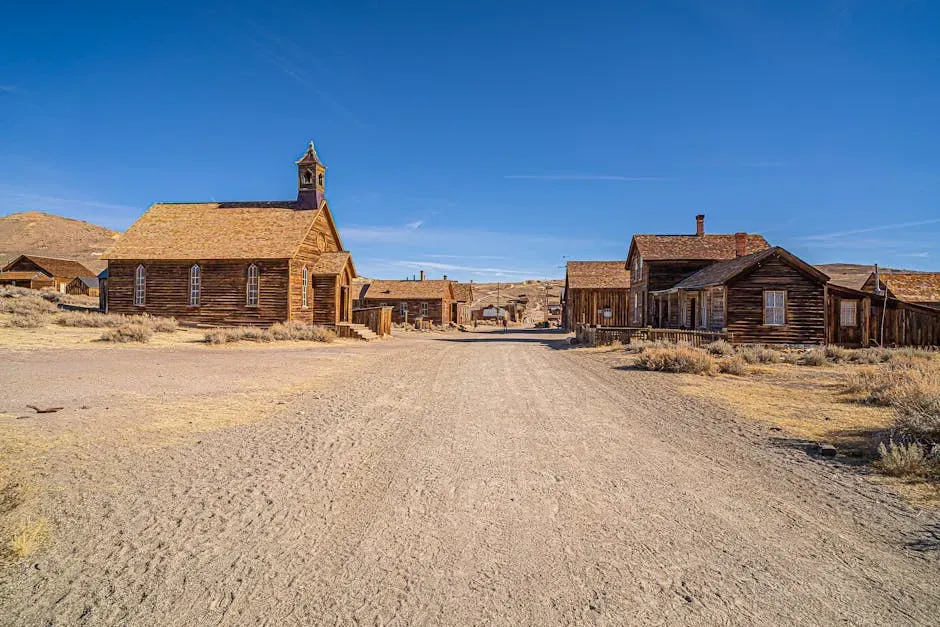
Gold does something strange to people. It makes them build entire cities in the middle of nowhere, practically overnight. Bodie, California was officially founded in 1876 after miners stumbled upon rich deposits of gold and silver in its hillsides. Gold-crazed prospectors flocked to the settlement at a rate of more than two dozen per day in the late 1870s, and its population eventually soared to some 10,000 people.
When the population reached some 10,000 residents, it was already known for its “sea of sin” reputation, filled with rough men, sex workers, opium dens, and whiskey-fuelled shootouts. Bodie was not exactly a family destination. It was more like the Wild West concentrated into a single chaotic place.
The gold ran out, as gold always does. Bodie has since become known as one of the nation’s most well-preserved ghost towns. Its 200 ramshackle buildings are kept in a state of “arrested decay” by park rangers, and tourists flock to the site to explore its 1880s Methodist church, saloons, and post office, as well as the ruins of a burned-out bank vault.
Partner offer
There is something deeply poignant about “arrested decay” as a concept. The park service does not restore Bodie or fix it up. They just stop it from collapsing completely, letting it exist in permanent ruin, which, if you think about it, is exactly what the gold rush itself did to thousands of people’s lives.
6. Hashima Island, Japan: The World’s Most Crowded Place, Now Empty
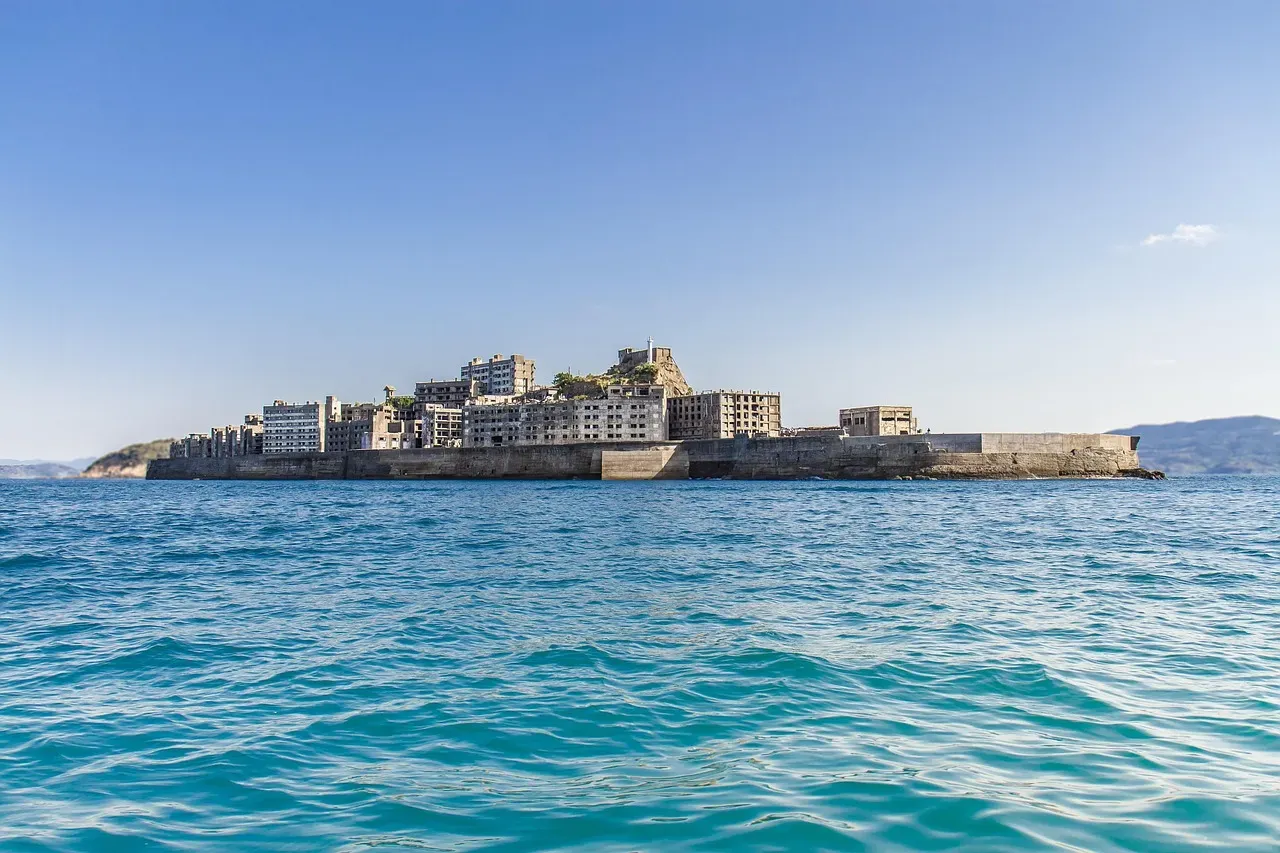
Off the coast of Nagasaki lies Hashima Island, nicknamed Gunkanjima, or “Battleship Island,” for its distinctive silhouette. For nearly a century, it served as a bustling undersea coal mining hub, housing over 5,000 residents and reaching the highest population density ever recorded on Earth. Think about that for a moment. The most densely populated place on the entire planet.
The island operated under brutal conditions. During World War II, Korean and Chinese workers were forced to labor in its mines. The working conditions were dangerous, and the stories of mistreatment are well-documented and deeply disturbing. It is a part of the island’s history that Japan has been slow to fully acknowledge.
In 1974, as coal reserves dwindled and the global energy market pivoted to oil, the mines closed and the island was abandoned almost overnight. Massive concrete apartment blocks, schools, hospitals, and temples were left to the mercy of the sea spray and the elements for decades.
Today Hashima is a UNESCO World Heritage Site, though the designation remains controversial because of its connection to wartime forced labor. Visiting it requires a special permit. The entire island sits there in the Pacific, slowly eroding, a concrete monument to how quickly prosperity can evaporate.
7. Craco, Italy: A Medieval City Brought Down by the Earth Itself
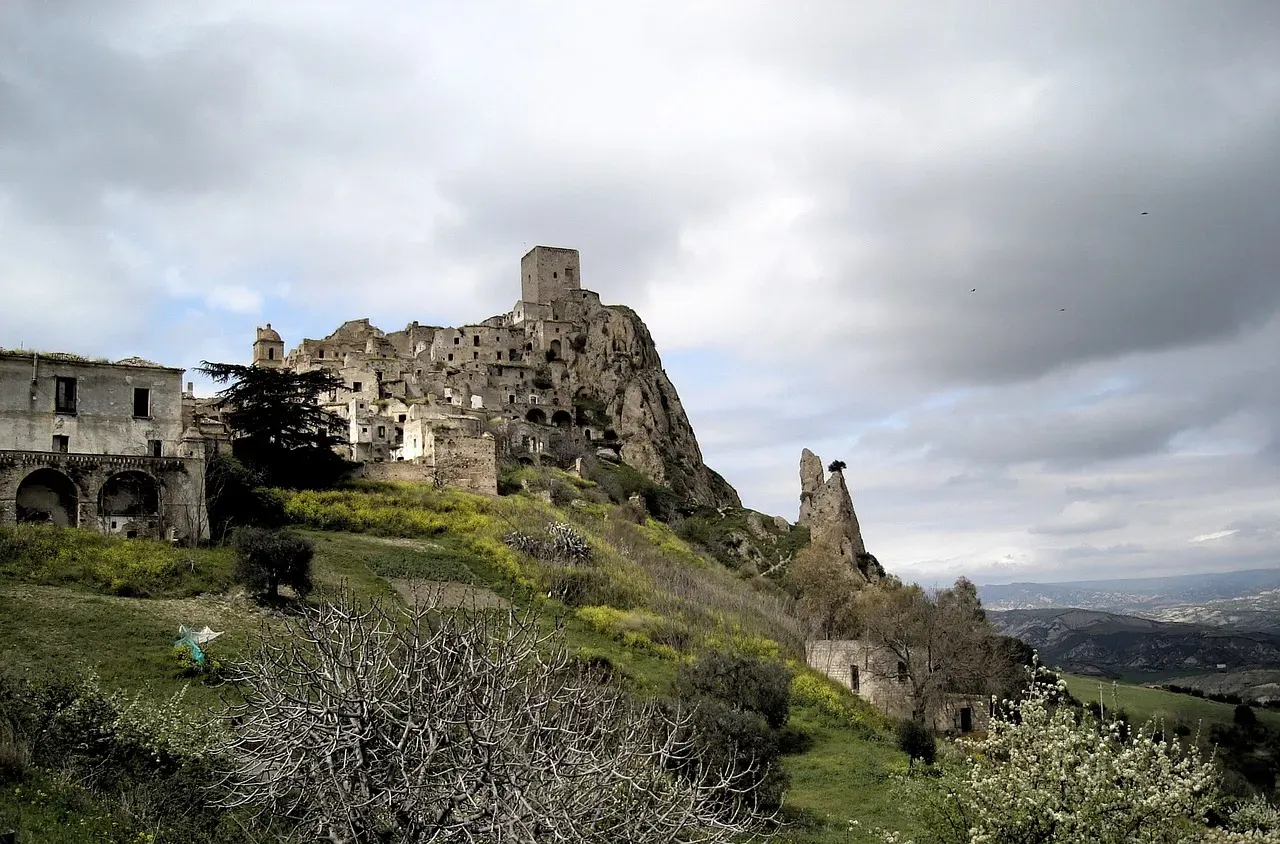
Rising eerily from the Basilicata badlands of southern Italy, the ancient town of Craco stands as a stark testament to the fragility of human settlements. Settled since the 8th century BC and later built up by the Normans as a medieval fortress, Craco’s crumbling palazzi and silent streets have now been left to the elements. A series of earthquakes and landslides led to its abandonment in 1980, and today visitors don hard hats to navigate its precarious ruins.
Craco did not die fast. It died slowly, over decades, earthquake by earthquake and landslide by landslide. The Italian government relocated the population to a planned village in the valley below, but the people of Craco never really left spiritually. Many former residents still gather in the valley to celebrate festivals tied to the old town, keeping the memory alive in ways that are genuinely moving.
Many of Craco’s former residents still speak of the city with nostalgia and pride, despite its tragic fate. Craco stands as a reminder of both human resilience and nature’s power to reclaim what is built.
What makes Craco unusual in this list is that nobody chose to leave because of a single catastrophic day. They were slowly, painfully driven out by the land beneath their feet. It is a different kind of tragedy, quieter and somehow more cruel for it.
8. Kayaköy, Turkey: Abandoned by War and Forced Migration
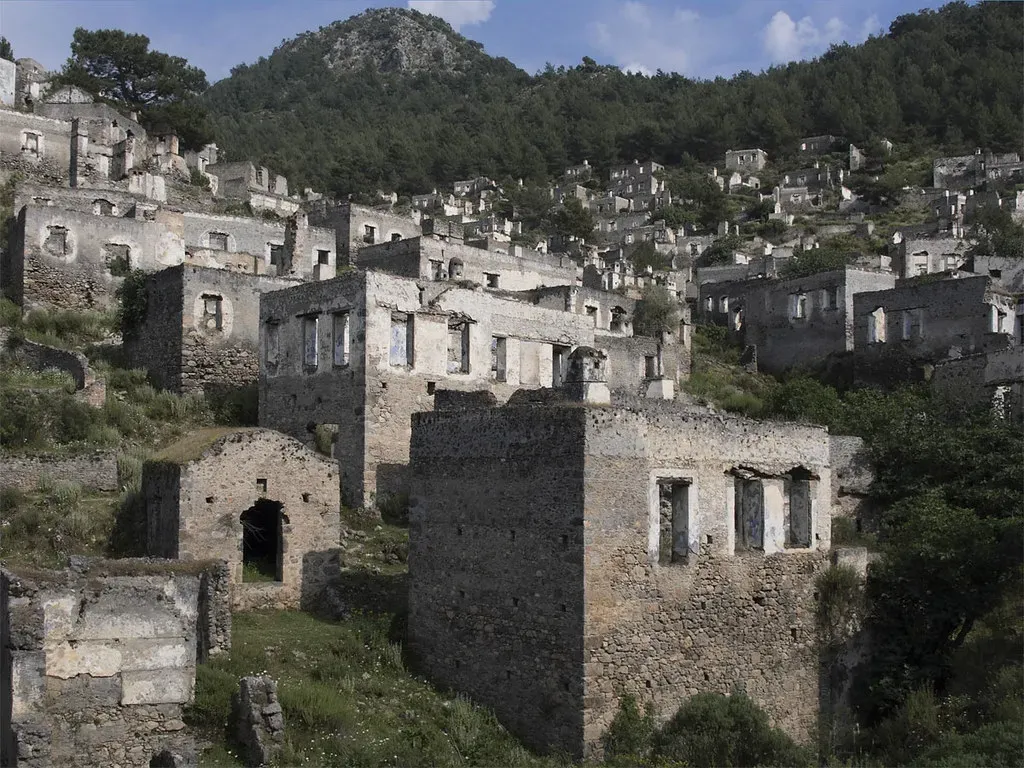
Kayaköy, once a bustling and peaceful town in southwestern Turkey, was primarily inhabited by Greek residents. However, following the Greco-Turkish War in the early 20th century, the town’s population was forcibly relocated, and Kayaköy was left to decay. Now overrun with overgrowth and weathered by time, the 350 abandoned homes in Kayaköy still hold memories of a peaceful past.
The population exchange between Greece and Turkey in 1923 was one of the largest forced migrations in history, displacing roughly 1.5 million Greek Orthodox Christians from Turkey and about half a million Muslims from Greece. Kayaköy was not bombed, not burned, not swallowed by sand. It was simply emptied of its people by a political agreement, and the people never came back.
Walking through Kayaköy today is a surreal experience by all accounts. The stone houses are skeletal but recognizable, terraced across the hillside like a faded photograph of what used to be. There are no dramatic sinkholes or radiation readings to explain the emptiness. Just the absence of people who were told they belonged somewhere else.
Places are abandoned for all sorts of reasons, including economic collapse, regime change, sickness, war, and natural disaster, and each set of ruins tells its own fascinating story. Kayaköy’s story is one of the most human ones of all: the story of home taken away not by nature, but by borders and politics.
9. Hallsands, England: A Village Swallowed by the Sea It Once Relied On
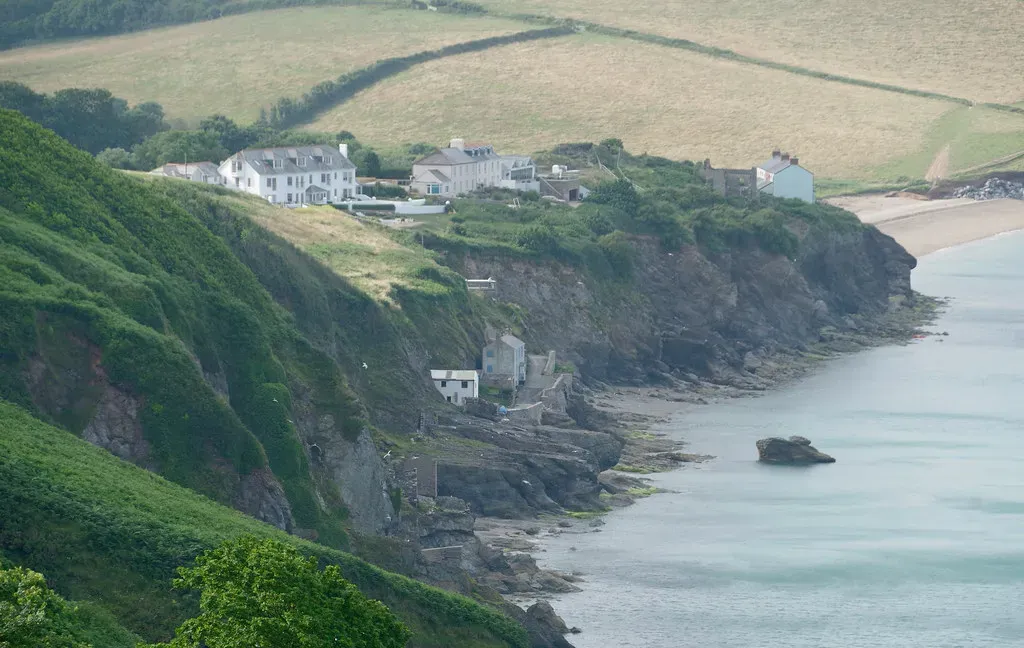
The village of Hallsands in Devon, England, was a cozy little fishing village that had existed since at least 1506, but was wiped away in one tragic night in January 1917 when it collapsed into the sea. The most tragic part was that it was largely the fault of man. In the 1890s, the British Admiralty decided to expand the naval dockyard at Keyham, and the Board of Trade gave the engineering company permission to dredge the shingle beach.
Three years later, storms hit the coastline and swept away part of the sea wall. On January 26, 1917, another killer storm struck, and this time, the entire village fell into the sea. Thankfully nobody was killed, but dozens of homes were lost. All that is left are the ruins of a chapel on the edge of a clifftop.
The residents of Hallsands had warned authorities repeatedly that dredging the beach was removing the natural barrier protecting their homes. Their warnings were ignored. It is one of those stories where the tragedy feels completely preventable, which arguably makes it the most painful kind to read about.
The fishing families of Hallsands had lived there for four centuries. They fished the same waters their grandparents had fished, repaired the same kinds of boats, slept through the same kinds of coastal storms. Then someone in a government office signed a permit, and within years, the sea took everything. A decision made in a distant office erased a village that had existed since the 1500s.
Conclusion: What Ghost Towns Are Really Telling Us
Ghost towns have stories of human tragedy mixed in with the occasional human triumph. They are complicated places and we need to take them on their own terms, for what they were and why they still exist in our midst. That feels exactly right to me. These are not theme parks or photo opportunities, even if many of them have become both.
Every single town on this list was someone’s home. It was where people fell in love, had children, built businesses, buried relatives. The speed with which all of that can vanish, whether by radiation, fire, war, or simply the greed of others, is genuinely unsettling. Ghost towns possess a haunting allure that extends far beyond their eerie aesthetic. Hidden behind every decaying facade are remarkable, and often heartbreaking, stories. These settlements, once vibrant hubs of human activity, were hollowed out for myriad reasons, leaving them as silent witnesses to the relentless passage of time.
Which of these nine stories struck you the hardest? Drop your thoughts in the comments. There are more ghost towns out there than you might imagine, and every one of them has a name, a past, and people who once called it home.
Partner offer
Planning a trip to Vegas?
Compare hotel rates and show tickets on VEGAS.com.