The music industry has always had a complicated relationship with controversy. Some artists thrive on it, using friction with the establishment as part of their brand. Others stumble into it and recover. Then there’s a quieter, smaller group whose names have become functionally toxic to the business infrastructure that once supported them. Musicians often ask whether a “blacklist” exists in the music industry. While there’s no single master list shared across the entire business, industry professionals do maintain their own informal versions, remembering those who have created serious problems and choosing not to work with them again. These six artists represent cases where the damage went far beyond a single bad relationship with one label.
R. Kelly: A Career Ended in a Courtroom

For much of the 1990s and 2000s, R. Kelly was one of the most commercially successful R&B artists alive. Billboard ranked him as the 9th greatest R&B artist of all time. The recognition made the industry’s decades-long silence around his behavior all the more troubling in hindsight.
The 2019 documentary “Surviving R. Kelly” reexamined his alleged sexual misconduct with minors, prompting RCA Records to terminate his contract and resulting in additional investigations by law enforcement. This culminated in a 2021 conviction for violations of the Mann Act and racketeering charges, and a 2022 conviction for production of child pornography. As of 2023, he is serving a 31-year combined sentence.
After decades of accusations of sexual misconduct, Kelly was convicted in New York in 2021 on federal racketeering and sex trafficking charges stemming from accusations that he orchestrated a long-running scheme to recruit and abuse women and underage girls. A judge later signed a writ of garnishment directing UMG to hand over publishing royalties to pay restitution and criminal fines. No path back to a recording contract exists. His career is not on pause. It’s over.
Ye (Kanye West): From Visionary to Untouchable

Few falls from grace in music history have been this swift or this complete. In late 2022, West made a series of antisemitic statements, resulting in the termination of his collaborations, sponsorships, and partnerships with Vogue, Universal Music Group, CAA, Balenciaga, Gap, and Adidas. The losses were staggering, both financially and professionally.
In December 2022, West said he admired Adolf Hitler, publicly denied the Holocaust, and identified as a Nazi in an interview with Alex Jones’s InfoWars. With the termination of his business relationships, West lost his billionaire status, with Forbes estimating his reduced worth at $400 million.
In a rant on Twitter in February 2025, West again made antisemitic comments, praised Hitler, and defended rapper Sean Combs from sexual misconduct allegations. West initially claimed the rant was a “social experiment” but later retracted that statement and reaffirmed his views. The repeated pattern of behavior means that major labels, which had already walked away, are extremely unlikely to return.
Marilyn Manson: Dropped and Slowly Crawling Back

In the wake of Evan Rachel Wood’s announcement that Marilyn Manson had “horrifically abused” her for years, Loma Vista Recordings, which had released Manson’s three most recent albums, parted ways with the singer. The decision came within hours of Wood’s public statement, a sign of how quickly the label wanted distance.
After Wood went public, at least a dozen other women came forward with similar allegations, including three more former girlfriends: Esme Bianco, Ashley Morgan Smithline, and a Jane Doe. The Los Angeles County Sheriff’s Department opened a criminal investigation into reports of domestic violence perpetrated by Manson between 2009 and 2011, and the findings were submitted to the L.A. District Attorney’s office in September 2022.
Manson did eventually sign a deal with indie metal label Nuclear Blast, though this came more than three years after his Loma Vista exit. The major label world, however, remains firmly closed to him. That distinction matters enormously when it comes to commercial reach, radio support, and industry credibility.
The Sex Pistols: Burned Every Bridge on the Way Up

The Sex Pistols managed the rare achievement of being dropped by two record labels within weeks of each other, all before their debut album was even released. On March 10, 1977, the group signed a new contract with A&M Records outside Buckingham Palace, and 25,000 copies of their single were pressed up. The celebrations, however, got out of hand, and the label wiped its hands of the group just four days later and destroyed most of the singles.
Richard Branson and Virgin Records then signed the Pistols on May 18 and decided to rush-release the song to coincide with the Queen’s anniversary. Despite a ban from the BBC, the single flew off the shelves, selling 200,000 copies in its first week. The relationship with Virgin was unstable from the start, and the band’s implosion in 1978 left a trail of burned professional relationships that took years to untangle.
What the Pistols proved was that talent alone doesn’t guarantee industry goodwill. The music industry moves too fast, and the competition is too great for professionals to waste time on people who repeatedly act unprofessionally. The Pistols became a case study in exactly that dynamic, celebrated historically but never truly forgiven by the business structures they torched.
Billie Holiday: Blacklisted for Singing the Truth
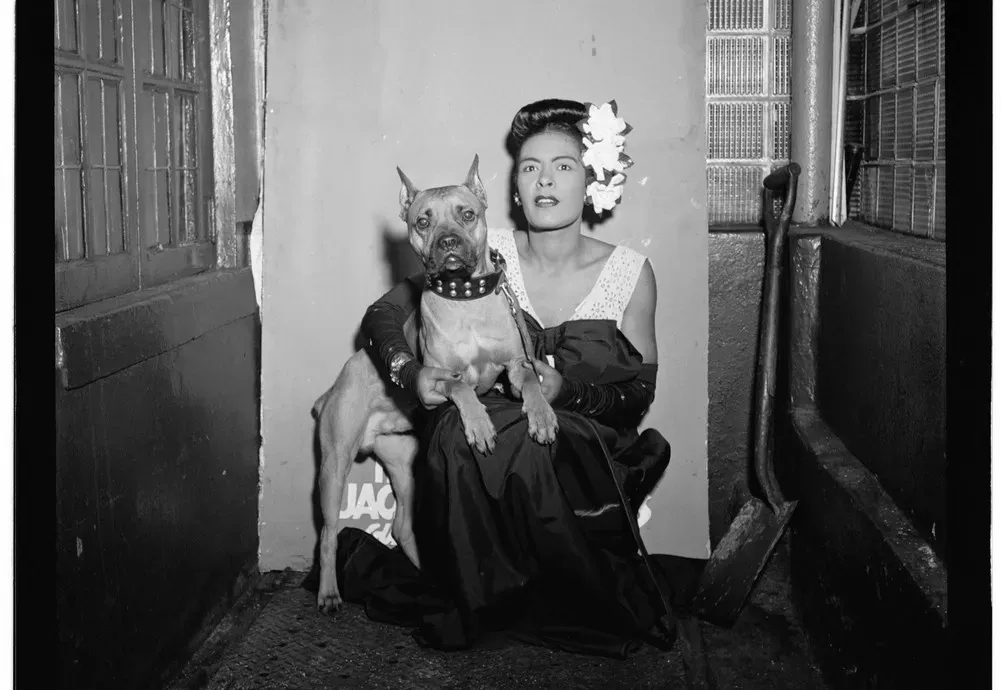
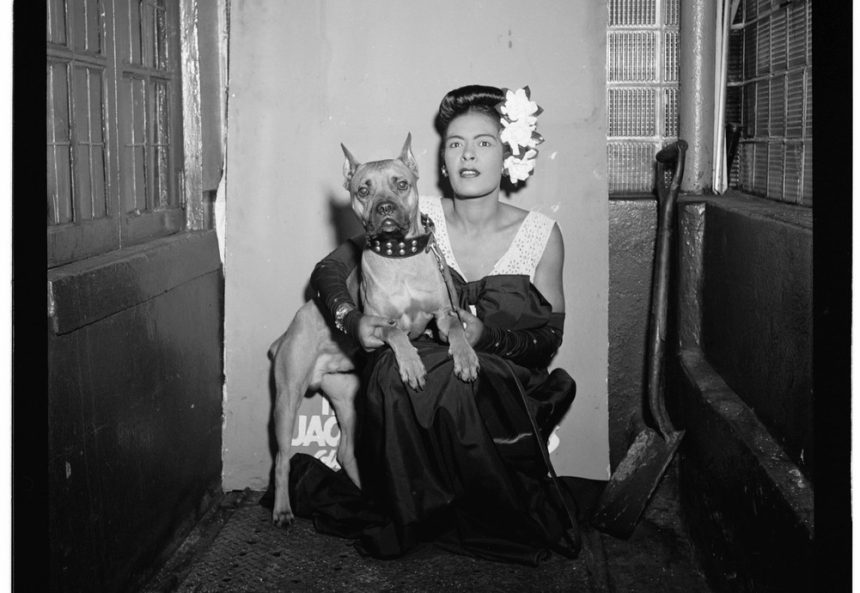
Billie Holiday’s entry on this kind of list is the most uncomfortable, because her exclusion wasn’t rooted in personal misconduct. It was rooted in courage. Holiday was forced to release “Strange Fruit” on a specialty label, as her main record company refused to allow her to record it. The social and political context of the song ignited a firestorm of controversy, and U.S. radio refused to touch it.
Still, the song became the singer’s biggest hit and was even added to the National Recording Registry by the Library of Congress in 2002. The establishment she challenged didn’t give her that recognition while she was alive. Instead, she faced sustained professional obstruction, surveillance by the FBI, and a revocation of her New York City cabaret license that prevented her from performing in clubs for years.
Her story is a reminder that the forces that push artists out of the industry aren’t always fueled by moral reasoning. Censorship in the music industry has a profound impact on artists. For artists, it can restrict their creative freedom and dilute their intended messages. Holiday lived that reality more directly than almost any other artist of her era.
Pete Seeger: Blacklisted for His Politics
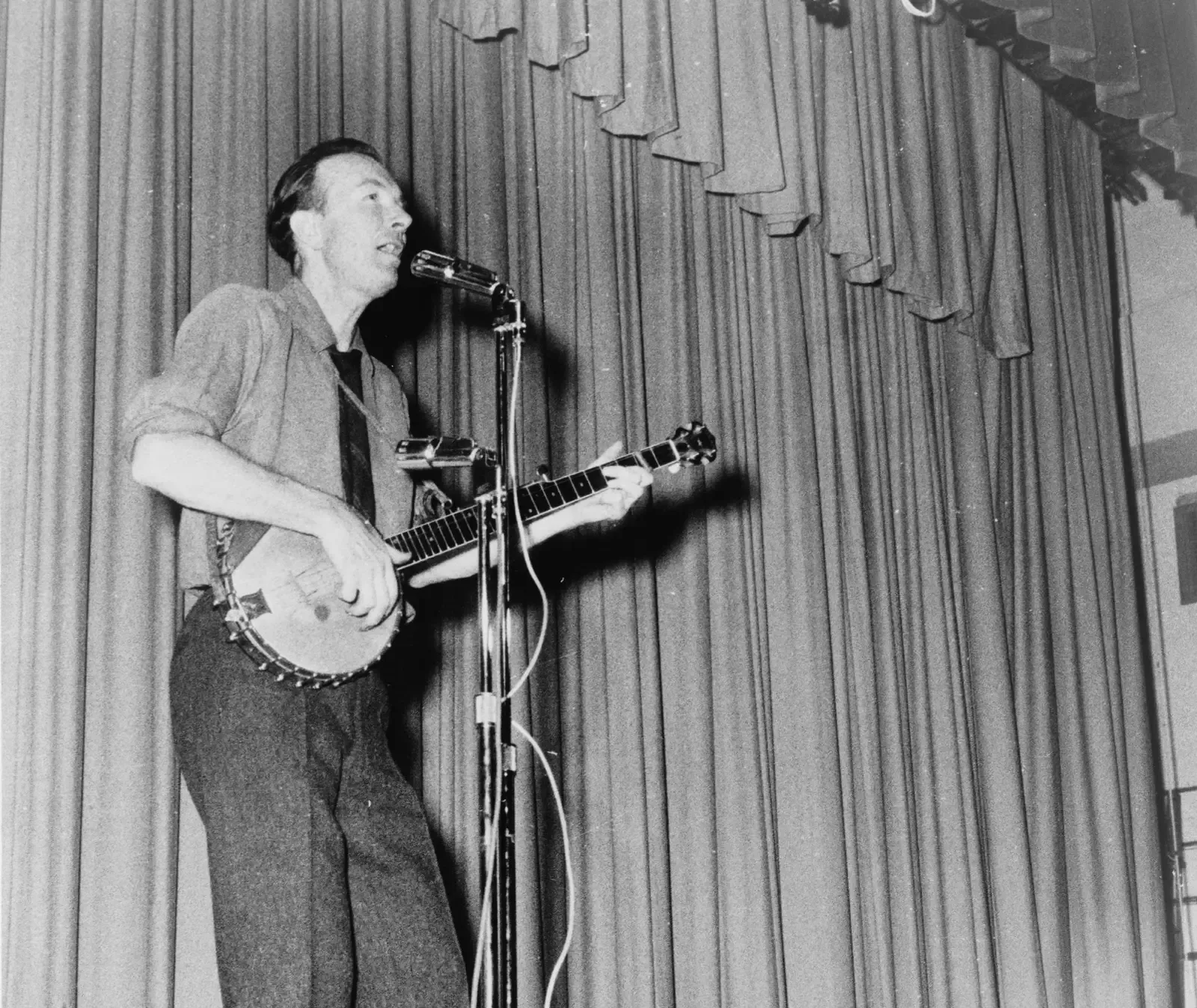
A talented musician who helped define American folk music, Pete Seeger was blacklisted from performing on radio and television in the 1950s and ’60s because of his leftist political views. The mechanism that silenced him was systematic and coordinated, not just a matter of individual label decisions.
In 1950, Seeger was named in the Red Channels publication and subsequently dropped from his record label. Five years later, he was called to testify before the HUAC Committee, where he refused to plead the Fifth or answer any questions. As a result, he was indicted for contempt of Congress.
In 1961, the singer was found guilty and sentenced to a year in prison, but his case was later dismissed on appeal. Seeger continued making music and performing for decades, but primarily outside the commercial mainstream. The labels that dropped him never came back, and he never sought them out. He simply built a different kind of career, entirely on his own terms, one that history has judged far more kindly than those who shunned him.
What these six cases collectively show is that the music industry’s version of exile takes many different forms. Some artists are dropped because of criminal convictions. Others are pushed out by political pressure or social movements. A few simply made themselves impossible to work with. The reasons vary widely, but the outcome is the same: a door that closed and, in most cases, never opened again.