History has no shortage of disappearances. Ships that vanished into fog, explorers who stepped off the edge of the known world and simply never came back. Most are forgotten within a generation. A few haunt us for centuries.
The Franklin Expedition is one of those few. It set off in 1845 with extraordinary ambition, the most powerful Arctic vessels Britain had ever launched, nearly 130 men, and a mission that seemed just barely within reach. What followed was one of the most devastating disappearances in the history of exploration, and one of the most remarkable rediscoveries ever made. The full story spans almost 170 years, stretches across frozen Arctic seas, and still isn’t entirely solved. Let’s dive in.
A Mission That Felt Almost Certain to Succeed
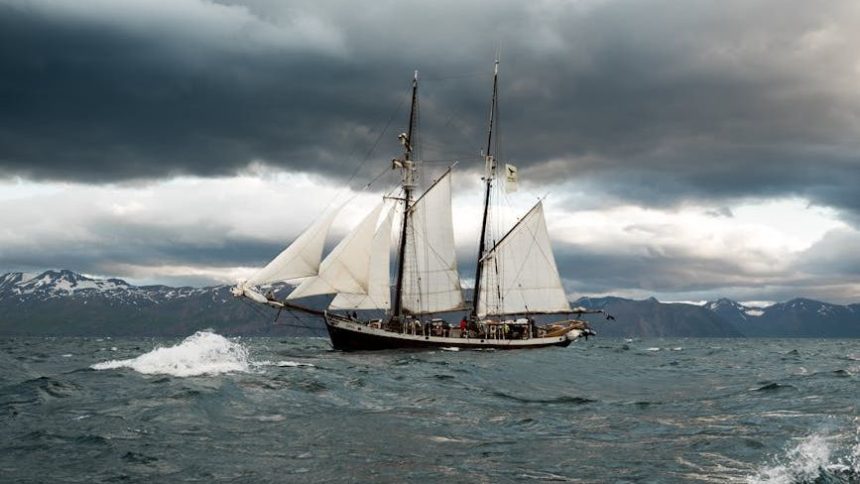
The Franklin Expedition was a British voyage launched in 1845 and led by Sir John Franklin, with the goal of finding the Northwest Passage through Canada and recording magnetic data as a possible aid to navigation. On paper, it looked like the right team with the right ships at the right moment. The 59-year-old Franklin and senior officers Francis Crozier and James Fitzjames had years of experience in polar exploration.
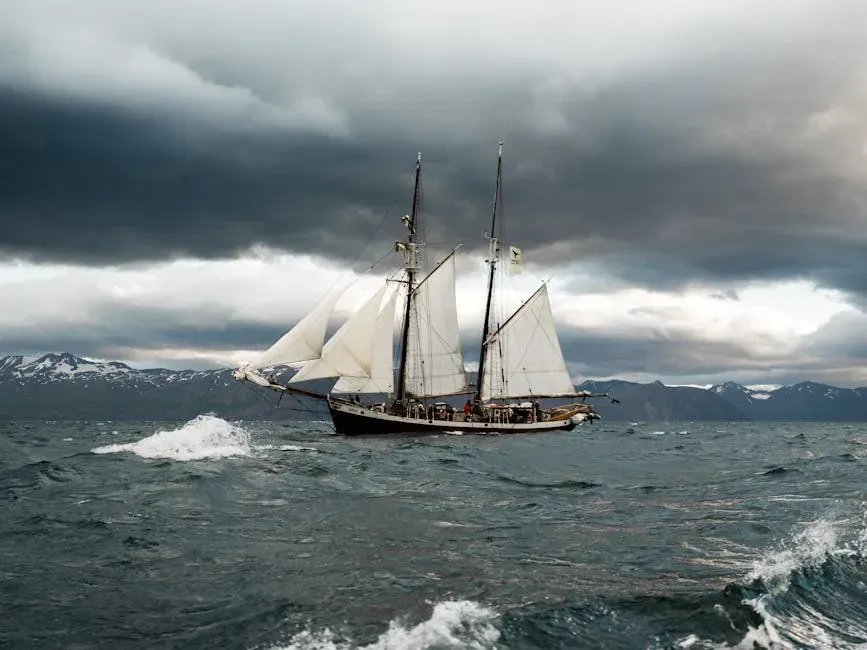
Their ships’ bows had been reinforced with extra layers of wood and iron to protect against the ice, and both vessels had been outfitted with steam engines to supplement their sails, along with steam heating systems and equipment to produce fresh water. Think of it as the cutting-edge technology of its day. The steam engines were converted former locomotives from the London and Croydon Railway, and the ships could make around 7.4 kilometres per hour on steam power, or travel under wind to reach higher speeds.
Franklin was reportedly quite proud of the preparations. The ships featured a library of more than 1,000 books, and rather than relying on typical dry rations, Franklin contracted a provisioner to prepare 8,000 tins of food meant to last for around three years. Honestly, for 1845, that sounds remarkable. The ships felt less like Arctic explorers and more like a small floating civilization.
The Last Time Anyone Saw Them
The expedition set sail from Greenhithe, Kent, on the morning of 19 May 1845, with a crew of 24 officers and 110 men. They stopped to take on final supplies and to send home letters, many of which would prove to be last goodbyes. After departing Greenhithe, the ships sailed first to Stromness in the Orkney Islands, then across the Atlantic to Greenland, stopping at Disko Bay for final supplies, where five men were sent home, leaving 129 to vanish into history.
The final sighting of the expedition by Europeans took place in late July 1845, when two whalers spotted the Terror and Erebus in Baffin Bay, waiting for conditions to improve enough for safe passage across Lancaster Sound. After that, silence. Complete, unbroken silence. No Europeans ever saw them again. For two years, there was no word from Franklin or his men.
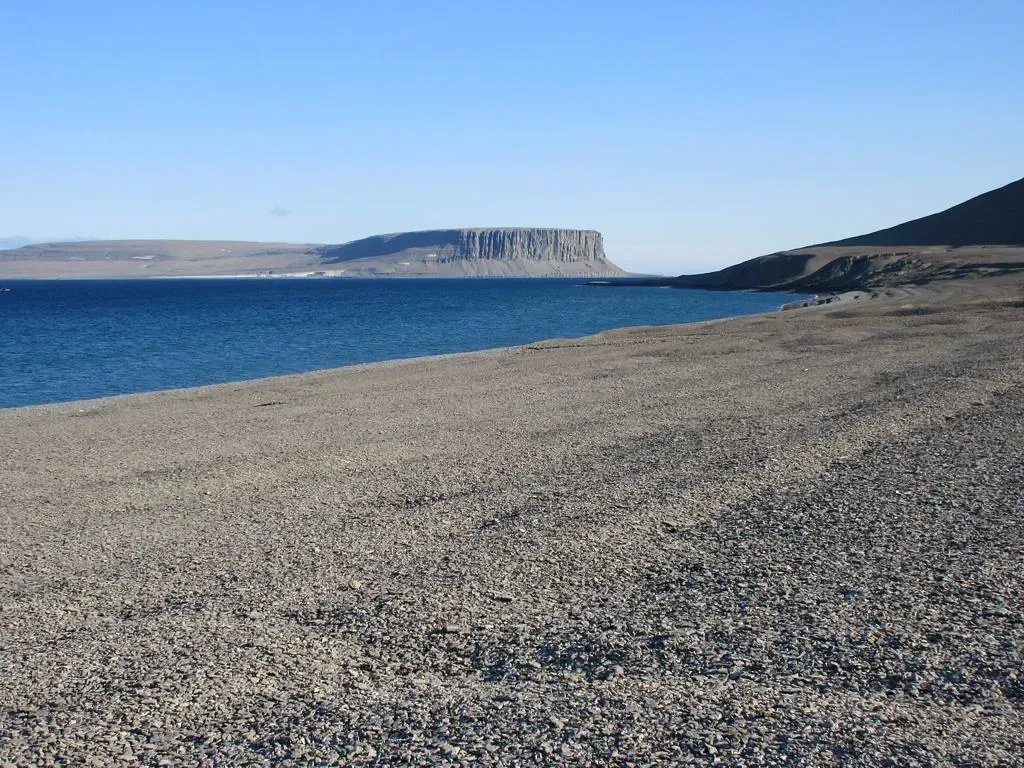
It is now known that things went reasonably well during the first months. Erebus and Terror negotiated the ice of Baffin Bay and made quick time through Lancaster Sound before being stopped by a wall of ice in Barrow Strait. Franklin turned north into Wellington Channel for some 240 kilometres, and a second barrier of ice forced him to retreat before settling into a winter campsite on Beechey Island.
When the Ice Refused to Let Go
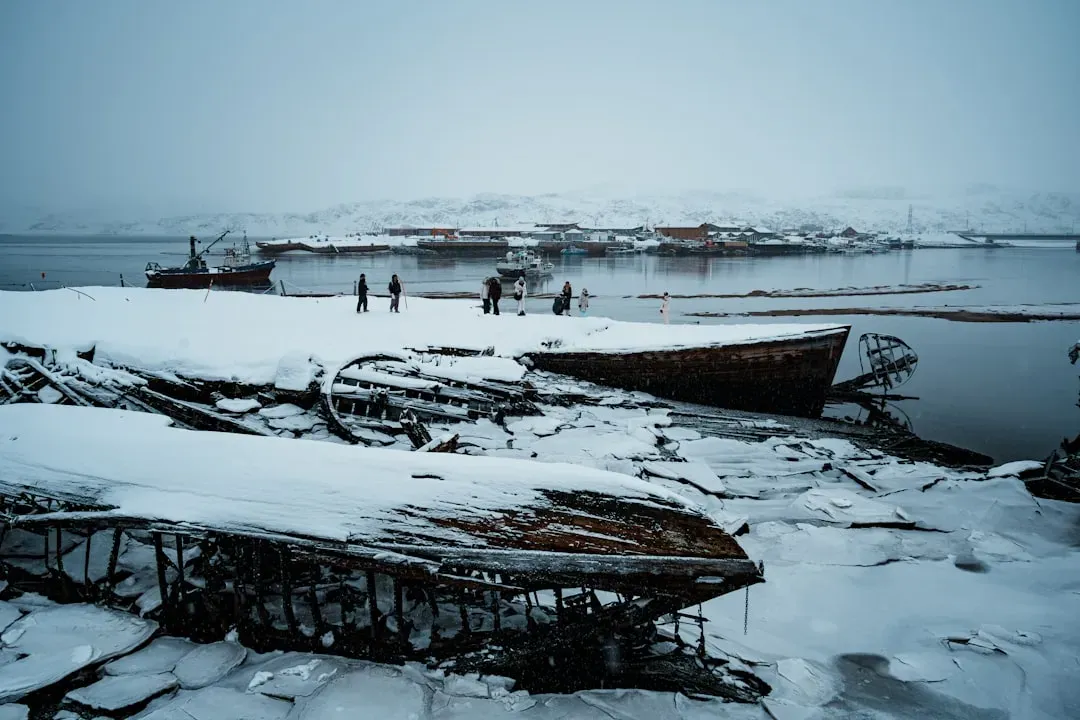
Off King William Island, the Erebus and Terror became trapped in the ice, forcing the men to spend the winters of 1846 to 1847 and 1847 to 1848 on the island. Sir John Franklin died on June 11, 1847. That is a detail that still stops me cold, no pun intended. Their leader gone, ice on every side, already well into their second winter with no end in sight.
After being icebound for more than a year, Erebus and Terror were abandoned in April 1848, by which point two dozen men including Franklin had died. The survivors, now led by Franklin’s second-in-command Francis Crozier and Erebus captain James Fitzjames, set out for the Canadian mainland. The 400-kilometre journey required the 105 survivors to traverse King William Island and cross the sea ice before reaching the river.
From archaeological finds it is believed that all of the remaining crew died on the subsequent march to Back River, most on the island, while around thirty to forty men reached the northern coast of the mainland before dying, still hundreds of miles from the nearest outpost of Western civilization. A death march across one of the most hostile landscapes on Earth. It’s almost impossible to fully comprehend.
The Search That Became a National Obsession

In 1848, Franklin’s second wife Lady Jane Franklin helped persuade the Admiralty and government to launch what became perhaps the largest search effort in naval history. It was an extraordinary act of determination. She refused to let the world forget. Spurred on by Franklin’s widow, as many as 50 ships would later travel to Canada in an attempt to locate the lost expedition.
Between 1847 and 1859, more than 30 search missions attempted to find the men and their vessels, but none were successful. Decades of effort, vast resources, and still nothing. For years, overland and sea expeditions scoured the area where the ships had been sent but found only a few artifacts and some scattered human remains.
A turning point came in May 1859, when a note was discovered in a cairn on King William Island, dated April 25, 1848 and co-signed by Fitzjames, explaining how the Franklin expedition had spent the winter of 1845 to 1846 on Beechey Island in the Arctic Archipelago. It was the closest thing to a message in a bottle that history had ever produced. The Victory Point Note is the last known communication of the expedition.
The Inuit Knew All Along

Here’s the thing that makes this story genuinely extraordinary, and a little uncomfortable. These discoveries highlight the importance of Inuit oral histories in gleaning information about the expedition. For many years, however, their accounts were dismissed. In the 1850s, British searchers interviewed Inuits on King William Island and were told of the crew’s incredible suffering, which included cannibalism. These claims caused outrage in England, and the Inuit stories were rejected. It was more than a century before their accounts were seriously investigated, and they have been invaluable to researchers.
Inuit oral historian Louie Kamookak of Gjoa Haven was instrumental in the discovery of the HMS Erebus. He collected an oral history of the expedition by listening to stories passed down from one generation to the next, and by comparing those stories to the journals of other expeditions, he was able to come up with a theory of the ship’s location.
Searchers found Erebus’s wreck in 2014 and Terror’s in 2016. Both were exactly where the Inuit had said they would be. Let that sink in. The knowledge had existed in oral tradition for over a century. The Land Was Always Used, a 2024 collection of oral histories about the Franklin expedition published by the Nattilik Heritage Centre in Gjoa Haven, is arguably the culmination of efforts to put the focus back on the Inuit, combining historical accounts with contemporary testimony from the Inuit community.
Partner offer
The Ships Are Finally Found
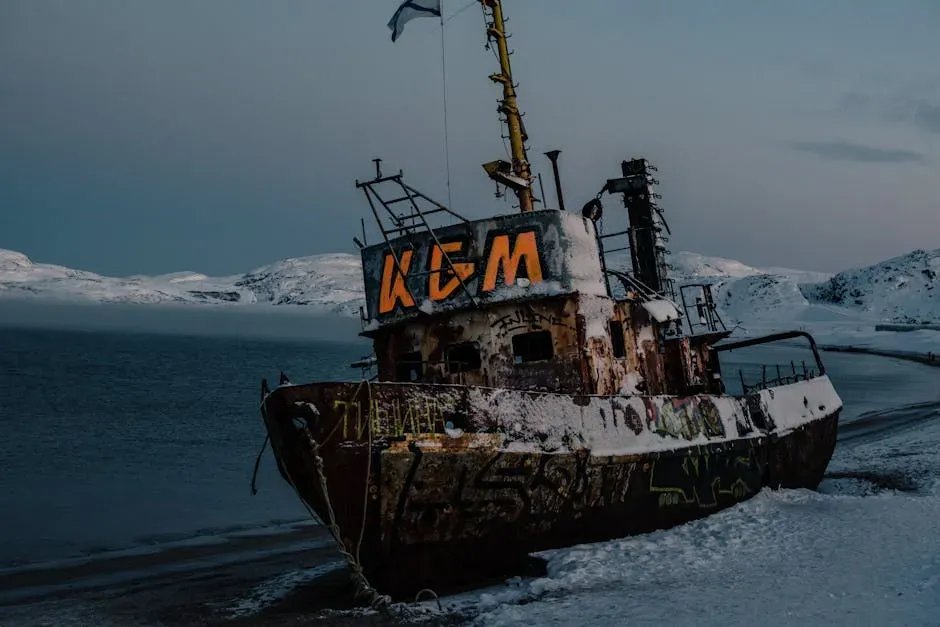
Finally, in the 2010s the mystery of what had happened to the two ships was solved. A combination of research into Inuit oral histories, the continued work of modern explorers, and the use of high-tech underwater equipment allowed scientists to locate first the Erebus in Queen Maud Gulf in 2014 and then the Terror in Terror Bay in 2016. Both wrecks were found off King William Island. Nearly 170 years after they vanished. That is not a typo.
In September 2014, a search team found the wreck of Erebus sitting in just 11 meters of water. Two years later, another team found the almost pristine wreck of Terror in deeper water to its companion’s northwest. The condition of the wrecks stunned researchers. The ship appeared to be in excellent condition, standing straight up, with the bow five meters off the sea and the stern four meters up, with the sonar image indicating the deck was largely intact.
Research and dive expeditions are now an annual occurrence at the wreck sites, protected as a combined National Historic Site called the Wrecks of HMS Erebus and HMS Terror National Historic Site. Recovered artifacts from the Franklin expedition are co-owned by Parks Canada and the Inuit Heritage Trust, and following the historic gift of the wrecks to Canada by the United Kingdom in 2018, Parks Canada began transferring a sample of Erebus artifacts to the National Museum of the Royal Navy starting in 2024.
What the Wrecks Revealed About Life on Board
Artifacts recovered from Erebus and Terror have shed light on life on board the ships, revealing some of the books the men read to pass the time, the instruments they used to record scientific data, and the hairbrushes and toothbrushes they used to groom themselves. There is something deeply moving about those everyday objects preserved under Arctic water. A hairbrush. A toothbrush. Objects that belonged to men who had no idea they were about to disappear from history.
The research team conducted 68 dives over 12 days to investigate and document the Erebus, recovering carefully excavated artifacts to help piece together more information about the 1845 expedition, including naval technology, scientific work, and life aboard the vessel. Underwater archaeologists found items related to navigation, science, and leisure in an officer’s cabin, believed to be that of Second Lieutenant Henry Dundas Le Vesconte, including a parallel rule, an intact thermometer, a leather book cover, and a fishing rod with a brass reel.
Parks Canada team manager Jonathan Moore noted that climate change and the resulting loss of sea ice has taken a toll on the Erebus, which rests in shallower water than the Terror, saying that in 2018, part of the upper deck flipped over, with evidence of artifacts moving around and timbers shifting. The very environment that preserved the ships for nearly two centuries is now threatening to destroy what remains.
The Dark Truth About How the Men Died
Hypothermia, starvation, lead poisoning or zinc deficiency, and diseases including scurvy, along with general exposure to a hostile environment while lacking adequate clothing and nutrition, killed everyone on the expedition in the years after it was last sighted by a whaling ship in July 1845. It’s a grim list, and researchers still debate which of these causes was most decisive.
Though the exact circumstances of deaths remain a mystery, experts believe some combination of scurvy, starvation, and exposure contributed. Lead poisoning, which was long the leading theory, probably did not kill the men directly. Still, the haste required in producing the 8,000 tins affected quality control, and the cans were later found to have lead soldering that was “thick and sloppily done, and dripped like melted candle wax down the inside surface.” Even if lead was not the direct killer, it almost certainly weakened the men over time.
Researchers also discovered that some bones bore cut marks suggestive of cannibalism. Rescuers had heard reports by local Inuit people of starving men who had resorted to cannibalism, but scandalized Victorians back home in England refused to believe these accounts. It took modern forensic science to confirm what the Inuit had been saying for generations.
A Senior Officer Identified in 2024
The Franklin story did not end with the discovery of the wrecks. In fact, some of its most dramatic chapters have been written only recently. In September 2024, archaeologists identified the cannibalized remains of a senior officer who perished during the expedition. By comparing DNA from the bones with a sample from a living relative, the research revealed the skeletal remains belonged to James Fitzjames, captain of the HMS Erebus.
In April of 1848, James Fitzjames of HMS Erebus helped lead 105 survivors from their ice-trapped ships in an attempt to escape the Arctic. None would survive. Fitzjames’ jaw, and many other crewmembers’ bones, are etched with cut marks consistent with cannibalism. This suggests that Fitzjames died while at least some other sailors were still alive, and that even officers were not spared.
Fitzjames is only the second member of the expedition to be positively identified, after the team identified John Gregory, an engineer aboard the Erebus, in 2021. In September 2024, researchers Douglas Stenton, Stephen Fratpietro, and Robert W. Park from the University of Waterloo and Lakehead University announced the positive identification of a skeletal mandible as belonging to Captain James Fitzjames through DNA testing. The research was published in the Journal of Archaeological Science: Reports.
The Mystery That Keeps Giving
More than 30 expeditions sought the ships, finding only a few artifacts, graves, and ghastly tales of cannibalism before the wrecks were finally located. Yet even now, with both ships found and regular diving seasons underway, the full picture remains elusive. Today the mystery of the lost Franklin expedition is far from solved, though the wrecks of Erebus and Terror were identified in 2014 and 2016. Archaeological research and Inuit oral histories have provided crucial clues, but as one researcher notes, “Everything about Franklin is still speculation.”
The latest research indicates that the men split into groups sometime after April 1848, with some parties surviving longer than others but all ultimately dying of starvation, scurvy, exposure, physical exhaustion, and chronic illnesses, among other causes. It’s hard to say for sure whether we will ever know the complete sequence of events. The fate of Franklin’s lost expedition is likely to remain a source of fascination, but piecing together the full details of what happened will require a lot more investigation.
In March 2024, the Government of Canada and the Kitikmeot Inuit Association signed a 23 million dollar Inuit Impact and Benefit Agreement for the site, setting out a new model for a cooperative relationship and supporting economic development opportunities for Inuit in Gjoa Haven and Cambridge Bay. The story of the Franklin Expedition is no longer just a British mystery. It belongs to the Arctic, and to the people who have lived there for thousands of years.
The Franklin Expedition is, at its core, a story about the limits of human certainty. A crew of 129 men set out absolutely convinced they were prepared for anything the Arctic could throw at them. They were wrong. Nearly 170 years later, we are still learning exactly how wrong they were, one bone fragment and one DNA test at a time.
What lingers most is not the tragedy itself but the fact that the Inuit always knew. Their oral histories carried the truth for over a century while the Western world dismissed them. The ships were found exactly where Indigenous knowledge said they would be. If there is one lasting lesson from this story, it might be this: sometimes the most advanced technology in the world matters far less than simply listening. What do you think about that?
Partner offer
Planning a trip to Vegas?
Compare hotel rates and show tickets on VEGAS.com.