Before a single frame plays, a movie poster has already done its job – or failed completely. It has maybe three seconds to stop a person in their tracks, spark curiosity, and plant a seed of anticipation that lingers for weeks. That’s a remarkable amount of pressure to put on a single image.
The best film posters throughout cinema history have done more than advertise movies: they’ve created cultural touchstones, shaped visual language, and become collectible art in their own right. From the hand-painted masterpieces of Hollywood’s Golden Age to the stark minimalism of modern indie cinema, iconic movie poster designs tell us as much about their era as the films they promote. What follows is a gallery of the finest examples ever committed to paper.
Jaws (1975) – The One That Changed Everything
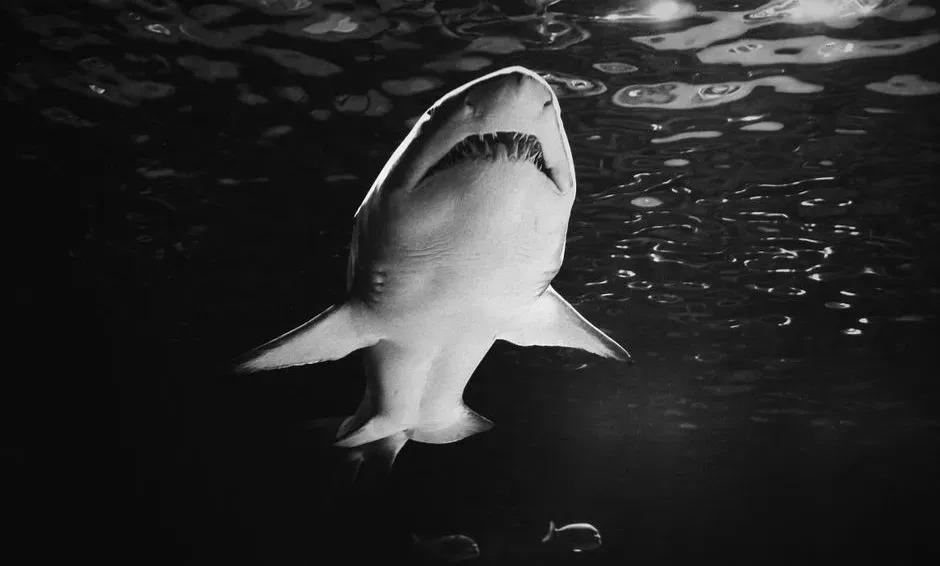
Roger Kastel’s Jaws poster remains perhaps the most recognized film image ever created. The composition is deceptively simple: a massive shark ascending toward an oblivious swimmer, the vast blue emptiness between them creating unbearable tension. The design taps into primal fears with surgical precision. There’s nothing decorative about it. Every element earns its place.
Jaws wasn’t just a great movie – it was the first summer blockbuster. Previously, studios had tended to open their biggest films during the autumn and winter. But in 1975, director Steven Spielberg believed his film about a killer shark roaming crowded beaches could attract a big summer audience, and he couldn’t have been more right. This led to an industry-wide switch to the hotter months, and the summer blockbuster has been the default mode ever since. The poster was the first domino to fall.
Star Wars: A New Hope (1977) – Myth Sold in a Single Frame

The original Star Wars poster by Tom Jung and later iterations by the Hildebrandt brothers established visual mythology before audiences ever entered theaters. Luke Skywalker’s heroic pose, lightsaber raised against a star-filled sky, promised epic adventure rooted in classical storytelling traditions. These posters drew deliberately from fantasy and adventure art traditions, positioning Star Wars as mythic rather than merely science fiction.
The poster for Star Wars: A New Hope features Darth Vader watching over the heroes in the foreground, which the other two in the original trilogy would echo as well. The juxtaposition between the dark and light highlights the conflict between the rebels and the Empire. Meanwhile, Darth Vader’s helmet is easily one of the most iconic masks in cinema history, so it was a wise decision to make it the largest image in the poster. It’s a composition that still feels thrilling today.
Vertigo (1958) – Saul Bass at His Absolute Peak
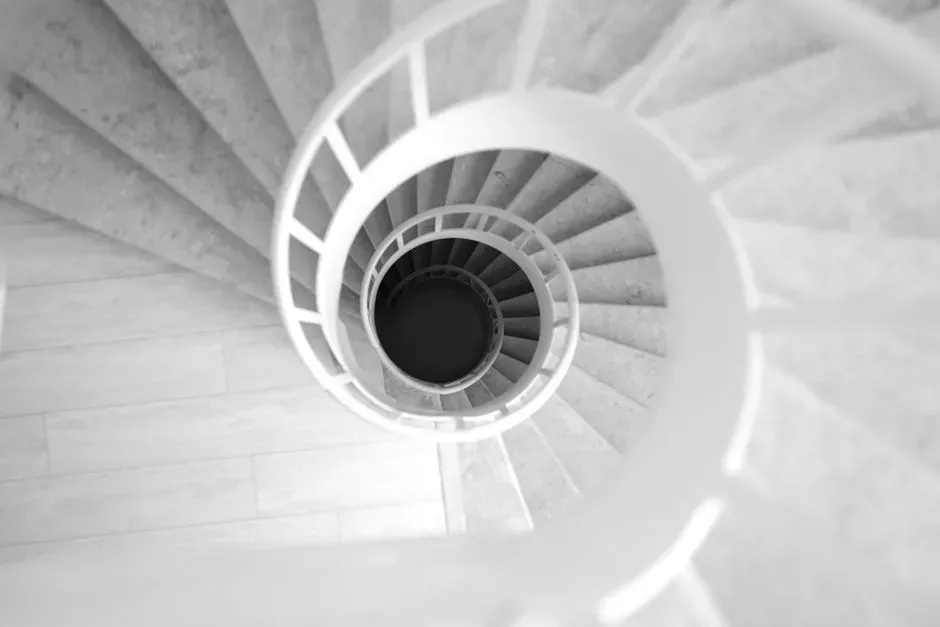
Title sequence and poster maestro Saul Bass created enough iconic imagery to populate a list in itself. But it’s this disorienting poster for Hitchcock’s Vertigo that is arguably his best. Using Lissajous spirals to recreate the film’s titular sensation, it is a simple yet enormously effective image that works doubly well when translated to the film’s opening titles.
The filmmakers couldn’t have chosen a better symbol to use on the poster. The spiral creates an optical illusion of sorts and gives you the sensation of falling – hence, vertigo. What’s more, the shape matches the downward spiral of obsession, the way Scottie can’t stop thinking about Madeleine after her death and sinks deeper and deeper into fixation. Few posters have ever matched form to theme so precisely.
The Godfather (1972) – Power Without a Word
The image of Marlon Brando’s Don Corleone is certainly striking – his black tuxedo fading into the all-black background – but arguably, the star of this poster is the instantly recognisable puppeteer logo, lifted direct from Mario Puzo’s book cover, and designed by legendary graphic designer S. Neil Fujita. In simple black-and-white, it tells us everything we need to know.
Marlon Brando has never looked so good in black and white than in the poster for The Godfather, where the only color in the entire image is the rose over Brando’s heart. That single detail, restrained and deliberate, communicates everything the film is about. It’s a lesson in how much atmosphere a designer can pack into almost nothing.
Metropolis (1927) – Art Deco Meets the Future
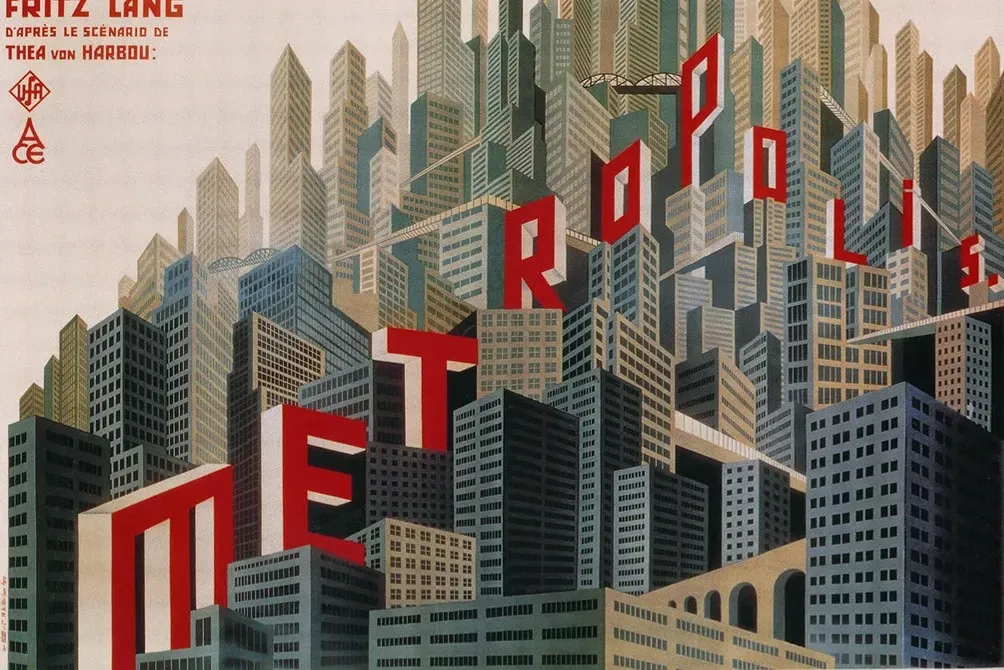
The poster for the 1927 Metropolis, designed by German graphic designer Heinz Schulz-Neudamm, is modern, sleek, and unsettling, influencing everything from Blade Runner to The Dark Knight. This one-sheet is a triumph of Art Deco style and German Expressionism. The towering buildings evoke both the futuristic and the ancient. Spotlights slice across the poster, and in a clever touch, the film’s title is designed to look as if the letters are formed by their beams.
Metropolis holds the record for the most expensive movie poster ever. An original copy of this poster sold for $690,000 in 2005. The 1927 Metropolis poster sold for $1.2 million in 2012, proving that these works transcend mere marketing materials. Its value at auction has only confirmed what designers have known for decades: this is one of the finest pieces of graphic art the twentieth century produced.
Silence of the Lambs (1991) – Haunting by Design
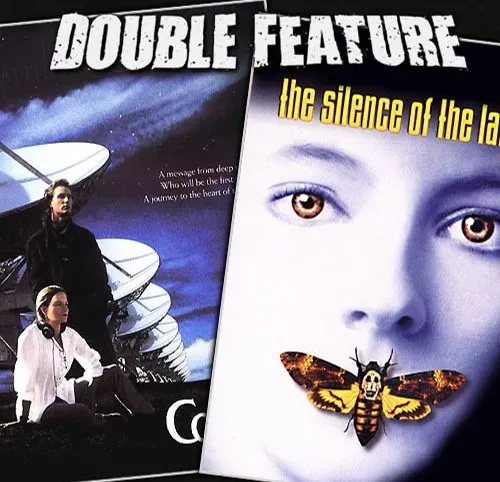
The face of Clarice Starling (Jodie Foster) is underneath a death’s head hawkmoth, accented with the nude bodies of embracing women in despair. It’s incredibly haunting. The Silence of the Lambs remains the only horror film in history to win Best Picture at the Academy Awards.
A more subtle indication of the film’s genre is that distorted, disturbing visage on the front half of the moth’s body. Notice how the moth is placed over Clarice’s mouth as well, similar to how Buffalo Bill inserts moths into his victims’ throats. The blurriness of the image conveys a sense of mystery, and Clarice stares directly at us in a way that evokes Jonathan Demme’s style of having actors say lines directly into the camera. It’s layered with meaning on every level.
A Clockwork Orange (1971) – Philip Castle’s Airbrush Revolution
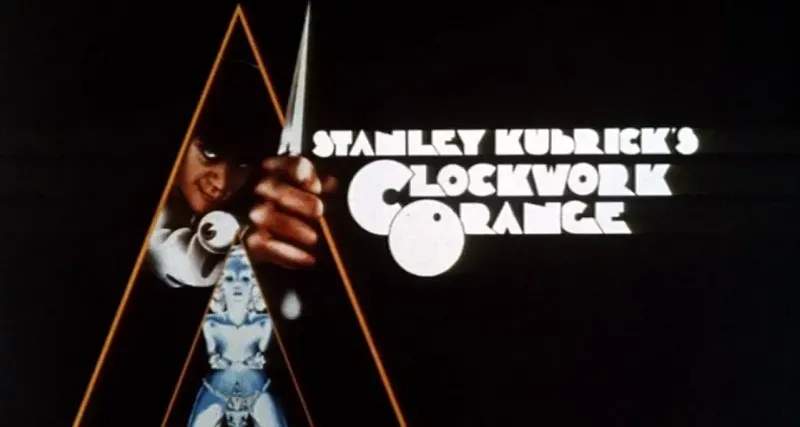
British artist Philip Castle introduced a completely new technique to the world of poster design: the airbrush. This tool allowed artists to create very sharp and detailed images, perfect for the raw realism of films like Stanley Kubrick’s A Clockwork Orange – one of the most iconic movie posters of all time, and designed by Castle.
Stanley Kubrick’s A Clockwork Orange poster is both striking and disturbing. Alex (Malcolm McDowell) holds a blade with a menacing grin, encapsulating the film’s themes of violence and control. The triangular design and eyeball imagery reference the film’s psychological and dystopian elements, making it an unforgettable piece of movie marketing. Kubrick, famously controlling over every aspect of his films, had a direct hand in the poster’s concept.
Raiders of the Lost Ark (1981) – Drew Struzan’s Defining Masterwork
Drew Struzan’s creation of the poster for Raiders of the Lost Ark is one of his best. It perfectly captures the tale of Indiana Jones in the first installment of the franchise. A young Harrison Ford with a whip in hand sports a winning smile with the movie’s supporting cast depicted around the edges. The warmth of the palette and the painterly texture give it the feel of a classic adventure serial, which was precisely the point.
Partner offer
By the time Raiders of the Lost Ark was released in 1981, Spielberg’s name was synonymous with quality, and fans were well aware of his friendship and occasional partnership with George Lucas. That’s why, when they geared up to launch a new franchise together, their joint involvement was the focus of everything. “Indiana Jones – the new hero from the creators of Jaws and Star Wars,” trumpeted the first poster’s tagline. That line alone probably sold a million tickets.
Pulp Fiction (1994) – Cool Reinvented
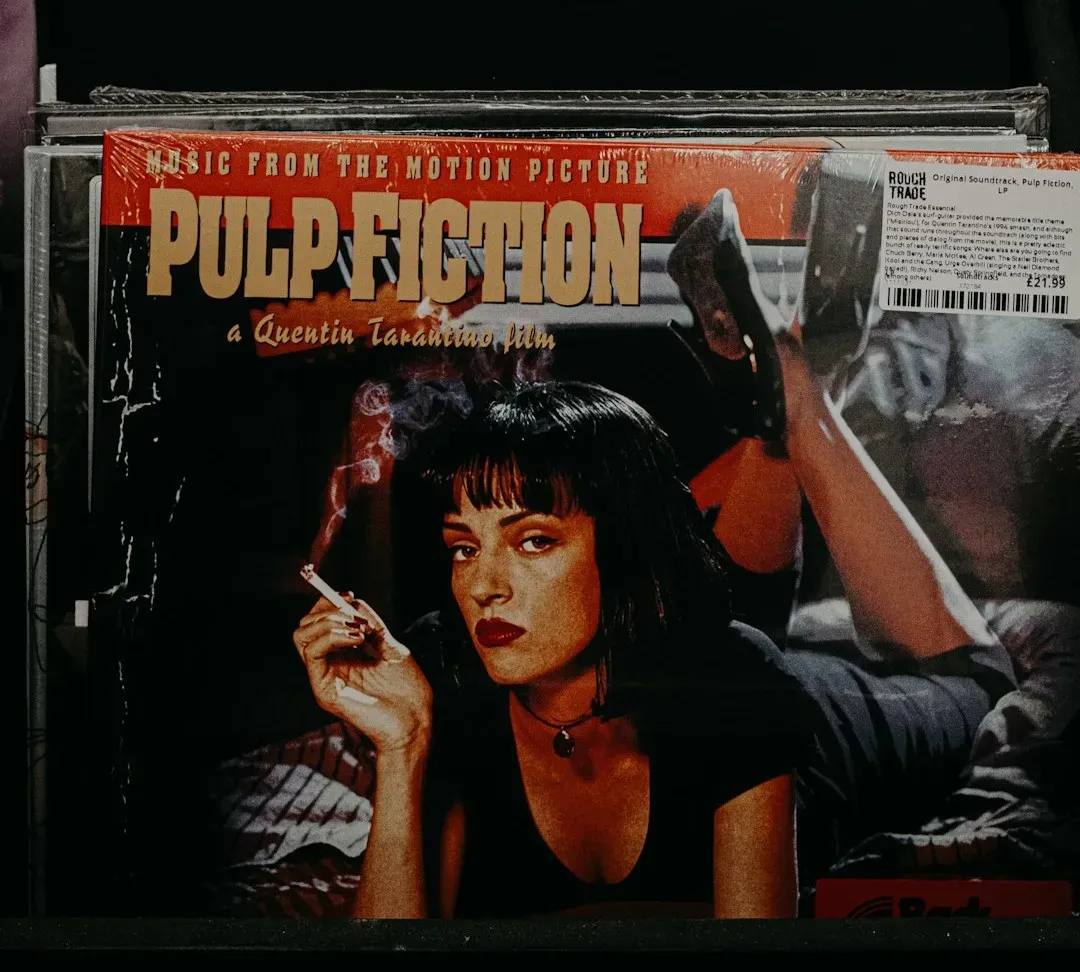
The Pulp Fiction poster featuring Uma Thurman reclining with a cigarette and pulp novel subverted expectations brilliantly. The Pulp Fiction poster does not tell us anything about the movie. Instead, it simply expresses the meaning of the movie title by incorporating the lead character with a cheap pulp novel. That restraint was itself a kind of confidence – a refusal to explain, which made audiences more curious, not less.
This Pulp Fiction poster had already been a dorm-room staple for decades. It’s the rare movie poster that functions equally well as independent art, stripped of any film context. The design captures Tarantino’s entire aesthetic – retro, knowing, and slightly dangerous – in a single still image.
The Exorcist (1973) – Restraint as Horror
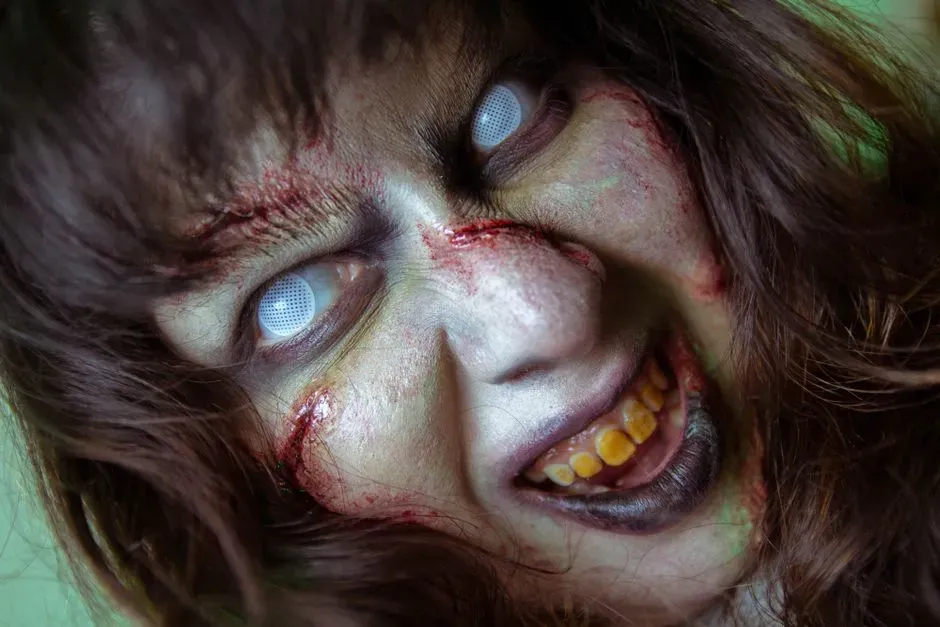
There are a number of shocking images in The Exorcist, many of which have been used in artwork for subsequent re-releases of the film. Back in 1973, however, Warner Bros. opted to hold its cards close to its chest. You’re not going to see Linda Blair’s head spinning around. Instead, the first poster for The Exorcist was all about signaling the movie’s incredibly eerie atmosphere.
The Exorcist has a reputation as a gross-out scare-fest, but a lot of its staying power comes from its elegance and restraint. There’s a reason it’s one of very few horror movies that won Oscars. The famous image of Father Merrin standing beneath a pale streetlight, a single cone of light cutting through the fog, is one of the most perfectly composed images in the history of film marketing. Sometimes what you don’t show is far more frightening than what you do.
Back to the Future (1985) – Time on a Poster
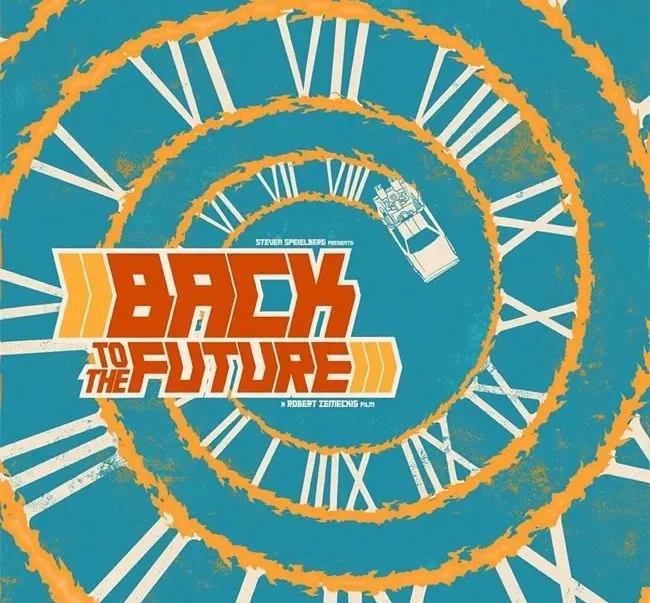
This artwork from master of the medium Drew Struzan takes all of the film’s iconic objects – Marty’s threads, the DeLorean, the flaming tyre tracks – and combines them in a single, stunning image. Plus he’s looking at his watch. Because time travel. The humor in that detail is exactly what made the film itself so enduring – smart, but never self-serious.
The Back to the Future movie poster perfectly communicates adventure, humor, and time-travel intrigue. Marty McFly checking his watch as lightning cracks behind him is pure visual storytelling. This design remains one of the best movie posters of all time, beloved by fans across generations. The sequels wisely kept the same compositional language, evolving the formula without abandoning it.
Blade Runner (1982) – Neo-Noir as Visual Poetry
The original Blade Runner movie poster blends noir mystery with futuristic aesthetics. With layered imagery, neon tones, and atmospheric composition, it reflects the film’s complex themes of identity and humanity. Today, it’s considered one of the most visually striking iconic movie posters ever produced.
Ridley Scott’s Blade Runner poster captures the film’s neo-noir atmosphere with futuristic cityscapes and dark, moody lighting. Illustrator John Alvin designed this great poster for Ridley Scott’s sci-fi classic, and Alvin worked on a number of other huge movies including E.T. and Star Wars. His ability to translate a film’s mood rather than simply its plot is what made him one of the most sought-after artists in Hollywood during that era.
The Phantom Menace (1999) – A Shadow That Said Everything

The design is centered around a young Anakin Skywalker, whose shadow forms the silhouette of Darth Vader on a Tatooine building, subtly hinting at his dark future. It’s a detail that’s easy to miss at first glance, which means it makes all the more dramatic impact when you realize the trick.
It simply had to be included because the imagery for Episode I: The Phantom Menace is a true lesson in skilled poster design. As a prequel, the audience already knows some of what’s to come. So depicting Anakin’s child form in front of Darth Vader’s shadow was a genius move. Whatever one thinks of the film itself, nobody disputes the poster’s brilliance. It remains one of the most discussed designs in franchise cinema history.
The Social Network (2010) – A New Template for a New Era
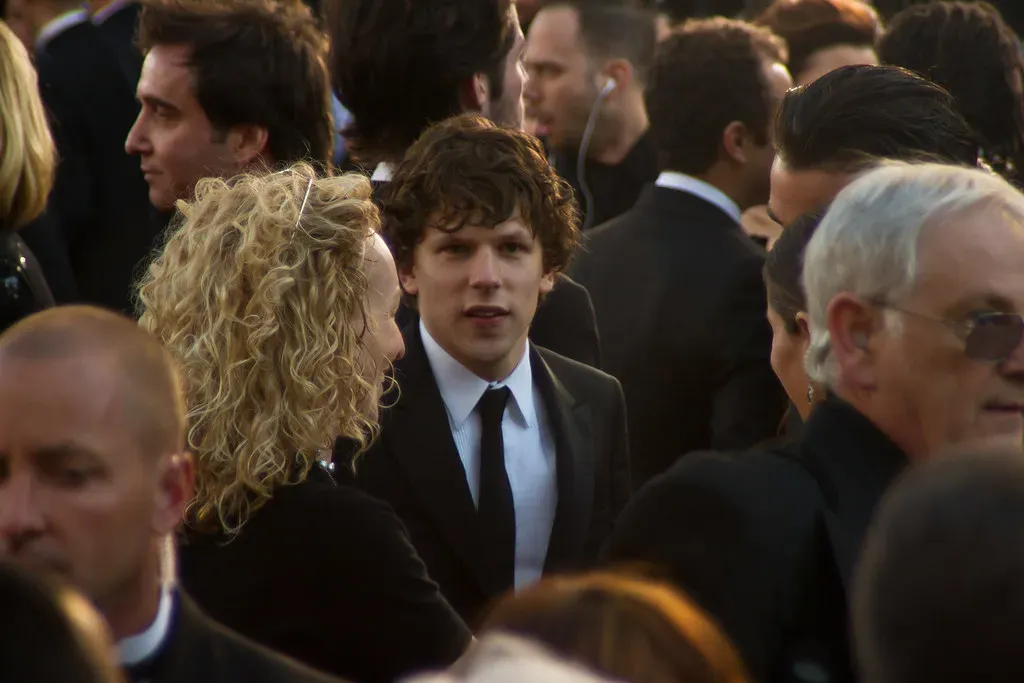
Neil Kellerhouse designed the poster for The Social Network. Kellerhouse’s design for the David Fincher directed, Aaron Sorkin penned film started a trend of movie posters that featured a character’s image with imposing text dominating the picture. This style was used for The Program, The King’s Speech, Thor, Salt, The Imitation Game, and many others.
The tagline – “You don’t get to 500 million friends without making a few enemies” – draped across a cold, slightly blurred face of Jesse Eisenberg communicated the film’s tone in a single glance. The best movie posters in cinema history come from many different decades, different genres, and in different styles. Movie posters have gone through iterations over the years, with some poster trends growing tiresome and others opening interesting new angles on a movie and the creative direction of a project. The Social Network poster launched one of the most widely imitated trends in modern film marketing.
What Makes a Poster Truly Iconic?
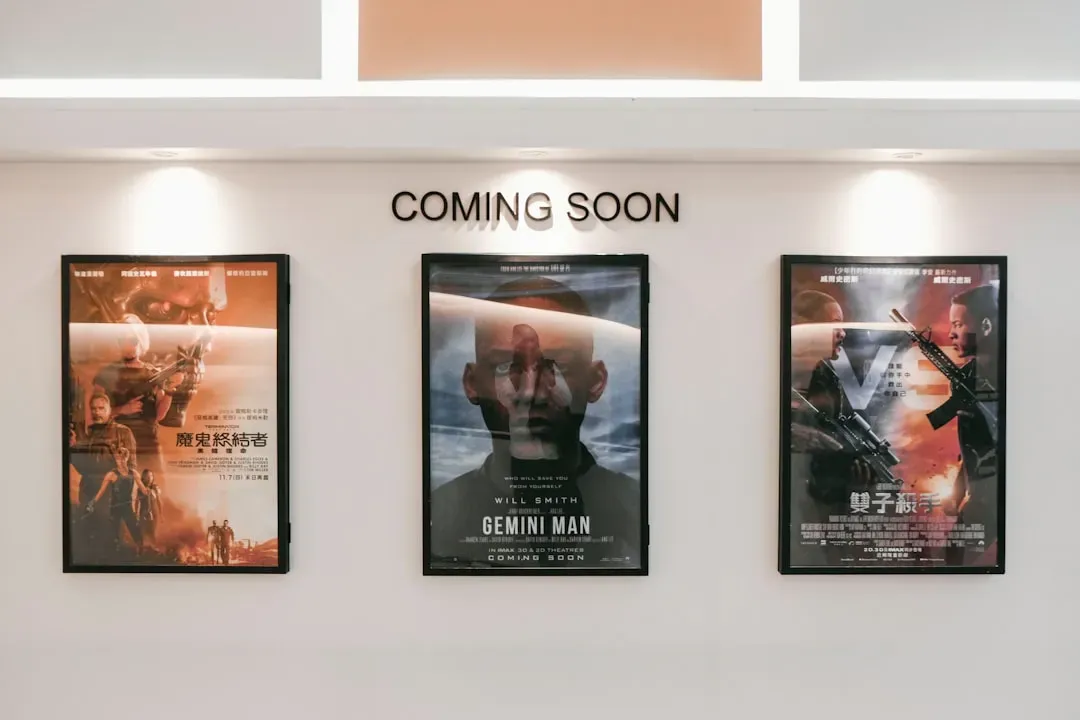
Saul Bass, Drew Struzan, and Roger Kastel rank among the most celebrated poster artists in cinema history. Bass revolutionized graphic design principles, Struzan defined blockbuster aesthetics, and Kastel created the iconic Jaws image that changed film marketing forever. What links these artists isn’t a shared style – it’s a shared instinct for distilling a film into its single most essential emotional truth.
Movie posters are more than marketing tools. At their best, they are cultural artifacts that capture a film’s mood, themes, and legacy in a single unforgettable image. While the worst movie posters feel like they were cobbled together in a few hours with little input from anyone who actually made the movie, the best highlight why a viewer should watch a film. They can draw in viewers with an intriguing location, make them curious with a mysterious hint at what’s in store, or get them excited by the characters and stories suggested on the poster.
The posters that endure are the ones that don’t try to say everything. They choose one idea, one feeling, one precise visual truth – and commit to it completely. That discipline, more than any particular style or era, is what separates the memorable from the merely printed.
Partner offer
Planning a trip to Vegas?
Compare hotel rates and show tickets on VEGAS.com.