
When Donald Trump stepped onto a stage in Las Vegas in August 2024 to announce his “No Tax on Tips” proposal, it wasn’t a random venue choice. Nevada, home to the densest concentration of tipped workers in the entire country, was exactly the right room to make that kind of promise. Within roughly a year, that campaign pledge became federal law – and Nevada’s workforce was central to every twist of the story.
The Tax Policy Center, a nonpartisan think tank, reported in 2024 that Nevada had the highest share of tipped workers in the country, at over five percent of the workforce – nearly three times the national average. That fact alone explains why this policy, once a political long shot, found real momentum so quickly.
Nevada’s Economy: Built on Service and Tips

Nevada’s tourism industry is responsible for roughly 37 percent of the state’s total gross domestic product, 22 percent of the state’s total wages and salaries, and 28 percent of the state’s employment. That dependence on hospitality is unlike almost anywhere else in America.
The tourism industry was responsible for over 98 billion dollars in total economic output during 2024 and supported over 436,000 jobs, generating more than 24 billion dollars in wages and salaries. The workers behind those numbers – dealers, servers, bartenders, valets, and housekeepers – depend heavily on gratuities to make ends meet.
Nevada is one of seven states that already requires employers to pay tipped workers the full minimum wage rather than a subminimum wage. That’s a meaningful distinction. It means Nevada’s service workers arrive at this new federal policy from a stronger base than most of their counterparts nationwide.
The Campaign Promise That Became Law

In a surprise move, the Republican-led Senate quickly passed the “No Tax on Tips Act,” giving its official stamp of approval to an idea that gained traction since President Donald Trump campaigned on it in 2024. The bipartisan nature of that vote was notable.
The bill was introduced in January by Senator Ted Cruz of Texas, with a bipartisan group of co-sponsors including Nevada’s two Democratic senators, Jacky Rosen and Catherine Cortez Masto. That cross-party coalition gave the proposal unusual staying power in a deeply divided Congress.
A version of the bill was included in the One Big Beautiful Bill Act and signed into law on July 4, 2025. From campaign rally to signed legislation in under a year – that’s a fast timeline by any standard in Washington.
What the Law Actually Says

Effective with the 2025 tax year, workers in occupations that “customarily and regularly received tips” before December 31, 2024 are able to deduct up to $25,000 in “qualified tips” from their federal taxable income. The change stems from the One Big Beautiful Bill Act, signed in July 2025.
The deduction is capped at $25,000 per year and is available regardless of whether a taxpayer takes the standard deduction or itemizes. It is written as a temporary provision of the tax code and applies from January 1, 2025, through December 31, 2028.
The tax break is restricted to employees who earn $160,000 or less in 2025, an amount that will rise with inflation in upcoming years. Workers above that threshold are phased out entirely. It’s a meaningful income cap, though critics argue it still reaches well into the middle class and above.
Who Qualifies – and Who Doesn’t

Treasury released a preliminary list of 68 tipped occupations, which includes many gaming-industry roles such as casino dealers, change-persons, and cage workers among the qualifying jobs. For Nevada, that inclusion of casino-floor positions was a significant detail.
Treasury and the IRS clarified that eligible payment forms include cash, check, credit card, debit card, gift card, electronic or mobile payments settled in cash, and certain tokens – including casino chips. That last point drew particular attention from Nevada stakeholders, where chips are a standard form of gratuity on casino floors.
The final regulations were formally published in the Federal Register on April 13, 2026, and clarified that qualified tips do not include automatic gratuities or surcharges. That exclusion of mandatory service charges matters in practice, especially for banquet workers and large-party servers.
Nevada Workers: A Closer Look at the Numbers

No Tax on Tips technically covers more than 440,000 Nevadans, based on a Nevada Independent analysis of Treasury’s list of tipped professions cross-referenced with 2024 Bureau of Labor Statistics data.
Experts suggest the actual number of genuinely tipped workers in Nevada is much smaller – closer to five percent, or a little more than 75,000 people, roughly equal to the number of Nevadans who work as wait staff, maids, and gambling dealers combined. The gap between those two figures reflects Treasury’s deliberate use of broad occupational categories.
Of the more than 60 million tax returns filed by early March 2026, over 3.5 million claimed this deduction, which has provided an average tax cut of roughly $1,300. The early filing data gives the first real-world glimpse of how broadly the policy is landing.
The Bipartisan Senate Vote: How Nevada Made It Happen
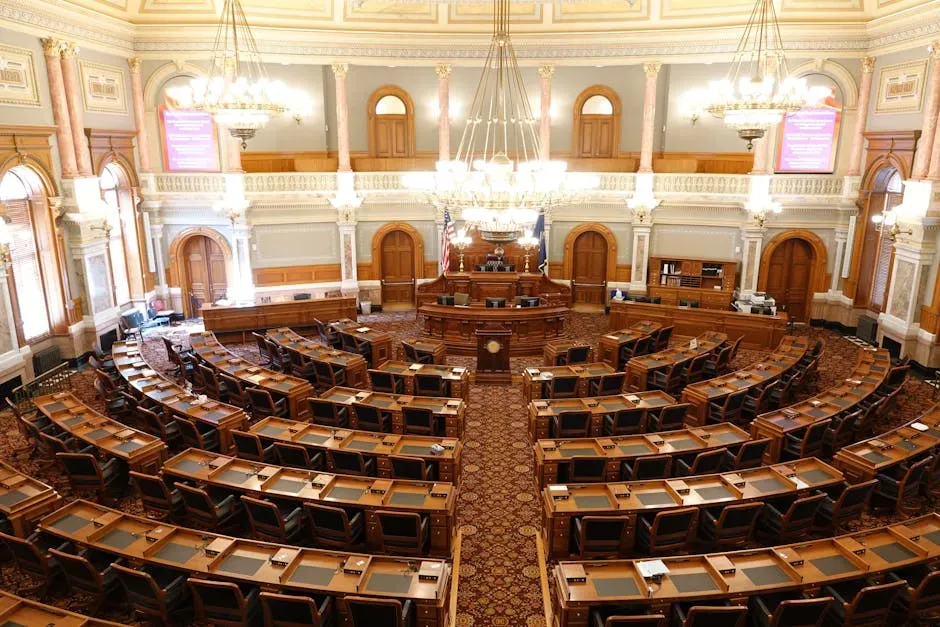
Senator Rosen brought the bill up in the Senate for a “unanimous consent” request – a process typically used for more mundane matters, where any senator can block passage. Consequential tax bills usually follow a more complex process. None of the 99 other senators objected, which led directly to the legislation’s passing.
The Senate unexpectedly passed the No Tax on Tips Act in a unanimous vote, giving weight to the prospect of eliminating federal income tax for cash tips. That unanimity was striking given how rarely tax policy travels that smoothly through the chamber.
The proposal is also being considered in at least 20 states, a sign that Nevada’s political pressure didn’t stop at the federal border. States are now watching how the federal version plays out before deciding whether to conform their own tax codes.
What Workers Are Actually Seeing in Their Refunds

Under the new measure, a single Nevadan who brings in $30,750 in 2025, including $4,000 in tips, and takes the standard deduction would have taxable income of $11,000 instead of $15,000 – boosting their refund by about $500 when they file.
The results of analysis indicate that the average single taxpayer in a tipped occupation could see a tax savings of approximately $1,985 in 2025, equivalent to about 5.9 percent of annual income for many bartenders. That’s a real number for someone living on a tight budget, though its long-term impact is less clear.
Many workers who would qualify already make too little or receive too many tax credits to owe taxes, and will not receive extra cash due to No Tax on Tips. Others will be a few hundred dollars richer. Higher earners who would otherwise owe more in federal taxes will see bigger upsides.
The Critics: Who Really Benefits?

The Tax Policy Center estimates that the new tip tax deduction will benefit roughly 2.6 percent of households in tax year 2026. About 44 percent of these households will earn over $100,000 in expanded cash income, and such households will receive roughly 69 percent of the benefit of the deduction.
Most of the direct tax benefits will go to middle- and higher-income taxpayers, while the bottom 40 percent will see virtually no benefit, because more than a third of tipped workers earn too little to owe federal income tax. That structural reality has drawn sustained criticism from labor economists.
Critics argue that employers of tipped workers are among the biggest beneficiaries, as the deduction gives them more room to hold down or cut base wages. Some tipped workers benefit, but only those in eligible occupations who owe federal income tax – and many earn too little to qualify.
The Fiscal Cost and What Comes Next

According to the nonpartisan Joint Committee on Taxation, the tips deduction will cost $32 billion over ten years, from fiscal years 2025 to 2034. The temporary nature of the deduction, expiring after 2028, pushes down its cost. If lawmakers eventually make it permanent, the CBO estimates it would cost around $83 billion over the same period.
In efforts to address the criticisms, the Culinary Union has endorsed the TIP Improvement Act, a federal bill introduced by Nevada Representative Steven Horsford in February 2026. If passed, the legislation would remove the provision’s temporary status and expand the deduction to $100,000.
The bill would also fix what Horsford called a “marriage penalty,” allow the use of a verified taxpayer identification number so immigrant workers are not excluded, and protect automatic gratuities from being excluded from the deduction. That last point matters enormously in Nevada, where large-party service charges are common.
Payroll Taxes, State Taxes, and What’s Still Owed
Workers can still have to pay payroll taxes, which include Social Security and Medicare, as well as state and local taxes. The name “No Tax on Tips” is, in that sense, incomplete – it covers federal income tax only.
Depending on design, exempting tips from payroll taxes could reduce workers’ Social Security benefits later in life – a trade-off that hasn’t received enough public attention. The current law deliberately stopped short of that step, though future legislation could revisit it.
The Institute on Taxation and Economic Policy estimates that if all states with income taxes decided to adopt the tip deduction, it would lead to a loss of $2.74 billion in state revenue in 2026 alone. Nevada has no state income tax, so that particular ripple doesn’t apply there – but the figure illustrates why other states are approaching conformity cautiously.
Nevada’s Lasting Influence on National Policy

Nevada is a state where both Donald Trump and Kamala Harris pitched no-tax-on-tips proposals to entice the Vegas-based workforce, which has the highest proportion of restaurant, hotel, and casino workers in the country. The fact that both major candidates backed the idea in 2024 was a direct reflection of Nevada’s political weight.
The Culinary Union Local 226 represents approximately 60,000 non-gaming employees throughout the region. The union used strikes in late 2023 and early 2024 as leverage with casino-hotel operators to negotiate new collective bargaining agreements with 32 percent cumulative wage increases and other benefits. A workforce that organized that effectively was always going to shape tax policy too.
Treasury and the IRS provided their first formal estimate projecting that more than ten million tax returns will report tips in 2026 – notably higher than previous estimates of workers in tipped occupations, though still representing a small portion of overall U.S. workers. That ten-million figure will shape every future debate about whether to extend or expand the deduction past 2028.
Conclusion: A Policy Still Finding Its Shape

The No Tax on Tips debate doesn’t have a tidy ending yet. What started as a campaign rally line in Las Vegas evolved into a genuine bipartisan legislative achievement – and simultaneously exposed real fault lines in how the U.S. tax code treats low-wage workers. The law as written offers meaningful but uneven relief. Those who earn just enough to owe federal income tax on their tips will benefit. Those who earn too little, or who are already zeroing out their liability through credits, largely won’t.
Nevada’s hospitality workers pushed this policy into national law faster than almost any observer expected. Whether the deduction becomes permanent, gets expanded through legislation like the TIP Improvement Act, or quietly expires after 2028, will depend on whether that same workforce – and the senators who represent them – keeps pressing. What’s already clear is that a cocktail server in Las Vegas helped redraw the U.S. tax code. That’s not nothing.