
History, as it’s taught in most classrooms, is often a cleaned-up version of what actually happened. Stories get simplified for young audiences, then those simplifications get printed in textbooks, repeated by teachers, and absorbed as fact by generations of students who never had reason to question them. The problem is that some of these simplifications aren’t just incomplete. They’re outright wrong.
What follows is a closer look at six of the most persistent historical myths that still circulate in schools today, and what the actual evidence tells us instead. Some of these corrections are well-known among historians. Others are still making their way into mainstream awareness. Either way, the real story is almost always more interesting than the myth.
Columbus “Discovered” America – Except He Didn’t


The assertion that Christopher Columbus “discovered” America in 1492 ranks among history’s most persistent myths, a narrative so deeply embedded in Western consciousness that generations of schoolchildren memorized “In 1492, Columbus sailed the ocean blue” without questioning the fundamental premise. The trouble with the word “discovered” is that it erases the tens of millions of people who were already living there.
This myth obscures three inconvenient truths: millions of Indigenous peoples had inhabited the Americas for at least 15,000 years before any European arrival, Viking explorers had established settlements in North America around 1000 CE, and Columbus himself never set foot on the North American mainland during any of his four voyages, instead landing in the Caribbean while mistakenly believing he had reached Asia. The myth that Columbus bravely defied flat-Earth believers appears to have been largely invented by the American writer Washington Irving, whose 1828 fictional biography depicted a heroic navigator facing down ignorant clergy who believed the world was flat. It was historical invention, not scholarship.
Everyone Believed the Earth Was Flat Before Columbus Proved Otherwise


By the time Christopher Columbus sailed west in 1492, educated Europeans had known the Earth was spherical for nearly two thousand years. The ancient Greek mathematician Eratosthenes had not only argued for a spherical Earth but calculated its circumference with remarkable accuracy around 240 BCE, using the angles of shadows in two different Egyptian cities. This was not a fringe theory. It was textbook knowledge for the educated classes of the ancient and medieval world.
Medieval scholars, the Catholic Church, and European universities all accepted a round Earth as established fact. According to historians, it was widely known, starting in the third century BCE, that the Earth was not flat. Columbus wasn’t trying to prove the Earth was round. He was trying to find a faster trade route to Asia and, as it happens, miscalculated the distance by thousands of miles. He only succeeded because an entire continent happened to be in the way.
The Egyptian Pyramids Were Built by Slaves

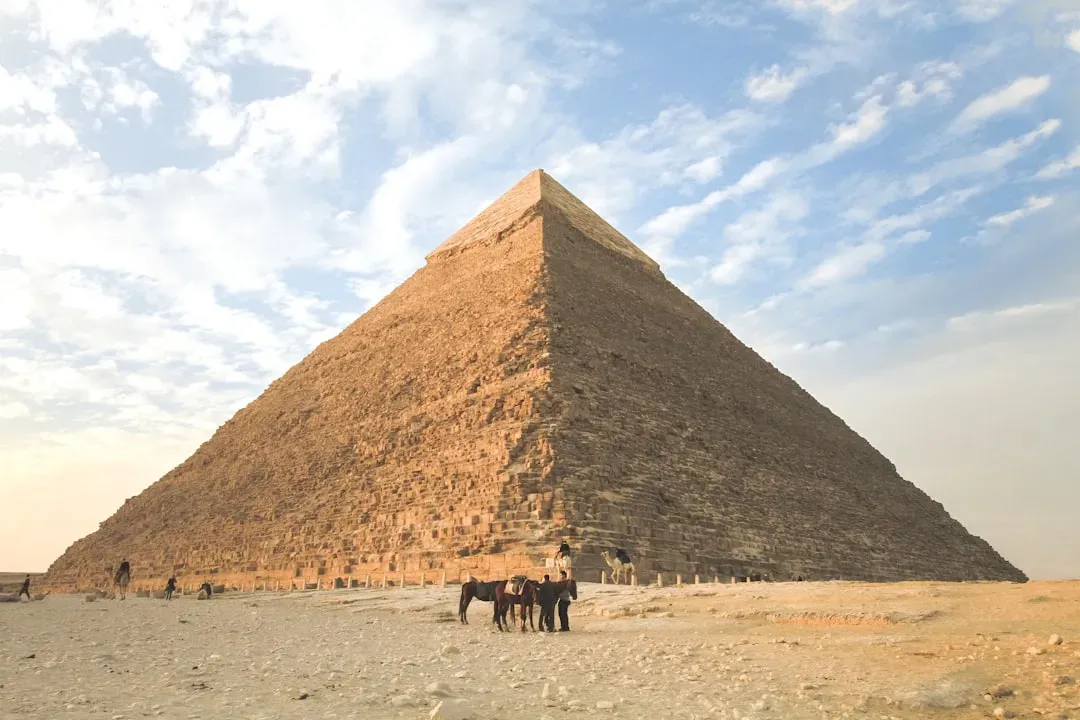
Slaves did not build the pyramids. The best evidence suggests that pyramid workers were locals who were paid for their services and ate extremely well. The ancient Greek historian Herodotus once described the pyramid builders as slaves, creating what Egyptologists say is a myth later propagated by Hollywood films. Cecil B. DeMille’s cinema did the rest of the damage.
Excavations around the pyramid have uncovered graves belonging to workers believed to have participated in the construction. The burial sites include statues, tools, and inscriptions listing over 20 job titles such as “artisan” and “overseer of the side of the pyramid.” Slaves would never have been treated this well, so researchers think that these laborers were recruited from farms, perhaps from a region much further down the Nile. There is now a consensus among Egyptologists that the Great Pyramids were not built by slaves.
Rosa Parks Was Just a Tired Woman Who Refused to Give Up Her Seat


The textbook version of Rosa Parks is deceptively simple: a weary seamstress on her way home from work, too tired to move to the back of the bus. It makes a beautiful story. It also misses nearly everything important about who she was and what her act of resistance actually meant. Although Parks has sometimes been depicted as a woman with no history of civil rights activism at the time of her arrest, she and her husband Raymond were, in fact, active in the local chapter of the NAACP, and Parks served as its secretary.
The roots of the bus boycott began years before the arrest of Rosa Parks. The Women’s Political Council, a group of Black professionals founded in 1946, had already turned their attention to Jim Crow practices on Montgomery’s city buses. In a short narrative, textbooks neglect the fact that Parks was an active member of the NAACP, which was looking for a test case to challenge Alabama’s state bus segregation laws, and that the bus boycott had been planned by the Women’s Political Council for over a year. Her courage was real. Her spontaneity was not the whole story.
Napoleon Bonaparte Was Remarkably Short

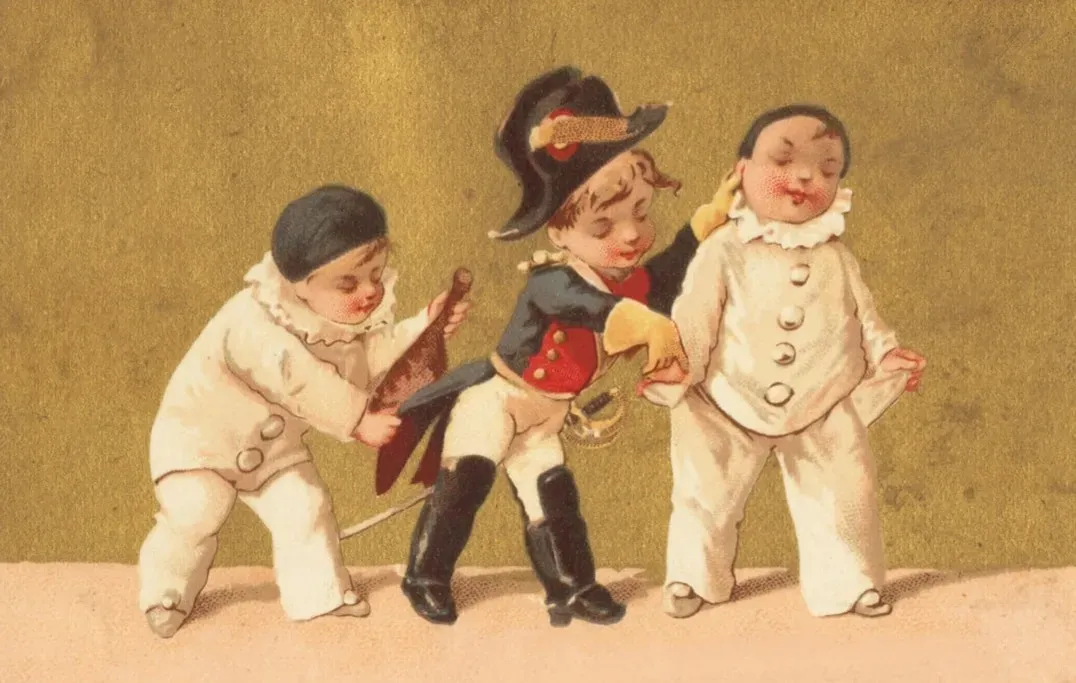
Ask almost anyone about Napoleon and the height joke comes up. It has been repeated so many times across so many centuries that it feels like a settled biographical fact. Napoleon Bonaparte stood around five feet six or five feet seven inches tall, roughly average for a French man of his era and taller than the average British soldier of the same period. The myth of his small stature is largely a product of British wartime caricature, particularly the work of political cartoonist James Gillray, whose satirical illustrations depicted Napoleon as a tiny, tantrum-throwing figure dwarfed by larger British opponents.
The myth was partially started by British cartoonist James Gillray. Napoleon was of average height, but in “Maniac-raving’s-or-Little Boney in a strong fit” (1803), Gillray portrayed him as a small man dwarfed by the furniture around him, making Napoleon out to be a child throwing a tantrum. Similar cartoons mimicked that motif, and the myth became the version we’ve become so familiar with today. That the image outlasted the war by more than two centuries says something about the staying power of a well-constructed insult.
The Aztecs Thought Hernán Cortés Was a God

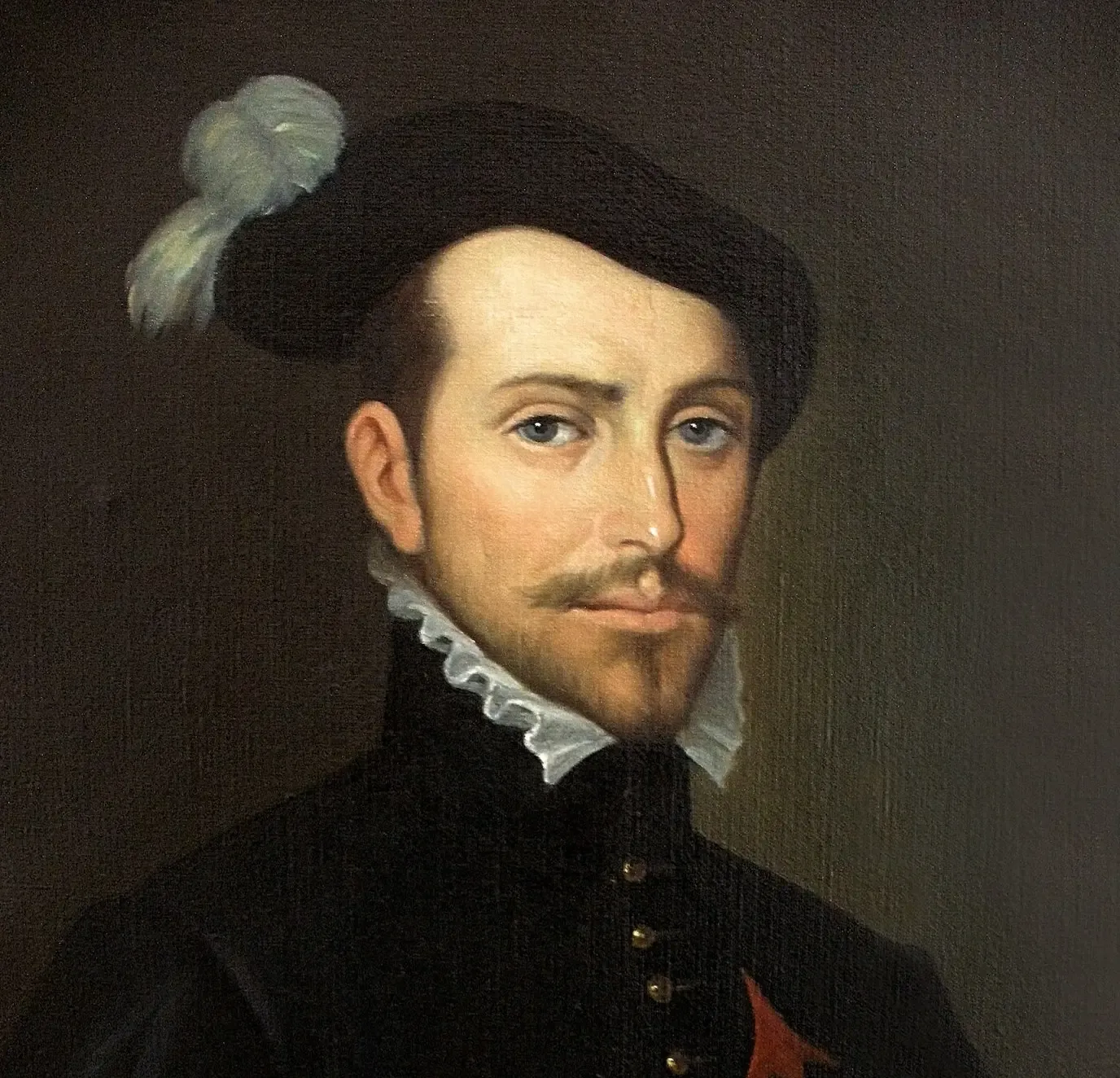
When Hernán Cortés arrived in Mexico in November 1519, a popular myth claims that the Aztec emperor Montezuma and his people thought he was a god. In reality, this was first claimed in 1552 by Francisco López de Gómara, who was chaplain and secretary to the then-retired Cortés. It is widely accepted that those claims were made to justify the conquest and mistreatment of the Aztec people.
Cortés himself never mentioned being perceived as a “white god” in any of his letters from that time. The Aztecs were highly sophisticated and had a complex understanding of gods and prophecy, but they treated Cortés and his men as powerful outsiders rather than actual deities. Historians think Montezuma’s cautious diplomacy was likely a political strategy to protect his city and assess the threat. The Mexica people of the Aztec Empire did not mistake Hernán Cortés for a god. This notion came from Francisco López de Gómara, who never went to Mexico and concocted the myth while working for the retired Cortés in Spain years after the conquest. The story flattered the conquerors. That’s precisely why it stuck.