
Most students spend years developing study habits that feel productive but aren’t. Rereading notes, highlighting passages, and recopying textbooks are comfortable routines – but cognitive science research has consistently shown they deliver surprisingly little return. Students often reread course materials and recopy notes, but these are relatively passive strategies that do little to help learning.
The techniques that actually move the needle tend to be less intuitive and, frankly, more uncomfortable. Research shows that students are quite aware of certain strategies but still avoid them, primarily because of the cognitive costs associated with them – the time, effort, and increased planning they require. What follows are twelve approaches that quietly transform how knowledge sticks, many of which most learners overlook entirely.
1. Retrieval Practice (Active Recall)

Active recall involves mentally retrieving information from memory, a process known to strengthen neural pathways associated with learning. This technique not only reinforces knowledge but also enhances retention and understanding of complex concepts. Rather than re-reading a chapter, the idea is to close the book and force yourself to reconstruct what you’ve learned from scratch.
One of the most robustly supported learning strategies by cognitive psychology is retrieval practice, yet it is often overlooked in popular questionnaires on learning strategies, particularly in terms of explicit self-testing as a strategy. One of the most exciting discoveries from learning science is that it appears that the greater the cognitive effort required to retrieve something from memory, the stronger the retention of that information. The discomfort of not knowing is, in a very real sense, part of the process.
2. Spaced Repetition

Spaced repetition is a research-based learning strategy that helps improve your long-term memory by reviewing information at a strategically increasing interval. Rather than cramming everything all at once, the method works by reinforcing knowledge before it’s likely to be forgotten. It’s directly tied to what the psychologist Hermann Ebbinghaus described as the forgetting curve, the natural decay of memory over time.
From a cognitive neuroscience perspective, spaced practice enhances memory consolidation. When learning is spaced, the brain has time between sessions to reorganize and stabilize the new information, and sleep and rest periods between sessions help reactivate and strengthen neural pathways involved in that learning. Starting a review the next day after learning something, then again after three days, then a week, builds far more durable memory than a single long session ever could.
3. Interleaving Different Subjects

The interleaving effect is the finding that studying and practicing examples of different concepts in a mixed order can facilitate learning more than focusing on one concept at a time. This effect is robust across many types of to-be-learned content, ranging from visual categories to STEM concepts and sports and motor skills. It feels counterintuitive, because switching topics repeatedly seems like it would slow things down.
Interleaving often feels more effortful than blocked practice and may leave learners with a sense of dissatisfaction. Nonetheless, over time, the technique enhances learners’ ability to discriminate among different types of problems and improves consolidation of information into long-term memory, representing an example of desirable difficulty. Generally speaking, consider interleaving no more than two to three topics per session and switching topics roughly every fifteen to twenty minutes.
4. The Feynman Technique
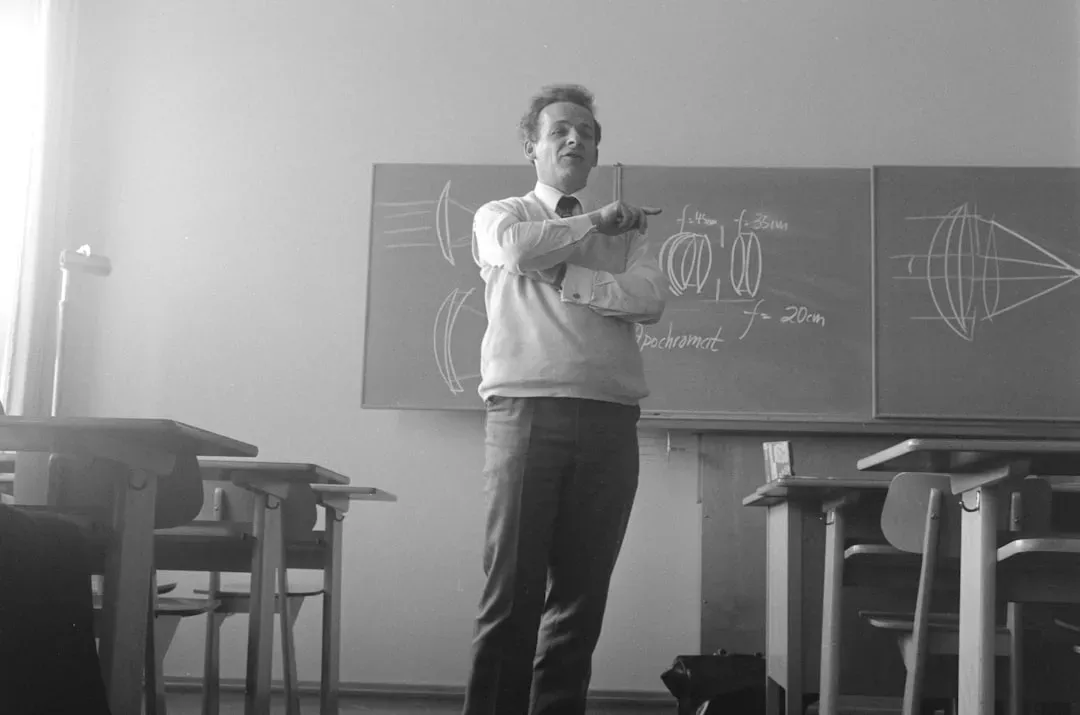
The Feynman Technique is all about breaking down complicated ideas into simple, understandable chunks. Named after the brilliant physicist Richard Feynman, this method pushes you to explain a concept as if you’re teaching it to a child. When you genuinely can’t simplify something, that’s a signal – not of a hard concept, but of a gap in your own understanding.
The Feynman Technique is a learning method that promotes understanding by requiring the learner to explain concepts in their own words, as if teaching a beginner. This forces simplification and clarity, which exposes gaps in comprehension and facilitates deeper learning. Research supports that “teaching to learn” improves retention and engagement. The technique works best when you resist the urge to look something up too quickly and instead sit with the confusion long enough to find the edge of your knowledge.
5. Elaborative Interrogation

Elaborative interrogation is a learning strategy in which students respond to “why” and “how” questions about factual statements they are studying. The term was coined by Michael Pressley and colleagues in a 1987 paper that demonstrated a striking effect: students who were prompted to explain why facts were true recalled significantly more of those facts than students who simply read the same information.
According to the levels of processing framework developed by Craik and Lockhart, deeper processing involving meaning-making, connections, and elaboration produces more durable memories than shallow processing. When a student constructs an explanation in response to a “why” prompt, they must first activate relevant prior knowledge, and this activation process itself strengthens the retrieval pathways for that prior knowledge. They then integrate the new fact with existing knowledge, creating a richer, more connected representation in memory. It adds only a modest amount of time to a study session but consistently deepens what you actually retain.
6. The Pretesting Effect

Challenging, less intuitive study methods often lead to superior long-term retention, and research aligns with the common metacognitive illusion in which fluent study conditions seem more effective, even though they are not objectively superior for learning. Pretesting exploits this dynamic deliberately. Taking a practice test on material you haven’t studied yet – and getting answers wrong – actually primes the brain to absorb the correct information more deeply when it arrives.
Research has found that generating errors with more complex and meaningful material improved recall accuracy even when corrective feedback was delayed. Less meaningful material did not yield the same benefit, a difference attributed to the activation of richer semantic networks that fosters more elaborative retrieval processes. The key is that wrong answers aren’t wasted effort. They create a kind of cognitive hunger that makes the right answer stick far more effectively afterward.
Partner offer
7. Sleep as a Study Tool

Research found that interleaving sleep between learning sessions not only reduced the amount of practice needed by half but also ensured much better long-term retention. Sleeping after learning is definitely a good strategy, but sleeping between two learning sessions is a better strategy. This is a significant finding that most students completely ignore when planning their revision schedules.
Understanding the connection between sleep and cognitive performance helps learners recognize the value of sleep in achieving academic success. Educators can explain how the brain processes and stores information during sleep, emphasizing its role in transferring knowledge to long-term memory and how sleep deprivation disrupts these functions. Memories are represented by networks of interconnected neurons, and when we learn something new, a new network is formed. This process of biological consolidation of memories requires time, and research shows that resting after learning enhances our ability to remember the information.
8. Chunking Information

Breaking down information into smaller parts can really help when you’re trying to understand something complex. Think of it like piecing together a puzzle, where you can use concept maps or diagrams to visualize and connect different ideas. Chunking isn’t simply about cutting information into pieces. It’s about grouping related details into meaningful units the brain can handle as a single item.
Cognitive Load Theory and Educational Neuroscience converge in their emphasis on optimizing cognitive processes to enhance learning efficacy. Reducing extraneous cognitive load is essential for effective knowledge acquisition, and neuroplasticity research corroborates this by demonstrating that cognitive load directly influences schema formation and long-term memory retention. In practical terms, chunking reduces the mental overhead of handling new material, which is why it’s particularly useful when learning dense or unfamiliar content for the first time.
9. Self-Explanation

Self-explanation involves explicitly connecting new information with what you know already, exploring how information fits together, identifying which parts are actually new or surprising, and explaining rules. It differs slightly from the Feynman Technique in that it happens during the learning process itself, not after the fact. You pause while reading or watching something, and you reason aloud (or on paper) about how the new idea connects to what you already know.
Cognitive learning strategies are strategies that improve a learner’s ability to process information more deeply, transfer and apply information to new situations, and result in enhanced and better-retained learning. These learning strategies engage learners in activities in which they are responsible for performing tasks while thinking about what they are learning and why they have reached particular solutions. The most efficient way to use self-explanation is to do it right in the learning process, but doing it retrospectively is still better than not doing it.
10. The Memory Palace (Method of Loci)

The Method of Loci, or memory palace technique, enhances recall by associating pieces of information with physical locations you mentally navigate. By leveraging spatial memory, the brain creates strong contextual cues that make recall more vivid and structured. A 2017 study found that using the Method of Loci led to a thirty to forty percent improvement in recall compared to rote learning, and it’s particularly useful for memorizing lists, speeches, or sequences.
The technique dates back to ancient Greek orators who needed to memorize long speeches without notes. You choose a familiar location – your home, a commute route – and mentally place items you want to remember at specific spots along the path. Retrieval becomes a mental walk. It sounds like an elaborate workaround, but it takes advantage of the brain’s strong capacity for spatial and visual memory, areas that evolved long before abstract language learning did.
11. Managing Cognitive Load Through Study Environment

Correlations between grades and techniques involving the management of extraneous cognitive load during study are consistent with the hypothesis that a quiet study environment benefits learning. Of special interest is the significant negative correlation between listening to music while studying and students’ grades, given its consistency with the literature on the deleterious effects of music on students’ performance. Most learners underestimate how much the environment itself shapes learning quality.
Reducing extraneous cognitive load is essential for effective knowledge acquisition, and neuroplasticity research demonstrates that cognitive load directly influences schema formation and long-term memory retention. Growing evidence suggests that cognitive load management should be dynamic and individual rather than applying one universally applied reduction approach. That means the right environment varies by person and task, but the principle holds: a cluttered, noisy, or distraction-filled space quietly chips away at the quality of what gets encoded.
12. Metacognitive Monitoring

The key to understanding what will work for whom and when is to pay attention to underlying cognitive processes. Cognitive science of learning has revealed the processes that are important, and these processes can guide practical decisions regarding strategies to meet students’ learning needs. Metacognitive monitoring – regularly checking what you actually know versus what you think you know – is what makes the other techniques work more reliably. Without it, learners can feel productive while absorbing almost nothing.
Using good study strategies is critical to successful learning. Despite over a hundred years of research on the strategies that consistently enhance learning, the study decisions that students make often run counter to the empirical evidence, showing a tendency to use ineffective strategies instead of effective ones. Metacognitive awareness is the habit of stepping back and honestly asking: “Am I actually learning this, or am I just going through motions?” That small but honest question, applied regularly, is often what separates students who improve from those who stay stuck.
The gap between knowing these techniques and using them is real. Most students acknowledge that rereading isn’t very effective, yet they return to it because it feels easier. Cognitive effort, by definition, is uncomfortable. Still, the research is consistent: the methods that feel harder in the short term tend to produce the most durable understanding over time. Small, steady shifts in how you study – starting with just one or two of these techniques – tend to compound in ways that purely passive review never does.
Partner offer
Planning a trip to Vegas?
Compare hotel rates and show tickets on VEGAS.com.