There’s something quietly unsettling about learning that the painting you’re staring at in a museum isn’t entirely the painting you think it is. Beneath some of the most celebrated works in art history, hidden under layers of oil and pigment that have sat undisturbed for centuries, are entirely different compositions. Different subjects. Different intentions. Sometimes even different artists.
Modern imaging technology has turned this into one of art history’s most compelling ongoing stories. As non-invasive ultraviolet, infrared, and X-ray techniques improve, researchers are revealing images once considered forever locked away. Each discovery reshapes what we know about an artist’s process, their financial pressures, and the artistic decisions they chose to bury. Here are six masterpieces where what’s on the surface turns out to be only half the story.
Picasso’s “The Blue Room” (1901) – A Mystery Man in a Bow Tie
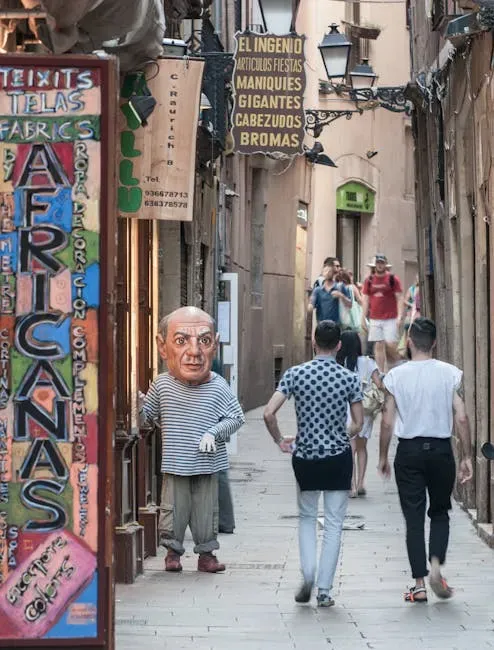
The Blue Room was painted by Pablo Picasso in 1901 during his second stay in Paris and depicts a bathing nude figure in a bedroom that has been identified as Picasso’s studio at the time. The painting is widely regarded as an important early example of the young Spanish artist’s transition into his Blue period. What nobody knew for over a century was that this moody composition had a secret passenger underneath it.
Art experts discovered a hidden painting beneath one of Picasso’s early masterpieces. Using infrared technology, they found a portrait of a bearded man wearing a jacket and bow tie and resting his hand on his cheek underneath The Blue Room. Experts believe Picasso could not afford a new canvas when he painted The Blue Room in 1901, leading him to repurpose an earlier work. This discovery sheds light on the practical challenges Picasso faced and his resourceful nature during his early career. The identity of the bearded man remains unknown to this day.
Picasso’s “The Crouching Beggar” (1902) – A Barcelona Landscape Below
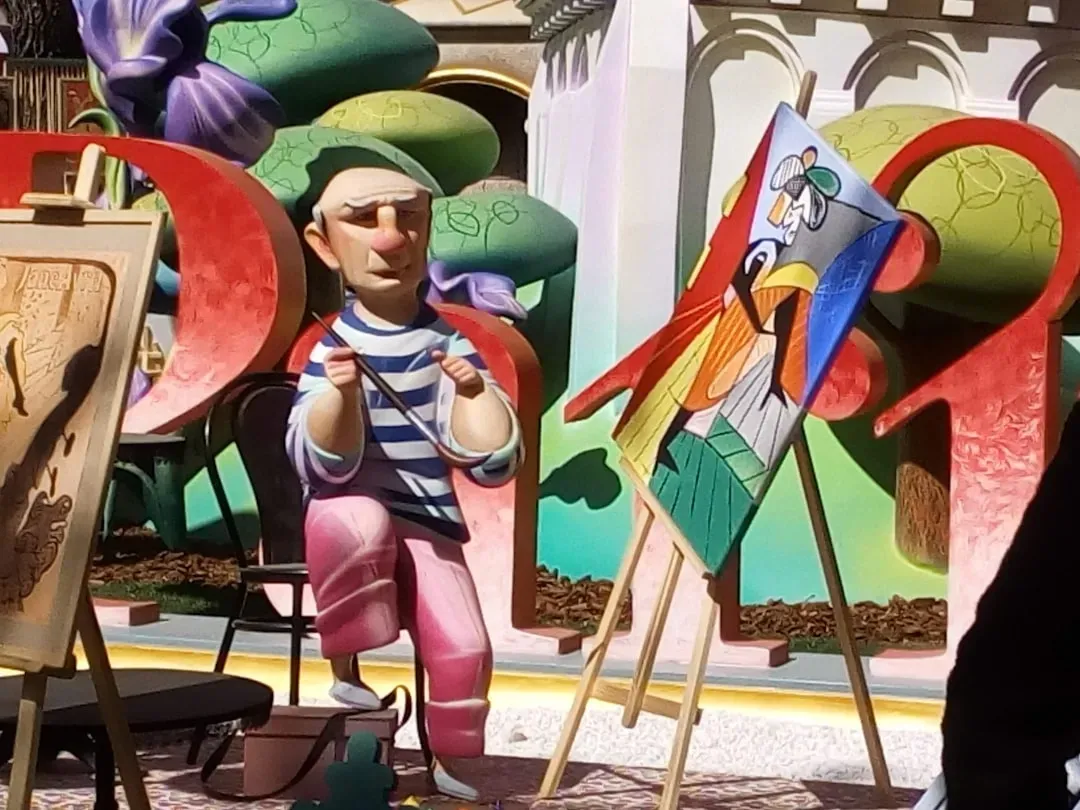
Researchers found a landscape underneath Picasso’s The Crouching Beggar (1902), which they believe depicts Parc del Laberint d’Horta in Barcelona. The top suspect as the original artist is Santiago Rusiñol. Though Picasso essentially destroyed Rusiñol’s painting with his own, it would appear he took some inspiration from it as well: the roll of the distant hills echoes the curve of Picasso’s beggarwoman.
Experts had suspected that the painting might be hiding something since way back in 1992, when they noticed that the surface texture was not always consistent with the brushstrokes and that unexpected colors could be seen through the cracks. Further investigation also revealed that Picasso’s Crouching Woman originally showed the female figure’s right arm, which is covered by her cloak in the final version, lifting up a piece of bread. A separate watercolor by the artist, Femme assise (1902), features this alternate figure. The layers of change within a single canvas say as much about Picasso’s restless process as any finished work ever could.
Van Gogh’s “Patch of Grass” (1887) – A Peasant Woman Hidden in Plain Sight
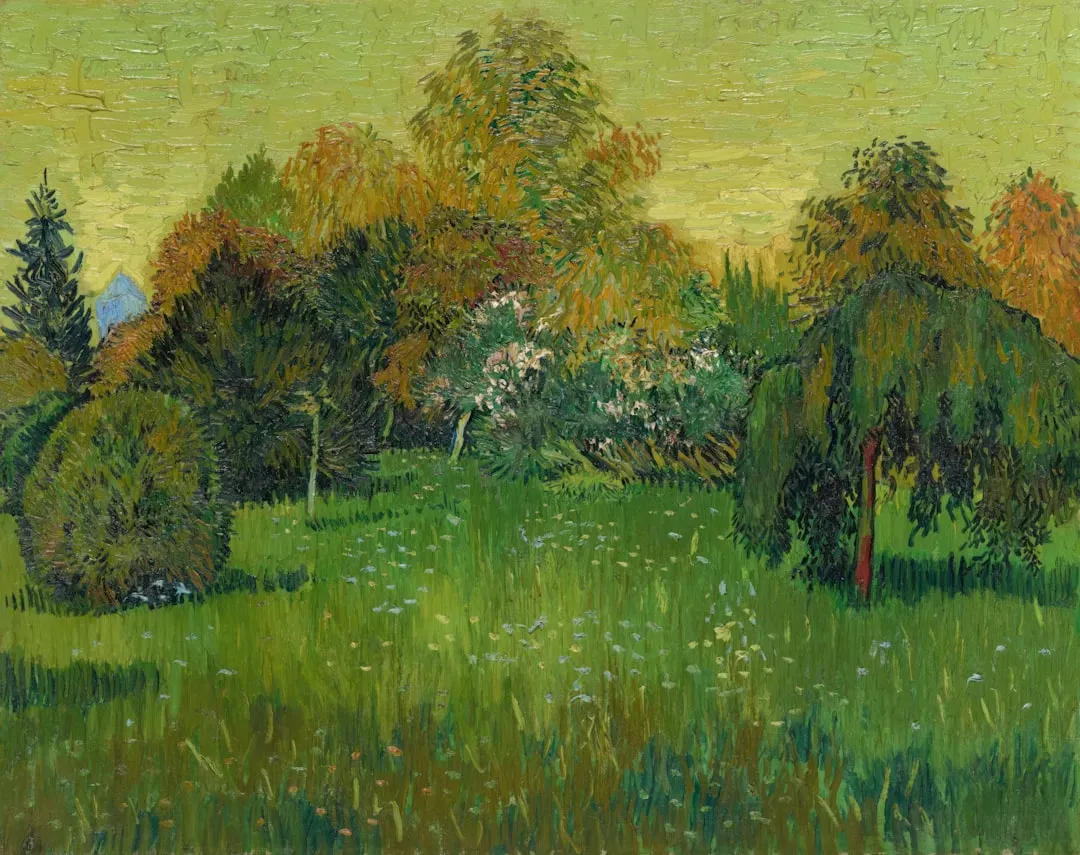
Vincent van Gogh’s “Patch of Grass” is a deceptively simple painting. What appears to be a colorful picture of a field actually covers the portrait of a peasant woman, painted over by the artist for unknown reasons. Van Gogh frequently painted over his canvases. Art experts estimate that approximately a third of his early paintings contain hidden images. The sheer scale of what may still be concealed beneath his known body of work is genuinely staggering.
Partner offer
With knowledge that something was hidden beneath the vibrant greens and blues, the painting was one of the first to be analyzed by the new macro-XRF technology when it debuted in 2008. This new technique measures the chemicals in pigments. In this case, mercury and the element antimony were useful in revealing a woman’s face painted in much darker brown and red tones. Patch of Grass was painted by Van Gogh in Paris in 1887 and is owned by the Kröller-Müller Museum. The woman’s face, warm and dark beneath the breezy greens, was practically invisible until chemistry revealed her.
Rembrandt’s “An Old Man in Military Costume” (c. 1630–31) – A Young Man Facing the Wrong Way
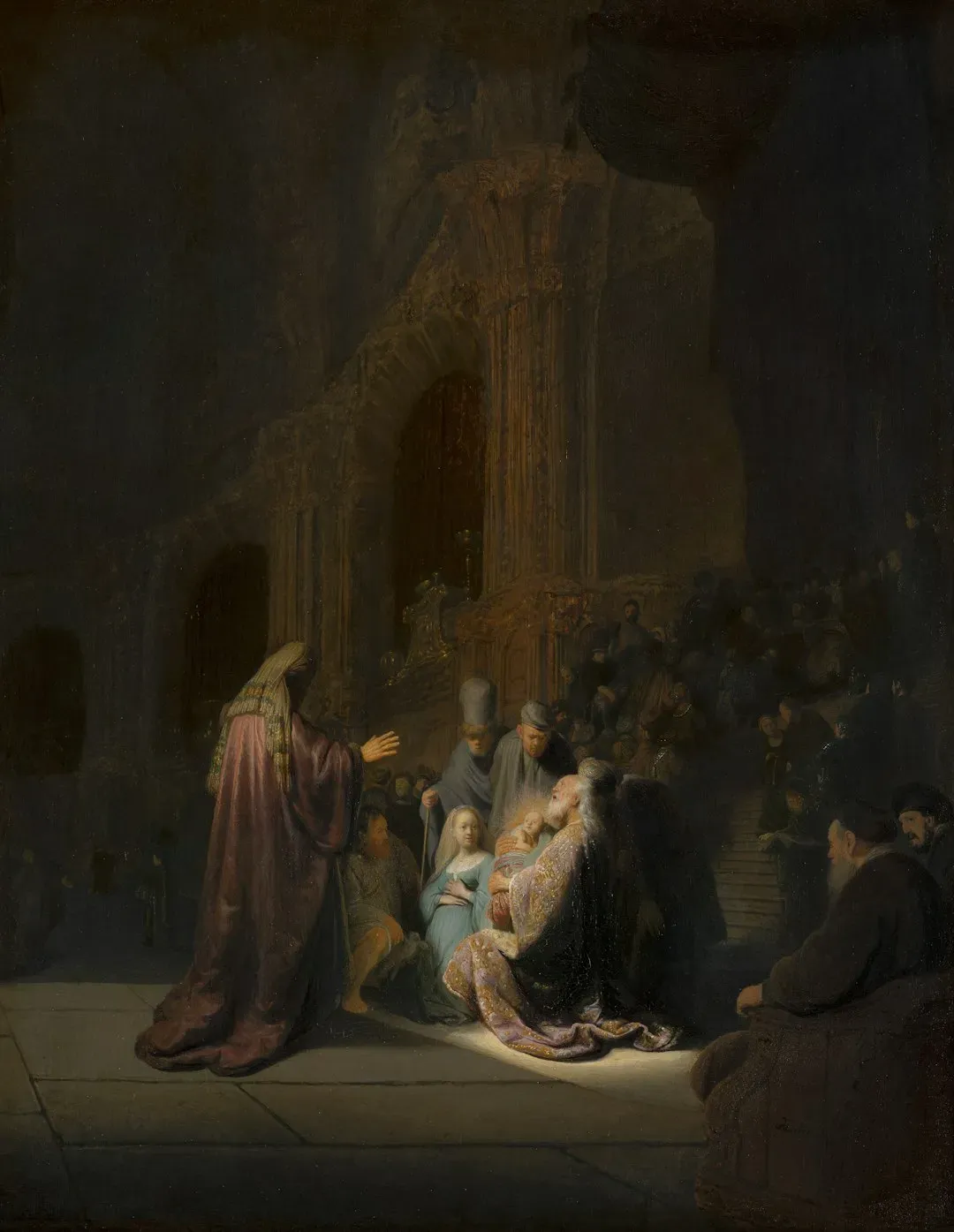
The figure underneath An Old Man in Military Costume has been known to scholars since 1968, when the Rembrandt Research Project X-rayed the painting and found a young man’s face upside down to the right of the Old Man’s face. While the figure was visible, it was indistinct. The painting was acquired by the J. Paul Getty Museum in 1978 and has been studied with different imaging techniques repeatedly since then. Decades of advances in technology were needed before the full picture became clear.
MA-XRF scanning significantly added to the understanding of the hidden painting by providing detailed images of the distribution of individual chemical elements, from which the specific pigments Rembrandt used to paint the first figure could be inferred. The underlying figure’s face is rich in the element mercury, indicative of the red pigment vermilion, one of the components used to create flesh tones. The MA-XRF map of mercury provided a nearly complete, detailed image of the face of the underlying figure; similarly, the map of copper, typically associated with blue or green pigments, provided an image of the cloak. In the view of Getty Museum curator Anne Woollett, the first painting is also likely by Rembrandt himself. It may even be another tronie (character study), but one that Rembrandt based upon his own features.
Leonardo da Vinci’s “The Virgin of the Rocks” (c. 1491–1508) – A Completely Different Sacred Scene
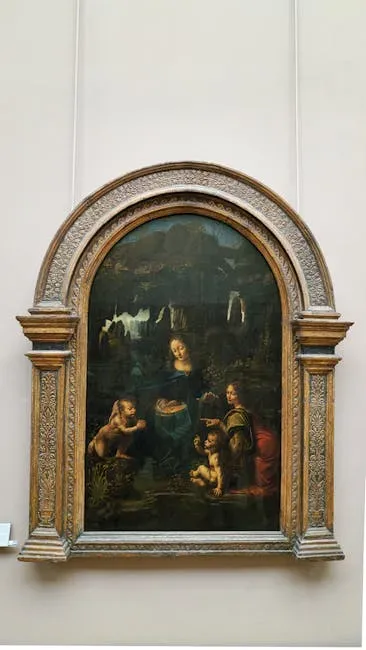
Leonardo da Vinci’s The Virgin of the Rocks originally had a very different composition, as new research by the National Gallery in London revealed. Analysis of the artwork showed that two distinct drawings depicting the same figures in different poses lie beneath the painting. In the first composition, the angel holds the infant Christ much more tightly, and both figures are positioned higher. The Virgin also looks toward the pair, instead of staring downward. A second composition aligns much more closely to the final version, but still sheds light on Leonardo’s artistic process.
Researchers at Imperial College London and the National Gallery used a new algorithm combined with macro X-ray fluorescence (MA-XRF) scanning, which maps chemical elements within paintings, to make these discoveries. The team used MA-XRF to non-invasively scan each pixel of the painting to detect different chemical elements within the materials Leonardo used. They found that the drawing for the hidden first composition contained zinc, making it possible to reveal more forgotten figures, including the Infant Christ and a winged angel at the right where now only landscape is visible. Leonardo’s motivation to rework the canvas is still unclear to researchers.
Kazimir Malevich’s “Black Square” (1915) – Two Paintings and a Hidden Inscription
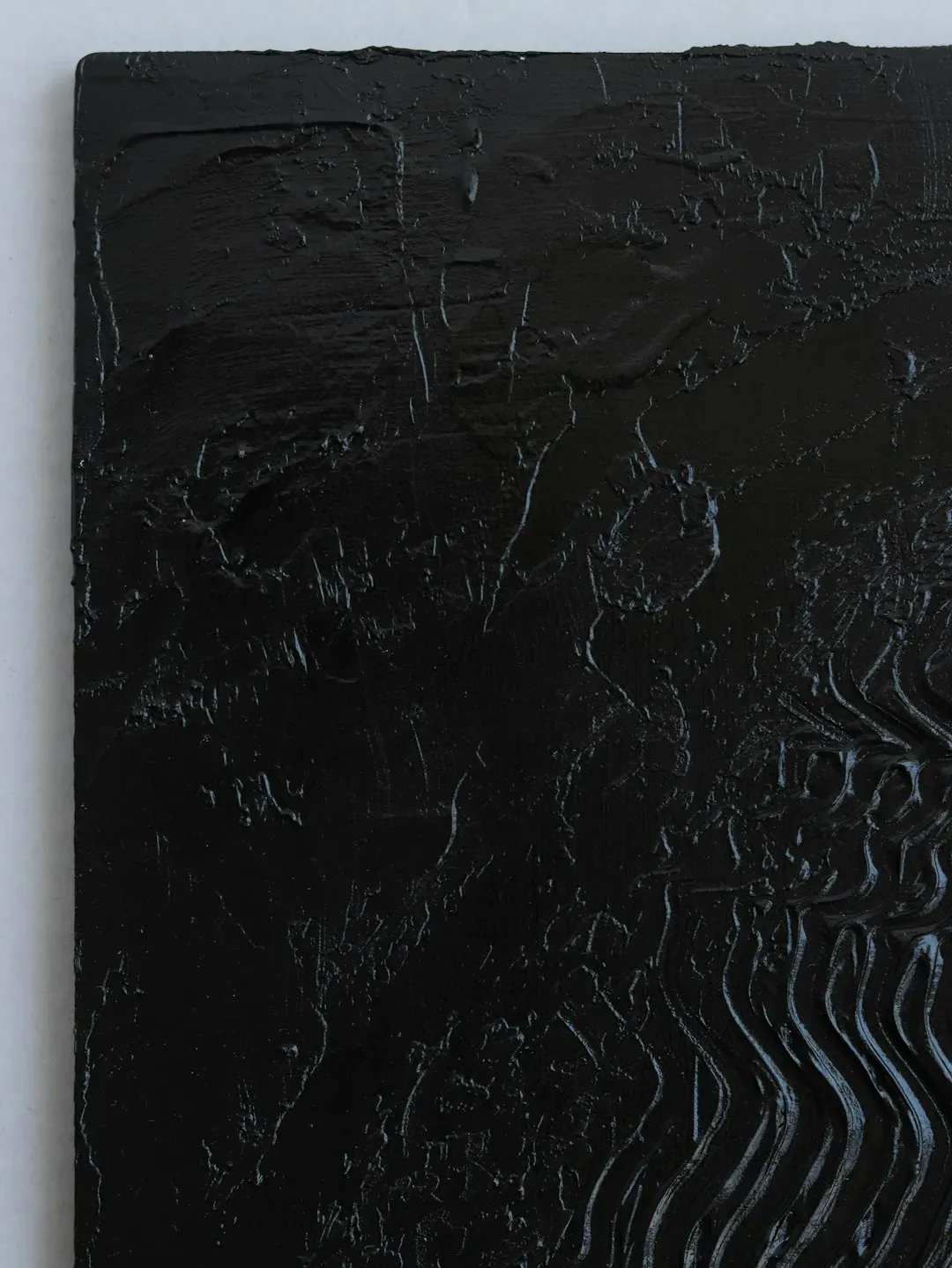
Experts at Moscow’s Tretyakov Gallery discovered two previous paintings and an inscription underneath Kazimir Malevich’s seminal Black Square (1915). The Russian museum, which owns one of three versions of the work, performed X-ray analysis on the top layer of black paint to uncover the underlying images. The findings could reveal the story behind the groundbreaking artwork. For a painting that looks like the simplest thing imaginable, it turned out to be remarkably complicated underneath.
A researcher from Russia’s State Tretyakov Gallery confirmed: “We’ve found out that not just one, but two images are underneath it. We proved that the initial image is a Cubo-Futurist composition, while the painting lying directly under the Black Square, the colors of which you can see in the cracks, is a proto-Suprematist composition.” Researchers also discovered an inscription on the border of the white paint that appears to read “Negroes battling in a cave.” This could indicate that Malevich was replying to an earlier painting of a black square created in 1897 by French writer and humorist Alphonse Allais, who titled his work “Combat des Negres dans une cave, pendant la nuit.” If the inscription’s interpretation is correct, it suggests that Malevich was influenced by many more artists than historians once believed.
Partner offer
Planning a trip to Vegas?
Compare hotel rates and show tickets on VEGAS.com.