The Oscar for Best Picture is supposed to be the definitive stamp of cinematic greatness. In theory, it crowns the film that best captured the art of moviemaking in a given year. In practice, though, the history of the award tells a more complicated story – one shaped by industry politics, aggressive campaigning, cultural blind spots, and a recurring tendency to reward the comfortable over the challenging.
Film historians and critics have long kept a running tab on the wins that don’t quite hold up. Some of these choices were questionable at the time. Others have simply aged poorly in ways that make the original decision look increasingly baffling. Here are six Best Picture winners that scholars and critics keep returning to when the conversation turns to the Academy’s most head-scratching moments.
Crash (2006): The Win That Still Stings

Crash may be the single worst film to ever win Best Picture, going beyond simply being “overrated.” While some older Best Picture winners can be justified as products of their era, Crash is widely described as a cloying, melodramatic film about race relations that ends up incorporating every stereotype imaginable. The film’s ensemble structure was praised at the time for being bold and timely, but those qualities have not survived close retrospective scrutiny.
Its victory was particularly stinging in a year that included the heartbreaking western romance Brokeback Mountain, the riveting biopic Capote, the powerful journalistic drama Good Night, and Good Luck, and Steven Spielberg’s gripping revenge epic Munich – all of which spoke to important social issues in a more insightful way. It’s widely considered the worst Best Picture winner of the modern era, at least until Green Book came along a decade later.
Green Book (2019): A Sanitized Story That Divided Everyone
Green Book was widely considered the worst Best Picture winner of the 21st century after Crash, as the film prevailed over Roma, Alfonso Cuarón’s acclaimed drama that won the Golden Lion at the Venice Film Festival and the Best Picture prize at the BAFTAs. The controversy wasn’t just about the quality of the film itself. It ran much deeper than that.
The family of Dr. Don Shirley strongly denied the close personal friendship depicted between Shirley and the film’s co-writer, and the win wasn’t well received by many who condemned Green Book for perpetrating a “white savior” narrative. Critics had alternately praised the film for its lighthearted tone or condemned it for shortchanging the violent bigotry of that era to focus on a heroic white character. Roma, by almost every critical metric, should have taken the prize home.
Shakespeare in Love (1999): The Night the Oscars Were Bought

It’s considered by many the greatest upset in Academy Awards history – a heist in which romantic comedy Shakespeare in Love shocked Steven Spielberg’s Saving Private Ryan. The win reshaped how studios approach Oscar season entirely. Miramax and Harvey Weinstein mounted an aggressive, highly effective Oscar campaign through targeted screenings, outreach to many branch voters, well-placed advertising, and personal persuasion, building broad goodwill among Academy members.
Partner offer
Even Academy voters, years later, seemed to regret it. In a 2015 Hollywood Reporter poll of Academy members, when asked to re-vote the 1999 Best Picture category, they chose Saving Private Ryan by a wide margin. Weinstein’s aggressive awards strategy, which helped the film land seven trophies including Gwyneth Paltrow’s Best Actress win, incited debate and reinvented awards campaigning permanently. The aftershocks from that single Oscar night are still felt today.
Dances With Wolves (1991): Goodfellas Never Forgave the Academy

That any movie nominated the same year as Goodfellas would win against that groundbreaking gangster film immediately suggests it’s overrated. What makes the win by Dances With Wolves even more confounding is that it also perpetuates the outdated white savior trope, and the film has since been criticized for its lack of authenticity – particularly regarding the Lakota language, which only one actor in the movie was actually a native speaker of.
Kevin Costner’s film earned seven Academy Awards and critical praise for bringing Westerns back into mainstream cinema, but it also features what we in the 21st century recognize as the white savior narrative, whose intent is to make stories less white-centric but, in practice, presents non-white characters as caricatures. Martin Scorsese’s Goodfellas, which lost that night, has since become one of the most studied and discussed films in cinema history – a fate Dances With Wolves has not shared.
How Green Was My Valley (1942): The Film That Beat Citizen Kane

While it’s one of John Ford’s better films, it isn’t Citizen Kane. At this point, How Green Was My Valley is most memorable for being the answer to the trivia question, “Which film beat Citizen Kane at the 1942 Oscars?” To this day, Welles’ audacious film directing debut tops many critics’ lists of the best films of all time. Few Oscar decisions have attracted more retrospective criticism across decades of film scholarship.
While How Green Was My Valley is a very nice drama, it is certainly not one of John Ford’s best films, and definitely did not deserve to win over Citizen Kane, which is widely regarded as one of the greatest films ever made. Citizen Kane was nominated for nine Oscars, and its only win was for Best Original Screenplay. The Academy essentially handed a nomination sweep to one of cinema’s most revolutionary works – and then gave the top prize to something else entirely.
The Greatest Show on Earth (1953): A Circus Act That Fooled No One
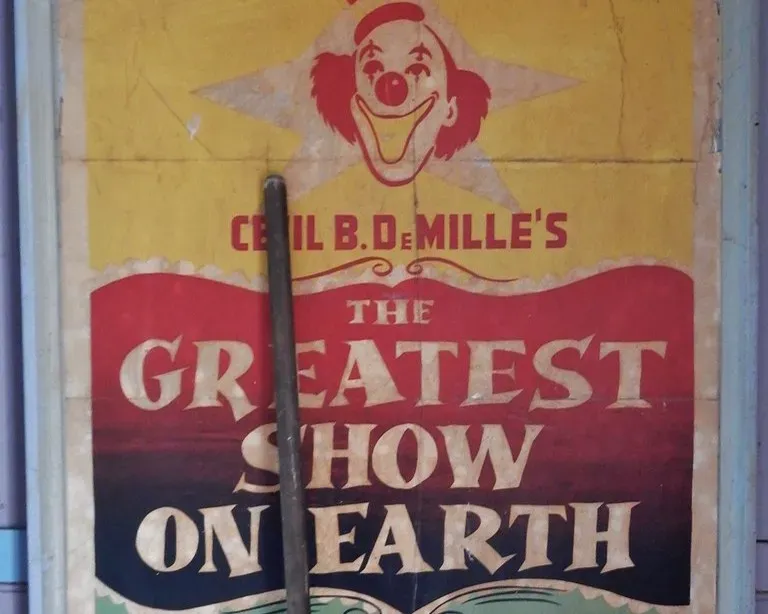
The Greatest Show on Earth made waves when it debuted in 1952 as a box-office success, but going up against far more nuanced films like High Noon, Ivanhoe, and The Quiet Man, it continues to be named among the worst Best Picture winners in Oscar history. Many believe the win was simply a way to cap off director Cecil B. DeMille’s almost 40-year career. It’s one of those wins that feels less like a celebration of great filmmaking and more like an industry gift to a departing legend.
Cecil B. DeMille’s melodrama about two competing trapeze artists was catnip to Academy voters by virtue of being a gigantic Hollywood production that was loud, fun, and filled with color and circus pageantry. It’s also thin and hokey. It’s possible that High Noon, a ticking clock classic from director Fred Zinnemann, lost the big prize because Hollywood was too terrified to award a film written by blacklisted screenwriter Carl Foreman, who refused to name names while testifying before the House Un-American Activities Committee during the height of McCarthyism. Politics, in other words, may have cost one of cinema’s great films its due recognition.
The Academy’s track record shows a recurring pattern: like most popularity contests, the Best Picture race rewards agreeability – the winner must be a widely liked crowd-pleaser, and must reflect well on the Academy itself. The archetype of the “Oscar bait” film is really the mathematical derivation of decades of the Academy defaulting to films that pleased the most people while displeasing the fewest. These six films are where that pattern produced its most lasting damage to the historical record – each a reminder that prestige and quality don’t always walk hand in hand through the same door.Partner offer
Planning a trip to Vegas?
Compare hotel rates and show tickets on VEGAS.com.