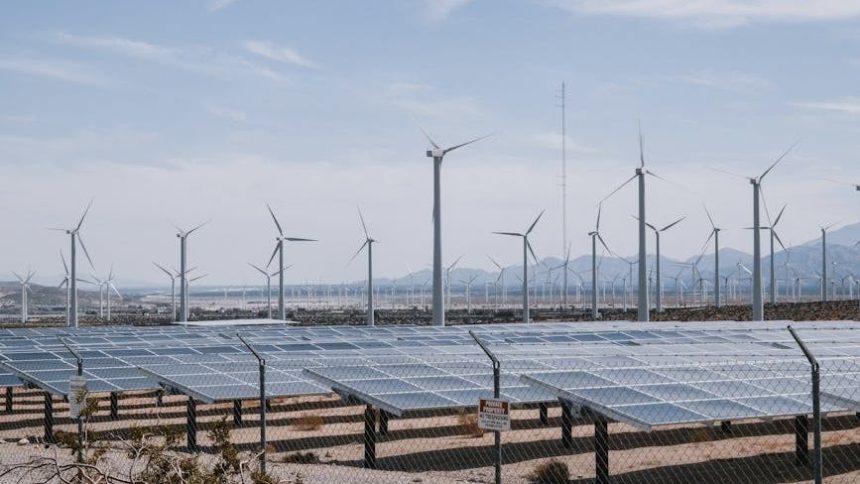
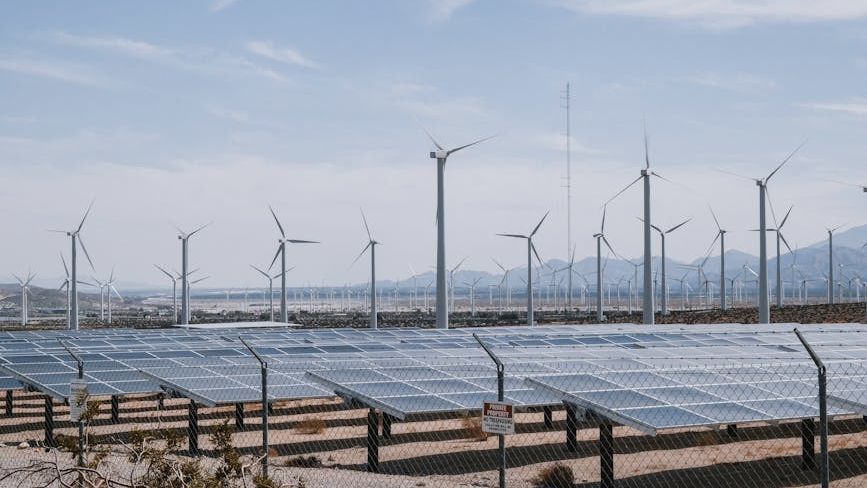
Analysis: Wind and solar have saved UK from gas imports worth £1.7bn since Iran war began – Image for illustrative purposes only (Image credits: Pexels)
The United Kingdom has avoided importing gas worth £1.7 billion since the Iran conflict began, thanks to record electricity generation from wind and solar. This relief comes amid elevated fossil fuel prices triggered by the fighting that started with US and Israeli strikes at the end of February. Carbon Brief analysis shows the renewables surge has displaced large volumes of gas-fired power that would otherwise have been required.
Scale of the Renewable Contribution
Wind and solar together produced 21 terawatt hours of electricity on the island of Great Britain in the period since late February. That output displaced the equivalent of 41 terawatt hours of gas, or roughly 34 liquefied natural gas tankers. At prevailing high prices, those imports would have cost around £1.7 billion.
The savings reflect a broader pattern in which renewables have supplied more than twice as much electricity as fossil fuels over the same stretch. A decade earlier the reverse was true, with fossil fuels outproducing wind and solar by a factor of four.
Sharp Drop in Gas-Fired Generation
Gas-fired power plants ran nearly a third less than in the same months a year earlier. Output fell to the lowest levels ever recorded for both March and April. The reduction eased pressure on the grid at a moment when global gas markets remain unsettled by the Middle East conflict.
Gas set the wholesale electricity price about 25 percent less often in March and April this year than it did in the corresponding months of 2022, when prices spiked after Russia’s invasion of Ukraine. The shift illustrates how higher renewable output can limit the pass-through of gas costs to consumers.
New Operational Records for the Grid
April brought several technical milestones. On 22 April, zero-carbon sources supplied 98.8 percent of electricity on the main transmission grid for half an hour. Solar reached a new peak of 15.4 gigawatts on the afternoon of 23 April, while wind hit 23.9 gigawatts on 25 March.
Wind and solar have now generated more electricity than fossil fuels for 15 consecutive months. The run includes the first full winter season in which renewables maintained the lead throughout.
What matters now
- Renewables have delivered measurable protection against gas-price volatility.
- Gas generation has fallen to historic lows for the spring months.
- The electricity mix has flipped decisively in favour of zero-carbon sources.
Longer-Term Shift in the Energy Mix
The sustained outperformance of wind and solar marks a structural change rather than a short-term fluctuation. For the first time, the country has moved through an entire winter with renewables ahead of fossil fuels on a monthly basis. This pattern reduces exposure to international gas markets even when geopolitical tensions push prices higher.
Continued growth in renewable capacity would be expected to widen these savings in future periods of conflict or supply disruption. The recent figures show how far the system has already travelled from the fossil-dominated mix of ten years ago.