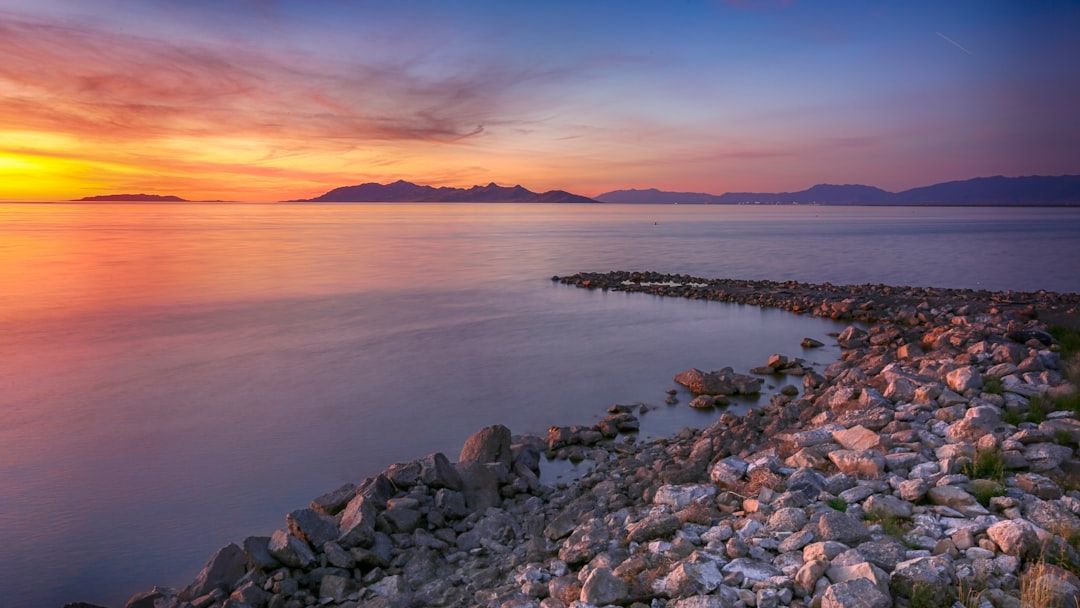
Climate Change and Faith – The Deseret News Investigation Into How Religious Communities Across Utah Are Rethinking Their Relationship With the Natural World – Image for illustrative purposes only (Image credits: Unsplash)
The receding shoreline of the Great Salt Lake has become impossible to overlook from the air or the ground, signaling broader environmental pressures that now reach into Utah’s religious life. Congregations across the Wasatch Front and beyond are beginning to weave language about stewardship and care for creation into their services, though the shift remains measured and rooted in existing doctrine rather than new political statements. This development carries weight because faith institutions hold significant land and influence, offering a potential avenue for dialogue where partisan efforts have often stalled.
Observable Changes Prompting Reflection
Western wildfires have left visible haze over valleys like Cache, where farmers once treated climate discussions as distant concerns. The same drought that has lowered lake levels continues to affect agriculture and water supplies, creating a backdrop that religious leaders can no longer ignore entirely. Sermons in Catholic parishes, LDS wards, and other congregations now reference guardianship of the land more frequently, drawing on longstanding scriptural themes without abandoning traditional caution.
These references appear in varied settings, from Ogden to Provo, and they emphasize accountability drawn from older teachings rather than contemporary policy debates. The result is a gradual widening of interpretation around environmental responsibility that still feels familiar to long-time members.
Younger Voices and Supporting Research
Students at Brigham Young University have formed sustainability groups that operate with varying levels of institutional support, helping surface questions about resource use and long-term consequences. A 2016 study from the university already showed that attitudes among Latter-day Saints were more layered than simple dismissal, with stewardship forming part of the doctrinal foundation even when practical applications remained limited.
Reporting from KUER in late 2021 highlighted how the once-sharp divide between scientific findings and religious perspectives is softening faster than expected in many Utah communities. Participants in interfaith gatherings have noted that younger members often initiate these conversations, bringing data on local impacts into settings where scripture provides the interpretive frame.
Scale of Influence Beyond Utah
Religious organizations worldwide control roughly 8 percent of habitable land and rank among the largest institutional investors, meaning decisions about insulation, tree planting, or energy sources can produce effects that extend well past any single congregation. A 2020 study connected patterns of religious affiliation to differences in greenhouse gas emissions, underscoring why shifts in these communities matter on a larger scale.
Leaders such as Cardinal Pedro Barreto have described the earth as a shared home, a framing that sidesteps partisan traps and focuses instead on collective responsibility. In Utah, this perspective surfaces in quiet preparations for dialogue that begin with moral principles rather than carbon accounting or international accords.
Remaining Questions About Outcomes
It remains uncertain whether these evolving conversations will translate into measurable reductions in emissions or resource strain. The drought persists, and the lake has not returned to previous levels, leaving open the possibility that moral language could substitute for concrete steps rather than drive them.
Still, the pattern observed from the foothills suggests a slow accumulation of small actions across denominations, including Catholic, Episcopal, Jewish, Muslim, and evangelical groups. These efforts draw on initiatives such as creation care programs and interfaith environmental forums without claiming immediate large-scale results.
What matters now is whether these internal shifts within Utah’s faith communities can sustain momentum long enough to influence daily practices and institutional choices, even as broader climate conditions continue to evolve.