Now I have enough solid research to write this article.
The end of the fixed time slot

Broadcast television was built around a grid. A drama had to fill roughly forty two minutes to leave room for commercials in an hour long slot, while a sitcom needed about twenty two minutes to fit a half hour block. Freed from the need to fill a half-hour or an hourlong time slot in linear TV, producers are allowing their shows to breathe and let the story dictate how long or short an episode can be.
That shift sounds small, but it rewired the entire writing process. When a service releases episodes on-demand, it no longer has to hit a precise minute count to protect an advertising grid, and that freedom has produced a noticeable spread in runtimes, even within the same season of a single show. Writers no longer draft toward a clock. They draft toward a story, then let the runtime land wherever it lands.
Streamers have no ad breaks to protect

Commercial breaks did more than interrupt shows. They forced structure. Every act had to end near a cliffhanger timed for a specific minute mark, because cold opens were timed, act breaks were engineered for commercials, and cliffhangers were placed where the network needed them.
Ad-free platforms erased that constraint entirely. Without a sponsor slot to hit, there’s no reason an episode needs to land near any particular number. A slower character study can run short, while a plot-heavy chapter can stretch past an hour without anyone in the control room worrying about lost airtime revenue.
Story length now dictates runtime, not the other way around

Perhaps the clearest way to describe the modern approach is that the story decides its own length. Producers on shows like Inventing Anna leaned into this directly, with one producer noting that added length allows us to have room for stories that might have otherwise been really short, and lets them actually explore certain things they otherwise might not.
That flexibility cuts both ways. A tightly plotted episode that only needs thirty five minutes to land its point doesn’t get artificially padded to hit forty five. A finale juggling five storylines gets the extra fifteen or twenty minutes it needs to resolve them properly, instead of being chopped down to fit a slot that was never designed with that finale in mind.
High profile examples make the pattern obvious

The spread isn’t subtle once you start noticing it. The Netflix drama Inventing Anna has episode lengths ranging from 60 to 82 minutes, while the Disney+ series The Book of Boba Fett has episodes ranging from 39 to 61 minutes. Stranger Things pushed the trend even further in its fourth season, where every episode was over an hour long, with the finale clocking in at 2 hours and 22 minutes.
Anthology style shows take this to an extreme. Love Death + Robots includes episodes ranging from just 6 minutes to over 17 minutes, since each segment is essentially its own self-contained short film rather than part of a continuous arc. There’s no shared runtime expectation to maintain because there’s no shared story demanding one.
Shorter seasons have made every episode count more
Episode length variation has arrived alongside a broader shrinking of season sizes overall. The average number of episodes per season for network shows decreased from 15.4 in 2018 to 10.2 in 2023, closely mirroring the average for streaming shows at 9.6 episodes in the same year. Fewer episodes means each one carries more narrative weight, which naturally pushes runtimes further apart depending on what that specific hour of story needs to accomplish.
By 2025 and into 2026, that trend hadn’t reversed. Most series, especially on streaming platforms, run closer to eight to 10 episodes per season now, a sharp contrast from the network standard of twenty two or more episodes that defined television for decades. With less room to spread a story out, writers lean harder into making each individual episode exactly as long as its specific content demands.
Production costs are pushing runtimes to stretch
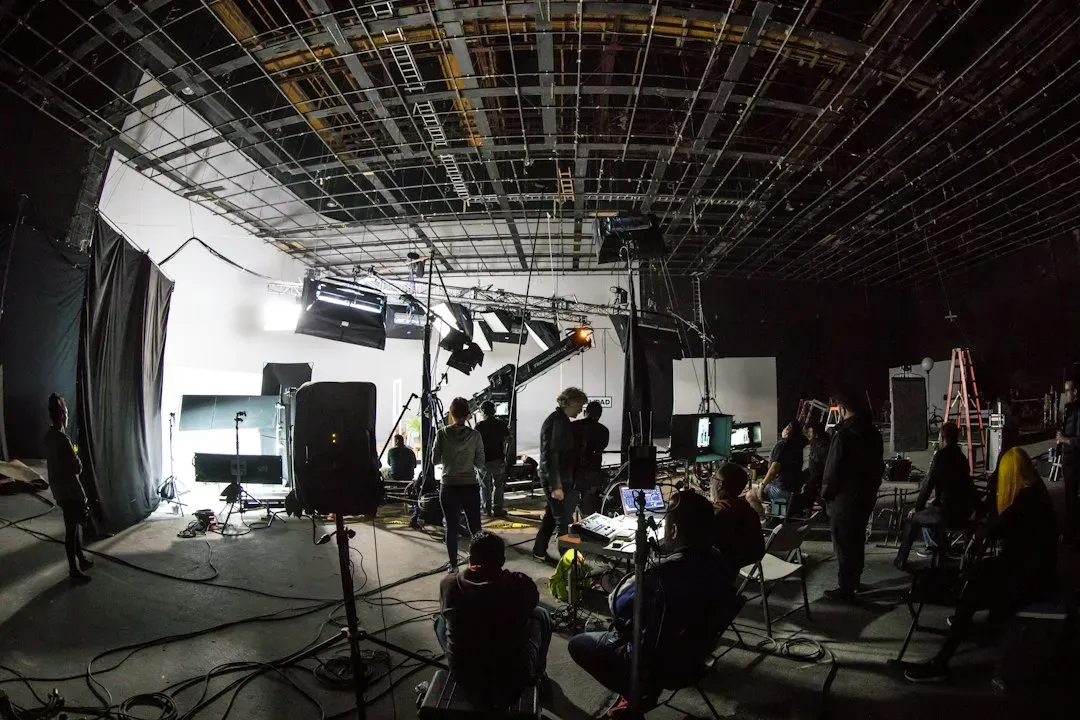
Money plays a bigger role in this than most viewers realize. Production costs for making TV shows are growing, causing networks to cut the amount of episodes released per season, and if the episodes are longer, production companies can still tell the same length of a story for less cost. Fewer, longer episodes can be cheaper to produce than many short ones, since certain fixed costs like sets, crew mobilization, and post production overhead get spread across a bigger single unit.
That financial logic doesn’t apply evenly across every episode of a season, though. A bottle episode set in one location might still run short and cheap, while a large ensemble finale absorbs a bigger chunk of the budget and the runtime to match. The result is a season where the money and the minutes move together, episode by episode, rather than following one flat rule.
The 2023 writers’ strike reshaped pacing decisions

The aftermath of the Hollywood writers’ strike also left a mark on how episodes get built. The 2023 Hollywood writers’ strike was caused by and resulted in the cheaper making of television, since before the strike writers were being forced to break stories or break seasons down and structure them, and due to that definition of the work, writers were only allowed to be paid the union minimum and were not kept for very long.
Following the strike, the industry didn’t simply return to cutting corners. During and after the strike, networks were no longer choosing to find cheaper ways to produce television, and instead the companies were forced to create these products, resulting in longer episodes and shorter, cheaper seasons. That combination, longer individual episodes paired with fewer total episodes, naturally widens the gap between the shortest and longest installments in a given season.
Some shows still choose to keep a consistent runtime
Not every streaming series takes advantage of the newfound flexibility. Some shows still keep a consistent runtime for brand identity and viewer expectations, but many creators use flexibility to match the length to the material. Children’s animated series and certain procedural dramas often stick close to a fixed number, because predictability itself is part of what makes the format work for their audience.
The logic behind those exceptions is worth noting too. A dialogue-heavy episode might run shorter, while a finale with multiple storylines might expand, which means even shows that generally aim for consistency will bend the rule when a particular episode genuinely needs more or less room. Consistency, in other words, tends to be a preference rather than a hard requirement anywhere on streaming.
Binge release models remove the pressure to standardize
Traditional weekly broadcast schedules rewarded uniform runtimes because viewers built habits around them, tuning in at the same time expecting roughly the same length. Binge-released seasons dropped all at once don’t carry that same behavioral pressure, since nobody is planning their evening around a single fixed viewing slot.
That structural difference gives editors and showrunners far more room to let individual episodes breathe or contract as needed. Once an entire season is available on release day, the audience experience is shaped more by story flow than by clock-watching, and creators have responded by treating runtime as just another storytelling tool rather than a fixed container.
Final thoughts