There is a strange kind of confidence required to walk away from guaranteed money. Yet some of Hollywood’s biggest names have done exactly that, trading a fatter upfront check for a smaller slice of something that might never pay off at all. It sounds risky because it is. Still, for the right project, at the right moment, the math has occasionally worked out beyond anyone’s expectations.
The basic logic behind trading salary for a share

Profit participation, often called a backend deal, means an actor accepts a reduced fee upfront in exchange for a percentage of whatever the film earns after certain costs are covered. While the highest-paid film actors can command multi-million-dollar salaries, actors can potentially earn substantially more by deferring all or part of their salary against a percentage of the film’s gross, known within the industry as a profit participation deal. The appeal is straightforward: if a movie becomes a genuine hit, the payout can dwarf whatever the studio would have offered as a flat fee.
This arrangement did not spring up recently. A practice first popularized in 1950 when James Stewart waived his $200,000 base salary for Harvey and collected $600,000 from profits shares set an early template that studios and stars have revisited ever since. It is a bet on the film itself, placed by the person with the most reason to believe in it.
The studio’s side of the bargain

Studios do not offer these deals out of generosity. Lowering an actor’s guaranteed fee reduces the production’s upfront financial exposure, which matters enormously on expensive projects. If the film underperforms, the studio pays less than it would have under a straight salary deal, and the actor absorbs some of that downside instead.
There is a flip side worth noting, though. Studios, too, assume risk if a film that promised backend shares fails, costing money and potentially damaging relationships with talent who feel misled about a project’s prospects. It is a shared gamble, even if the actor tends to carry more of the visible risk.
Jack Nicholson’s Batman deal set the modern benchmark

No case illustrates the upside better than Jack Nicholson’s 1989 turn as the Joker. Nicholson, being perhaps the most famous actor in the world, had a minimum guarantee of $10 million to star in a movie, but for Batman, he lowered this price to $6 million, instead getting a cut of the film’s box office and merchandising profits.
The bet paid off spectacularly once the film became a cultural phenomenon. Within just a few years of the release, Nicholson’s backend deal had already netted him more than $40 million, and by the mid-1990s, his total payday had climbed to an estimated $60 million, equivalent to around $130 million today. Some estimates run even higher, with certain reports putting his total take closer to ninety million dollars once merchandising and later sequels are factored in.
Tom Hanks and the Forrest Gump gamble

Tom Hanks provides another well-documented example from the same era of ambitious backend thinking. For Forrest Gump, Tom Hanks declined his contracted $7 million fee, personally financed portions of production, and ultimately received $60 million through profit participation, making it one of the highest-paid film roles in history.
That kind of return only happens when a film exceeds every reasonable expectation, which Forrest Gump certainly did. It also required Hanks to genuinely believe in a project that, on paper, was an unusual sell: a sprawling, sentimental drama with no guaranteed audience. The willingness to put his own resources behind it speaks to how seriously some actors take these bets.
Jim Carrey and the comedy that beat the odds

Comedies can be just as fertile ground for backend deals as prestige dramas. Jim Carrey followed the same structure with Yes Man in 2008, forgoing any upfront salary and accepting 36.2 percent of the film’s profits, which ultimately delivered him $35 million after the comedy grossed $223.24 million worldwide on a $70 million budget.
That is a notably large equity stake for one actor to hold in a single film, and it reflects the leverage Carrey had built over a long career of box office reliability. Studios were willing to give up a bigger chunk of the profits because his name alone tended to move audiences into theaters. The deal worked because the film’s costs stayed modest relative to its eventual global haul.
Leonardo DiCaprio and the layered backend of Inception

Not every profit deal is a simple percentage of box office. DiCaprio’s arrangement on Inception mixed several revenue streams together, which is common for A-list talent on studio tentpoles. DiCaprio’s profit participation agreement included top-tier gross points and residuals from DVD sales, television syndication, and streaming platforms, and thanks to those terms, he is reported to have earned around $59 million from Inception.
That figure reflects how backend compensation can compound across formats long after a movie leaves theaters. A film with staying power in home video and licensing can keep paying out for years, which is precisely why actors with enough leverage push to have those revenue lines written into their contracts up front. It rewards patience as much as star power.
Arnold Schwarzenegger, Danny DeVito, and a full salary waiver
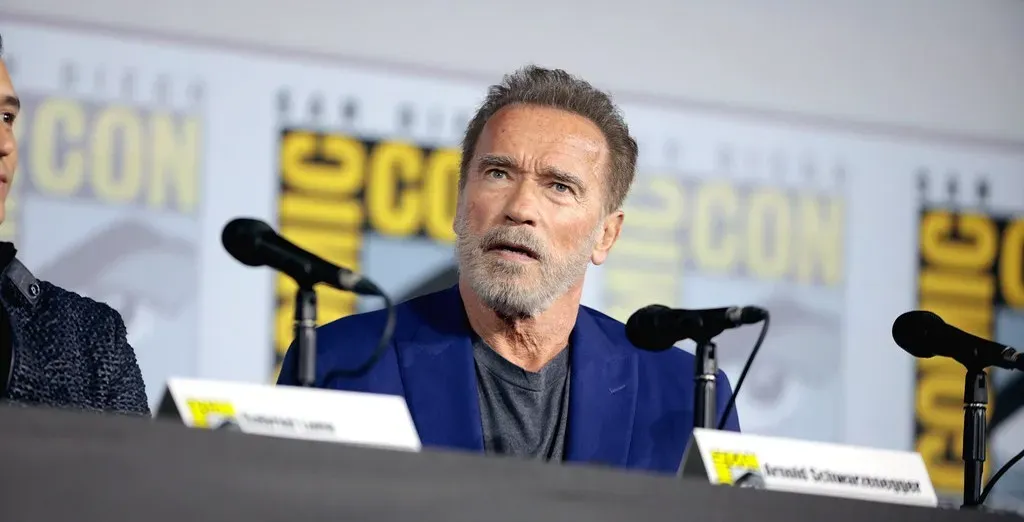
Sometimes the trade goes even further than a reduced fee, with talent giving up their entire guaranteed pay. On Twins in 1988, Arnold Schwarzenegger, Danny DeVito and director Ivan Reitman waived their salaries entirely in exchange for 40% of the film’s backend profits, a bet that also paid handsomely.
That is a notably aggressive structure, since none of the three had a financial floor if the comedy flopped. It suggests genuine conviction in the material, not just a negotiating tactic dressed up as confidence. When the film performed well, the arrangement proved that a full salary waiver, paired with real ownership of the profits, can outperform a conventional deal by a wide margin.
Understanding the waterfall and why net profits rarely arrive

Backend deals sound simple until you look at how profits are actually calculated. The profits are typically paid out to participants only after a series of other parties are paid first, a payment order often called the waterfall, with net profits generally paid out only after investors recoup their entire initial investment, receive an additional preferred return often between fifteen and twenty percent, and other specified costs like sales and delivery are fully covered.
This is why so many net profit deals never actually pay a cent, even on films that seem to do reasonably well. Net profits are defined as profits payable to participants after recouping the cost of production, interest, overhead, advertising, full distribution fees, and fees paid to first gross profit participants, and creative accounting practices at the studios and distribution companies make it hard to realize contingent revenue in these types of deals. That gap between promised percentage and actual payout is exactly why experienced actors and their representatives push for gross points rather than net points whenever they have the leverage to demand it.
Gross points versus net points, and why the distinction matters so much

The difference between gross and net participation is arguably the single most important variable in any backend negotiation. Gross participants get paid based on the film’s overall revenue with minimal deductions, which is why Nicholson’s Batman deal and similar gross arrangements produced such enormous payouts. Net participants, on the other hand, sit behind a long line of other claims and often see nothing.
Studios reserve the more favorable gross deals for talent who can genuinely move the needle at the box office. Under this type of deal structure, the director or producer receives additional compensation for their film, calculated as a percentage of the profits left over after the studio recoups production expenses and distribution fees, but by 1950, the power of the studio system had drastically decayed as television entered the scene, granting some A-list actors the influence required to negotiate more favorable contracts. That shift in leverage, from studios holding all the cards to stars able to demand a real cut, is the historical root of every major backend deal that followed.
How streaming has reshaped the calculus in 2025 and 2026

The rise of streaming platforms has changed the backend conversation considerably. The rise of streaming giants like Netflix, Amazon, and Apple has fundamentally altered the backend landscape, since historically a show could become profitable years after its initial run through syndication and international sales, but today vertically integrated streamers often produce, distribute, and exhibit content in-house, retaining global rights and eliminating traditional syndication pathways, which has led to a shift toward buyouts, where talent receives a larger upfront payment but forfeits future profit participation.
That shift explains why traditional profit participation deals are less common on streaming originals than they once were on theatrical releases. Instead, actors and their unions have pushed for structured bonuses tied to viewership rather than open-ended profit shares. SAG-AFTRA agreed to a performance-based model that rewards shows and films watched by at least 20% of a streamer’s subscribers, with SAG-AFTRA members receiving a 100% bonus on top of their fixed residual once that threshold is met. This year’s contract negotiations extended that framework further, with the ratified 2026 agreement building on those streaming success payments while adding new protections around AI and digital replicas. The deal also expands the bonus to the union’s Success Bonus Distribution Fund based on residuals that performers get for popular streaming programs.
Why some actors still prefer the guaranteed check

Despite the headline-grabbing successes, plenty of actors and their advisors avoid backend deals altogether, and for good reason. Profit-sharing also carries inherent risk, as lower-than-expected box office or streaming results can mean much lower returns than a guaranteed salary. A career built on a string of modest hits and quiet flops does not leave much room for betting on backend math.
There is also the question of who actually has enough leverage to negotiate favorable terms in the first place. In the beginning of their careers, actors will frequently be able to negotiate either a small percentage of net profits or no contingent compensation at all. For most working actors, a reliable paycheck simply beats a speculative share of profits that may never materialize once the studio’s accountants finish their calculations.
The takeaway on backend risk and reward