There’s a persistent assumption about how writers work: they start at the beginning, they build toward something, and then they end. The finished book arrives in the order it was meant to be read. Neat, sequential, logical. Except literary history keeps proving that wrong in the most fascinating ways.
Several of the most celebrated authors in the canon produced books that were written early, shelved for years or decades, and then surfaced at the very end of their careers or lives, reversing every expectation readers had formed. What follows are ten cases where the writing order and the publishing order told completely different stories.
1. Jane Austen – Northanger Abbey


Lovers of Jane Austen probably know the publication history of Northanger Abbey: written first, published last. Austen wrote and revised the novel early, tried to get it published, then wrote all her other novels and ended up having Northanger Abbey come out with Persuasion, her last finished work. Jane Austen first drafted the manuscript in Steventon, possibly as early as 1794, and completed it in 1798 to 1799.
In 1803, Henry Austen negotiated via his lawyer to sell the manuscript to London booksellers Crosby and Co. for £10, on the understanding that it would be published soon. However, this did not happen. In 1809 Jane wrote to them directly, under a pseudonym, asking for the novel to be published, but Crosby maintained that he held the copyright. Eventually, in 1816, Henry bought the manuscript back for the original price of £10. Although the title page is dated 1818, the novel was published posthumously in 1817 with Persuasion, despite Northanger Abbey having been completed in 1799.
2. Harper Lee – Go Set a Watchman


Written before her only other published novel, To Kill a Mockingbird, Go Set a Watchman was initially promoted as a sequel by its publishers. It is now accepted that it was a first draft of To Kill a Mockingbird, with many passages in that book being used again. In the spring of 1957, a 31-year-old Lee delivered the manuscript for Go Set a Watchman to her agent to send out to publishers, including J. B. Lippincott Company, which eventually bought it.
As her editor saw it, the manuscript was by no means fit for publication. It was described as “more a series of anecdotes than a fully conceived novel.” During the next couple of years, Lee was led from one draft to the next until the book finally achieved its finished form and was retitled To Kill a Mockingbird. A significant controversy around the decision to publish Go Set a Watchman centered on allegations that the elderly Lee was taken advantage of by her publishers. Later, when it was realized that the book was an early draft as opposed to a distinct sequel, it was questioned why the novel had been published without any context.
3. Herman Melville – Billy Budd

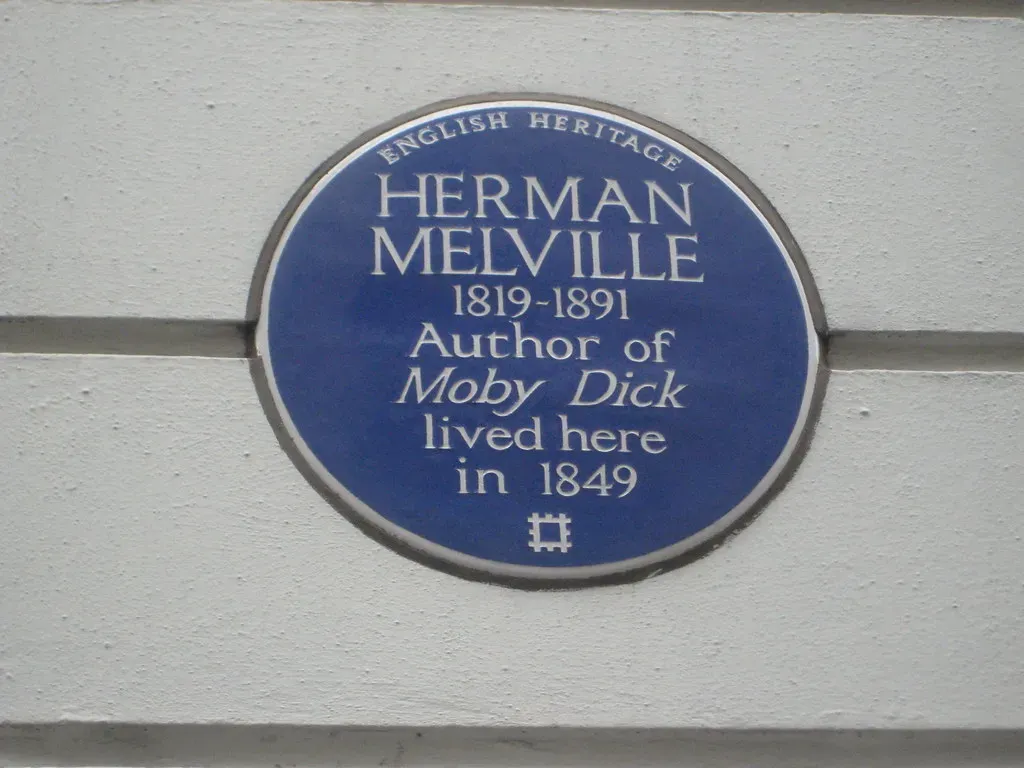
Herman Melville spent most of his later life in near-total literary obscurity. After the commercial failure of Moby-Dick in 1851, he largely retreated from public literary life and spent his final years working as a customs inspector in New York. Quietly, during those final years, he was writing a short nautical novella about a young sailor’s unjust fate aboard a warship.
The older Melville did write some poetry in his spare time, and also penned much of a novella. That was Billy Budd, undiscovered and unpublished until the 1920s, more than three decades after Melville’s 1891 passing. The success of Billy Budd, along with a belated realization of Moby-Dick’s masterpiece quality, retrospectively helped Melville join Mark Twain and Nathaniel Hawthorne in the top pantheon of 19th-century American authors. For readers discovering it in the 1920s, Billy Budd read less like an early effort and more like a final, crystalline statement from a writer who had spent a lifetime refining his view of innocence and authority.
4. C.S. Lewis – The Magician’s Nephew


C.S. Lewis turned fans upside down with the publication order of his beloved Narnia series. While The Magician’s Nephew quietly emerged as the sixth published book, it is actually the origin of Narnia in the story’s timeline. Readers who picked up the books as they were released found themselves suddenly yanked back to the very beginning, unraveling mysteries they’d already accepted as facts.
The book explains the creation of Narnia, the wardrobe’s magic, and even the White Witch’s beginnings, which left many who read in publication order feeling like they’d hit a finale that was hiding in plain sight. Literary critics have often pointed out that this book almost feels like a grand reveal or swan song, yet it’s technically the start of everything. The confusion sparked lively debates about the “right” order to read the books, making Lewis’s storytelling a case study in nonlinear series.
5. Douglas Adams – Mostly Harmless

Mostly Harmless was meant to be the swan song of the Hitchhiker’s Guide to the Galaxy series, full of melancholy, wit, and a sense of cosmic closure. Ironically, Adams had grappled with how and when to end the series, and this book reflects a sort of fatigue and finality. The novel was published in 1992, and Adams himself expressed profound ambivalence about it, having reportedly written it during a period of intense personal unhappiness.
The series didn’t actually end there, as Adams and later contributors kept adding to the universe, muddying the waters of what “final” really meant. Readers were left scratching their heads, torn between laughter and bewilderment at a book that seemed to say goodbye but didn’t quite close the door. Adams died in 2001, and Eoin Colfer later wrote a sixth installment, And Another Thing, in 2009, which muddled the sense of closure even further. Mostly Harmless felt like a last book that couldn’t quite commit to being one.
6. J.D. Salinger – The Catcher in the Rye

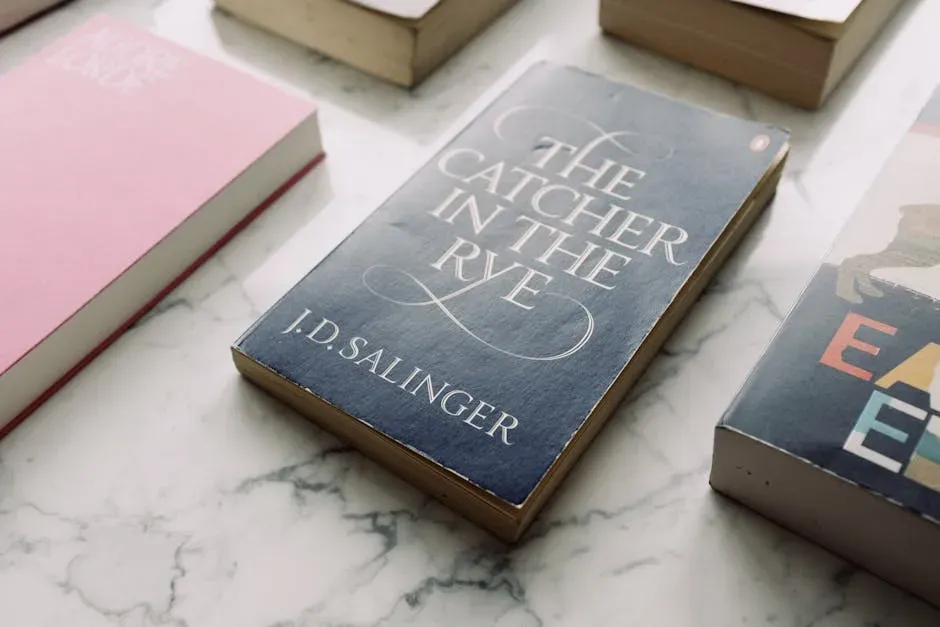
J.D. Salinger’s The Catcher in the Rye exploded onto the literary scene as a manifesto for youthful angst and alienation. Yet as Salinger’s only published novel, it became an unintended “last word,” leaving fans pining for more. Over time, Salinger released short stories that filled in pieces of Holden Caulfield’s family, creating a strange effect: the so-called “ending” of Holden’s journey was actually the first glimpse into Salinger’s world.
Critics and readers alike have noted that The Catcher in the Rye feels like the final act of a longer story, with its sense of loss, burnout, and retreat from the world. This inversion of narrative order left generations of readers feeling like they’d been handed a poignant farewell before ever really meeting the author. The mystique surrounding Salinger’s later, unpublished works only deepens the sense that this “last book” came first.
7. J.R.R. Tolkien – The Silmarillion
Tolkien began writing what would eventually become The Silmarillion during the First World War, sketching mythological tales while recovering from trench fever after the Battle of the Somme. These were the foundational myths of Middle-earth, written decades before The Hobbit or The Lord of the Rings ever reached readers. In terms of the internal chronology of his invented world, The Silmarillion covers events that predate everything else by thousands of years.
Yet it was never published during Tolkien’s lifetime. He died in 1973, and his son Christopher Tolkien spent years editing and compiling the vast, unfinished manuscript before finally publishing it in 1977. For millions of fans already devoted to The Lord of the Rings, discovering The Silmarillion felt like being handed the cosmological origin story of a world they thought they already understood. The book that came last was actually the one written first and set earliest, which left many readers grappling with entirely new layers of mythology they hadn’t anticipated.
8. F. Scott Fitzgerald – The Last Tycoon

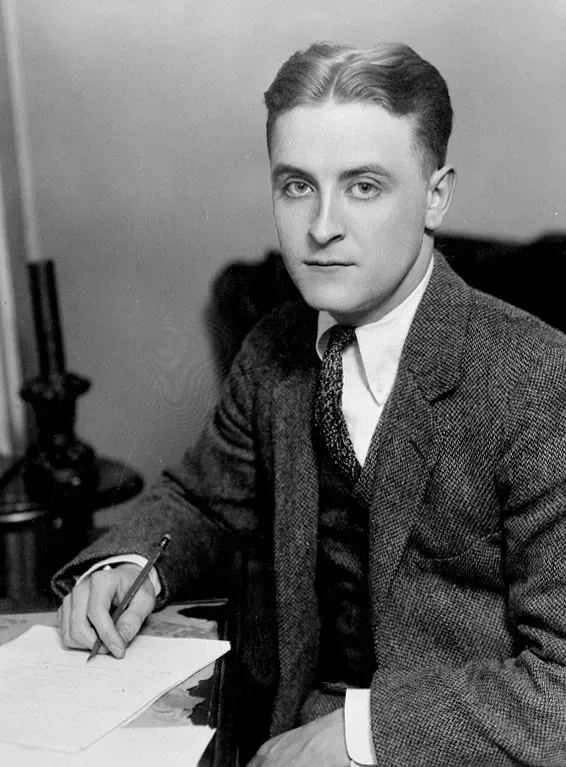
Fitzgerald’s final novel, left unfinished at his death in 1940, is in one sense his most obviously “last” book. He was working on The Last Tycoon when his heart gave out, and it was published posthumously in incomplete form. What confuses the picture is the long creative path that led there. Fitzgerald had been shaping a Hollywood novel for years, during a period when his earlier masterworks, The Great Gatsby among them, had faded badly from public view and his finances were in ruin.
What scholars have noted is that many of the themes Fitzgerald was building toward in The Last Tycoon, questions of idealism colliding with corrupt industry, and the American myth machine churning people up, were concepts he had actually been circling since his earliest published work. F. Scott Fitzgerald’s final published work came out the year after his death. The book reads in some ways like a culminating first draft of ideas that had been forming across his entire career, giving it the strange quality of a conclusion that began before anything else was finished.
9. Suzanne Collins – The Ballad of Songbirds and Snakes

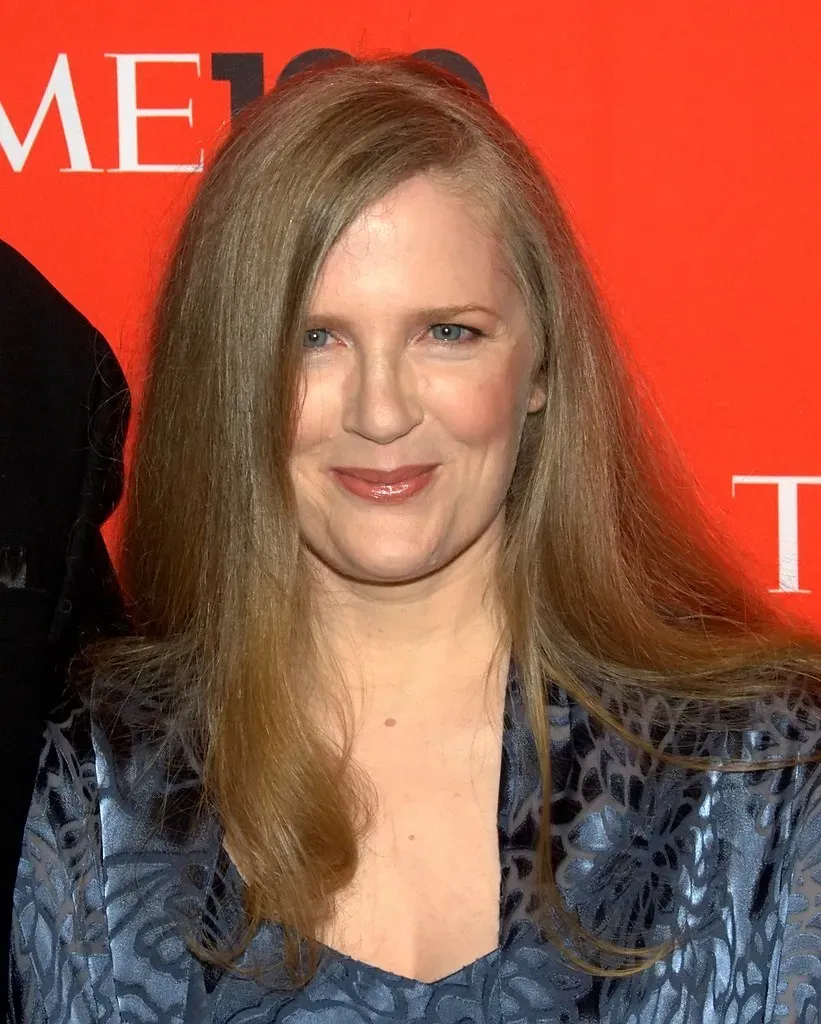
Suzanne Collins’s The Hunger Games burst onto the scene as a self-contained story of rebellion, survival, and sacrifice. Many readers felt the novel could stand alone, with its tightly wrapped conclusion and sense of resolution. Yet Collins expanded the world with sequels that deepened the lore and complicated the characters’ fates. Then, in 2020, she went further back than anyone expected.
The Ballad of Songbirds and Snakes, published in 2020, functions as a prequel set 64 years before the original trilogy, following a young Coriolanus Snow long before he becomes the tyrant readers despise. In narrative terms, it is the story that comes first chronologically, but Collins wrote it last. With each new installment, the original book began to feel like a hidden finale, a last stand that concealed more stories yet to come. For fans who had already made peace with the ending of Mockingjay, suddenly understanding Snow’s origin rewrote the emotional logic of the entire series.
10. Isaac Asimov – Foundation’s Edge and the Prequel Novels


Isaac Asimov began publishing his Foundation stories in the 1940s, building an epic science fiction universe across decades. He returned to the series much later in life, writing Foundation’s Edge in 1982, followed by Prelude to Foundation in 1988 and Forward the Foundation in 1993, the latter published posthumously. These later books function as narrative prequels, covering events that chronologically predate the original Foundation novels by years.
This backward storytelling made the “first” book feel like the middle or end of the saga, challenging readers to rethink the order of events. Asimov’s decision to revisit and expand his universe has become a hallmark of science fiction, inspiring other writers to experiment with narrative structure. The Foundation series remains a touchstone for discussions about how stories evolve and how beginnings can feel like endings. Readers who had grown up with the original trilogy found themselves suddenly handed a prequel written by an older, philosophically deeper Asimov, one who was clearly treating the material as a meditation on legacy as much as an adventure.
What unites all ten of these cases is something more than quirky publishing trivia. Each author, in their own way, was working through ideas or stories that didn’t fit neatly into any single moment of their career. Writing rarely respects linear time, and publication order almost never tells the whole truth about when a book was truly born. Sometimes the ending was always the beginning, just waiting for the world to catch up.