There’s something quietly fascinating about an artwork that stops mid-breath. No tidy conclusion, no final brushstroke of certainty. What’s left behind can be more revealing than anything a polished, completed canvas might show – raw process, real intention, sometimes the weight of a life cut short.
Some of history’s most celebrated artists left their greatest works in a state of suspension, for reasons ranging from distraction and perfectionism to death and outright deliberate strategy. These ten works offer a rare glimpse into the creative mind before the curtain fell.
1. The Mona Lisa – Leonardo da Vinci
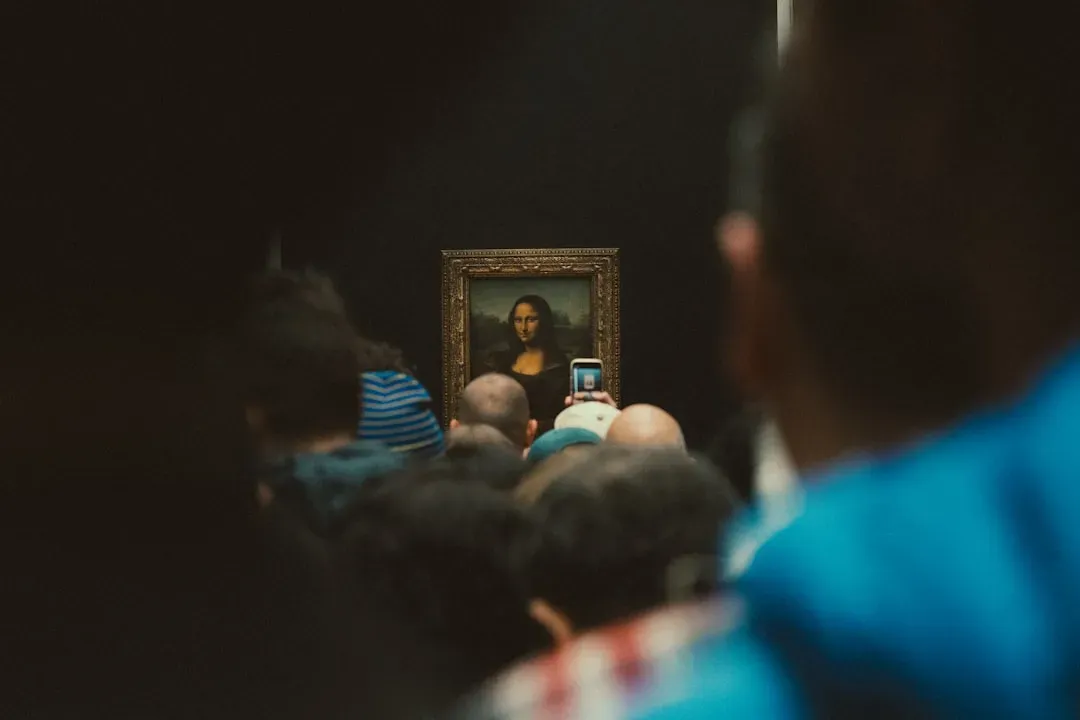
Leonardo da Vinci began working on the Mona Lisa in 1503 and continued refining it until 1517. He paused work on the painting, likely due to arm injuries, but the artwork was never returned to the client because of da Vinci’s premature death in 1519. By 1517, his right hand was paralyzed, which is why the Mona Lisa belongs to the list of unfinished paintings.
Despite the years of work, the painting was never truly finished, da Vinci was never paid for his work, and it never went to the client who originally commissioned it. While the masterpiece certainly doesn’t appear unfinished, the Mona Lisa is indeed incomplete. It’s a strange irony that the world’s most recognized painting is technically a work in progress.
2. The Adoration of the Magi – Leonardo da Vinci
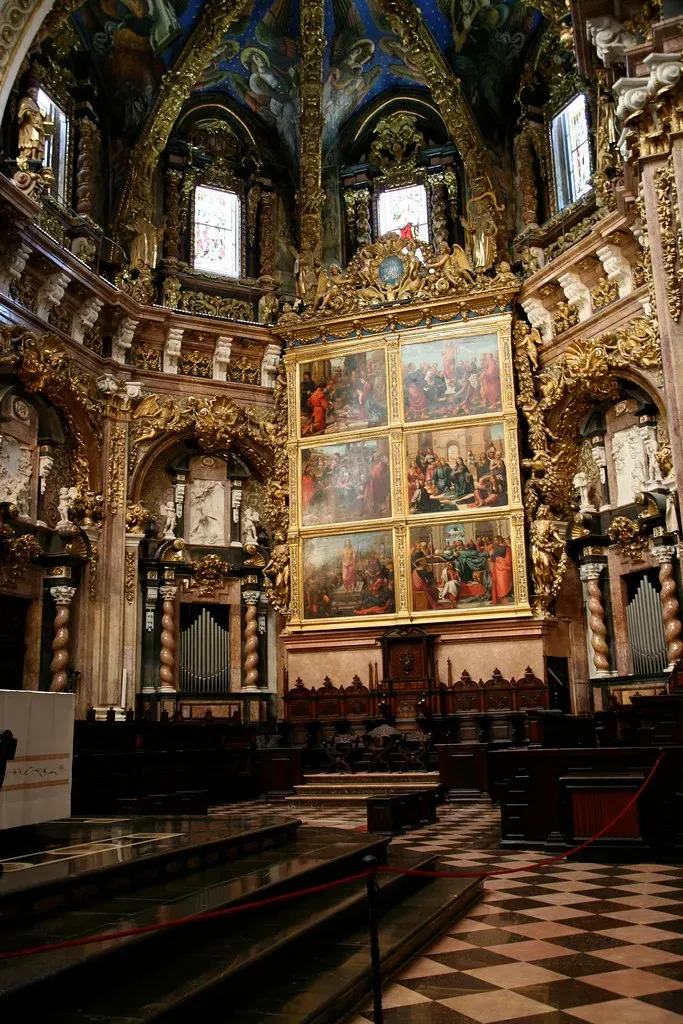
The Adoration of the Magi is an unfinished early painting by Leonardo da Vinci. Leonardo was given the commission by the Augustinian monks of San Donato in Scopeto in Florence in 1481, but he departed for Milan the following year, leaving little more than the preparatory underdrawing in charcoal, ink and watercolor. It has been in the Uffizi Gallery in Florence since 1670.
Owing to the painting’s unfinished status in 1481, the commission was handed over to Filippino Lippi, who painted another Adoration of the Magi, completed in 1496, in substitution of the one commissioned to Leonardo. The Opificio delle Pietre Dure in Florence restored the work between 2012 and 2017, removing years of dirt and old varnish, resulting in a work that is incredibly bright, with Leonardo’s charcoal outline and marks clearly visible.
3. Saint Jerome in the Wilderness – Leonardo da Vinci
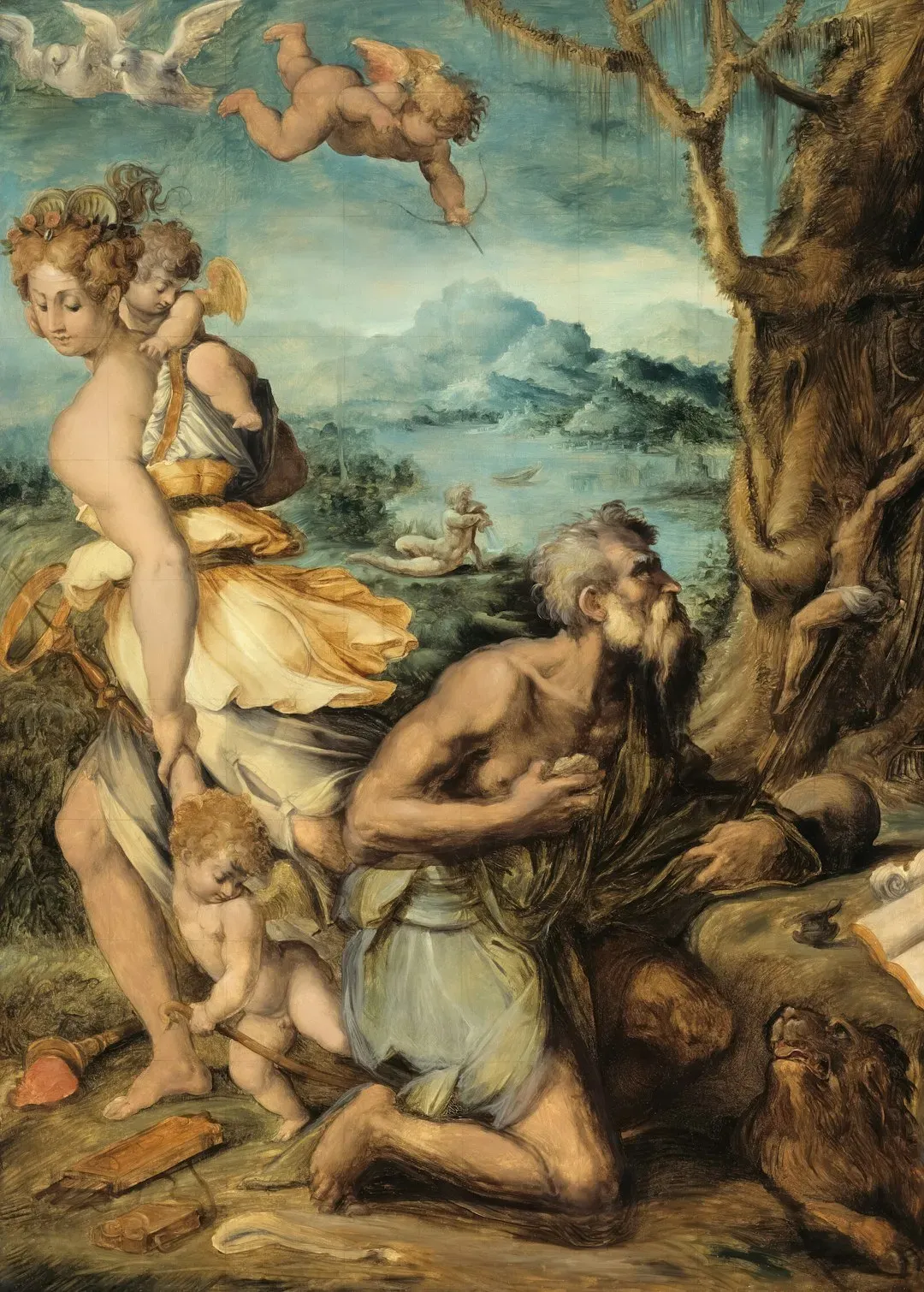
Saint Jerome in the Wilderness is an unfinished painting by Leonardo da Vinci, dated approximately 1480 to 1490. The painting depicts an emaciated Saint Jerome, his face contorted in spiritual agony as he kneels in the desert. At an unknown date after Leonardo’s death, the panel was cut into five pieces before eventually being restored into its original form.
The panel was divided in half, and the section with the torso of Jerome was found in a Roman shop by Joseph Fesch, a Cardinal and Prince of France, who then reunited it with the other part he found at a shoemaker’s shop. It was later sold to Pope Pius IX, who gifted the work to the Vatican Museums in the mid-19th century, where it has been ever since. The painting’s turbulent survival story is almost as dramatic as the scene it portrays.
4. Rondanini Pietà – Michelangelo
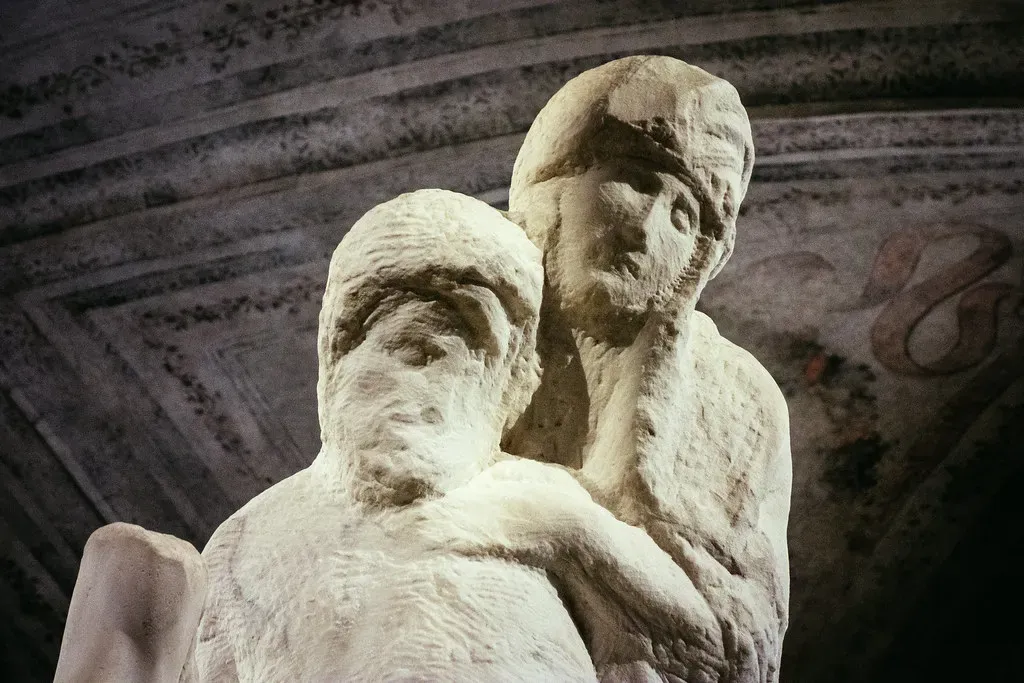
The Rondanini Pietà is a marble sculpture that Michelangelo worked on from 1552 until the last days of his life in 1564. In his dying days, Michelangelo hacked at the marble block until only the dismembered right arm of Christ survived from the sculpture as originally conceived. The elongated Virgin and Christ are a departure from the idealized figures that exemplified the sculptor’s earlier style.
Working on the Rondanini Pietà in the final stages of his life, Michelangelo’s sense of his own mortality is conveyed in the frail, thin, elongated representations of Christ and Mary. As he worked, he made changes which brought the two figures closer together, altering Christ’s position so that he almost seems to emerge from Mary. Since the mid-1950s, it has been housed in the Castello Sforzesco, and since May 2, 2015, it can be seen in a specially designed room called the Museo della Pietà Rondanini.
5. George Washington “Athenaeum Portrait” – Gilbert Stuart
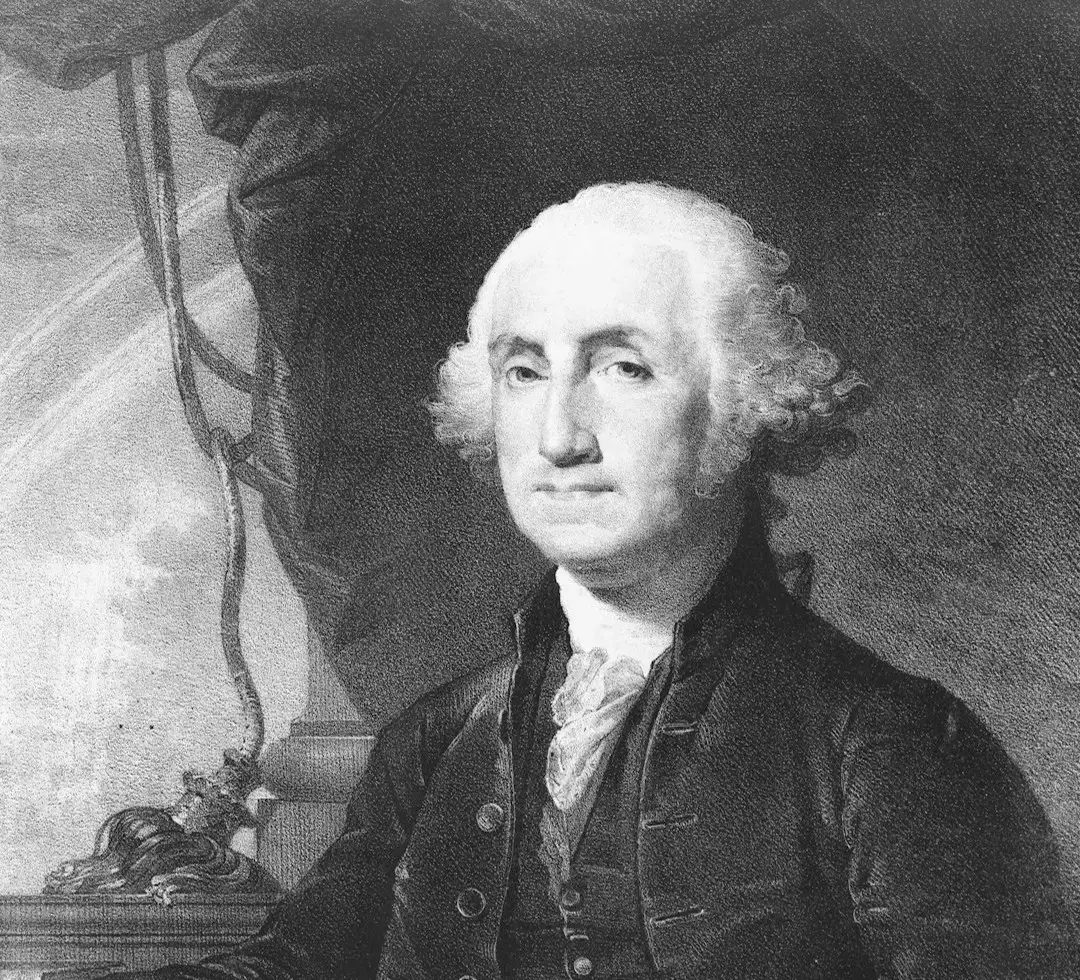
The Athenaeum Portrait is an unfinished painting by Gilbert Stuart of President George Washington, created in 1796. The painting depicts Washington at age 64, about three years before his death, on a brown background. Washington agreed to sit for Stuart, but the artist did not want to give up the portrait because he knew he could use it as a model for future commissions. Stuart purposely left the work unfinished and began to create and sell copies.
After Washington’s death, Stuart used the original to paint 130 copies, which he sold for $100 each. More than 60 of these copies still exist. Most notably, the Athenaeum Portrait served as the model for the engraving that would be used, in mirror image, for the United States one-dollar bill. The face that stares back from the world’s most circulated banknote is, technically, unfinished.
Partner offer
6. Victory Boogie-Woogie – Piet Mondrian
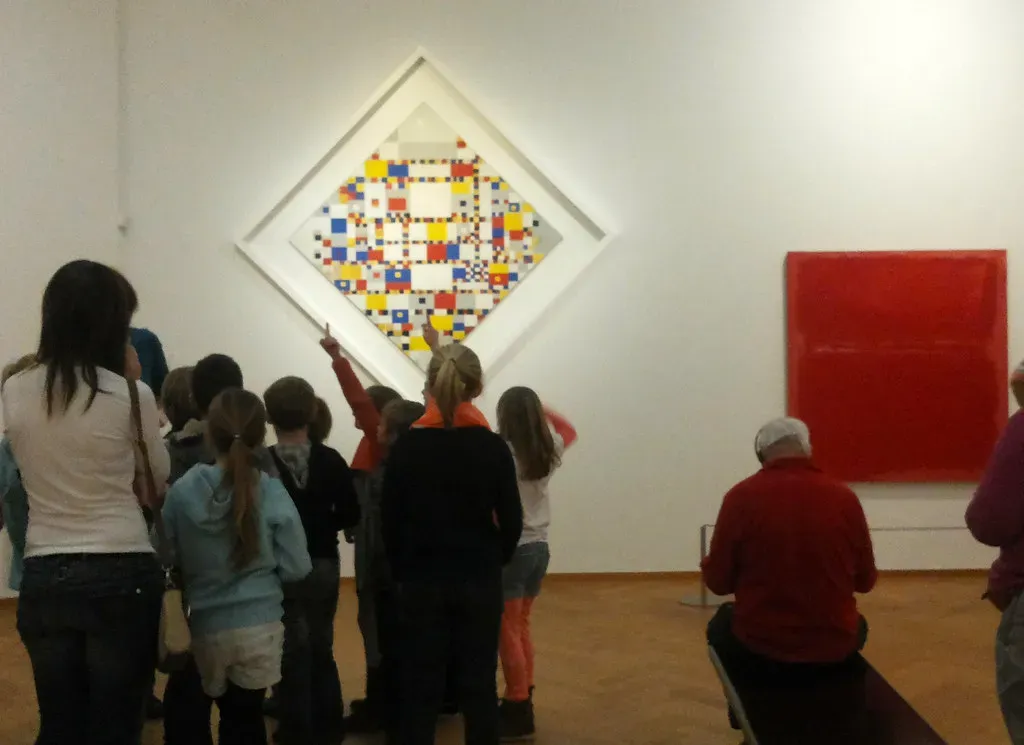
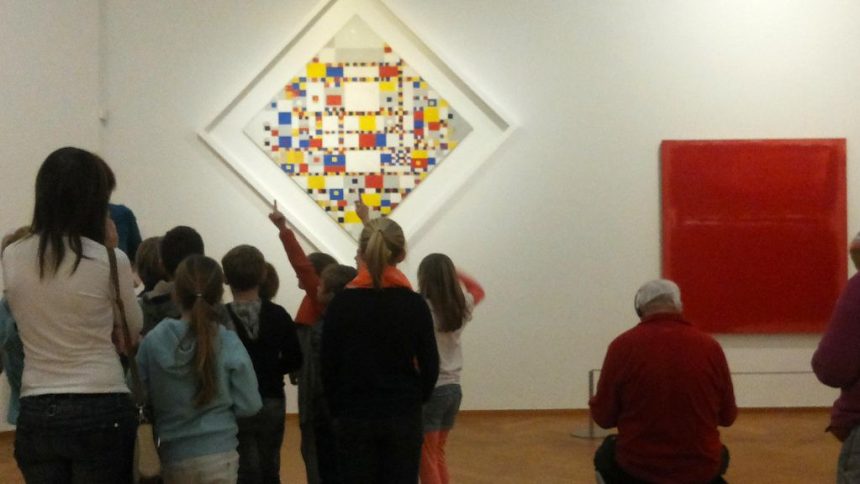
After news broke that suggested the end of World War II was near, Dutch painter Piet Mondrian began working on a new painting. He was well known for his beautiful paintings, mostly consisting of white, red, blue, and yellow squares and rectangles. Unlike his other paintings, his celebratory Victory Boogie-Woogie was , and that wasn’t the result of an artistic choice. The artist had been suffering from pneumonia when he died on February 1, 1944, at seventy-two years old.
Looking closely at the picture, one can see that the bolder, simpler lines had been replaced with smaller, more vibrant squares of sticky tape as the painting developed. Alongside the musical influences, the name also represents Mondrian’s enthusiasm and belief that the US and the Allies would help win World War II. Housed at the Gemeentemuseum in the Netherlands, the sale of the painting for $40 million in 1998 caused controversy when it transpired that the money had been donated by the Dutch Central Bank.
7. Unfinished Portrait of Franklin D. Roosevelt – Elizabeth Shoumatoff
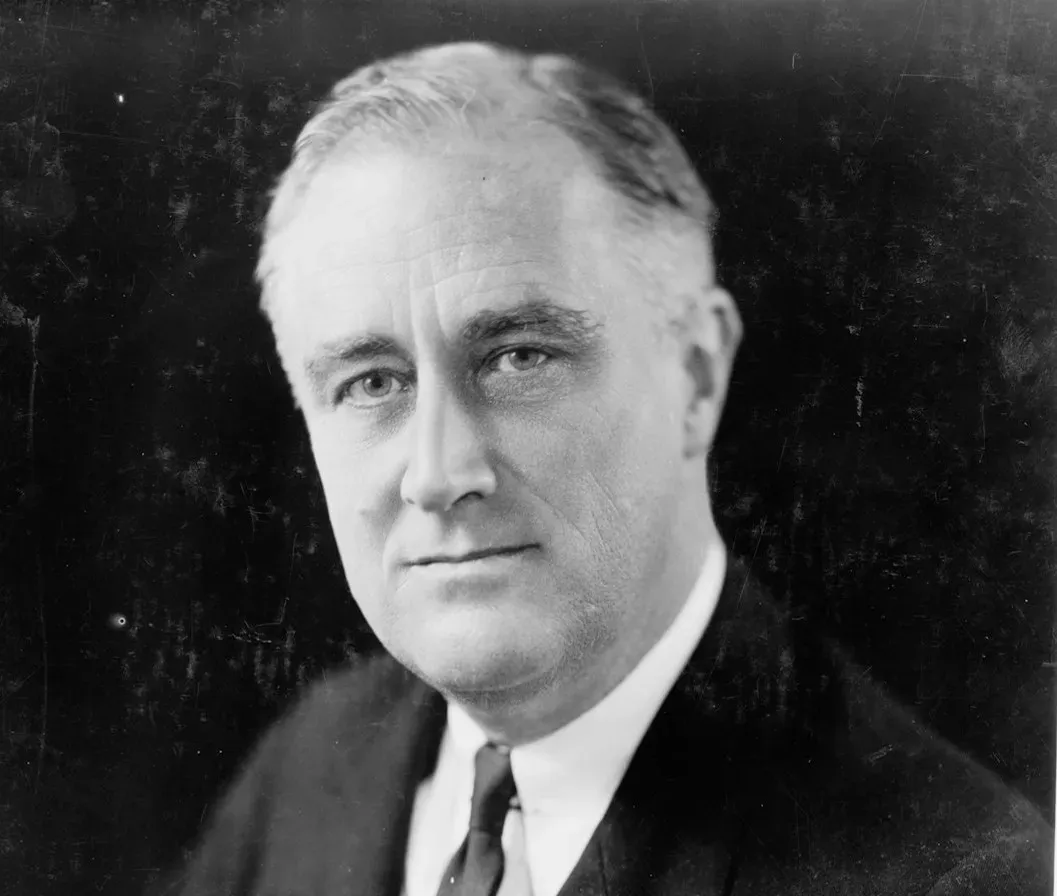
On April 12, 1945, Shoumatoff was on her second day of painting the President, filling in the outlines of his face and shoulders, when Roosevelt experienced severe pain in the back of his head and collapsed. He died three hours later, leaving the painting forever unfinished. Shoumatoff the portrait, and it became famous for showing the president during his last days.
The portrait itself is considered to be a highly flattering depiction of the President, who was emaciated and obviously ill at the time. Since Elizabeth Shoumatoff never sold the famous artwork, the exact monetary value of it is unknown. It remains on display in the Little White House, a testament to the vagaries of fate. Few artworks carry the same sense of historical rupture as a portrait abandoned mid-session on the day of its subject’s death.
8. The Entombment – Michelangelo
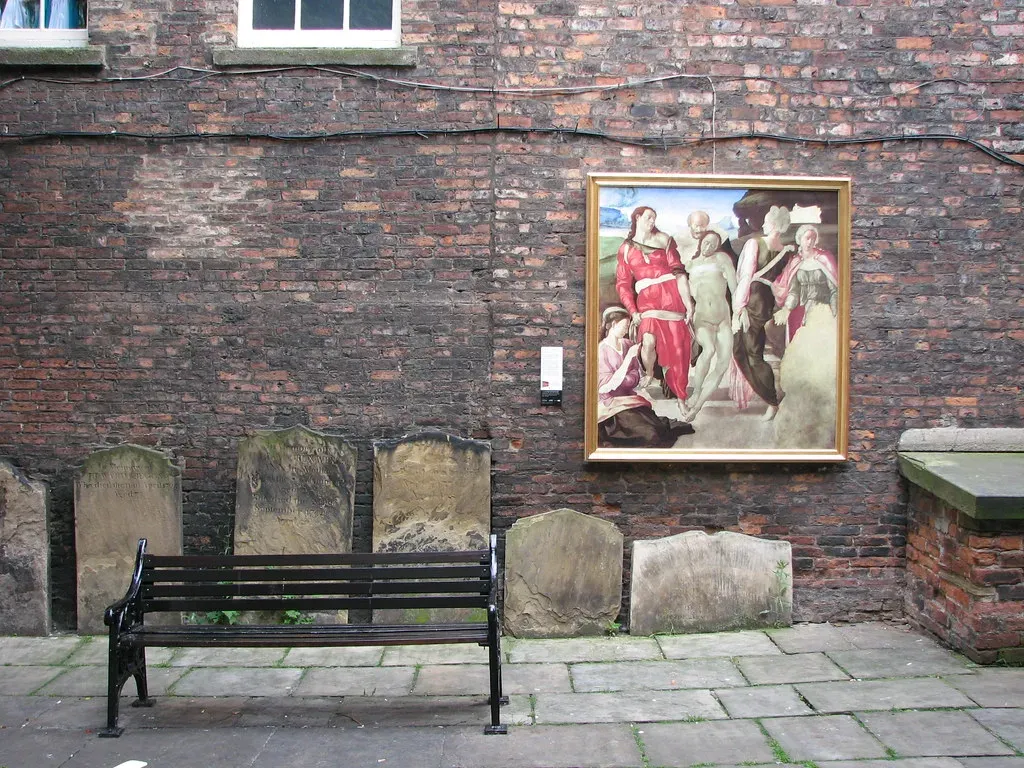
This unfinished depiction of the burial of Jesus is one of the more hotly contested paintings in the art world. Some art historians attribute it to Michelangelo. Based on documents of the period, it is known that Michelangelo was commissioned in 1500 to paint an altarpiece for the chapel at Sant’Agostino in Rome. One set of historians insists that this commission was never even begun, while another contends that The Entombment is, in fact, the work discussed in the documents.
The wood from The Entombment was nearly used to make a table before it was purchased for £1. In 1868, it was sold to the National Gallery for £2,000. The work’s near-destruction is a reminder of how thinly the line between lost masterpiece and forgotten scrap can run. Its attribution debate continues to this day, adding another layer of mystery to an already puzzling relic.
9. The Virgin and Child with Saint Anne – Leonardo da Vinci
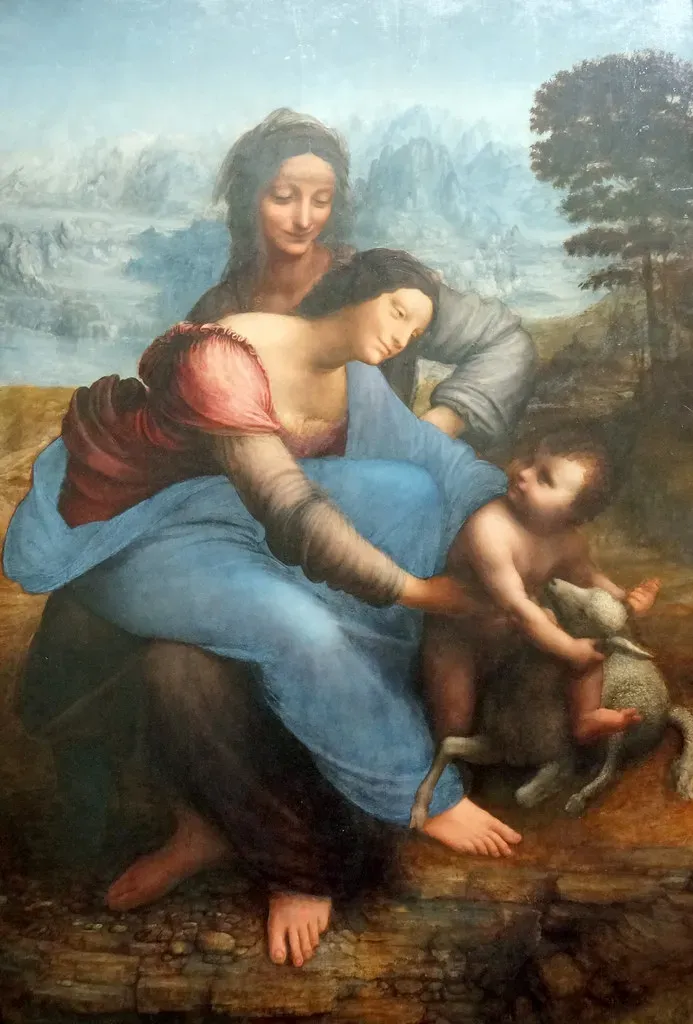
This unfinished work by Leonardo is a joyful depiction of the Virgin Mary with the infant Jesus and Mary’s mother, Saint Anne. This portrayal is full of warmth depicting the familial dynamic between grandmother, mother, and child. He used atmospheric perspective to hint at the mountains in the distance and employed the sfumato technique to soften the transition between colors, thereby creating a delicate haziness.
When Leonardo resettled in Florence in 1500, the artist made preliminary progress on his painting Virgin and Child with Saint Anne, which he would set aside unfinished, not to be completed for another 10 years. The work eventually made it to France, as it was located in the inventory of the Château de Fontainebleau in 1683. It has been speculated that King Francis I acquired the painting from Leonardo’s beloved assistant, Salai, following Leonardo’s death. It is now displayed at the Louvre in Paris.
10. Shooting the Rapids, Saguenay River – Winslow Homer
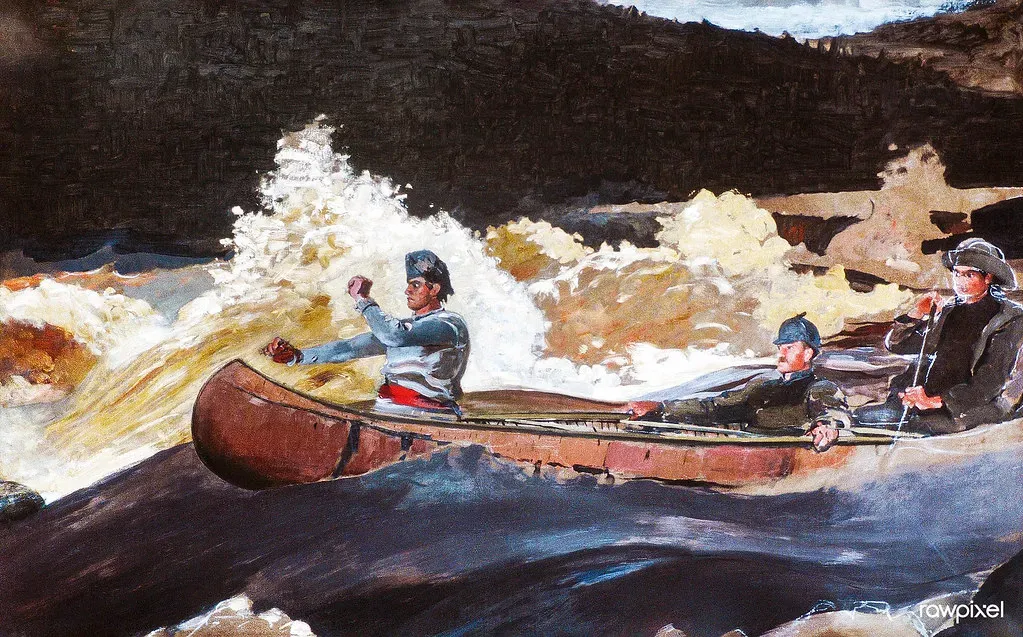
Back home in his Prouts Neck, Maine, studio, Homer began to paint Shooting the Rapids, Saguenay River using watercolors as a basis to lay out a dramatic scene: his brother Charles in a canoe, bracing himself against the force of nature, with two guides trying to steer through the rapids. One paddle was not yet painted and one was just sketched in, with the work showing chalk revisions and unfinished areas that retain an almost abstract nature.
The story goes that Homer was determined to finish the picture, but claimed he needed to return to Saguenay River to do so. Begun five years before his death, Homer kept the work in his studio, never finishing it. Elizabeth Kornhauser has suggested that the work reminded the artist of his adventures and served as a token of his affection for his brother. It now sits in museum collections as a quietly emotional fragment, more personal than perhaps any finished Homer ever was.
What makes these ten works so enduringly compelling is not their incompleteness as a flaw, but as a feature. Abandoned or interrupted artworks may reveal traces of the creative process in a composition that would have otherwise been turned into a unified surface. As early as the first century A.D., the Roman author Pliny the Elder acknowledged the appeal of unfinished works of art, stating that they are often more admired than those that are finished, because in them the artists’ actual thoughts are left visible. In that light, every unfinished brushstroke is less an ending than an open door.
Partner offer
Planning a trip to Vegas?
Compare hotel rates and show tickets on VEGAS.com.