There’s something almost paradoxical about banning a film. The act of prohibition almost guarantees the kind of attention that a quiet release never could. Throughout cinema history, certain films have been banned by film censorship or review organizations for political or moral reasons or for controversial content, such as racism and underage immorality. The reasons vary wildly, but the films themselves share one thing in common: they touched a nerve too raw for governments, religious institutions, or cultural gatekeepers to ignore.
Censorship standards vary widely by country, and can vary within an individual country over time due to political or moral change. What’s considered dangerous in one decade can become a celebrated classic in the next. These ten films each crossed a line somewhere in the world, and in doing so, they wrote themselves permanently into cinema history.
1. Battleship Potemkin (1925)

Battleship Potemkin is a 1925 Soviet silent epic directed by Sergei Eisenstein, presenting a dramatization of the 1905 mutiny aboard the Russian battleship Potemkin, and is a prime example of the Soviet montage theory of editing, particularly in the iconic “Odessa Steps” scene. Originally intended to commemorate the twentieth anniversary of the Russian Revolution, the film faced censorship and bans in several countries due to its provocative content, believed to incite riots.
The film was banned in many countries, including the United States, Great Britain, France, and, after a time, in the Soviet Union itself, because it was believed that its strong emotional impact would influence people to riot. France imposed a ban after a brief run in 1925 and lifted it in 1953 after the death of Joseph Stalin, while the UK banned it until 1954. Ironically, the film was later banned by Joseph Stalin himself for fear it might incite a riot against his regime.
2. The Birth of a Nation (1915)

D.W. Griffith’s The Birth of a Nation stands as a landmark in film history for its innovative cinematic techniques, but its legacy is deeply tarnished by racist portrayals and the glorification of the Ku Klux Klan. The film sparked immediate protests and was met with censorship efforts across the United States, as civil rights groups condemned its dangerous stereotypes.
It’s an incredibly racist piece of work, featuring evil and bumbling Black characters, a heroic depiction of white supremacy, and pseudohistory that legitimizes the Lost Cause of the Confederacy. Even by 1915 standards, this was seen as wildly problematic, and the movie’s release was met with protests and vehement criticism. Its racist narrative led to bans in France, parts of the US, and later South Africa for inciting racial hatred.
3. A Clockwork Orange (1971)
Stanley Kubrick’s A Clockwork Orange remains one of cinema’s most controversial works, and its unflinching portrayal of violence and psychological manipulation led to bans in countries like Ireland and Singapore. The film follows Malcolm McDowell’s violent delinquent in a dystopian world, and the UK, Ireland, and Singapore banned it for glorifying violence and sexual assault, with Kubrick himself withdrawing it from UK distribution after copycat crimes surfaced.
The UK ban was particularly unusual in that it came not from the government but from the director himself. Kubrick pulled the film from British distribution and it remained unavailable there for nearly three decades until after his death in 1999. The anxiety it induced was enough to get it banned in 14 countries, including Ireland, New Zealand, Australia, Sweden, Brazil, Chile, Finland, France, Iceland, Norway, Singapore, West Germany, the United Kingdom, and South Africa.
4. Cannibal Holocaust (1980)
Cannibal Holocaust is a 1980 Italian horror film often cited as one of the most disturbing movies ever made, and its realistic portrayal of violence, including actual animal cruelty, led to bans in countries like the UK, Australia, and Italy, with the director arrested on obscenity charges and required to prove in court that the actors were still alive. The movie was banned at different points in time for different durations in Australia, Norway, Finland, Iceland, New Zealand, Singapore, the UK, and the US for its depictions of extreme violence, cannibalism, and animal cruelty.
Video shops were raided by police and titles deemed to be obscene were seized and destroyed, with Cannibal Holocaust being one of the primary titles at issue, making it illegal to possess the film in the UK for years. As recently as 2001, Cannibal Holocaust was banned in South Africa, with that country’s Film and Publication Board calling it “undoubtedly the most disturbing” film they had screened.
5. Salò, or the 120 Days of Sodom (1975)

Pier Paolo Pasolini’s 1975 film Salò was banned in nine countries, including Australia, New Zealand, Norway, Finland, Canada, the UK, Italy, Germany, and the USA. The film adapts the Marquis de Sade’s novel, transposing its tale of depravity to fascist Italy in 1944, with explicit depictions of torture, sexual violence, and sadism making it notorious and controversial.
Episodes of torture were transposed to Benito Mussolini’s Fascist Italy of the early 1940s, where sexual decadence also functioned as a political critique. The movie was banned in Britain and Australia, and caused a stir nearly twenty years later in America when the owners of a Cincinnati video store were arrested for “pandering.” It was banned in many countries for its graphic content and disturbing themes, with bans lasting decades in some places, and despite its notoriety, Salò has been the subject of much critical discussion and remains one of the most infamous films ever made.
6. The Last Temptation of Christ (1988)
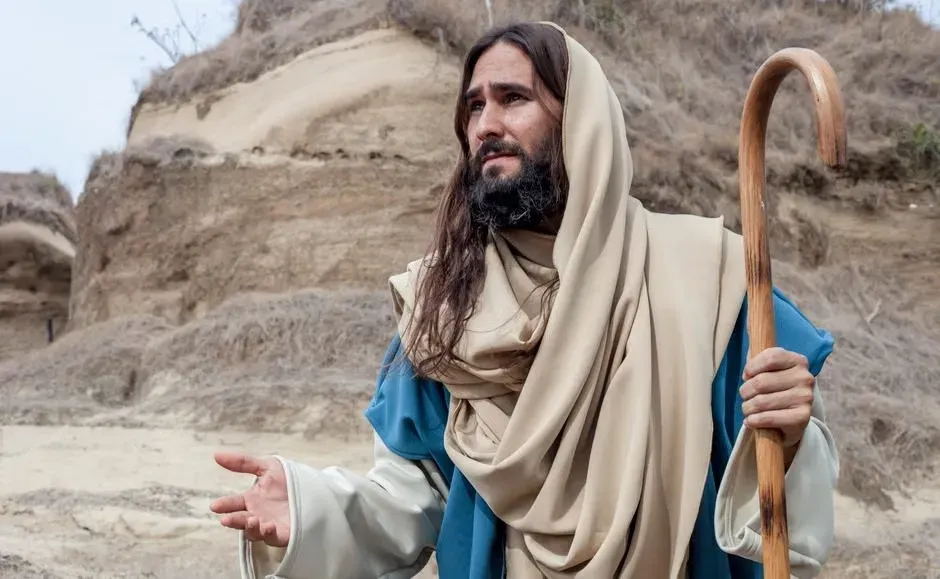
The film depicts the life of Jesus Christ and his struggle with various forms of temptation including fear, doubt, depression, reluctance, and lust, and its depiction of Christ being tempted by imagining himself engaged in sexual activities caused outrage from certain Christian groups, who claimed the work was blasphemy. During a screening in a Paris cinema, an Integralist Catholic group placed an incendiary device under a chair, causing 13 people to suffer injuries.
In countries such as Chile, Argentina, Mexico, Turkey, and Greece, the film was banned for several years, while it still remains banned in Singapore and the Philippines. Due to death threats, Scorsese was accompanied by bodyguards when appearing in public after the film was released. Evangelist Bill Bright offered to buy the film’s negative from Universal in order to destroy it, and the protests were effective in persuading several theater chains not to screen the film.
7. The Texas Chain Saw Massacre (1974)

Following a group of young adults victimized by several cannibals, The Texas Chain Saw Massacre was so macabre that it caused some audience members within the United States to leave midway through, and those reactions were only the tip of the iceberg compared to the global response, with upwards of ten countries preventing it from being broadcast, all citing the violence as the reason. Britain went so far with the ban that even the word “chainsaw” was disallowed, forcing the title to be changed.
The UK, Australia, and Norway banned the film for extreme violence, with some calling it depraved. It was only released in Russia in 2024, fifty years after its original broadcast. What’s striking in retrospect is that the film contains relatively little explicit gore compared to modern horror, yet its raw, low-budget realism felt so authentic to audiences and censors at the time that governments took action almost reflexively.
8. Life of Brian (1979)
Monty Python’s Life of Brian is a satire about a man mistaken for the Messiah, and Norway, Ireland, and parts of the UK banned it for blasphemy, fearing it mocked Christianity, with protests erupting globally and some countries, like Greece, facing theater bombings. The film’s central argument, that the joke is really about blind religious conformity rather than faith itself, was largely lost on its most vocal critics.
Sweden reportedly used the controversy to its own advantage in advertising, promoting the film with the tagline that it was “so funny it was banned in Norway.” The uproar led to bans in Turkey, Mexico, Greece, Chile, Argentina, Singapore, and the Philippines. The Python troupe had anticipated some backlash, but the scale of the global reaction surprised even them. Decades on, the film is widely studied in film school and theology departments alike.
9. The Da Vinci Code (2006)
A hit with book clubs worldwide, The Da Vinci Code follows renowned symbologist Robert Langdon as he becomes a prime suspect in a murder and joins a young French woman on the run, stumbling into a mystery involving the Catholic Church and a two-thousand-year-old cover-up concerning Jesus Christ. The Da Vinci Code was banned on religious grounds in countries such as Pakistan, Egypt, Samoa, and Sri Lanka, with many claiming it to be a work of blasphemy, which ironically gave the film more attention than it would have received otherwise.
Countries like Jordan, Egypt, and the Philippines banned it for blasphemous content, while some theaters in India faced protests, and China pulled it after initial screenings due to religious backlash. The Da Vinci Code remains banned in many countries, including the independent state of Vatican City, due to its divisive depictions of Christianity’s origins. It’s a rare case of a commercially mainstream Hollywood thriller carrying enough theological weight to trigger international censorship.
10. A Serbian Film (2010)

A Serbian Film is a 2010 horror movie that is banned in 12 countries, including Australia, New Zealand, Malaysia, South Korea, Spain, Norway, Ireland, Brazil, Singapore, Finland, the UK, and Germany. The film centers on a retired adult film actor lured back into the industry, only to discover he has been unknowingly recruited into something deeply sadistic. Its content pushed so far past conventional limits that it triggered bans almost universally wherever it was submitted for classification.
Arguably the most controversial film ever made, A Serbian Film was banned in numerous countries, with people in over 40 countries unable to watch it. One Spanish festival director notably faced charges for publicly showing the movie, though he was exonerated, and it was also the first film in over 20 years to be banned in Brazil. Critics remain divided about whether the film constitutes extreme art or simply extreme content, and that debate shows no signs of resolving anytime soon.
What unites these ten films is that each one triggered a response far beyond the usual chatter of controversy. Governments enacted legislation, protestors took to the streets, and in some cases, cinemas were literally set on fire. The films on this list span a full century of cinema, which is itself a reminder that no era has a monopoly on discomfort, and that what a society chooses to ban often reveals more about its own fears than about the films themselves.