Most people stop at the obvious. They see the size, the grandeur, the tourist crowd forming around a famous statue, and they snap a photo. What they rarely do is look closely enough to notice that nearly every great statue in history was built to say something specific, something its creator encoded into the pose, the material, the gesture, even the direction it faces. These details weren’t accidents.
Across centuries and continents, sculptors embedded layers of meaning into their work, some of it political, some spiritual, some quietly personal. The result is a world full of statues that most of us have seen but never truly read. These are ten of them.
1. The Statue of Liberty’s Broken Chains at Her Feet
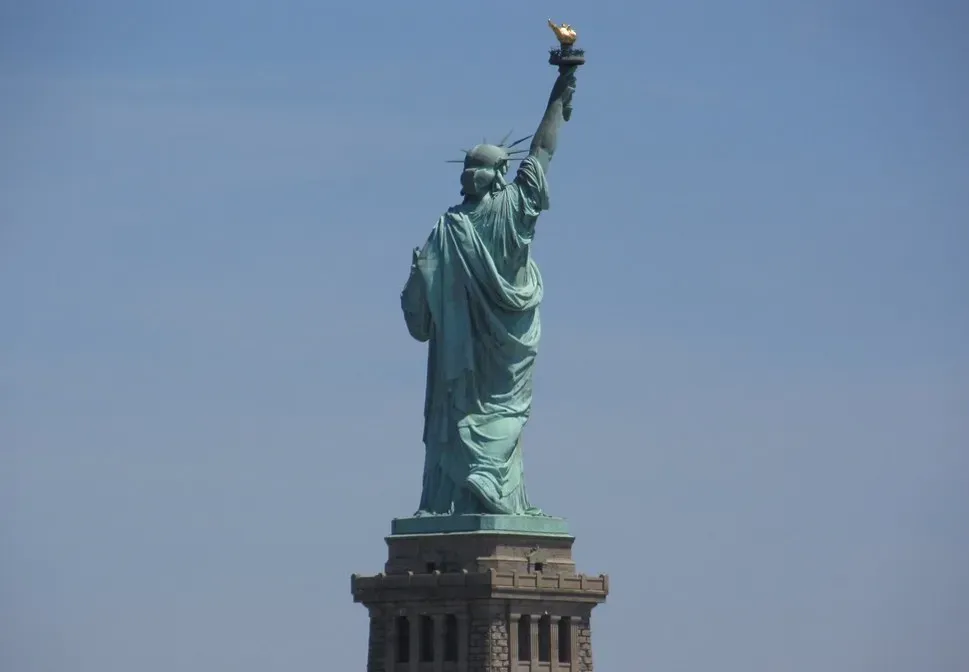
Nearly every visitor to Liberty Island looks up. The torch, the crown, the sheer scale of the thing. Almost nobody looks down. The chains at Lady Liberty’s feet show her as a goddess free from oppression and servitude, a direct reference to the recent abolition of slavery. The chains are half-hidden by her robes and nearly impossible to see from the ground.
Sculptor Frédéric-Auguste Bartholdi originally wanted to place the broken chains in her hands, but eventually accepted they were too controversial and would be better off hidden at her feet. The broken shackles and axe head represent the throwing off of tyranny and oppression, and the National Park Service describes the statue as a whole as symbolizing American independence and the end of all types of servitude. It’s a bold anti-slavery statement hiding in plain sight, right below one of the world’s most photographed monuments.
2. The Seven Rays on Lady Liberty’s Crown
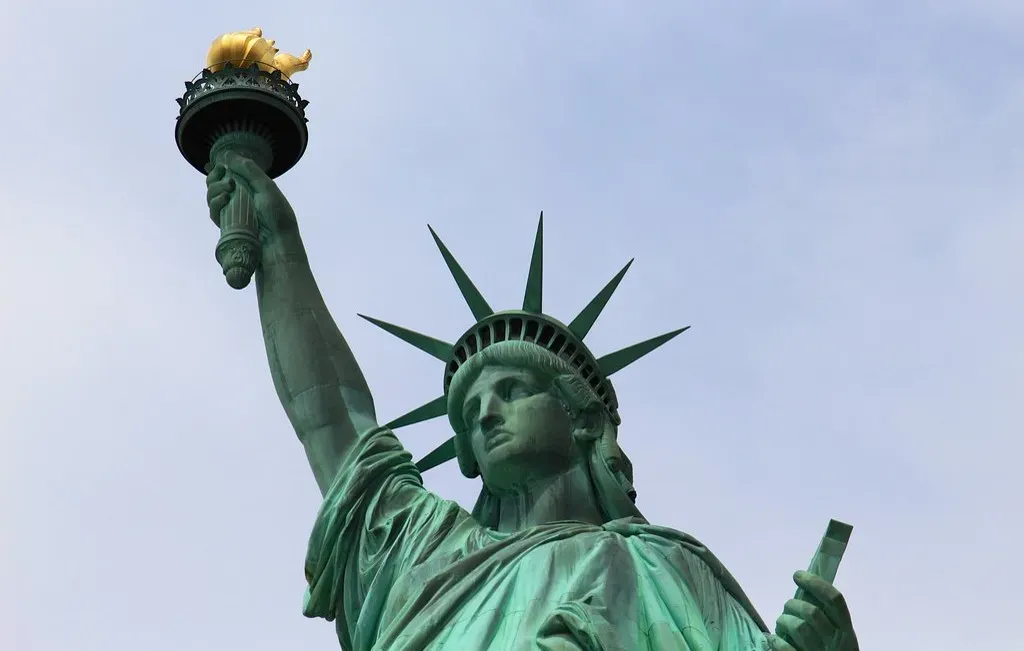
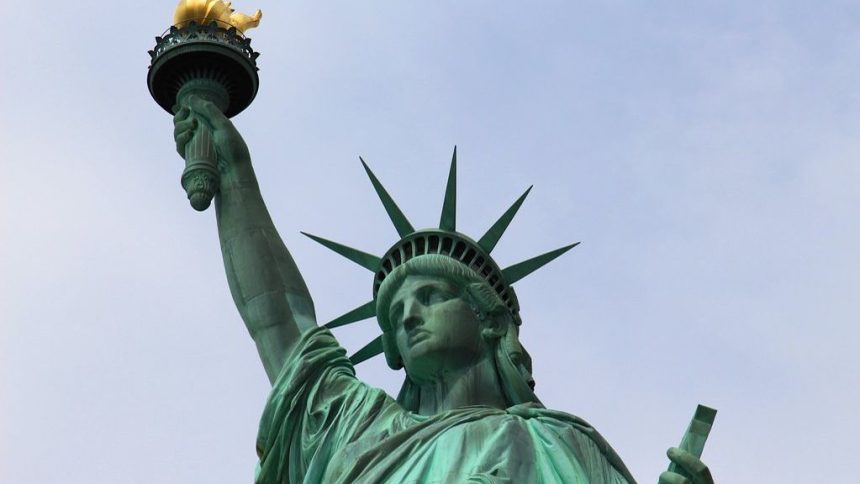
Atop the crown sit seven rays. Just as the crown’s windows represent the gemstones of Earth, the seven rays represent the seven seas and the seven continents of the world. The gesture is deliberately universal. Freedom, in Bartholdi’s vision, wasn’t a specifically American condition. It was meant to radiate outward across every ocean and every landmass.
The seven spikes radiating from Lady Liberty’s crown have long sparked debate. The rays are often interpreted as liberty reaching across the world, though sources differ on whether that’s meant to evoke continents, seas, or a broader universal message. Regardless of interpretation, the rays make her presence striking and memorable. They suggest that liberty has no borders and reaches across oceans, shining light and hope to every corner of the world.
3. Rodin’s “The Thinker” Was Originally Dante in Hell
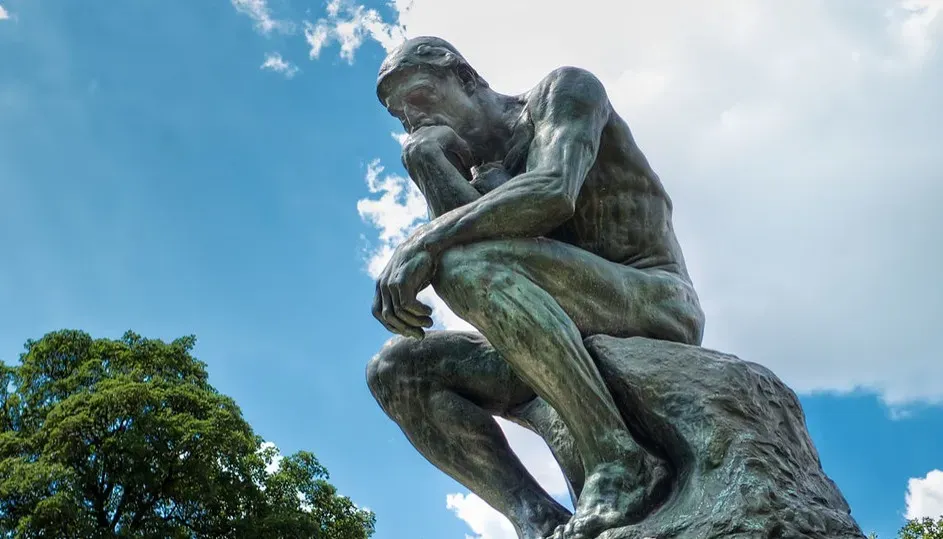
Everyone recognizes the pose: a muscular man seated on a rock, chin resting on his fist, lost in thought. What very few people know is who he was originally meant to be. When conceived in 1880 as the crowning element of The Gates of Hell, The Thinker was initially entitled “The Poet.” He represented Dante, author of the Divine Comedy, leaning forward to observe the circles of Hell below, meditating on his work. The Thinker was therefore initially both a being with a tortured body, almost a damned soul, and a free-thinking man determined to transcend his suffering through poetry.
The theme for The Gates of Hell was taken from Dante’s Inferno, and this figure, planned for the lintel on top, was initially conceived as the poet himself. His nudity marked him as a universal embodiment of every poet, every creator, who draws new life from the imagination. In the late 1880s Rodin began to exhibit the figure, sometimes with the title “Poet,” other times as “Poet/Thinker.” By 1896, it had become simply The Thinker, a still more universal image that reveals in physical terms the mental effort and even anguish of creativity. The brooding philosopher you think you know was once a man staring into the inferno.
4. Michelangelo’s David Has Misaligned Eyes – On Purpose
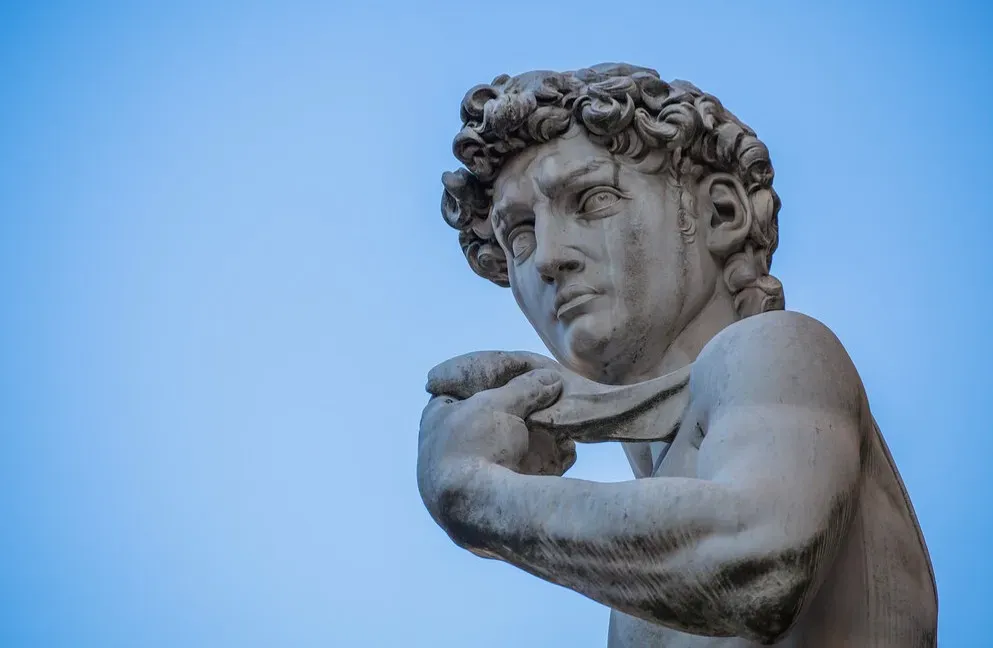
One of the most famous statues in the world, the David resides in Florence’s Galleria dell’Accademia. He stands ready to take on Goliath, and the consensus is that he was sculpted to be a perfect male specimen. Yet close observers have noticed that the statue has what seems to be a flaw: his eyes look in two slightly different directions. It’s virtually impossible to spot when he’s on his pedestal. While the left one looks directly at the viewer, the right one seems to gaze at a distance beyond the viewer.
It’s been debated whether or not it’s a mistake, but plenty of scholars think it’s because you can’t see both eyes at a time as you walk around the statue. So Michelangelo made sure that David’s gaze was as impactful as possible from either side. It’s a sculptural trick that accounts for real-world viewer movement rather than a fixed frontal perspective. Looking at him from the left, he meets your gaze. Move to the right, and he seems to look past you, alert, calculating, already planning his next move.
5. Christ the Redeemer Has a Hidden Heart
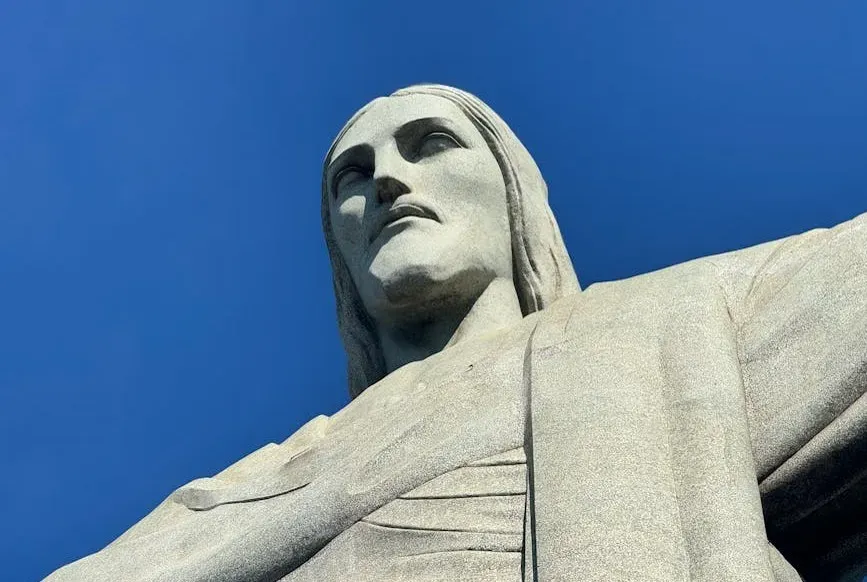
From below, the iconic Art Deco figure atop Mount Corcovado reads as open arms and pure monumentality. The reinforced concrete statue represents the largest Art Deco sculpture on Earth. A closer inspection reveals the exterior surface, comprised of thousands of triangular soapstone tiles arranged in a mosaic pattern. Most visitors never look closely enough to notice a quiet detail carved into the chest.
Christ the Redeemer has a small and discreet heart, located just above the mantle. This hidden detail, unknown to most visitors, adds another layer of symbolism to the monument. The heart represents divine love and compassion, positioned at the center of the figure’s chest where a human heart would be located. The fact that this heart is subtle and not immediately visible to observers has led some to see it as a metaphor for the hidden depths of faith and love that cannot always be seen on the surface but are nonetheless present and powerful. It reminds viewers that the statue is more than just an impressive structure. Add to that the deeply human detail that women who helped attach the soapstone tiles wrote the names of their loved ones on the small pieces of stone before placing them. Thousands of names, prayers, and messages of love are literally embedded in the statue’s surface, invisible to observers but forever part of its fabric.
Partner offer
6. The Moai of Easter Island Face Inward, Not Outward
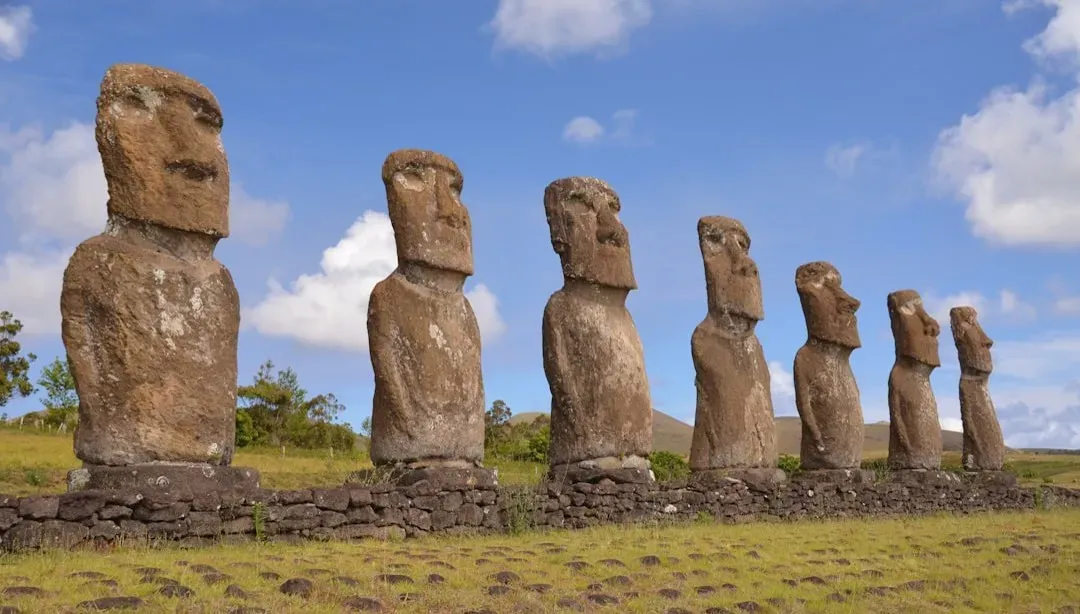
The popular image of Easter Island’s massive stone figures shows them staring mysteriously toward the sea. That’s not quite right. Carved from volcanic rock, the Moai have large heads, long faces, prominent brows, and straight noses. Most of them stand on stone platforms called ahu, facing inland as if watching over the island’s villages. Researchers believe they represent ancestral chiefs or gods, symbolizing power and connection to the spiritual world.
These massive stone figures were created by the Rapa Nui people between 1250 and 1500 CE. There are about 900 Moai on the island, with the largest standing over 10 meters tall and weighing up to 82 tons. The inward orientation is the key detail most tourists miss. The Moai weren’t sentinels guarding the coast. They were protectors facing the communities they were built to watch over, ancestral presences looking after the living, not the horizon.
7. The Lincoln Memorial’s Hands Spell “AL” in Sign Language
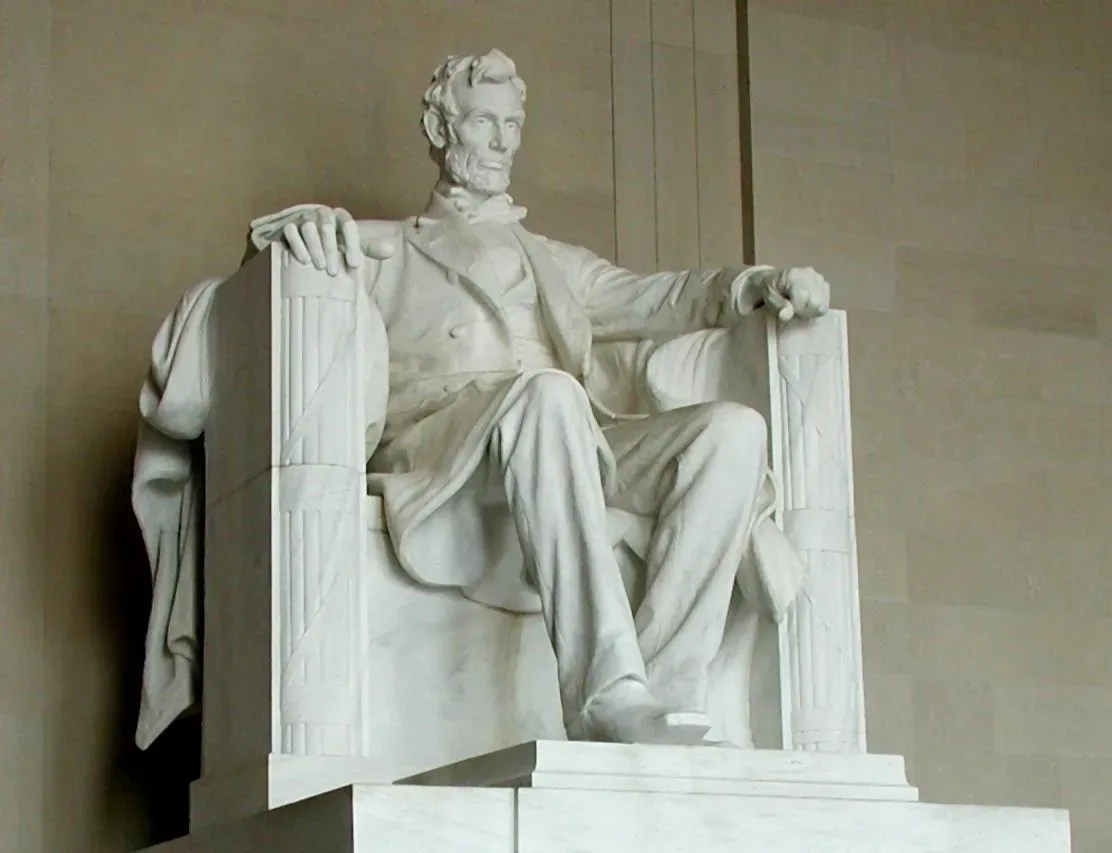
Daniel Chester French’s seated Lincoln is one of the most solemn public monuments in the United States. Visitors tend to focus on the expression: that heavy, contemplative gaze. Fewer notice what his hands are doing. Lincoln was a key supporter of deaf education, signing the charter for Gallaudet University, the world’s first university for the deaf. The sculptor, Daniel Chester French, was said to have added this as a subtle tribute to Lincoln’s advocacy. Most visitors are so taken in by Lincoln’s solemn expression and the grand columns that they never spot this detail. The memorial, dedicated in 1922, isn’t just about one man – it’s about the promise of equality for all Americans, including those with disabilities.
The left hand forms the letter “A” in American Sign Language, and the right forms the letter “L,” together spelling Lincoln’s initials. Whether French intended this deliberately remains a matter of some debate among scholars. Still, French was familiar with the deaf community, and the correspondence between the finger positions and ASL letters is specific enough that many historians consider it a genuine embedded tribute rather than coincidence.
8. The Sphinx Aligns with the Rising Sun
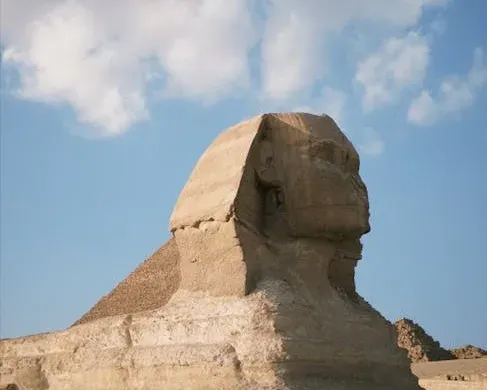
The most famous statue in Egypt remains the Great Sphinx of Giza. This iconic colossal limestone statue stands at 73 meters long and depicts a sphinx with the body of a lion and the head of a pharaoh, most likely Khafre. As one of the oldest monumental sculptures in the world, the Sphinx is a significant landmark. Most visitors see it as guardian of the pyramids, a fixed marker of ancient power. Its solar dimension is far less discussed.
Few people know the Sphinx could also be associated with Horus as an emblem of heavenly kingship and solar protection. The Sphinx is thought by some scholars to have once possessed a solar crown, which has since eroded because of time. In contrast to the stylized images of ancient Egyptian gods placed to rest in temples and tombs, the Sphinx functioned as a colossal border guardian between the world and the celestial realm. Its alignment to the rising sun on certain days adds a layer of mystery that is rarely considered in travel brochures. The ancient Egyptians built meaning into orientation itself, treating the directions of sunrise and sunset as spiritually charged coordinates.
9. The Oscar Statuette’s Film Reel Has Five Deliberate Spokes
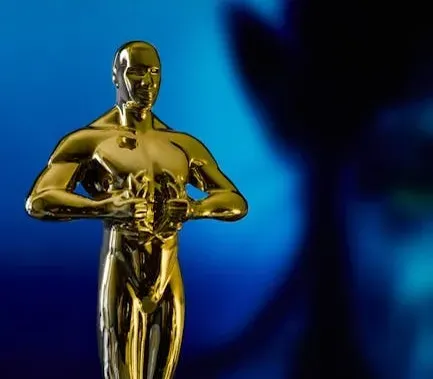
The Oscar statuette is a familiar sight on Hollywood’s biggest night, but its design is rich with symbolism. The figure holds a crusader’s sword and stands atop a film reel with five spokes. Each spoke represents one of the original branches of the Academy: actors, directors, producers, technicians, and writers. First awarded in 1929, the Oscar was designed to embody the spirit of knightly valor in the world of cinema.
The sword suggests that the creative arts are worth fighting for, while the reel connects all the crafts that bring movies to life. For winners, it’s not just a trophy – it’s a badge of honor acknowledging the teamwork behind every film. This is one of the most quietly clever pieces of institutional symbolism in popular culture. The five spokes aren’t decorative. They’re a structural argument, in bronze, about how cinema is fundamentally a collaborative art.
10. The Little Mermaid in Copenhagen Depicts Longing, Not Happiness
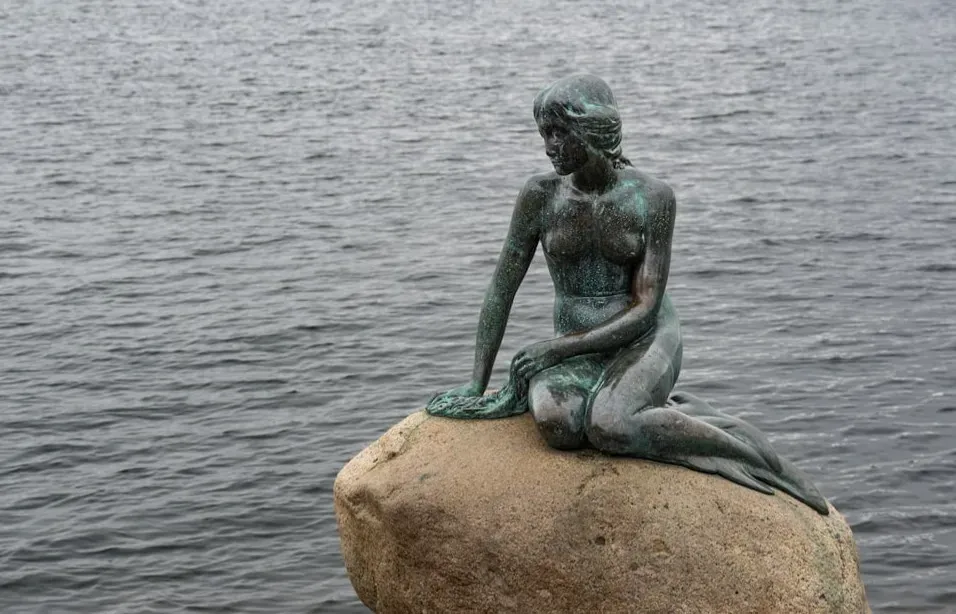
The Little Mermaid is based on the fairy tale of the same name by Danish author Hans Christian Andersen. The small and unimposing statue is a Copenhagen icon and has been a major tourist attraction since 1913. Much of the charm of the Little Mermaid is how quaint but fairytale-like it is, and it inspires one’s imagination to run wild while looking at it. Many visitors expect something cheerful, a figure from a children’s story. The emotional register of the statue is actually much sadder.
In Andersen’s original tale, the mermaid sacrifices her voice and endures constant pain to be with a prince who ultimately marries someone else. She doesn’t get a happy ending. The durability of sculpture makes it an ideal medium for commemorative purposes, and much of the world’s greatest sculpture has been created to perpetuate the memory of persons and events. The statue on the Copenhagen harbor, cast in 1913 by sculptor Edvard Eriksen, captures the mermaid at the precise moment of that longing, perched between two worlds she can never fully inhabit. The melancholy in her posture is the whole point. It’s a monument to yearning, not triumph, which is exactly why it endures.
There’s something genuinely rewarding about looking at a famous statue a second time, more carefully. The broken chain at Liberty’s feet, the hidden heart on a concrete Christ, the inward gaze of the Moai – none of these were accidents. They were choices, made by people who understood that the most lasting ideas don’t always announce themselves. Sometimes they wait, just below the surface, for someone patient enough to find them.
Partner offer
Planning a trip to Vegas?
Compare hotel rates and show tickets on VEGAS.com.