Memory is a strange and fragile thing. We forget grocery lists within minutes, yet somehow a rhyme learned in third grade about the days of a month can surface decades later, word perfect, without any effort at all. That staying power is not an accident. It is the result of careful, time-tested design.
A mnemonic device is any learning technique that aids information retention or retrieval in the human memory, often by associating the information with something that is easier to remember. Mnemonics date back thousands of years and were widely used in ancient cultures to preserve and transmit knowledge in oral traditions. The ten examples below are among the most durable ever devised. Each one carries a small piece of history with it.
1. The Method of Loci (The Memory Palace)


The method of loci is a mnemonic technique that uses visual imagination and spatial memory to organize and recall information. It involves mentally associating pieces of information with specific locations in a familiar environment, such as rooms in a house or landmarks along a well-known route. It is arguably the oldest formal memory system ever recorded, and it remains one of the most powerful.
The method of loci is traditionally associated with the Greek poet Simonides of Ceos, who is said to have used it to recall the seating arrangement at a banquet hall that collapsed, allowing him to identify the crushed victims by remembering where each person had been seated. The story appears in Cicero’s De Oratore from 55 BCE and was later recounted by Quintilian around 95 CE. In modern times, the technique is still widely used, particularly in competitive memorization, and is taught in seminars and workshops on memory enhancement.
2. ROY G. BIV (Colors of the Rainbow)


Most mnemonics have a particular order to memorize, as in Roy G. Biv for the colors of the visible spectrum: red, orange, yellow, green, blue, indigo, and violet. The name functions as a fictional person, which makes it strangely easy to hold in the mind. You almost feel like you’ve met the man.
As Newton reported in his 1672 New Theory of Light and Color, he named these seven colors: red, orange, yellow, green, blue, indigo, and violet. Taking the first letter of each major color produces the mnemonic ROY G. BIV. Another traditional mnemonic device turns those same initial letters into a sentence: “Richard Of York Gave Battle In Vain.” This is said to refer to the defeat and death of Richard, Duke of York at the Battle of Wakefield in 1460.
3. HOMES (The Great Lakes)


Most often, a mnemonic device involves taking the first letter of several words one desires to remember and forming them into an easily remembered word. For example, HOMES describes the names of the Great Lakes: Huron, Ontario, Michigan, Erie, and Superior. Simple, neat, and completely portable. No context is needed once it clicks into place.
When a list is not in any set order, it allows for more freedom in creating a mnemonic. HOMES helps you remember the names of the Great Lakes even though there is no significance to the order of Huron, Ontario, Michigan, Erie, and Superior. The word HOMES is a mnemonic for the Great Lakes that has been used for generations to keep all five straight. Geography teachers have relied on it for so long that its origin is almost beside the point.
4. Every Good Boy Does Fine (Musical Notes)

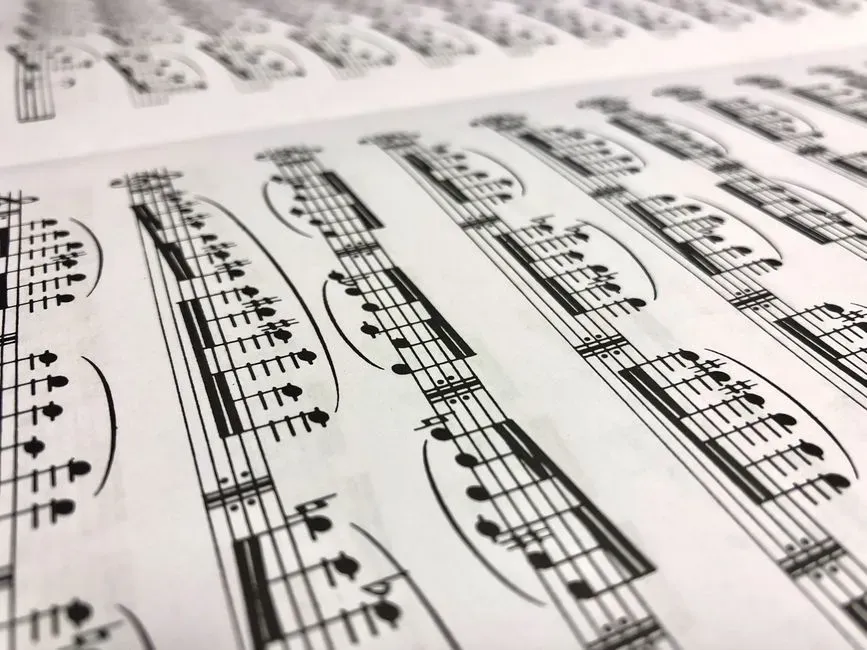
“Every Good Boy Does Fine” is a common acrostic used to remember the notes on the lines of a treble clef in music: E, G, B, D, and F. Music students learning to read sheet music encounter this phrase very early, and for most of them it never really leaves. It is one of those accidental permanent fixtures of early education.
The companion phrase for the spaces of the treble clef is simply FACE, which spells itself out without needing any sentence at all. Together, these two devices cover the full treble staff. There is an endless number of mnemonic devices that get passed down from generation to generation, covering just about every field of human endeavor, and music education has always been particularly well served by them.
5. Please Excuse My Dear Aunt Sally (Order of Operations)

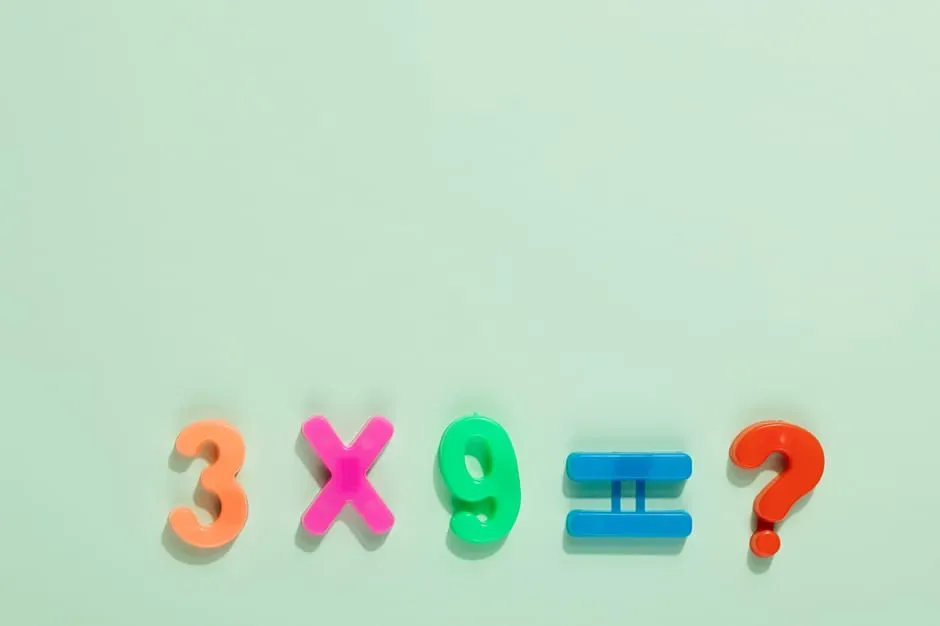
Students use acronyms like “PEMDAS” (Parentheses, Exponents, Multiplication, Division, Addition, Subtraction) to remember the math order of operations. The sentence form, “Please Excuse My Dear Aunt Sally,” gives learners a story rather than just a string of letters, which is exactly why it sticks so well. Aunt Sally has been saving math grades for generations.
Studies have shown that using mnemonic devices in studying is significantly beneficial because it allows the memory to store less actively managed information, thereby allowing a person to memorize more at the same time. This expansion of short-term memory enhances the creation of long-term memories. PEMDAS is a perfect example of that principle at work in a subject many students find intimidating.
6. In 1492, Columbus Sailed the Ocean Blue


When studying Christopher Columbus’ explorations, a useful mnemonic is: “In fourteen hundred ninety-two, Columbus sailed the ocean blue.” It is one of the most recognized rhyming mnemonics in American and British classrooms alike. The rhyme does something clever, embedding a date inside a simple couplet that almost anyone can recall on demand.
Whether set to a song or just a simple rhyming phrase, the cadence of a rhyme is a helpful memory trigger for students. Mnemonic techniques use memorable associations to aid in learning and recall, emphasizing long-term retention. Such strategies not only improve memory but also make the learning process more engaging. A date that might otherwise feel arbitrary becomes anchored the moment a rhyme gives it rhythm.
7. Thirty Days Hath September


The well-known rhyme runs: “Thirty days hath September, April, June, and November; All the rest have thirty-one, Save February, with twenty-eight days clear, And twenty-nine each leap year.” It is one of the oldest mnemonics still in daily use in the English-speaking world, with versions traceable to at least the 16th century. The fact that most adults still recite it when checking a calendar says something striking about how well a good rhyme can hold information.
Some mnemonics are simple rhymes, like “Thirty days hath September” or “I before E, except after C.” Others are acronyms to help remember the spelling of tricky words. The calendar rhyme is interesting because it persists even in an age when the answer is one tap away on a phone. Habit and rhythm beat convenience more often than people expect.
8. I Before E, Except After C

“I before E, except after C” is a rhyme used to remember the spelling rule for words containing the letter combination “ie” or “ei.” It is taught to nearly every young English learner, and it has held its place in classrooms despite the inconvenient truth that English has more exceptions to this rule than most teachers care to count. Still, it provides a useful first anchor for uncertain spellers.
Controlled experimental studies conducted over several decades have substantiated the general claim that imagery and mnemonics facilitate the learning and recall of specific items of information and that these techniques can be taught to many types of people. Spelling mnemonics like this one work precisely because they give hesitant writers a mental foothold, even if the rule is imperfect. Some scaffolding is better than none.
9. My Very Educated Mother Just Served Us Nachos (The Planets)


This acrostic helps students recall the eight planets of the solar system in order from the Sun: Mercury, Venus, Earth, Mars, Jupiter, Saturn, Uranus, and Neptune. The sentence was updated after 2006, when Pluto was reclassified as a dwarf planet, giving the old version, “My Very Educated Mother Just Served Us Nine Pizzas,” an unexpected retirement. The order of the planets in the solar system is a classic list in need of a good mnemonic. Before the discovery of Pluto in 1930, a popular mnemonic was “Mary’s Violet Eyes Made John Stay Up Nights.”
Over time, mnemonics expanded beyond oral traditions to adapt to changing educational needs. With the rise of modern education, they became essential tools for students, professionals, and anyone needing to retain vast amounts of information. The planets mnemonic is a tidy illustration of how these devices evolve alongside the knowledge they carry. When science changes, the memory trick updates with it.
10. Dear King Philip Came Over For Good Soup (Taxonomy)

Biological classification has its own memorable sentence: Domain, Kingdom, Phylum, Class, Order, Family, Genus, Species. The older version without “Domain” began with King Philip, and many students still encounter that variant today. The use of mental imagery and mnemonic devices as aids to information encoding and retrieval has been promoted by orators, teachers, and mnemonists for at least the past two thousand years. Taxonomy mnemonics are a natural fit in science classrooms because the hierarchy is genuinely difficult to hold in sequence.
Humor, ritual, and embodied performance emerge as central mechanisms through which mnemonics foster engagement, motivation, and retention. Mnemonic pedagogy should be understood as a performative act of co-construction, where memory is enacted and reinforced through social interaction rather than isolated cognition. That idea holds up well here: students rarely forget the taxonomy order once they’ve laughed about a king being told dinner is ready. The absurdity is the point.
What these ten examples share is something deeper than clever wordplay. Mnemonics make use of elaborative encoding, retrieval cues, and imagery as specific tools to encode information in a way that allows for efficient storage and retrieval. They aid original information in becoming associated with something more accessible or meaningful, which in turn provides better retention. Across every era and every classroom, the best mnemonics have always worked the same way: they borrow something familiar to hold something new.
The fact that so many of these devices have survived intact across generations, resisting replacement by technology, suggests they are tapping into something genuinely fundamental about how human memory works. A rhyme about September, a fictional leprechaun named Roy, a collapsing banquet hall in ancient Greece. The tools are quirky, sometimes accidental, occasionally a little absurd. They have outlasted empires and survived the arrival of smartphones. That might be the most compelling endorsement memory has ever given itself.