Some inventions change the world with a bang. Others slip in quietly, so woven into daily routines that people forget life ever worked differently. The zipper, the paperclip, the humble sticky note: none of them promised a revolution, yet each one reshaped how millions of people move through an ordinary day.
What ties these ideas together isn’t complexity. It’s the opposite. The simplest solutions tend to stick around the longest, because they solve a real problem without demanding much from the user. Here are ten of them, and the surprisingly interesting stories behind how they became fixtures of modern life.
1. The zipper

Before the zipper, clothing relied on buttons, hooks, and laces that took time and patience to manage. Whitcomb Judson patented an early clasp locker in the 1890s, but it was Gideon Sundback who refined the design into the reliable interlocking teeth we recognize today, patenting his version in 1917. Adoption was slow at first, with the fashion industry treating it as a novelty for boots and tobacco pouches rather than everyday clothing.
It took the 1930s and a push from children’s clothing manufacturers, who marketed zippers as easier for kids to manage than buttons, to make the fastener mainstream. From jackets to backpacks to tents, the zipper became one of those objects nobody thinks about until it breaks. Its success lies in doing one small job extremely well, closing a gap quickly and securely, over and over, for years.
2. Sticky notes

The Post-it note began as a failure. In 1968, chemist Spencer Silver at 3M developed an adhesive that was weak and repositionable, the opposite of what a strong glue is supposed to be. For years nobody found a use for it, until a colleague named Art Fry started using the sticky scraps as bookmarks that wouldn’t fall out of his hymnal.
3M launched the Post-it Note commercially in 1980, and it quickly became a staple of offices, kitchens, and classrooms worldwide. The idea succeeded precisely because it embraced imperfection, a weak stick was the whole point. Today variations of that same low-tack adhesive show up in everything from wall calendars to digital note apps that borrowed its name and metaphor.
3. The wheelie suitcase
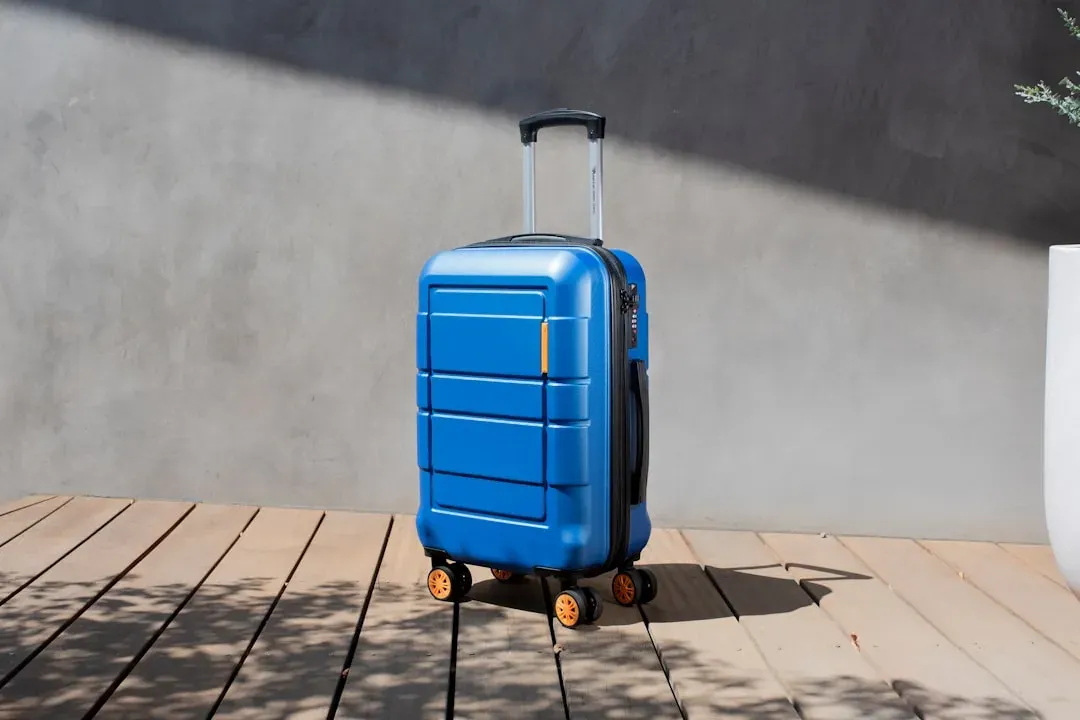
For most of the twentieth century, luggage had no wheels, and travelers simply carried heavy bags by hand. Bernard Sadow is credited with patenting a rolling suitcase in 1972 after watching an airport worker roll a heavy machine on a wheeled skid. His design was pulled along on a leash-like strap, and while it helped, the real leap came later.
In 1987, airline pilot Robert Plath created the Rollaboard, a suitcase with wheels and a retractable handle that stood upright on its own. That upright, two-wheel design became the template for the modern rolling carry-on used by travelers everywhere. It’s a reminder that sometimes an obvious idea, wheels on a bag, just needs the right decade and the right traveler to catch on.
4. The QWERTY keyboard layout

The QWERTY layout was designed in the 1870s for mechanical typewriters, partly to reduce the jamming of typebars by spacing out commonly paired letters. Christopher Latham Sholes and his collaborators arranged the keys through trial and error rather than a strict scientific formula, and the layout stuck once typewriters became commercial products. Critics have long argued that other layouts, like Dvorak, are more efficient, but QWERTY had already become the standard by the time alternatives appeared.
That early dominance carried straight into computer keyboards, smartphones, and tablets, even though the mechanical jamming problem it solved no longer exists. Billions of people now type on a layout designed around a nineteenth century engineering constraint. It’s one of the clearest examples of how an everyday habit, once set, is remarkably hard to dislodge.
5. Bar codes
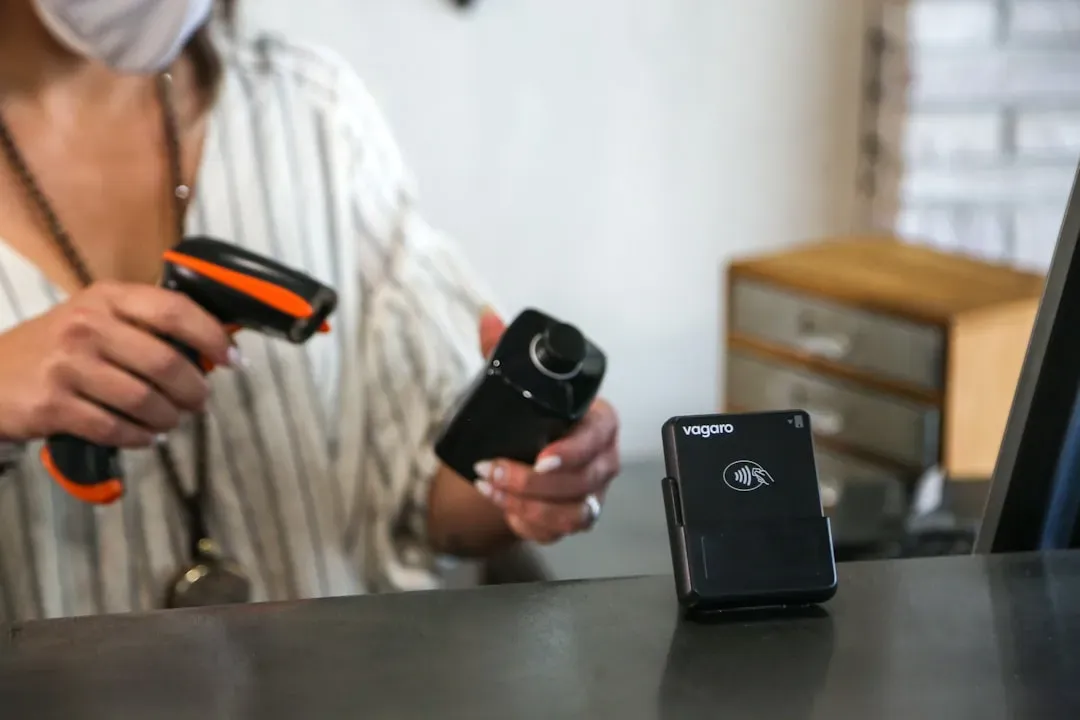
The bar code, that small pattern of black lines on nearly every product, was patented in 1952 by Norman Joseph Woodland and Bernard Silver, though it took decades for scanning technology to catch up with the idea. The first product ever scanned at a retail checkout was a pack of Wrigley’s chewing gum in 1974 at a supermarket in Ohio. From there, the Universal Product Code spread rapidly through grocery stores and retail chains during the following decades.
Bar codes did more than speed up checkout lines. They gave retailers accurate, real time inventory data for the first time, which reshaped supply chains and pricing strategies across entire industries. Today the same basic concept underlies QR codes, which surged in everyday use for menus, payments, and check-ins, especially after 2020.
Partner offer
6. The paperclip

Simple wire fasteners for paper existed in various forms during the nineteenth century, but the now-familiar looped design, often called the Gem clip, emerged in Britain in the 1870s without a single clear inventor. Norwegian engineer Johan Vaaler is sometimes credited with the paperclip, though his 1899 patent actually described a different, less practical design than the Gem shape people use today. Despite the murky history, the double-loop wire clip became the standard because it held papers together without punching holes or leaving residue.
Its low cost and reusability made it a fixture of offices, schools, and homes for well over a century. Unlike many office tools that have been digitized away, the paperclip survives largely unchanged, still sold by the box in every stationery aisle. Its staying power comes from doing exactly one job, and doing it with almost no failure rate.
7. Velcro

Swiss engineer George de Mestral got the idea for Velcro after noticing how burrs from burdock plants clung stubbornly to his dog’s fur and his own clothing during a hike in the 1940s. Studying the burrs under a microscope, he saw tiny hooks that caught on loops of fabric and fur, and he spent years developing a synthetic version made of nylon hooks and loops. He patented the fastener in 1955, naming it Velcro from the French words for velvet and hook.
NASA’s use of Velcro in space suits and equipment during the 1960s helped raise its public profile considerably. Since then it has shown up in shoes, medical devices, clothing, and countless household products where a quick, adjustable fastening beats buttons or laces. It remains one of the most direct examples of an idea borrowed straight from nature and adapted for practical use.
8. Instant coffee

Soluble coffee existed in rough forms as early as the late 1800s, but it was chemist Satori Kato and later George Constant Washington who developed more commercially viable versions in the early twentieth century. Nescafé, launched by Nestlé in 1938, refined the process and turned instant coffee into a mass market product just as World War II created huge demand for easily transportable rations. Soldiers relied on it heavily during the war, which introduced the product to a much wider global audience once peace returned.
Instant coffee never fully replaced brewed coffee, but it solved a real problem for people who wanted caffeine without the time or equipment a proper pot required. It remains especially popular in parts of Europe, Asia, and Latin America, and global instant coffee consumption has continued rising into the 2020s as convenience-focused products gain ground in emerging markets. The core appeal has stayed remarkably consistent for nearly a century, speed over ceremony.
9. The shopping cart

Before 1937, grocery shoppers carried baskets by hand, which limited how much they could buy in a single trip. Sylvan Goldman, who owned a chain of grocery stores in Oklahoma City, designed a folding metal frame that held two baskets and rolled on wheels, essentially the first shopping cart. Customers were initially skeptical, with men reportedly feeling the carts looked feminine and women associating them with baby carriages, so Goldman hired models to push them around his stores to normalize the idea.
Once shoppers adopted the cart, average grocery purchases increased significantly, since people could physically carry more items at once. That single change in retail behavior helped enable the modern supermarket model, where stores are built around aisles wide enough for carts and layouts designed to encourage browsing. Nearly every large retail store today, from hardware chains to warehouse clubs, still relies on some version of Goldman’s original concept.
10. The pull tab and ring pull can

Canned beverages originally required a separate opener, which meant people frequently found themselves stuck without one. Ermal Fraze, an engineer, grew frustrated during a picnic without a can opener and later developed the pull tab mechanism, patenting it in the early 1960s. Alcoa and beverage companies adopted the design commercially, and by the late 1960s pull tab cans were widespread across soda and beer brands.
The detachable tab created litter and safety concerns, since sharp discarded tabs often ended up on beaches, in parks, and in the wild. This led to the stay tab design in the late 1970s, which remains attached to the can after opening, a version still used on virtually every beverage can today. It’s a small mechanical detail most people never consciously think about, yet it gets used billions of times a day worldwide.
Taken together, these ten ideas share a common thread: none of them required advanced technology or massive investment to succeed, just a clear observation of a small daily frustration and a workable fix. Some, like the zipper and paperclip, have barely changed in decades. Others, like the bar code and pull tab, kept evolving quietly in response to new problems. What unites them is how invisible they’ve become, proof that the most transformative ideas are often the ones nobody notices anymore.
Partner offer
Planning a trip to Vegas?
Compare hotel rates and show tickets on VEGAS.com.