There’s a specific kind of embarrassment that comes with singing a song confidently, for years, only to find out you’ve been completely wrong the entire time. It happens to virtually everyone. The gap between what we hear and what an artist actually sings has a proper name: a mondegreen. A mondegreen is a mishearing or misinterpretation of a phrase in a way that gives it a new meaning, most often created by a listener who, unable to hear a lyric clearly, substitutes words that sound similar and make some kind of sense.
The reasons these slip-ups happen are surprisingly well-understood. The creation of mondegreens is driven in part by cognitive dissonance, since a listener finds it psychologically uncomfortable to listen to a song and not make out the words. The brain constantly attempts to make sense of the world by filling in the gaps when it cannot clearly determine what it is hearing. The results can be hilarious, oddly poetic, or just baffling. Here are ten of the most famous examples.
1. “Purple Haze” by Jimi Hendrix – “‘Scuse Me While I Kiss This Guy”


In the song “Purple Haze,” many listeners are more likely to hear Jimi Hendrix singing that he is about to kiss “this guy” than that he is about to kiss the sky. The actual lyric is “‘Scuse me while I kiss the sky,” a vivid, psychedelic image that fits the song’s whole atmosphere perfectly. The consonant sounds in “the sky” and “this guy” are close enough that, without context, the brain latches onto whichever version it finds more familiar.
Both Jimi Hendrix and Creedence Clearwater Revival’s John Fogerty eventually acknowledged the mishearings of their lyrics by deliberately singing the mondegreen versions of their songs in concert. Hendrix reportedly leaned into the joke, which only helped cement the wrong version in popular memory. It’s probably the most famous mondegreen in rock history, and it’s still catching people out decades later.
2. “Tiny Dancer” by Elton John – “Hold Me Closer, Tony Danza”


One of the most frequently misheard lyrics ever, the Elton John “Tony Danza” mishearing has spawned a life of its own. The correct lyric is “hold me closer, tiny dancer,” but the words blend together in such a way that the name of a TV sitcom star seems to make perfect sense to many listeners. A 2024 analysis from Prereply lists Elton John as the most frequently misunderstood musician of all time, with more than 2,500 reports of misheard lyrics.
The single spawned a joke on an episode of “Friends,” where, when discussing the most romantic songs of all time, Phoebe says that, in her opinion, it’s “the one that Elton John wrote for that guy on ‘Who’s the Boss’.” That cultural moment probably locked the wrong version into a new generation’s memory. “Tiny Dancer” is a perfectly clear phrase, but sung at tempo with Elton’s distinctive phrasing, “Tony Danza” is what a surprising number of people have been singing for years.
3. “Blinded by the Light” by Manfred Mann’s Earth Band – “Wrapped Up Like a Douche”


The cover of Bruce Springsteen’s “Blinded by the Light” by Manfred Mann’s Earth Band contains what has been called “probably the most misheard lyric of all time.” The phrase “revved up like a deuce,” altered from Springsteen’s original “cut loose like a deuce,” both referring to hot rodders’ slang for a 1932 Ford coupe, is frequently misheard as “wrapped up like a douche.”
The party ultimately responsible for the original lyrics is Bruce Springsteen, but it’s Manfred Mann’s 1976 version that caused the confusion. The word “deuce” simply isn’t part of everyday conversation, so the brain reaches for something that sounds close and vaguely plausible. The mishearing became so culturally embedded that it’s arguably more famous than the real lyric at this point.
4. “Bad Moon Rising” by Creedence Clearwater Revival – “There’s a Bathroom on the Right”


Listeners have long heard Creedence Clearwater Revival’s “Bad Moon Rising” as “there’s a bathroom on the right” instead of “there’s a bad moon on the rise.” The phonetic overlap is almost absurdly close, which is exactly why this one has lingered so long. John Fogerty’s delivery at the end of each verse blurs the phrase just enough for the bathroom version to feel completely plausible on first listen.
John Fogerty eventually acknowledged the mishearing of his lyric by deliberately singing the mondegreen version of the song in concert. That’s a fairly rare thing for a performer to do, and it says something about how widespread the confusion had become. Hearing Fogerty himself sing about a bathroom is the sort of thing that makes fans realize they may never fully trust their own ears again.
5. “Stairway to Heaven” by Led Zeppelin – “There’s a Wino Down the Road”


In Led Zeppelin’s “Stairway to Heaven,” the line “and as we wind on down the road” is frequently heard as “there’s a wino down the road.” It’s a classic example of how a poetic, slightly abstract phrase gets replaced by something far more concrete and, frankly, more entertaining. The imagery of a wandering drifter fits the song’s vaguely mystic tone just enough that the mishearing never quite sounds wrong.
Although “Stairway to Heaven” has been called “the best rock song of all time,” it actually never charted, which means most people encountered it through radio play, where compression and audio quality made mishearing even more likely. The song runs for over eight minutes, and by the time the final section builds to a crescendo, listeners are often filling in lyrical blanks on their own. The wino, it turns out, has been living rent-free in people’s heads for fifty years.
6. “Bennie and the Jets” by Elton John – “She’s Got Electric Boobs, a Bowl of Soup”


In Elton John’s “Bennie and the Jets,” people mistook his sartorial observations “she’s got electric boots, a mohair suit” for “she’s got electric boobs, a bowl of soup.” The song’s production style doesn’t help: it was deliberately recorded to sound like a live concert performance, complete with crowd noise and an echo effect that blurs the consonants. Elton’s theatrical delivery does the rest.
This mishearing has become one of the most repeated examples in any discussion of mondegreens, partly because both versions feel oddly consistent with the song’s glam-rock energy. The real lyric is a vivid fashion portrait. The wrong one is somehow equally vivid, in a completely different direction. Elton John holds the dubious distinction of having two separate songs in the top tier of the most misheard lyrics ever recorded.
7. “Smells Like Teen Spirit” by Nirvana – “A Mulatto, an Albino, a Mosquito, My Libido”


Kurt Cobain’s abstract lyrics were never the easiest to understand, and the chorus line from “Smells Like Teen Spirit” is probably the most misunderstood. The actual lyric is “a mulatto, an albino, a mosquito, my libido.” The words are real, but they’re strung together so unexpectedly that most listeners default to phonetic approximations, like “a mulatto, an albino, a mosquito, my libido” becoming a run of seemingly random syllables that could mean almost anything.
Some listeners have heard the chorus as “I’m a lion, I’m a vinyl, I’m a skittle, I’m a beetle.” That version is arguably more memorable than what Cobain actually wrote. The song’s distorted guitars and Cobain’s intentionally raw vocal style make clean comprehension nearly impossible, which is part of why “Smells Like Teen Spirit” has generated more lyric debates than almost any other song of the 1990s.
8. “Money for Nothing” by Dire Straits – “Money for Nothin’ and Chips for Free”


One of the most commonly misheard lyrics is “money for nothin’ and chips for free,” when the actual lyric from Dire Straits’ “Money for Nothing” is “money for nothin’ and your chicks for free.” The word “chicks” is slang that, without the cultural context of the mid-1980s, sounds more like “chips” to a lot of modern listeners. It’s a single-syllable swap that completely changes the meaning but somehow doesn’t break the rhythm of the song.
Around 2,000 people were polled by Starkey Hearing Technologies to find the most common misheard song lyrics, and Dire Straits’ mishearing ranked prominently on that list. The guitar-heavy production and Mark Knopfler’s understated vocal delivery create enough sonic clutter that the wrong word slots in without much resistance. Chips for free is, admittedly, a very appealing concept.
9. “Lucy in the Sky with Diamonds” by The Beatles – “A Girl with Colitis Goes By”
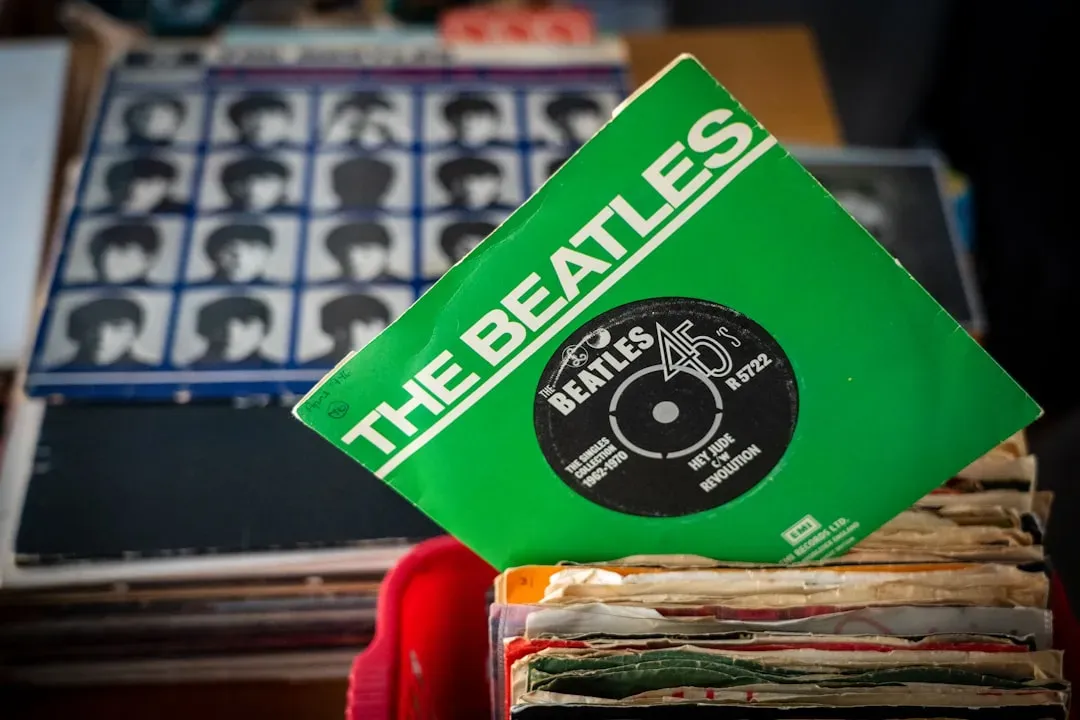
In The Beatles’ “Lucy in the Sky with Diamonds,” the lyric “a girl with kaleidoscope eyes” is commonly misheard as “a girl with colitis goes by.” “Kaleidoscope” is a word that doesn’t appear anywhere else in the Beatles’ catalog, and sung quickly over a dreamy, organ-driven backdrop, it loses its hard edges fast. “Colitis,” a medical term, sounds phonetically close enough for the brain to accept it without question.
The Beatles were famously misheard throughout their career, and their studio experimentation often made lyrics harder to parse in real time. In “I Want to Hold Your Hand,” the bit where the Beatles sing “I can’t hide” was often confused for “I get high.” Across a catalog as large as theirs, the opportunities for the brain to manufacture its own version of a lyric are essentially endless.
10. “Taylor Swift’s ‘Blank Space'” – “Got a Long List of Starbucks Lovers”

Taylor Swift fans misheard the lyric “got a long list of ex-lovers” so frequently that the singer poked fun at her own song on Valentine’s Day in 2015. In a now-deleted tweet, she wrote about “sending love to all the lonely Starbucks lovers” while noting that it was not the correct lyric, to which the coffee chain playfully replied: “Wait, it’s not?” The song is from her 2014 album “1989,” and it became one of the defining pop hits of that decade.
The mishearing works because Swift’s enunciation blurs the “ex-lovers” phrase into something that genuinely sounds like “Starbucks lovers” at full pop-production volume. It’s a reminder that even clearly articulated modern recordings aren’t immune to the mondegreen effect. Steven Pinker has observed that mondegreen mishearings tend to be less plausible than the original lyrics, and that once a listener has “locked in” to a particular misheard interpretation, it can remain unquestioned even when that plausibility becomes strained. The Starbucks version is perhaps the best modern proof of that.
What all of these examples share is something genuinely human: the brain’s restless need to find meaning in sound. We’re not mishearing out of carelessness. We’re doing the opposite, working hard to turn noise into narrative, sometimes too hard. The wrong version sticks precisely because it made sense in the moment, and once a word takes root, it’s remarkably stubborn about staying.
Next time you’re singing along confidently in the car, it might be worth a quiet fact-check. The lyrics might be exactly what you think. Or you might be telling the world about a bathroom on the right.