There’s something quietly fascinating about a book that starts its life as a gift for a child and ends up on university syllabuses centuries later. It happens more often than you’d expect. Some of the most revered works in the literary canon weren’t shaped by grand artistic ambitions aimed at sophisticated readers. They were told to small audiences first, polished around kitchen tables, or spun out in a children’s magazine one serialized chapter at a time.
Even after printing became widespread, many classic “children’s” tales were originally created for adults and later adapted for a younger audience – but the reverse is also true, and arguably more surprising. The eleven books below all began their lives with young readers in mind. What happened next is literary history.
1. Alice’s Adventures in Wonderland by Lewis Carroll (1865)

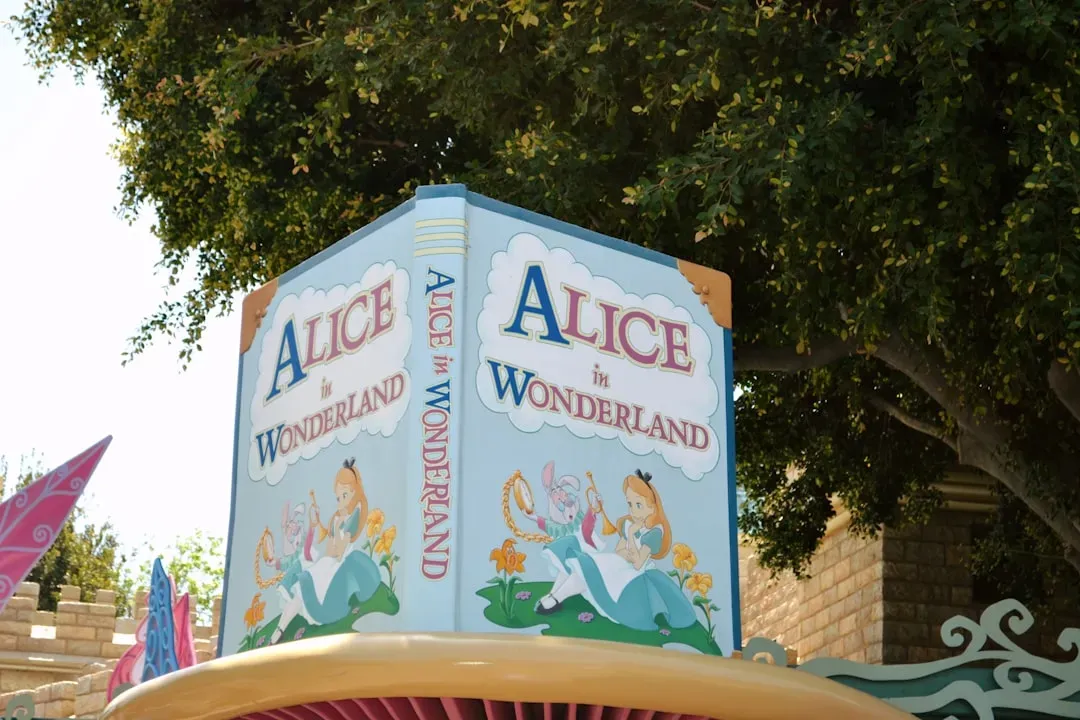
The story was first told by Charles Lutwidge Dodgson on a boating trip with a friend and three little girls, one of whom was Alice Liddell. It was meant as a gift for her, and the fictional Alice is based on her. The book grew from that single afternoon on the water into one of the most studied and adapted works in the English language.
Imaginative and strange, the novel utilized tropes that were not new to writings for children, such as a lost child and magical animals, but presented them in a way that turned them on their head. It plays with math, logic, and language in a way that was altogether new and remains an inspiration for modern writers. Carroll was a mathematics lecturer at Oxford, and the logic puzzles embedded in Wonderland still reward adult readers in ways a child simply can’t anticipate.
2. Gulliver’s Travels by Jonathan Swift (1726)

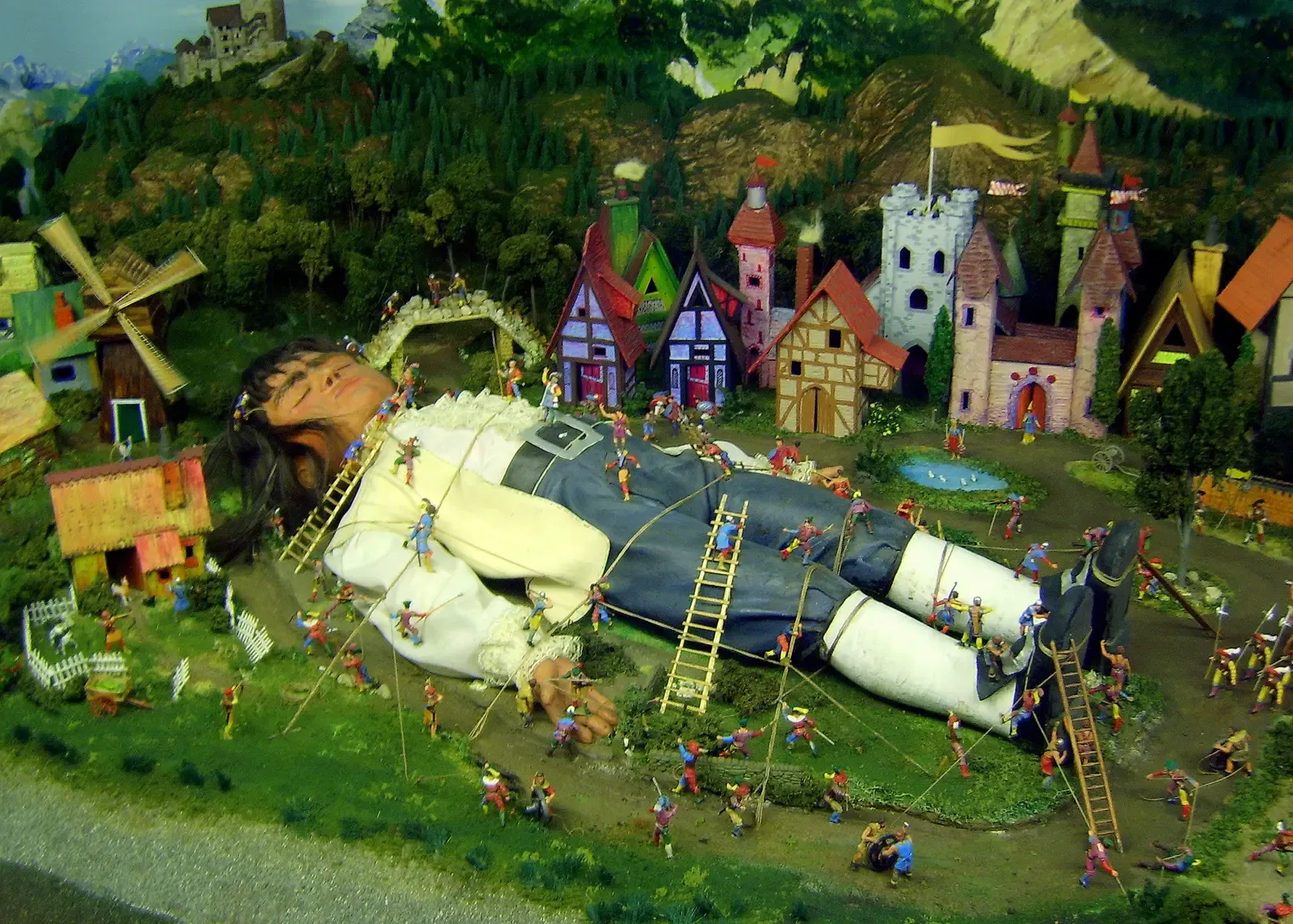
Although the novel is popularly classified under children’s literature, Swift had originally written it as a political satire. The tiny people of Lilliput, the giants of Brobdingnag, and the rational horse-creatures of Houyhnhnm Land were never meant to be charming fantasies. They were Swift’s tool for dismantling the political machinery of early 18th-century Britain.
On its publication, the book was an immediate success, and Swift claimed that he wrote Gulliver’s Travels “to vex the world rather than divert it.” Gulliver’s Travels has been an immensely successful children’s book – although Swift did not care much for children – so widely popular through the world for its imagination, wit, fun, freshness, vigor, and narrative skill that its hero is in many languages a common proper noun. The irony would not have been lost on Swift himself.
3. Robinson Crusoe by Daniel Defoe (1719)

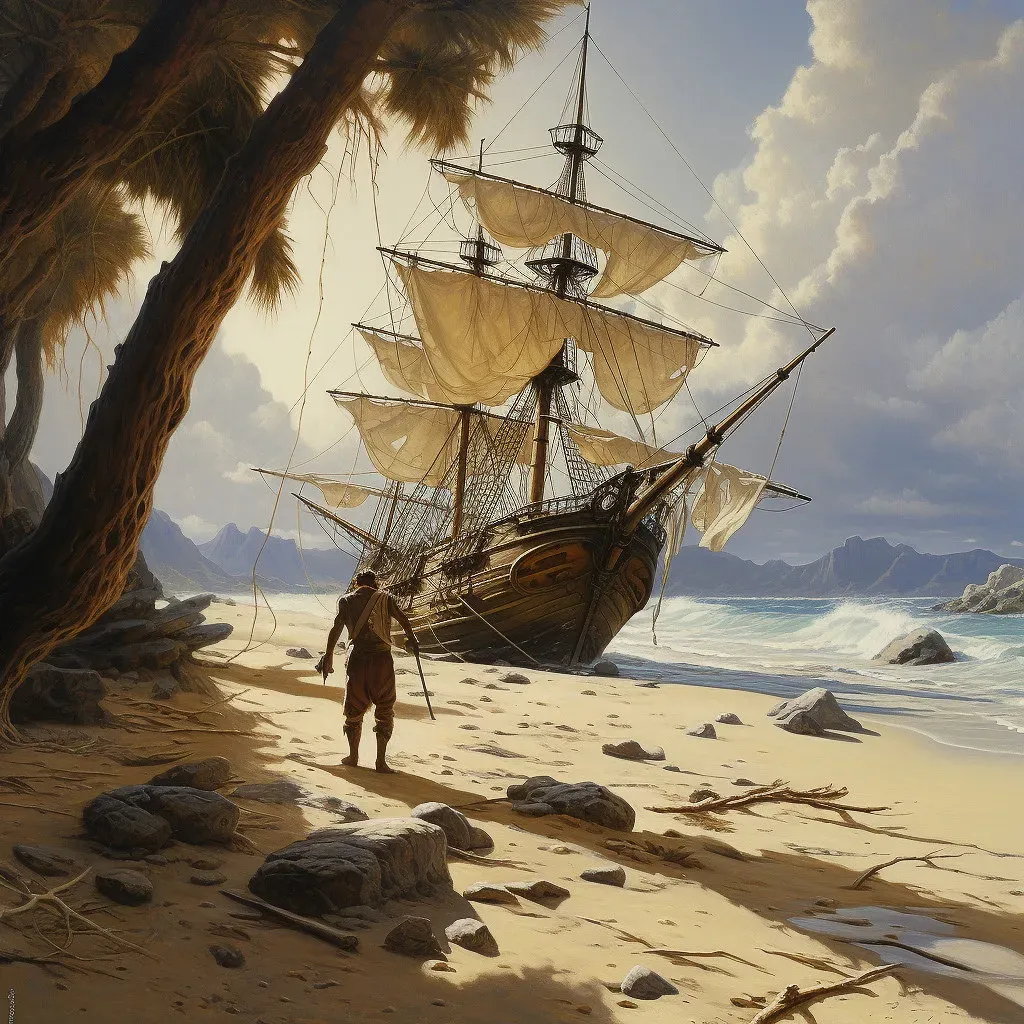
Robinson Crusoe was first published in 1719 and credited Crusoe as the author, so readers believed that he was a real person. Shipwrecked, Crusoe spends 30 years on a remote tropical island before being rescued. It is thought to be one of the first novels in the realistic style and was well received from its first publication. Defoe’s target was clearly an adult readership hungry for survival narratives and moral reflection.
Although both novels were originally published with an adult audience in mind, each has gone on to enjoy success as stories intended for children – and Robinson Crusoe arguably started that pattern. The inspiration for Crusoe himself was believed to be Alexander Selkirk, a Scot who was shipwrecked for four years on a Pacific island that is now part of Chile. Children inherited a story that was, at its core, a deeply Protestant meditation on self-reliance and providence.
4. Treasure Island by Robert Louis Stevenson (1883)


A boy’s book written for Lloyd Osbourne, the son of Fanny, Stevenson’s future wife, and a book for readers of all ages. Stevenson sketched a map of a fictional island to entertain his stepson during a rainy Scottish holiday, and the whole novel grew outward from that hand-drawn image. It’s one of the tidier origin stories in literary history.
In England, many noted authors for adults published works for children, including Charles Dickens and Robert Louis Stevenson, whose 1883 work Treasure Island is considered a classic children’s adventure story. Treasure Island, by Robert Louis Stevenson, takes the fifth spot among the most widely held novels in libraries worldwide – an extraordinary reach for a book that started as a rainy-day diversion for one child.
5. The Adventures of Tom Sawyer by Mark Twain (1876)

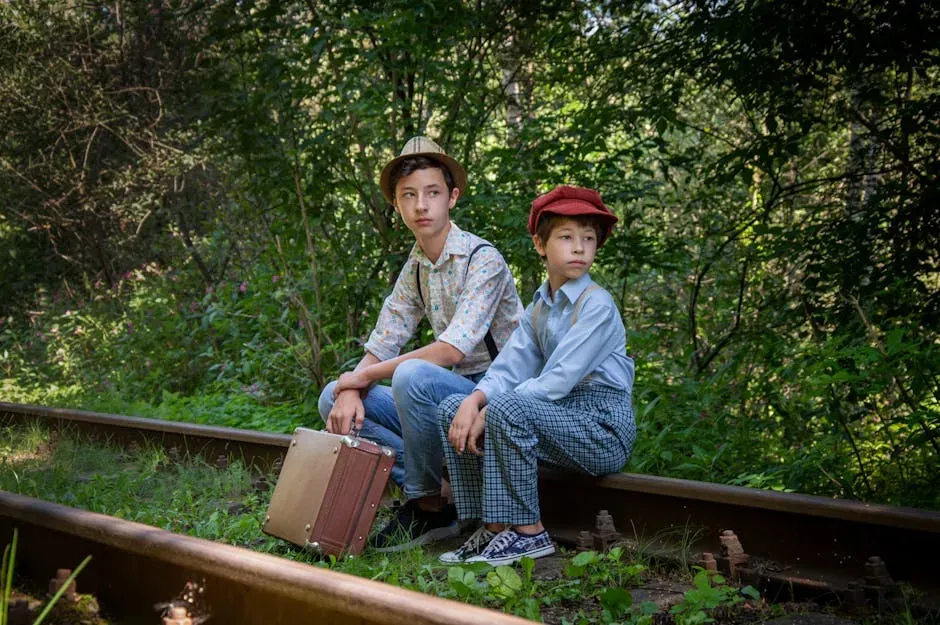
Mark Twain’s book Tom Sawyer (1876) was one of the first “boy books,” intended for children but enjoyed by both children and adults alike. Twain was deliberate about his intended audience in a way that many of his contemporaries weren’t. He built Tom’s world from his own Missouri childhood, filling it with the specific textures of mischief, summer afternoons, and a society adults recognize all too clearly.
Samuel Langhorne Clemens, best known by his pen name Mark Twain, was an author and humorist noted for the novels The Adventures of Huckleberry Finn and The Adventures of Tom Sawyer, among many other books. Twain was raised in Hannibal, Missouri, which later provided the setting for Tom Sawyer and Huckleberry Finn, and he spent time as a riverboat pilot on the Mississippi River before finding fame as a writer. The autobiographical seam running through Tom Sawyer is part of what gives it its lasting weight.
6. The Swiss Family Robinson by Johann David Wyss (1812)


Originally written to entertain his four young sons, Johann David Wyss based The Swiss Family Robinson on Daniel Defoe’s classic shipwreck story. Inspired by Defoe’s Robinson Crusoe, this book began when Wyss started creating and telling stories to his four sons about a family that was shipwrecked. Wyss used these stories as an opportunity to teach his children about moral character traits such as kindness, family unity, faith, and hard work.
Partner offer

The Swiss Family Robinson (1812) is one of the most translated books of all time and has enjoyed lasting popularity through several adaptations, including a 1960 Disney film and two TV series by the American showman Irwin Allen in the 1970s. What began as a father’s private teaching tool for four Swiss boys became a global phenomenon across multiple generations and media.
7. The Adventures of Pinocchio by Carlo Collodi (1883)

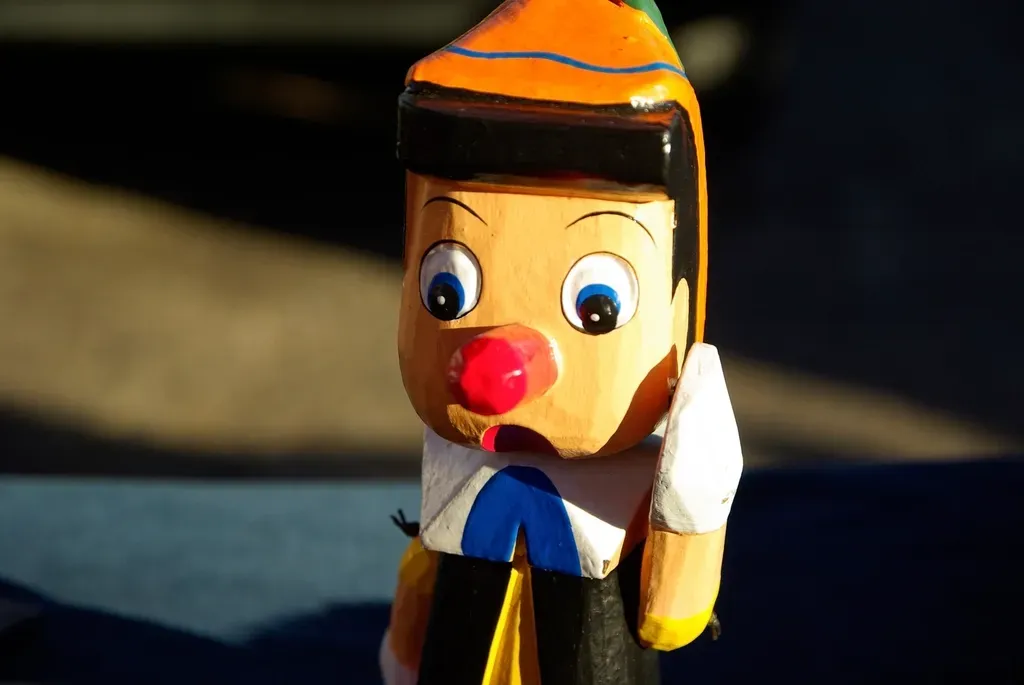
The Adventures of Pinocchio, the classic children’s novel by C. Collodi, first appeared in serial form in 1881 in the Giornale dei bambini (“Children’s Magazine”) and was published as a book in 1883. Collodi always had children squarely in his sights, though his original vision was considerably darker than anything Disney would later produce.
Collodi originally intended the story to be a tragedy. It concluded with the puppet’s execution. Pinocchio’s enemies, the Fox and the Cat, bind his arms, pass a noose around his throat, and hang him from the branch of an oak tree. The disappointment of the story’s fans, however, led Collodi’s publishers to insist that he resurrect Pinocchio and continue the puppet’s adventures. The happy ending was essentially demanded by readers – children included.
8. The Hobbit by J.R.R. Tolkien (1937)

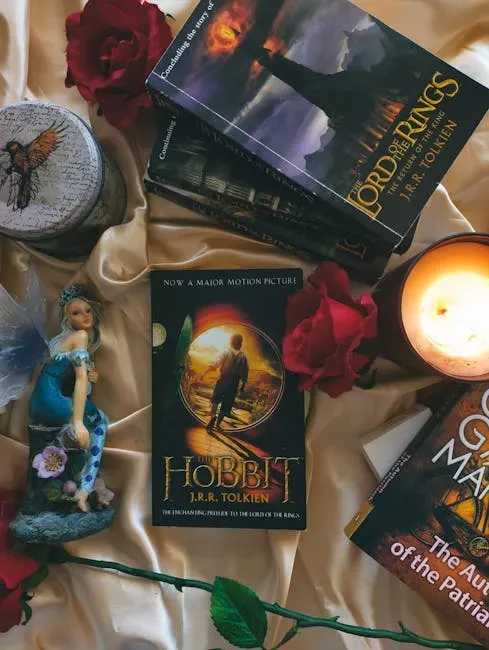
It can be hard to remember after reading the very serious, very dark Lord of the Rings, and even harder after watching the definitely-for-adults movies, but the fact is that The Hobbit is for kids. Tolkien reportedly began telling the story to his own children, and the book’s lighter, more whimsical tone compared to his later trilogy is not accidental. It reflects exactly the audience it was shaped around.
The Hobbit would become the prequel to Tolkien’s masterpiece, The Lord of the Rings, which inspired the tropes and conventions for the entire fantasy genre and which has been adapted into some of the most successful movies in modern film. The book was nominated for a Carnegie Medal and desire for a sequel was at a thrilling high. The story that sparked one of literature’s greatest franchises began as a children’s tale told by a father to his sons.
9. Alice’s Adventures in Wonderland Sequel: Through the Looking-Glass (1871)


Lewis Carroll returned to Alice Liddell’s world six years after Wonderland, producing a companion volume that is structurally rooted in a game of chess rather than a deck of cards. Carroll’s “Alice” books were part of a flourishing movement throughout the world to write entertaining books for children. Like the first volume, the sequel was conceived for a specific young reader before becoming canonical literature for everyone else.
Most early Victorian fairy-stories and other works for children were intended to promote what contemporaries believed was “good” and “moral” behavior on the part of children. Carroll’s “Alice” books take a swipe at this Victorian morality, in part through their uninhibited use of nonsense and wordplay and in part through direct parody. That subversive undercurrent is precisely why both books still feel fresh to adult readers well over a century and a half later.
10. Little Women by Louisa May Alcott (1868)

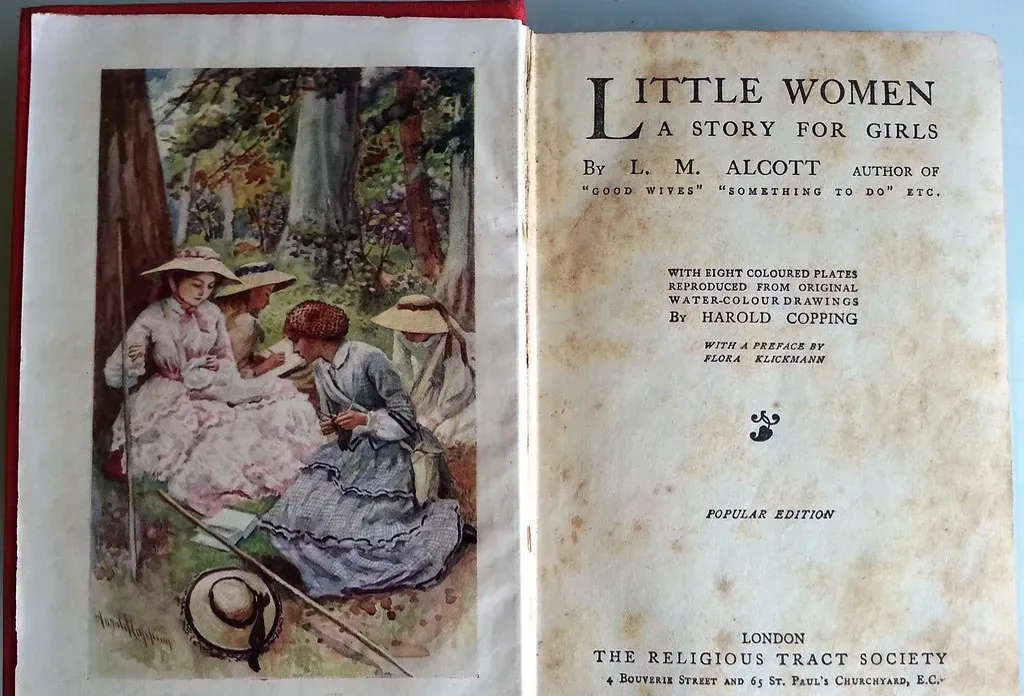
The United States saw Louisa May Alcott’s Little Women in 1868–69, part of a movement to publish realistic stories for children. Alcott was reportedly reluctant to write the book, telling her publisher she didn’t especially like writing for girls. Her editor pushed her forward regardless, and the result redefined domestic fiction for young readers on both sides of the Atlantic.
The four March sisters – Meg, Jo, Beth, and Amy – were drawn from Alcott’s own family, and Jo’s fierce independence gave generations of young women a literary mirror they hadn’t seen before. A great book, even if originally written for children, can inspire and entertain adult readers as well. These classic children’s books and novels have resonated with readers of all ages and continue to do so through the years. Little Women is perhaps the clearest proof of that claim in the entire American literary tradition.
11. The Adventures of Huckleberry Finn by Mark Twain (1884)

Mark Twain’s Adventures of Huckleberry Finn occupies an unusual position in literary history: written as a sequel to a children’s book, it grew into something that many critics consider the great American novel. Alice’s Adventures in Wonderland, by Lewis Carroll, is second on the most widely held novels list, followed by The Adventures of Huckleberry Finn and The Adventures of Tom Sawyer, both by Mark Twain. That level of library presence speaks to how deeply both books have embedded themselves in the culture.
Twain pitched Huck Finn as a follow-up for young readers who loved Tom Sawyer, yet the book’s unflinching treatment of race, freedom, and moral conscience far exceeds anything a children’s adventure story would typically attempt. The fairy-tale absurdity of Wonderland has solid historical ground as a satire of the serious problems of the Victorian era. Lewis Carroll is ironic about the prim and all-out regulated life of the “golden” Victorian century – and Twain was doing the same thing for American society with Huck’s journey down the Mississippi. The river trip reads like a children’s adventure; the questions underneath it do not.
What unites all eleven of these books is something simple but worth naming: the best stories written for children don’t condescend. They take their young readers seriously, which is probably why adults keep returning to them. A book that genuinely respects its first audience tends to earn a much wider one over time.
Partner offer
Planning a trip to Vegas?
Compare hotel rates and show tickets on VEGAS.com.