There’s a quiet injustice baked into the concept of the one-hit wonder. One signature song can so thoroughly overshadow the rest of an artist’s discography that only that song remains familiar to later audiences, regardless of how strong the surrounding work actually is. The label sticks, and the deeper catalog gets buried.
What follows is a slightly different take on the argument. These aren’t simply artists who deserved more hits. These are cases where the song that made them famous is, on a musical level, genuinely more interesting, more crafted, or more emotionally resonant than anything else they managed to put out. The hit wasn’t a lucky accident. It was a peak they never quite reached again.
1. Soft Cell – “Tainted Love” (1981)


“Tainted Love” was originally composed by Ed Cobb and first recorded by Gloria Jones in 1964. In 1981, the song attained worldwide fame after being covered and reworked by British synth-pop duo Soft Cell for their album Non-Stop Erotic Cabaret. The duo’s version stripped the track down to something cold, obsessive, and perfectly constructed, with every synth pulse in exactly the right place. Buoyed by the then-dominant new wave sound of the time, “Tainted Love” became a major hit in the US during the Second British Invasion, spending a then-record breaking 43 weeks on the US Billboard Hot 100.
For many, the band will forever be identified with “Tainted Love.” For anyone prepared to dig a bit deeper, the album Non-Stop Erotic Cabaret remains one of the most subversive but accessible pop collections ever released off the back of an international mega-hit. The album has genuine depth, particularly tracks like “Bedsitter” and “Say Hello, Wave Goodbye.” Yet “Tainted Love” remains the centerpiece, a song whose tightly wound structure and emotional control the band never quite equalled elsewhere.
2. The Buggles – “Video Killed the Radio Star” (1979)

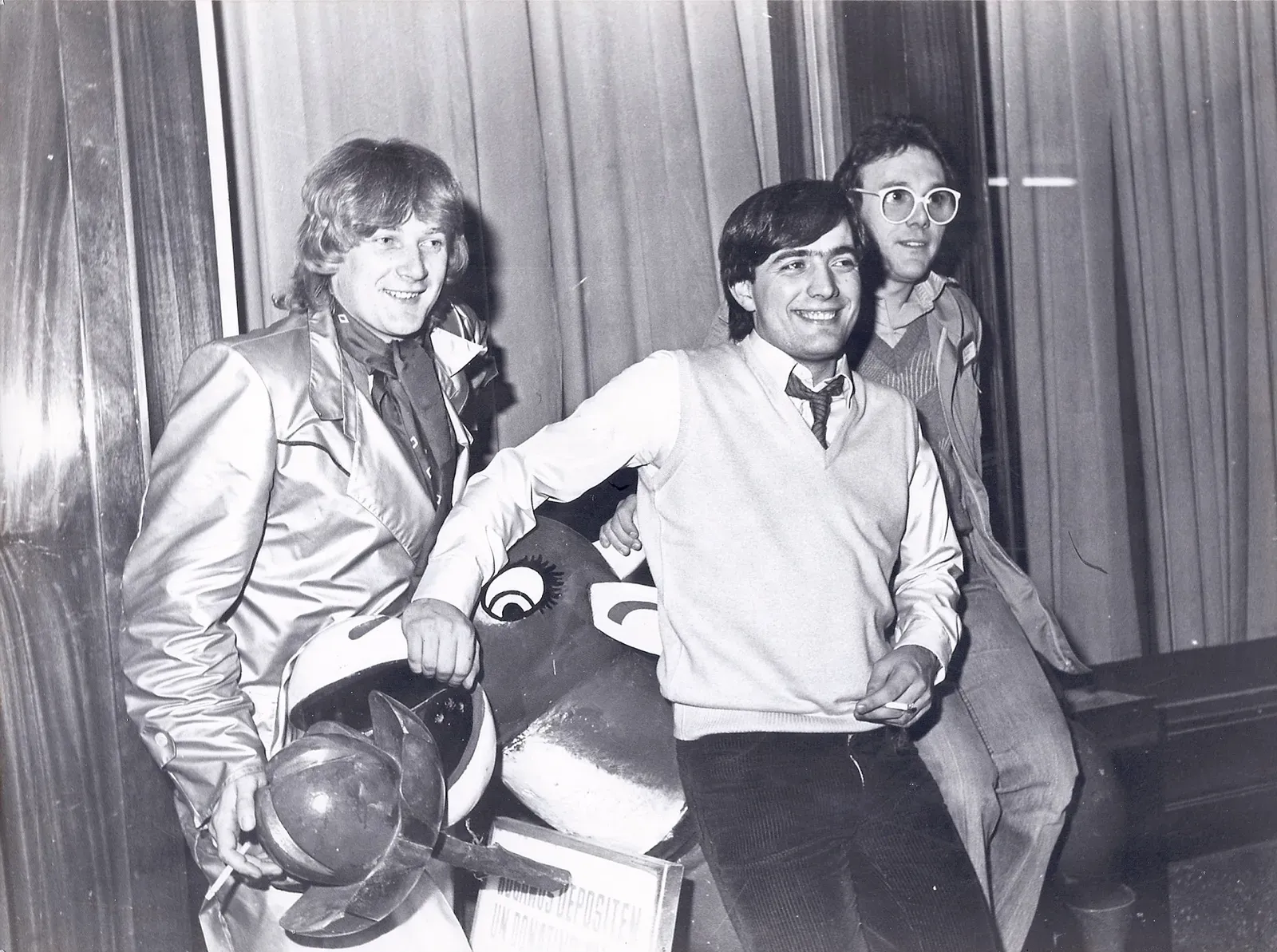
In August 1981, “Video Killed the Radio Star” became the first music video to air on MTV. The song was genuinely ahead of its moment, a conceptual, wryly melancholic pop piece about the march of technology. Released in September 1979 and a chart-topper in no less than 16 countries, the Buggles’ version became an instant classic; a nostalgic yet techno-savvy rumination on the passing of a musical era that had previously been dominated by the radio.
“Video Killed the Radio Star” is an understandably iconic track, but all of The Age of Plastic deserves rediscovery. Yet for all the cheekiness of the music, there is an undeniable strain of sorrow running through the album. After the success of “Video Killed the Radio Star,” The Buggles broke up relatively quickly. Geoff Downes joined Yes and later Asia, while Trevor Horn developed into one of the most influential producers in pop history. The hit remains the high-water mark of Horn’s work as a performer, and nothing The Buggles recorded afterward came close to its clean conceptual logic.
3. Zager and Evans – “In the Year 2525” (1969)


Zager and Evans’ sci-fi masterpiece makes the duo the only act to go to number one on both sides of the Atlantic, yet fail to have a single Top 100 single in either the UK or US before or after. That’s a remarkable thing to contemplate. A song that reached the very summit of two major markets, surrounded by complete silence on either side. Written by Rick Evans, it was initially a local hit for the Truth label before a slightly tweaked version took the world by storm on RCA Victor. The duo stuck around for a while making fine music, though without much further chart success.
The song itself has an almost apocalyptic gravity to it, cycling through centuries with a patience and thematic ambition that was unusual for pop music in 1969. Its arrangement is sparer than the era typically demanded, which gives the concept space to breathe. Their follow-up material leaned toward conventional country-folk and lacked the singular, eerie tension that made the hit feel like something from another dimension.
4. The Only Ones – “Another Girl, Another Planet” (1978)


Alanmair, CC BY-SA 4.0)
A rocket-fuelled mix of punk energy and romantic fatalism, 1978’s “Another Girl, Another Planet” is one of the great lost singles of the late 1970s. Peter Perrett’s languid vocals and John Perry’s shimmering guitar lines conjure something both yearning and dangerous. It’s a song that feels simultaneously reckless and precise, which is a genuinely difficult balance to strike. It should have made them huge. Instead, it became their epitaph, a cult classic that outlived the band itself.
The Only Ones released three studio albums and had a devoted following in British post-punk circles, but the surrounding material, while respectable, never matched the kinetic surge of that single. There’s a looseness to their records that can read as charm or carelessness depending on the day. “Another Girl, Another Planet” is the one moment where everything snapped into focus without sacrificing an ounce of danger.
5. Stealers Wheel – “Stuck in the Middle with You” (1972)

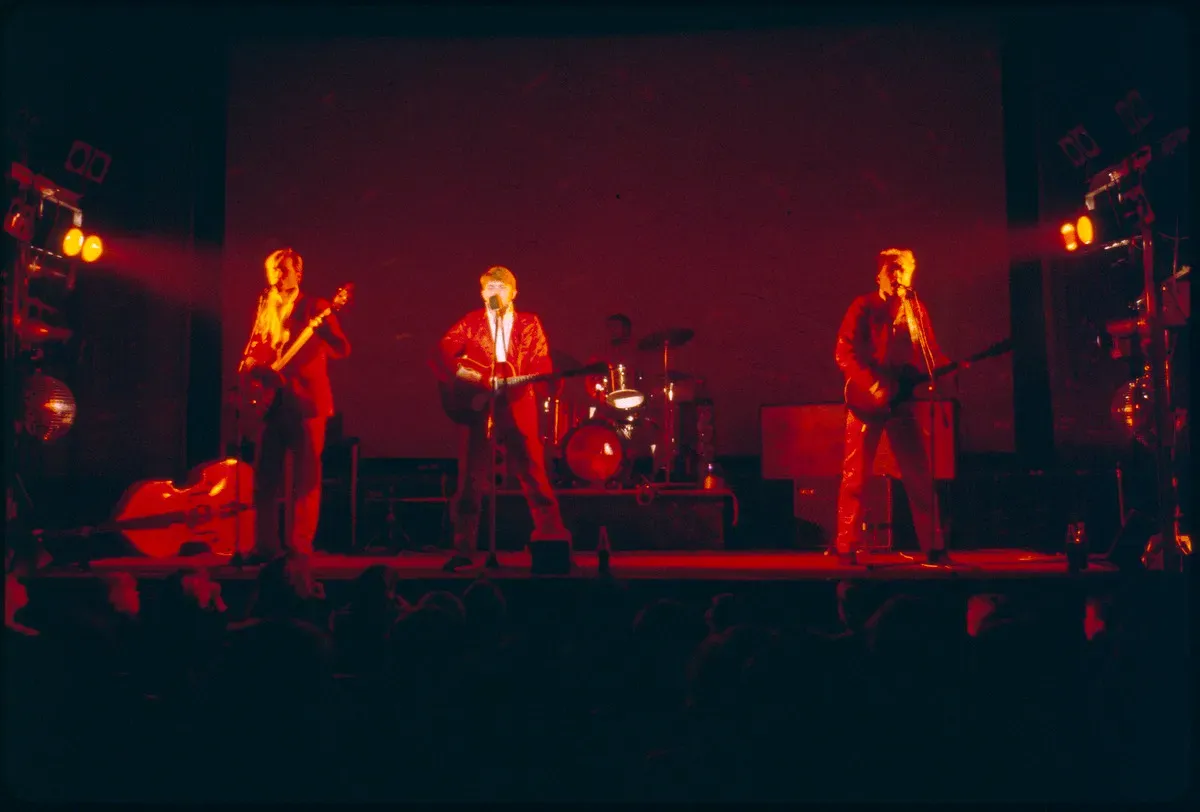
The song was written by Gerry Rafferty and Joe Egan and released in 1972. Chart-wise, it made it to number 6 on the Billboard Hot 100 and number 8 in the UK charts. Its laid-back, shuffling groove and wry, slightly paranoid lyrics gave it a timeless quality that most mid-tempo pop records of the period couldn’t sustain. In 1992, the song had a resurgence when it was featured in Quentin Tarantino’s Reservoir Dogs, introducing it to an entirely new generation.
The band broke up in 1975 and reformed without Egan or Rafferty in 2008. The albums they made were competent and occasionally warm, but “Stuck in the Middle with You” had something the rest of their output didn’t: an immediately identifiable character. That slightly deadpan narrative perspective, wrapped in a hook you can’t shake, turned out to be something they only achieved once.
6. Spirit – “I Got a Line on You” (1968)

Spirit was a radical anomaly in the LA scene, featuring a jazz-drumming veteran in Ed Cassidy and a teenage guitar prodigy in Randy California. “I Got a Line on You” was their one real commercial breakthrough, a tight, fuzz-drenched piece of late-1960s rock that had a directness the band didn’t always permit themselves. Their masterpiece, The Twelve Dreams of Dr. Sardonicus from 1970, is a sophisticated, psychedelic concept album that blends folk, hard rock, and early electronic Moog textures.
Ironically, the argument here runs slightly differently: Spirit’s deeper catalog is genuinely excellent, but “I Got a Line on You” stands apart from it because of its economy. It doesn’t meander. It arrives, does its job with force and personality, and leaves. That discipline is rarer in their broader work, where ambition sometimes stretched into formlessness. The hit is leaner and more memorable than most of what surrounded it.
7. The La’s – “There She Goes” (1988)


Few songs capture aching, heartfelt purity quite like The La’s “There She Goes.” Its melodic perfection, jangling and chiming guitars, Lee Mavers’ plaintive vocals, and an undercurrent of wistful melancholy make it instantly unforgettable. The band labored over their one studio album under notoriously difficult circumstances, with Mavers famously refusing to sign off on any mix as finished. The album eventually appeared in 1990 to strong reviews but modest sales.
Their catalog is essentially one record, and it’s a decent one. Still, “There She Goes” distills everything The La’s ever aimed at into three minutes of almost perfect simplicity. The other tracks have charm and roughness, but they don’t carry the same ache. Mavers reportedly hated the released version of the song, which makes it all the more striking that it sounds so effortless to everyone else.
8. Chumbawamba – “Tubthumping” (1997)


Chumbawamba are a perfect example of how a band’s lone hit doesn’t always paint a complete picture of the group’s sound. The band formed in England in the early 1980s and wrote intensely political songs that fused folk, punk, and dance with just about every other genre of music you can imagine. For over a decade before “Tubthumping,” they were a committed anarchist collective making agitprop records that sold in the thousands. Then one supremely catchy drinking anthem changed everything.
“Tubthumping” is genuinely infectious in a way that requires real craft, not just luck. The production is energetic and sharp, the structure circular and insistent, the hook almost physically impossible to dislodge. Their earlier work, while admirably principled and musically inventive, was rarely this accessible. There’s a cruel irony to a band that spent years making art for the underground finally reaching millions with something they likely never expected to be their signature.
9. Norman Greenbaum – “Spirit in the Sky” (1969)


The result was “Spirit in the Sky,” a gigantic hit that has kept Greenbaum wealthy for decades because it’s been used in countless movies and TV commercials. The fuzz guitar riff at its center is one of the most recognizable sounds in rock history, immediately evocative of something between revival tent and psychedelia. Either way, when you listen to it, you feel some kind of spiritual moment. While it did better in the UK, it’s been featured in a lot of television shows, commercials, and movies, making it a success for all involved.
Greenbaum originally started out performing in local coffeehouses in Boston. After a while he relocated to the West Coast during the mid-1960s to form Dr. West’s Medicine Show and Jug Band. His other recordings, including the novelty-leaning output from that earlier group, were charming in places but thin in ambition. “Spirit in the Sky” operates on a different level entirely, a song that manages to sound both accidental and inevitable, which is probably the rarest trick in pop music.
10. Pilot – “Magic” (1974)


Before they became the core of the Alan Parsons Project, this Scottish group delivered one of the most infectious pop-rock hooks of the decade. Produced by Alan Parsons himself, “Magic” reached number 5 in the US in 1974 and featured a polished, high-gloss sound that felt ahead of its time. The song has a buoyancy and melodic precision that makes it feel almost effortless, which is a deceptive quality that takes genuine skill to manufacture. While they had a number 1 hit in the UK with the song “January,” they remained strictly one-hit wonders in the United States.
The rest of Pilot’s catalog, including their debut and follow-up albums, is pleasant and well-constructed, but it doesn’t match the particular sparkle of “Magic.” The song’s string of descending chords and its quietly triumphant chorus have a naturalness that their other material was always chasing and occasionally approaching. Several of the band’s members went on to bigger things elsewhere, but this hit remains the most complete thing they ever put their name to.
11. Nena – “99 Luftballons” (1983)


Despite Nena’s broader career in Germany, she never replicated this global impact. The song perfectly demonstrates how a one-hit wonder can fuse instant pop appeal with substantive commentary, leaving an enduring cultural mark. “99 Luftballons” remains emblematic of the era’s anxieties and musical style, a single that captures a moment in history while continuing to thrill new listeners decades later. Released in German and later translated into a slightly different English version, it managed the rare feat of crossing language barriers on melodic strength alone.
The track’s musical construction is more sophisticated than its reputation as an 1980s novelty suggests. The synth arrangement builds in a way that mirrors its own apocalyptic narrative, moving from playful to unsettling without ever losing its pop momentum. The one-hit wonder occupies a strange, shimmering corner of pop culture: a perfect convergence of timing, catchy hooks, and often just a little luck. Sometimes bands burn bright and fast, sabotaged by internal chaos or fickle industry whims. In Nena’s case, the song simply arrived at exactly the right cultural moment, wrapped in exactly the right musical form, and nothing else in her international output ever matched that convergence.
The strangest thing about this list isn’t how different these acts are from one another. It’s how each of them touched something, just once, that they were never quite able to touch again. Whether that’s down to timing, circumstance, or the simple fact that some ideas only exist in a single perfect form, the result is the same. The hit endures. Everything around it fades a little further into the background every year.