
You probably never stopped to wonder why certain pop songs hit you a little harder than others. There is a reason some hooks feel impossibly grand, some melodies seem to carry centuries of weight, and some choruses make you feel something almost operatic. Quite often, the secret ingredient is borrowed from a concert hall, not a recording studio.
Sampling has become an increasingly mainstream practice across all genres since the phrase was coined in the late 1970s, and because classical music is one of the most common genres to sample in pop and hip-hop, those samples have also become one of the main ways young people around the world get introduced to classical music. Honestly, I find that kind of beautiful. Let’s dive in.
1. Eric Carmen – “All By Myself” and Rachmaninoff’s Piano Concerto No. 2
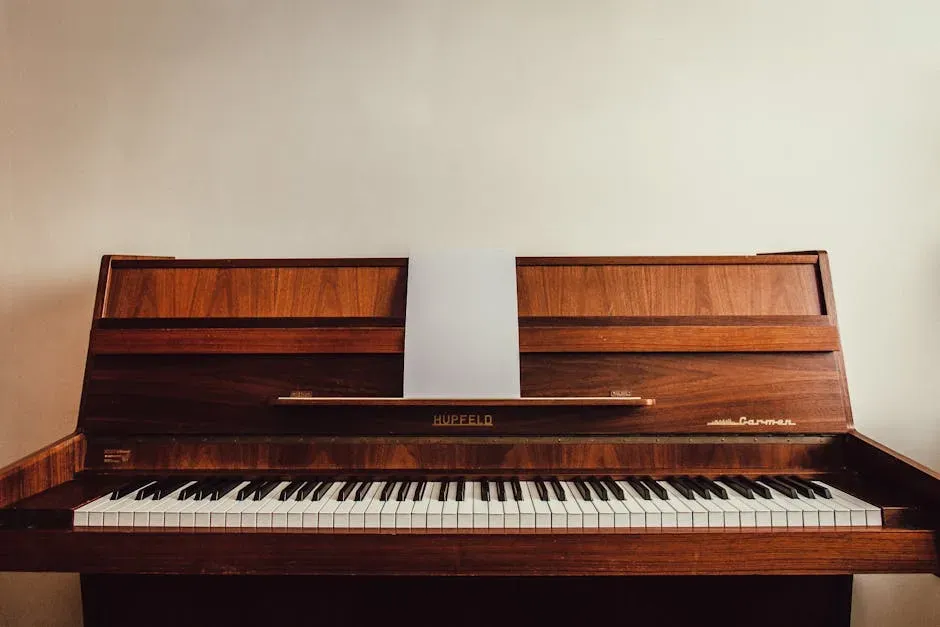
“All By Myself” is a song by American singer-songwriter Eric Carmen, released by Arista Records in December 1975, and the verse is based on the second movement of Russian composer Sergei Rachmaninoff’s 1900 Piano Concerto No. 2 in C minor, Opus 18. That’s one of the most romantic pieces ever written, quietly hiding inside a pop radio staple.
Rachmaninoff’s melody is passed between the piano, flute, and clarinet in his concerto, and Carmen used it as the basis for the tune of the verse. Using Rachmaninoff’s harmonically meandering theme also meant Carmen had to incorporate similar chord patterns beneath his pop melody, which is an unusual musical feature to hear in a pop song.
Rachmaninoff’s music was thought to be in the public domain in the United States at the time, but it was still protected outside the US. Carmen was later contacted by the Rachmaninoff estate, and an agreement was reached in which the estate would receive roughly twelve percent of the royalties from “All By Myself.” That’s what you get for borrowing from a genius without checking the fine print.
The song reached number two on the Billboard Hot 100 in the United States, making it Carmen’s highest-charting solo single. It also reached number twelve on the UK Singles Chart, contributing to its widespread commercial success.
2. Nas – “I Can” and Beethoven’s “Für Elise”
Nas made waves in 2003 with “I Can,” a hip-hop anthem that samples Beethoven’s “Für Elise.” The familiar piano riff, usually associated with recital halls, became the backbone of a song aimed at inspiring youth to believe in themselves, and the song climbed to the Top 20 of the Billboard Hot 100.
The “Für Elise” sample is arranged in 4/4 time to fit the song’s drums and serves as its melodic and harmonic foundation. “I Can” charted at number 12 on the Billboard Hot 100 in 2003 and remains Nas’s highest-charting single as a lead artist to date.
The classical quote adds a cool backdrop to the affirmations passed back and forth between Nas and a chorus of children. Für Elise is a hallmark piece for those learning to play the keyboard, and the fact that Nas samples one of the pillars of piano pedagogy adds another layer to this encouraging and uplifting song created for children.
Teachers and parents praised “I Can” for its positive message, and it’s even been used in classrooms to introduce students to both hip-hop and classical music. Now that is a full-circle moment Beethoven definitely could not have predicted.
3. Blackpink – “Shut Down” and Paganini’s “La Campanella”

Released on September 16, 2022, “Shut Down” is a song by South Korean girl group Blackpink, issued through YG Entertainment and Interscope Records as the second single from their second studio album, Born Pink. It is primarily a hip-hop song driven by trap beats and a looped classical violin sample of Niccolò Paganini’s “La Campanella.”
The sample is taken from the beginning of the third movement of Paganini’s second violin concerto. The sample is transposed down in pitch compared to the original key of D major, and it is used effectively to give the song a dark and mysterious vibe.
“Shut Down” became Blackpink’s second number-one hit on the Billboard Global 200 as well as the first song by a K-pop act to top Spotify’s weekly chart. In the United States, the track entered the Billboard Hot 100 at number 25, and it debuted at number 24 on the UK Singles Chart.
Glenn Rowley writing for Billboard called it one of the best songs of 2022, praising its “swagger and savvy” and the melding of classical music and hip-hop as “ingenious.” Taking a 19th-century Italian virtuoso and dropping him into a K-pop banger? Only Blackpink would pull that off with a straight face.
4. Barry Manilow – “Could It Be Magic” and Chopin’s Prelude in C Minor

Out of all songs featuring classical music quotes, Barry Manilow’s “Could It Be Magic” contains one of the longest direct classical music quotes. Manilow admits he wrote the tune after becoming fixated on the harmonic structure of Frédéric Chopin’s Prélude in C minor Op. 28, No. 20, with the resulting song referencing the first eight measures of the Chopin piece, then moving on to a musical development, before ultimately returning to the prelude in the conclusion.
In a well-known clip, Manilow explains how he wound up writing the song after a glass of wine. He thought he had invented something brilliant. He had not. He had Chopin swimming around in his head the whole time and simply did not realize it until it was too late. Honestly, relatable.
5. Billy Joel – “This Night” and Beethoven’s Pathétique Sonata
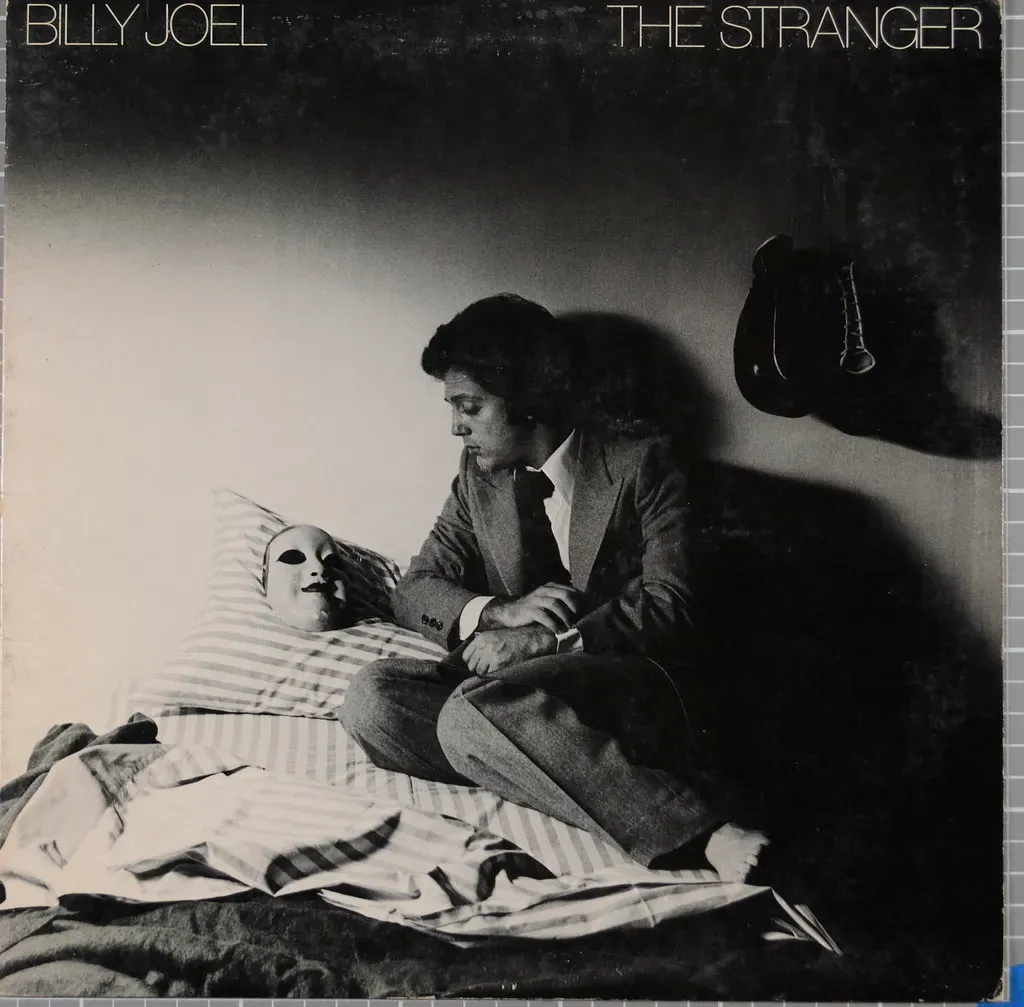
Billy Joel once said in a CBS interview, “I have not forgiven myself for not being Beethoven.” In a classic case of if you can’t beat them, join them, Joel wove in a swung version of the opening melody from the second movement of Beethoven’s Pathétique Sonata into the chorus of “This Night.”
Partner offer
In what reads almost like an act of musical homage, Billy Joel incorporated Beethoven’s Piano Sonata No. 8, Pathétique, into “This Night.” The slightly swung version of the opening melody from movement two takes center stage in the chorus, seamlessly blending classical sophistication with pop sensibility. The song has a warmth to it that now makes complete sense once you know its origin.
6. Maroon 5 – “Memories” and Pachelbel’s Canon in D

Pachelbel’s Canon in D boasts an infamous chord progression that has inspired countless compositions, and pop songs are not exempt from its spell. Maroon 5’s “Memories” uses the same chord progression, breathing new life into the classical structure.
Pachelbel’s ubiquitous cello chord progression has inspired plenty of pop songs, from Kylie Minogue’s “I Should Be So Lucky” to Oasis’ “Don’t Look Back in Anger.” It’s like the musical equivalent of a template that never goes out of style. Somehow, Pachelbel composed arguably one of the most recycled chord sequences in the history of Western music without even trying to.
7. Lady Gaga – “Alejandro” and Vittorio Monti’s Csárdás

For the intro of her single “Alejandro,” Lady Gaga neatly borrowed Csárdás, the rhapsodic concert piece for violin by Vittorio Monti, which itself was based on a traditional Hungarian folk dance. There’s a delicious layering of influences here: folk music becomes a concert piece, and a concert piece becomes a pop intro.
Classic FM compiled a list of the best-selling tracks to have sampled classical music over the last 25 years, with artists including Muse, David Guetta, Beyoncé, and Little Mix all making the list. Lady Gaga’s sampling of Vittorio Monti is among the most notable examples featured on that chart. The fact that a violin showpiece composed around 1904 ended up introducing a dance-pop anthem to millions of listeners is truly something else.
8. Dizzee Rascal – “Nutcrackerz” and Tchaikovsky’s The Nutcracker

Dizzee Rascal’s “Nutcrackerz” samples the “Dance of the Sugar Plum Fairy” from Pyotr Ilyich Tchaikovsky’s ballet, The Nutcracker. The iconic bells chime in the background throughout the track, and the sample is instantly recognizable, giving the song a universally appealing sound.
The song uses those fairy bells as a looping backdrop, and the classical sample paired with a hip-hop beat is a strong example of how a well-known piece can be reframed entirely. Think about it. One moment you’re at a Christmas ballet, the next you’re in a London grime track. Music is wild like that.
9. Muse – “The Globalist” and Elgar’s Enigma Variations
Muse’s “The Globalist” is one of the longest songs the band has ever produced. Featured on the album Drones, this ten-minute work tells the story of an individual during the rise and fall of a dictatorship. Most of the song is original work, however, the melody pivots at around the six-minute-and-forty-five-second mark to directly quote Elgar’s Enigma Variations, and this section lasts for the rest of the song.
Muse samples classical music in other songs too. The group’s “I Belong to You (Mon Cœur S’ouvre à Ta Voix)” acknowledges its classical inspirations in its very title. The song opens with an original melody before shifting to cover an aria from Camille Saint-Saëns’s Samson and Delilah, known in English as “Softly awakes my heart.” Muse is practically a classical ensemble wearing a rock band’s clothing at this point.
10. Kelis – “Like You” and Mozart’s “Queen of the Night” Aria

Kelis’ “Like You” appears on her 2006 album, Kelis Was Here, which debuted at number ten on the Billboard album charts. The track samples Mozart’s famous coloratura “Queen of the Night” aria from The Magic Flute, and this sample is most clearly heard in the song’s chorus, beginning at around the 28-second mark in the recording.
The track is a unique example of how a classical opera sample can be used in R&B, soul, pop, and hip-hop all at once. The “Queen of the Night” aria is already one of the most technically demanding pieces a soprano can sing, so hearing it repurposed into an R&B banger is genuinely shocking the first time. In the best possible way.
11. John Denver – “Annie’s Song” and Tchaikovsky’s Symphony No. 5

Classical music often surprises us by showing up in unexpected places, and John Denver’s “Annie’s Song” is a prime example. Written after a ski run, the melody of Denver’s song was unknowingly drawn from Tchaikovsky’s Symphony No. 5. The horn solo from the second movement of this symphony forms the basis of “Annie’s Song,” although it wasn’t until after the song was released that Denver was told by a friend that his supposedly original melody was not so original after all.
Here’s the thing. Denver wasn’t even intentionally sampling. He had absorbed Tchaikovsky so deeply through listening that the melody simply flowed out of him as if it were his own. It remains one of the clearest examples of how classical music can surprise us by showing up in unexpected places, even inside the mind of a composer who didn’t know it was there. Accidental borrowing, meet a permanent place in music history.
12. Alan Walker and Sophie Simmons – “Lovesick” and Brahms’s Hungarian Dance No. 5

When electronic music producer Alan Walker and Sophie Simmons joined forces to create “Lovesick,” they brought a touch of classical charm to pop. The track cleverly incorporates the energy of Brahms’s Hungarian Dance No. 5, and while the verses feature original composition by Walker and Simmons, the chorus is a direct quote of the main theme composed by Brahms.
The combination was seen as a perfect example of how an iconic classical piece can be transformed into a contemporary hit. Brahms wrote his Hungarian Dances in the 1860s, drawing on traditional Hungarian Romani folk music. The fact that this same energy ended up powering an electronic pop track nearly a century and a half later says everything about the timelessness of great melody.
Classical music doesn’t need a concert hall or a formal education to reach people. It needs the right producer, the right moment, and sometimes just a single glass of wine. These twelve examples prove that the line between a Beethoven sonata and a chart-topping hit is much thinner than most people think. What would you have guessed? Tell us your favorite classical music surprise in the comments.
Partner offer
Planning a trip to Vegas?
Compare hotel rates and show tickets on VEGAS.com.