There’s a particular kind of magic trick that happens when a familiar face suddenly splits into two people on screen. It’s not just a costume change or a wig swap, it’s a full transformation that asks an actor to argue with themselves, comfort themselves, or sometimes even kill themselves, all within the same frame. A handful of performers have pulled this off so convincingly that audiences forget they’re watching one person do the work of two. The following three examples stand out not because the trick itself is rare, but because of how thoroughly each actor disappeared into both roles. These aren’t cases of a character wearing a disguise or hiding a secret identity. These are genuinely separate people, built from the ground up, occupying the same story at the same time.
1. Tom Hardy as Reggie and Ronnie Kray in Legend (2015)

When director Brian Helgeland set out to make Legend, a biographical crime drama about London’s most infamous gangster twins, his first instinct was to cast two different actors. “My initial instinct was to get two guys to play the brothers,” Helgeland later explained. That plan changed after a single dinner with Tom Hardy, who convinced the director to let him play both Kray brothers himself.
The result was a film built almost entirely around one actor performing opposite himself. The gripping film starred Hardy as identical brothers Reggie and Ron, chronicling their takeover of the criminal underworld in 1960s London. Reggie came across as the smoother, more controlled operator, while Ronnie was portrayed as volatile and unpredictable, and Reggie was the suave one of the two while Ronnie had an entirely different demeanor and was altogether more unhinged. Hardy’s work earned him serious industry recognition, including a Best Actor win at the British Independent Film Awards for the double performance.
2. Nicolas Cage as Charlie Kaufman and Donald Kaufman in Adaptation (2002)
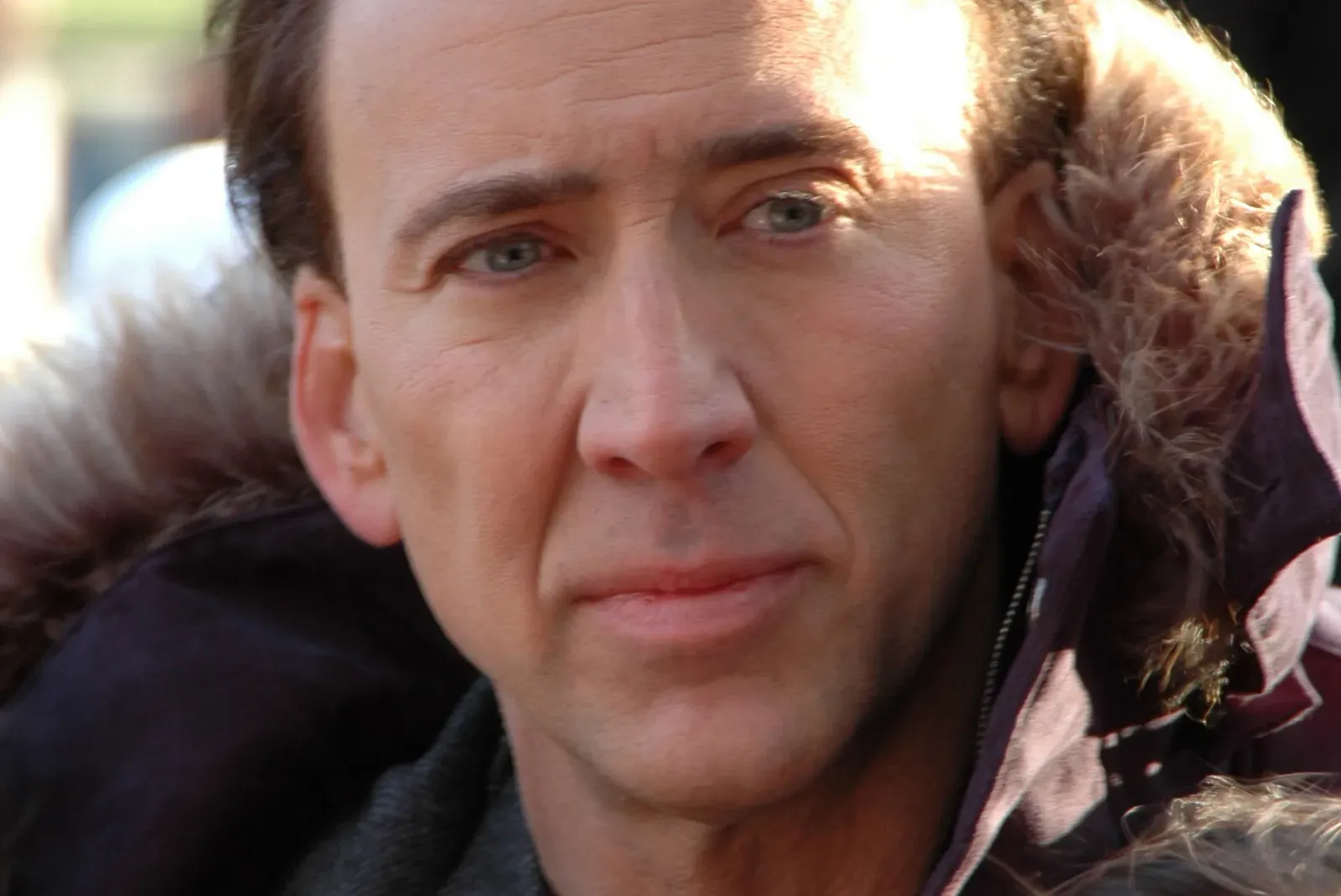
Adaptation is a strange, self-referential film about a screenwriter struggling to adapt a book, and it leans into that strangeness by inventing a fictional twin brother for its real-life screenwriter. Given the wide range of films Nicolas Cage has been in, it would honestly be more surprising if he hadn’t been in a movie where he played multiple roles, and the Oscar winner played both Charlie Kaufman and Donald Kaufman in Adaptation. Charlie is neurotic, self-loathing, and creatively paralyzed. Donald is his breezy, confident, commercially minded opposite, a guy who writes a hacky thriller script without a shred of self-doubt.
What makes this dual role different from a simple twin gimmick is how the film uses the two Kaufmans to comment on the creative process itself. Cage doesn’t just change his hairstyle or posture between scenes, he shifts his entire rhythm of speech and body language depending on which brother is on screen. The performance was distinctive enough to earn Cage an Academy Award nomination, a rare feat for a film built around an actor essentially arguing with a version of himself.
3. Lupita Nyong’o as Adelaide and Red in Us (2019)
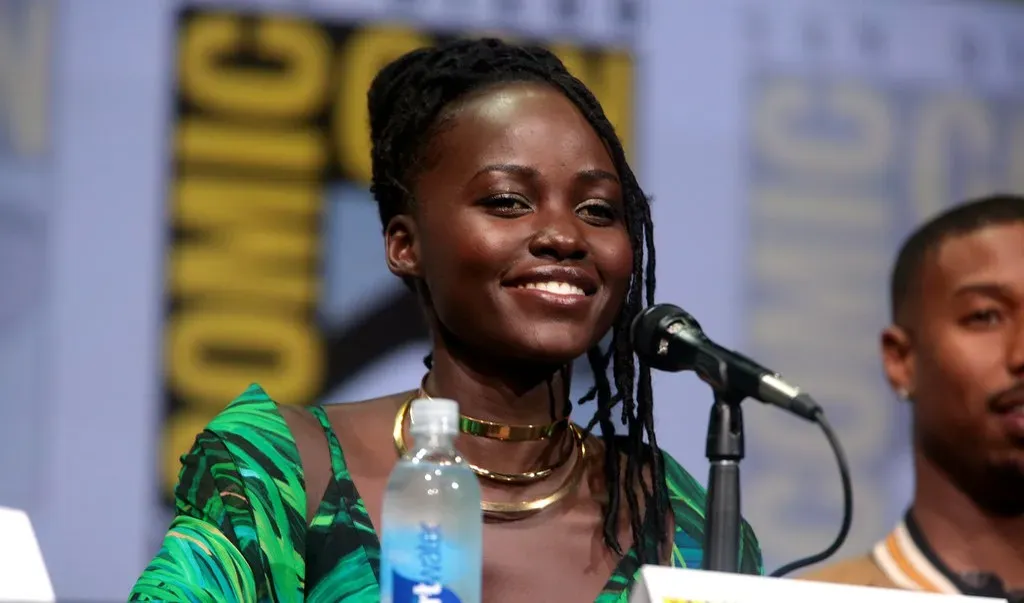
Jordan Peele’s horror film Us hinges entirely on the believability of its central performance, since the story is a direct confrontation between a woman and her underground doppelganger. Nyong’o’s double role as Adelaide, a wife and mother of two children, and Red, Adelaide’s scissor-wielding, hoarse-voiced doppelganger, is perhaps the scariest part of the film. The two characters needed to feel like mirror images of each other while also being unmistakably distinct people with different histories and different ways of moving through the world.
Nyong’o built that distinction through deliberate physical choices rather than makeup or prosthetics. She told Variety she always creates rituals for a role, and for this one it was vital, creating precise rules for each character’s physical movement as well as mental and emotional ones, including specific physical exercises and vocal warmups for each role. The production even scheduled shoot days around the split, since Nyong’o described having to flip back and forth between characters, and for the most part wouldn’t shoot the same character on the same day, so at least she’d have a Red day and then an Adelaide day. A late twist in the film recontextualizes both performances entirely, which only adds weight to how carefully each character had been built from the start. Each of these performances required something more demanding than a costume change or a clever edit. The actors had to build two internally consistent people, each with their own logic, and then let those two people share the screen without either one feeling like an afterthought. It’s a difficult trick to pull off convincingly, which is probably why so few performances in this category are remembered as anything less than a genuine achievement.