Every chart-topping career has a version of itself that almost didn’t happen. Before the sold-out arenas and platinum plaques, plenty of now-famous names sat across a desk from an executive who said no. Some of those rejections came quietly, others became industry legend, but each one shaped the artist who eventually broke through.
Lady Gaga and her three months at Def Jam

In 2006, a then-unknown singer named Stefani Germanotta signed a solo deal with Def Jam Recordings after record executive L.A. Reid was ready to sign her on the spot after she auditioned accompanying herself on piano. The excitement didn’t last. L.A. Reid was the chairman of Def Jam Records in 2006 when Gaga was signed to the label, but she was dropped just three months later.
Gaga later described the experience in painfully personal terms. She said that after he signed her, he never met with her, and she used to wait outside his office for hours hoping he’d take meetings about her songs, but it never happened, and he eventually dropped her after three months. She has called it one of the worst days of her life, and years later even said that the music video for one of her singles was about the day she was dropped by her first label, Island Def Jam. Reid himself later admitted it was tough dropping Lady Gaga and then watching her become a wildly successful, iconic figure who changed the course of music. Within a couple of years she resurfaced through a songwriting deal and a new partnership with Interscope, and the rest of her run, from “Just Dance” through her Grammy-winning acting and touring career, needs no introduction.
Katy Perry’s triple rejection before pop stardom

Long before “I Kissed a Girl,” Katy Perry released a Christian-pop record under her birth name, Katy Hudson. Katy Hudson was released on March 6, 2001, through Red Hill Records, but it was commercially unsuccessful, and Red Hill later ceased operations. That was only the first door to close on her.
She then signed with Island Def Jam through producer Glen Ballard’s imprint, only to have the project shelved when that label folded, before landing a deal with Columbia Records that also fell apart. Following two unsuccessful contracts with Island Def Jam Records and Columbia Records, whereby Perry was dropped by both before she could finish an album, she ultimately secured a deal with Capitol Records in 2007. As one retrospective summed it up, through the course of her career, she was dropped by her label three times. A year later, “One of the Boys” turned her into a global star, and she has since broken multiple Guinness World Records and topped the Billboard 200 three separate times.
Ed Sheeran’s rejections over his sound and his looks

Before he became one of the best-selling artists of his generation, Ed Sheeran spent years being turned down for reasons that had little to do with his songwriting. According to accounts of his early career, his “slightly chubby and ginger” appearance and musical approach weren’t initially appealing to record labels, and he reportedly once played to an empty house while trying to build an audience. Other reporting on his rise notes that record label executives didn’t just reject his music, they criticized his appearance, with some telling him he was too chubby and ginger and that it would hurt his marketability.
Rather than wait around for a label to come calling, Sheeran built momentum on his own. He began gaining traction online before releasing the independent EP No. 5 Collaborations Project, and after it peaked at number two on iTunes, he got a deal with Atlantic Records. That deal produced eight studio albums and roughly 170 million album sales worldwide over 15 years, a run that ended amicably when Sheeran left Warner Music Group in 2026 to chart a new path in his career.
The Beatles and the label that let them go
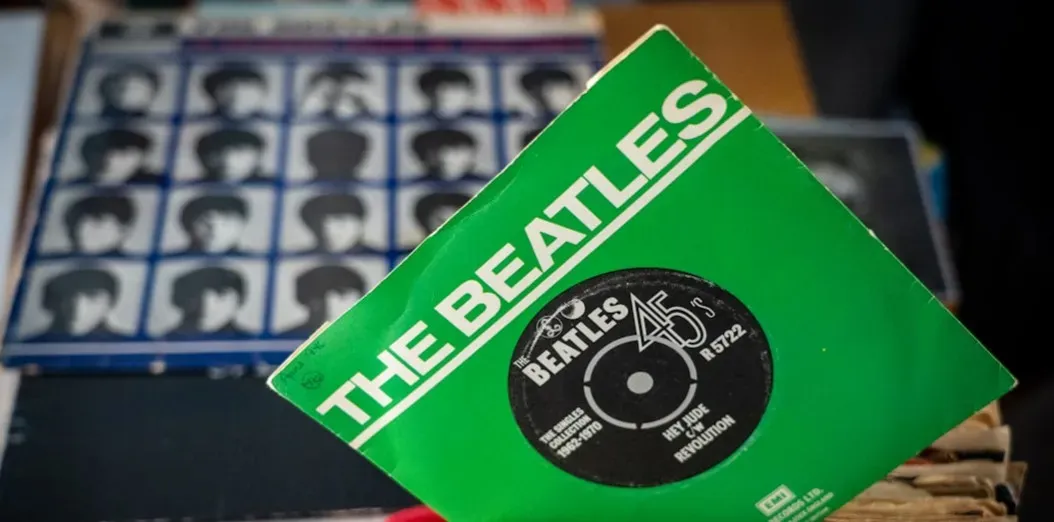
Perhaps the most famous rejection in pop history didn’t involve a solo artist at all. On New Year’s Day in 1962, John Lennon, Paul McCartney, George Harrison and Pete Best auditioned for Decca Records at Decca Studios in West Hampstead, north London, and were rejected by the label, who instead signed a contract with Brian Poole and the Tremeloes.
Partner offer
The reasoning has become industry folklore. Decca’s A&R man rejected the band, saying “guitar groups are on the way out” and “The Beatles have no future in show business”, a verdict that stands among the most quoted misjudgments in music. Manager Brian Epstein didn’t stop there either. He made numerous trips to London to visit record companies with the hope of securing a record contract but was rejected by many, including Columbia, Pye, Philips, and Oriole, before George Martin and EMI’s Parlophone label finally said yes months later, setting the stage for a band that would go on to redefine popular music for the rest of the century.
Partner offer
Planning a trip to Vegas?
Compare hotel rates and show tickets on VEGAS.com.