


Every generation carries its own cinematic baggage. For Baby Boomers, certain films from the 1950s through the 1970s aren’t just movies – they’re cultural landmarks tied to real historical moments, social upheaval, and shared memories. These films were watched in packed theaters, debated over dinner, and passed down like family heirlooms.
For Boomers, watching these classic films is not just about nostalgia – it’s about reliving the moments that shaped their lives. They grew up during a time of great cultural and social change, witnessing the Vietnam War, the civil rights movement, and a Hollywood that treated cinema as serious art. Gen Z, raised on streaming queues, TikTok clips, and the rapid-fire pacing of modern filmmaking, often sees the same films through a very different lens. Here are seven beloved Boomer classics that frequently leave younger viewers reaching for their phones.
1. Lawrence of Arabia (1962)


Lawrence of Arabia runs in multiple versions, with the most complete restoration clocking in at 228 minutes including overture and intermission music, spread across a genuinely epic retelling of T.E. Lawrence’s campaigns in the Arabian Peninsula. For Boomers who saw it in theaters during its original run, the scale was simply unprecedented – desert cinematography that had never been attempted before, and a central performance by Peter O’Toole that felt genuinely mythic.
For the minority who find themselves bored by its intentionally slow pacing, the film demands a certain patience and literacy about cinema history that doesn’t always come naturally to viewers shaped by fast editing. The average attention span has reportedly dropped dramatically within the past two decades, which makes nearly four hours of deliberate, dialogue-heavy desert storytelling a tough sell for younger audiences raised on digital media. It’s a masterpiece that genuinely requires you to meet it on its own terms.
2. Doctor Zhivago (1965)

Doctor Zhivago is considered by many the slowest-moving of David Lean’s epic trilogy alongside Bridge on the River Kwai and Lawrence of Arabia, and clocking in at just over three hours, viewers often feel every single minute. Boomers who experienced it in theaters in 1965 were swept up by the sweeping Russian Revolution backdrop, the romance between Omar Sharif and Julie Christie, and a score that became one of the most recognizable in Hollywood history.
The plot of Doctor Zhivago drags on in a way that many compare to a soap opera – a grand, visually stunning soap opera, but a soap opera nonetheless. That languid, meandering quality is precisely what Gen Z viewers tend to flag as a dealbreaker. Without a propulsive narrative structure or any of the layered social commentary that younger audiences tend to respond to, it reads as a very long love story in very cold weather.
3. The Godfather (1972)

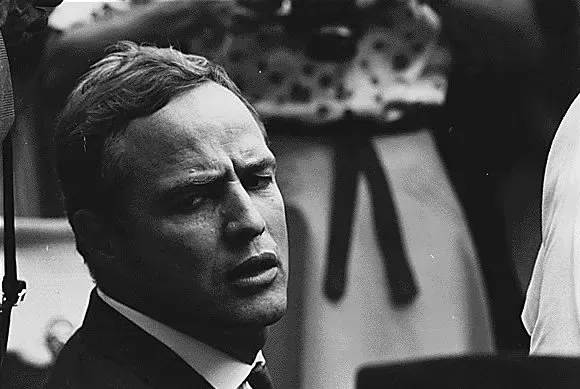
Marlon Brando’s iconic performance as Don Vito Corleone is just one of the reasons The Godfather has stood the test of time – the story of a powerful mafia family in 1940s New York is full of intrigue, betrayal, and family drama. It’s not just a gangster movie; it’s a family drama that explores the themes of power, loyalty, and tradition. For Boomers, it represents peak American filmmaking – a film that changed the industry entirely.
Younger viewers today often have shorter attention spans and tend to prefer less subtle depictions of conflict, whether that involves violence, relationships, or the struggle between good and evil. The Godfather’s deliberate pacing, long stretches of quiet table talk, and nearly three-hour runtime feel distant from what Gen Z expects from a crime film. Many have grown up on faster, more visually aggressive crime storytelling, which makes the Corleones’ measured world feel like it belongs to another era entirely – because it does.
4. Ben-Hur (1959)

Ben-Hur won eleven Academy Awards when it was released, a record that stood for decades, and its chariot race sequence was genuinely revolutionary for its time. Boomers who saw it as children or teenagers remember it as a near-religious experience – a film so vast and ambitious that nothing else at the cinema came close. Boomers grew up during a time of great cultural and social change and witnessed some of the most iconic moments in history, and epic biblical films like Ben-Hur mapped directly onto that sense of grand moral struggle.
The film runs close to four hours and spends considerable time on Roman political drama and Christian allegory before ever arriving at the chariot race. Older films often featured extensive scene-setting and staging that could require lengthy sequences to build toward a single moment the director was looking for – a style that younger viewers tend not to follow with patience. For Gen Z, the journey to the payoff simply feels too long, and the biblical framing adds a layer of distance that makes emotional connection harder to find.
5. Saturday Night Fever (1977)

Saturday Night Fever launched John Travolta into superstardom and defined an entire cultural era. Its Bee Gees soundtrack became one of the best-selling albums in history, and for Boomers the film captured something electric about late-1970s New York – the energy, the desperation, the escapism of the dance floor. It felt raw and alive in a way that few films of that decade managed.
Saturday Night Fever is filled with derogatory and sexist language toward women, and includes various scenes of sexual assault that many viewers today find deeply uncomfortable. This depiction of men and women may have been accepted in the 1970s, but it sits uneasily in the current cultural climate. Gen Z, as the initial generation fully ingrained with social media, tends to be captivated by films that speak to their experiences and largely drawn to movies that challenge the status quo – which makes a film rooted in retrograde gender dynamics and faded disco nostalgia a genuinely difficult watch for many younger people.
6. 2001: A Space Odyssey (1968)


Stanley Kubrick’s 2001: A Space Odyssey is routinely listed among the greatest films ever made, and Boomers who watched it at the cinema in 1968 describe an almost hallucinatory experience. Nothing like it had ever been put on screen – the silence, the classical music, the unsettling intelligence of HAL 9000. It was the kind of film that changed how people thought about what cinema could actually do.
Strong narrative and visual styling are two of the most important aspects of a film for younger audiences, in roughly that order. 2001 famously has almost no conventional narrative at all – long stretches contain no dialogue, minimal action, and a final act that deliberately resists interpretation. Younger viewers have been observed finding older films “technically primitive, politically incorrect, narratively dull, and slowly paced,” and 2001, despite its technical brilliance, falls squarely into the “narratively dull” category for many Gen Z viewers who prefer films that tell them what to feel rather than leaving vast philosophical space for them to fill themselves.
7. Bonnie and Clyde (1967)

Bonnie and Clyde was genuinely shocking when it arrived in 1967, and its influence on American cinema is hard to overstate. The film cracked open the old Hollywood Production Code and ushered in an era of gritty, morally ambiguous storytelling that defined the 1970s. Films like The Graduate and Easy Rider captured the restiveness of the 1960s that reached full expressive flower during that era – and Bonnie and Clyde was very much part of that same wave of cinema that spoke directly to Boomer disillusionment with authority and tradition.
Nostalgia can cause people to see their own pasts through rose-colored glasses, making it hard to be objective – and sometimes it takes someone from outside a generational bubble to discern which things are genuinely worth preserving. Gen Z viewers, watching Bonnie and Clyde today, often find the romanticization of violent criminals dated rather than daring. The film’s slow country roads, its theatrical shootouts, and its long stretches of Depression-era atmosphere tend to feel remote without the historical context that made it so electric for its original audience.
None of this means these films are bad. Most of them are genuinely great. The gap isn’t really about quality – it’s about context. People of every age prefer their own entertainment choices, and it’s rare that those choices reach past a generation or so. Boomers absorbed these films at a specific historical moment, when cinema was a shared cultural event and these particular stories resonated with lived experience. Movies watched at the cinema and recorded off television became precious in a way that something caught on a streaming service while checking a phone simply cannot be. That’s not a generational flaw on either side. It’s just how culture works – each era sees its own reflection on screen, and the images that matter most are the ones that arrive at exactly the right moment in a person’s life.


