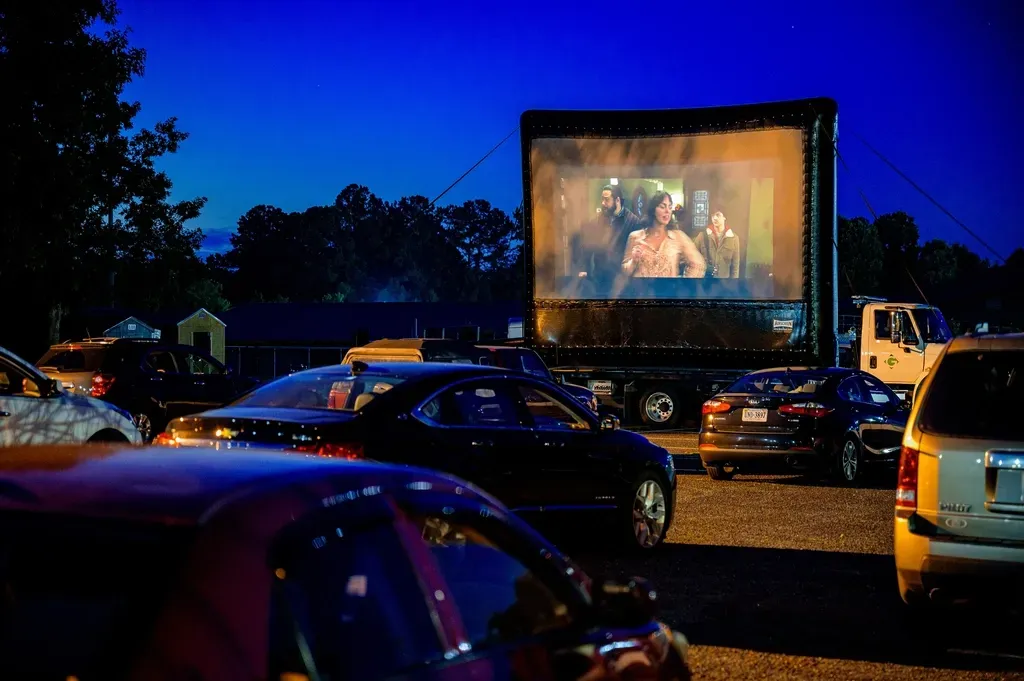
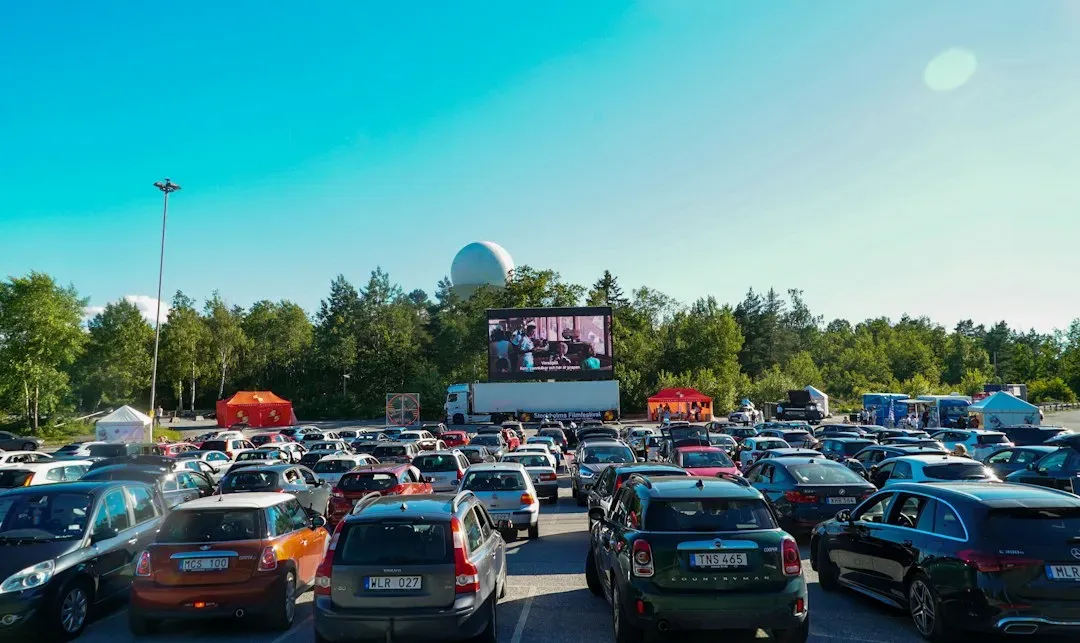
Car culture was booming, families were growing, and an outdoor screen offered cheap entertainment where kids could be loud in the back seat without bothering anyone. The double feature, often a sci-fi creature picture paired with a western or a teen drama, became a familiar way to spend a summer night.
Not every film from that decade was made for the lot, though some seem to belong there more than others. These seven titles, from monster movies to rock and roll dramas, show the kind of stories that flickered across those big outdoor screens.
Invasion of the Body Snatchers (1956)

Don Siegel directed this tense science fiction thriller about a small California town where people are replaced by emotionless duplicates grown from alien pods. It was based on Jack Finney’s serial and novel, and Kevin McCarthy starred as the doctor who realizes what’s happening.
The film ran lean, at around eighty minutes, which made it a natural fit for a double bill. It has since earned serious recognition, and the Library of Congress added it to the National Film Registry in 1994.
The Blob (1958)
A young Steve McQueen led this low budget horror film about a gelatinous alien that devours a Pennsylvania town. Irvin Yeaworth directed it, and the bright Technicolor goo gave it a look that popped on a big outdoor screen.
Teenagers who warn the adults and get ignored became a staple of the genre, and this film leaned into that. Its theme song, written by Burt Bacharach and Mack David, added to its drive-in charm, and the movie later inspired a 1988 remake.
Creature From the Black Lagoon (1954)

Jack Arnold directed this Universal monster picture about an expedition that discovers a gill-man in the Amazon. The creature suit, worn mostly by Ben Chapman on land and Ricou Browning underwater, remains one of the most admired designs in classic horror.
The film was originally released in 3D, which suited the spectacle of audiences watching an underwater swim sequence in the dark. It also spawned two sequels, Revenge of the Creature and The Creature Walks Among Us.
Rebel Without a Cause (1955)
Nicholas Ray’s drama starred James Dean as Jim Stark, a troubled teenager in a new town. Natalie Wood and Sal Mineo co-starred, and the film captured the restlessness of postwar youth in a way that resonated with the young crowds who filled cars at the drive-in.
Dean died in a car crash in September 1955, a month before the film opened, which added to its lasting mystique. The Library of Congress selected it for the National Film Registry in 1990.
Them! (1954)
Gordon Douglas directed this atomic age thriller about giant ants born from nuclear testing in the New Mexico desert. James Whitmore and Edmund Gwenn played key roles, and the story treated its premise with a straight, procedural seriousness.
It was one of Warner Bros.’ bigger hits of the year and kicked off a wave of giant bug movies. The film was added to the National Film Registry in 2023.
Blackboard Jungle (1955)
Richard Brooks directed this drama about a teacher facing a rough inner city high school, with Glenn Ford in the lead and Sidney Poitier in a notable supporting role. Its opening used Bill Haley and His Comets’ Rock Around the Clock, which helped introduce rock and roll to a mass movie audience.
Teen audiences responded loudly, and the film drew attention for the way it portrayed juvenile delinquency. That pairing of music and rebellion made it a perfect match for crowds sitting in their cars with the radio speakers hooked on.
Earth vs. the Flying Saucers (1956)
Fred F. Sears directed this alien invasion picture, which featured Ray Harryhausen’s stop motion effects. Hugh Marlowe and Joan Taylor starred, and the saucers attacking Washington, D.C., became one of the most recognizable images of 1950s science fiction.
Harryhausen’s work gave the modest production a sense of scale that suited a wide outdoor screen. Its saucer destruction of national landmarks was later referenced by Tim Burton in Mars Attacks!