Science is supposed to be methodical. Controlled. Predictable. You form a hypothesis, run the tests, and arrive at a conclusion. That’s the textbook version, at least. The reality? Some of history’s most world-altering discoveries happened because someone forgot to wash their hands, stepped away on vacation, or used the wrong resistor in a circuit. Honestly, it’s equal parts humbling and hilarious.
The stories behind these breakthroughs are stranger than any fiction. They remind us that curiosity matters more than perfection, and that recognizing a golden mistake might be the most underrated skill in all of science. Buckle up for a gallery of beautiful accidents.
1. Penicillin: The Lifesaving Mold Nobody Wanted
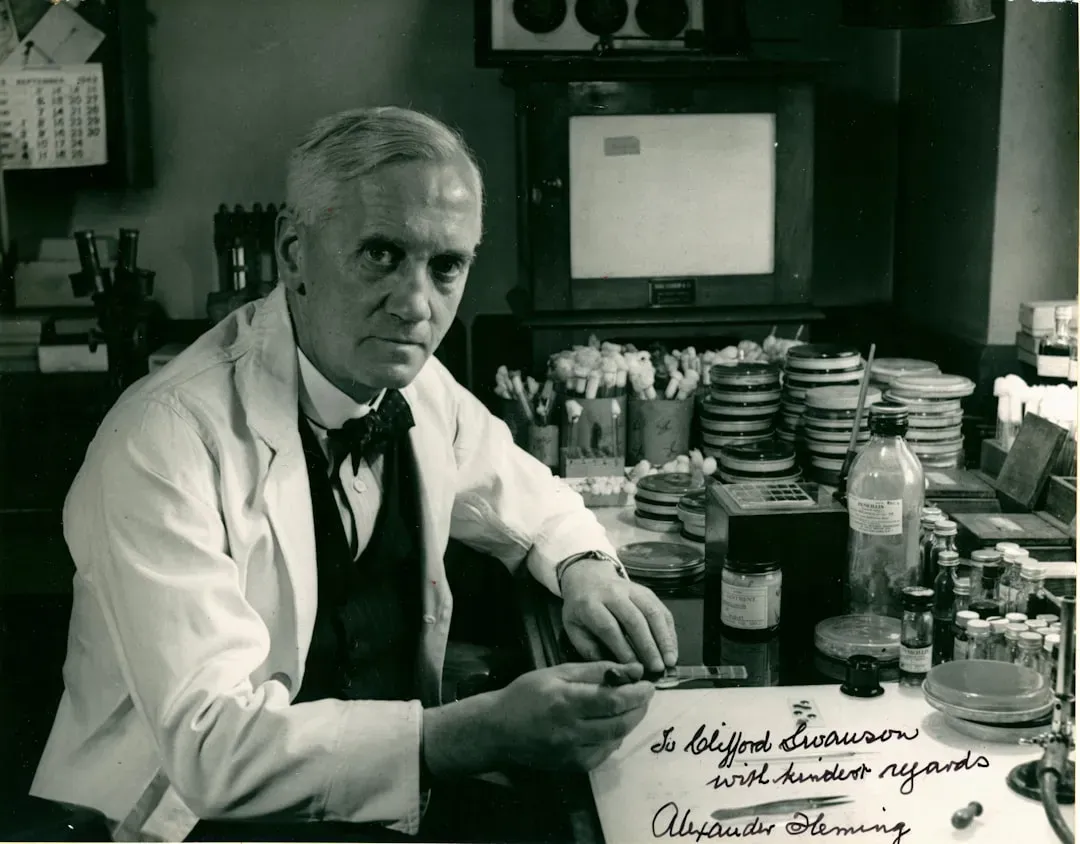
The world’s first antibiotic, which has prevented millions of deaths from infection and disease, was the accidental byproduct of a messy workspace. Alexander Fleming, a bacteriologist in London, returned from a vacation in 1928 to discover that one of the petri dishes in his lab had mold growing on it – the result of unintended contamination. On closer inspection, he saw that the area around the mold was free of bacteria. Fleming named this bacteria-killing substance penicillin after the species of fungus, Penicillium notatum, and published a paper about his discovery in 1929.
The temperature conditions that prevailed during Fleming’s absence permitted both the bacteria and the mold spores to grow; had the incubator been used, only the bacteria could have grown. In fact, in the 1930s, little notice was taken by the scientific community of his paper published in the British Journal of Experimental Pathology. It was not until 1940, just as he was contemplating retirement, that two scientists, Howard Florey and Ernst Chain, became interested in penicillin. In time, they were able to mass-produce it for use during World War II. It’s estimated that since its discovery, penicillin has saved 500 million lives and, along with its derivatives, is still a mainstay in the treatment of myriad illnesses.
2. X-Rays: When a Glowing Screen Changed Medicine Forever

Wilhelm Roentgen, Professor of Physics in Würzburg, Bavaria, discovered X-rays in 1895 – accidentally – while testing whether cathode rays could pass through glass. On November 8, 1895, while experimenting with electric current flow in a partially evacuated glass tube, Röntgen observed that a screen of barium platinocyanide far from the tube gave off light when the tube was in operation. He theorized that when the cathode rays struck the glass wall of the tube, some unknown radiation was formed that traveled across the room, struck the chemical, and caused the fluorescence.
When Wilhelm Conrad Röntgen first observed what he called “X-rays” on November 8, 1895, even he initially believed he was a “victim of deception.” Light could not have been responsible for this, because the tube was wrapped in black paper. Following up on his observation, Röntgen produced an image of the bones of his wife’s hand as evidence of his discovery. X-ray technology revolutionized medicine by providing a way to view interior structures of the human body without invasive or exploratory surgical procedures. Wilhelm Röntgen received numerous accolades for his work, including the first Nobel Prize in physics in 1901, yet he remained modest and never tried to patent his discovery.
3. Radioactivity: A Cloudy Day That Rewrote Physics

In 1896, French physicist Henri Becquerel made a groundbreaking discovery that would revolutionize science. While studying phosphorescent materials, Becquerel stumbled upon the phenomenon of radioactivity. Becquerel was investigating whether uranium salts emitted X-rays when exposed to sunlight. Due to cloudy weather, he stored his experiment in a drawer. Upon retrieving it days later, he found that the photographic plates had been exposed without sunlight. This unexpected result led Becquerel to realize that uranium naturally emitted a new type of radiation.
Becquerel concluded that invisible radiation that could pass through paper was causing the plate to react as if exposed to light. Marie Curie decided to study the new radiation using the sensitive electrometer invented by her husband Pierre to measure the conductivity of air that the radiation induced. Becquerel’s discovery paved the way for further research by Marie and Pierre Curie, who isolated radioactive elements like radium and polonium. This work earned Becquerel and the Curies the 1903 Nobel Prize in Physics. Think about that for a moment – nuclear physics, nuclear medicine, and our entire modern understanding of the atom all trace back to overcast skies in Paris.
4. Viagra: A Heart Drug That Had Other Ideas
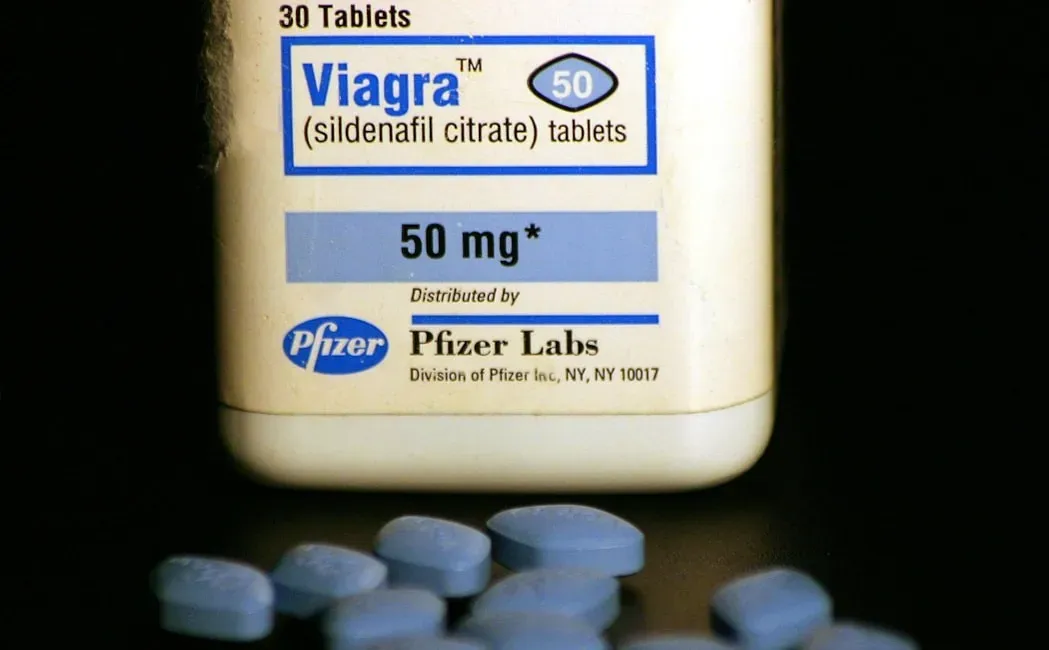
In the early 1990s, pharmaceutical company Pfizer was working hard on a drug intended to manage and treat hypertension and angina. A team of researchers, led by Dr. Ian Osterloh, Peter Dunn and Albert Wood, had set out to develop a drug that would dilate blood vessels and reduce blood pressure. The compound they were investigating was initially called UK-92480. The scientists were disappointed – the drug only lowered blood pressure by 3 to 4 mmHg, compared to the normal 80 to 120 mmHg range. Thinking that all the work had been wasted, Pfizer decided to withdraw the drugs from the subjects.
A very observant nurse reported that the men were embarrassed because they were getting erections. It appeared that the blood vessels dilating were not in the heart, but rather elsewhere. With that, the so-called “potency pill” was born. Pfizer decided to market it for erectile dysfunction, rather than for angina – a decision that became an often-cited example of drug repositioning. The drug was patented in 1996 and approved for use in erectile dysfunction by the FDA on March 27, 1998, becoming the first oral treatment approved to treat erectile dysfunction in the United States. Let’s be real – few failures in pharmaceutical history have turned out quite this spectacularly.
5. The Microwave Oven: A Melted Chocolate Bar Starts a Revolution

In 1946, Percy Spencer, an engineer for the Raytheon Corporation, was working on a radar-related project. While testing a new vacuum tube, he discovered that a chocolate bar he had in his pocket melted more quickly than he would have expected. He became intrigued and started experimenting by aiming the tube at other items, such as eggs and popcorn kernels. Spencer concluded that the heat the objects experienced was from the microwave energy.
The egg cooked so rapidly that it exploded in the face of a curious colleague. Spencer realized that the low-density microwave energy was heating the food rapidly from the inside out. The first microwave weighed 750 pounds and stood 5 feet 6 inches tall. The first countertop microwave was introduced in 1965 and cost $500. Today there are over a billion microwave ovens in use around the world – all born from one melted candy bar that an engineer chose to investigate rather than ignore.
6. Saccharin: The Sweetener From Unwashed Hands

Constantin Fahlberg discovered saccharin in 1879 when he neglected to wash his hands after working in his laboratory. During dinner, he noticed his bread tasted unusually sweet and traced the flavor back to a chemical compound he had spilled on his hands earlier. His accidental discovery led to the first commercially viable artificial sweetener, opening the door for diet foods and beverages that millions consume today.
After spending the day studying coal tar derivatives, Fahlberg left his Johns Hopkins laboratory and went to dinner. Something he ate tasted particularly sweet, which he traced to a chemical compound he’d spilled on his hand. Best of all, it turned out to be calorie-free. He then secretly patented the breakthrough discovery as saccharin. Despite initial concerns about its safety, saccharin has been extensively studied and is now widely used in food and beverages. The accidental nature of its discovery highlights the role of serendipity in scientific breakthroughs. It’s hard to say for sure whether he was more excited about the discovery or embarrassed about skipping the handwashing.
7. The Implantable Pacemaker: The Wrong Resistor That Saved Millions
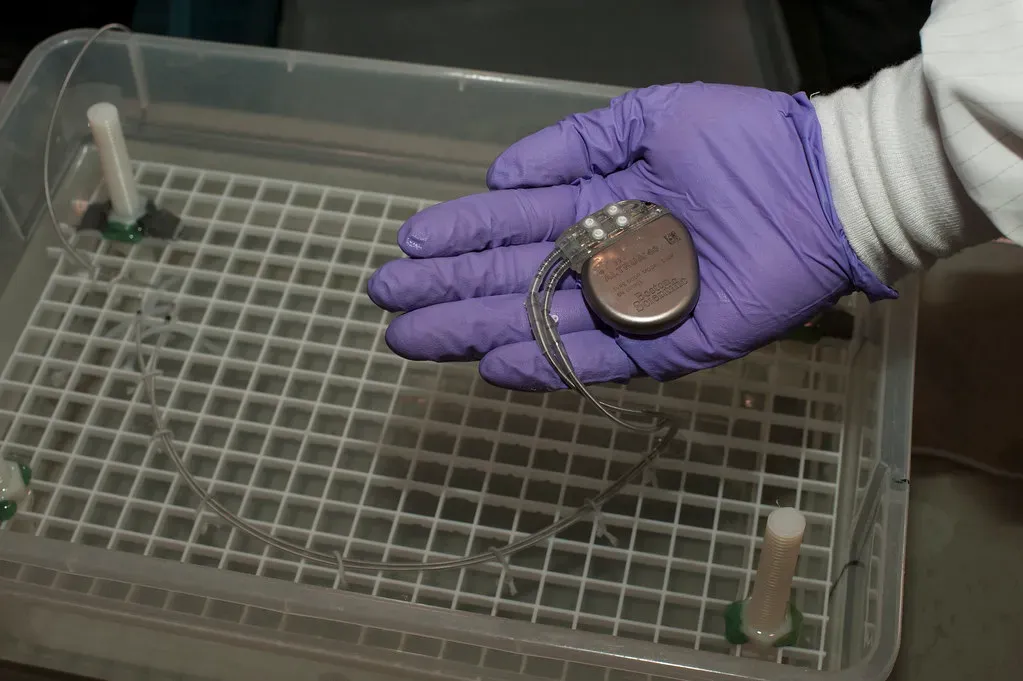
In the 1950s, William Greatbatch was working on an oscillator to record heart sounds. When he incorrectly assembled the contraption by installing a resistor with the wrong resistance into the unit, it began to give off a steady electric pulse. Greatbatch realized that the small device could regulate the human heart. After two years of refinement, the first pacemaker was implanted in humans in 1960.
Wilson Greatbatch was building a device to record heart sounds in 1956 when he installed the wrong resistor value into his circuit. The device began emitting electrical pulses instead of simply recording, which reminded Greatbatch of the rhythm of a heartbeat. This mistake led to the development of the implantable cardiac pacemaker, a device that has extended countless lives around the world. Greatbatch was a great inventor who acknowledged that nine out of ten things won’t work, and the tenth one pays for the other nine. As of his death in 2011, Greatbatch had been awarded 325 patents. There is no cleaner example of failure transforming into one of the most important medical devices ever created.
What These Mistakes Tell Us About Science
Accidental scientific discoveries, often referred to as serendipitous findings, have significantly contributed to the advancement of human knowledge throughout history. The term “serendipity,” coined by Sir Horace Walpole in 1754, describes the unexpected yet beneficial outcomes resulting from chance observations or experiments. Such discoveries can occur when scientists alter experimental conditions, miscalculate, or stumble upon new phenomena while searching for something entirely different.
The thing about an accidental discovery is the scientist still has to recognize that they have made one, and see how their mistake might benefit humanity. This leads us to wonder how many accidental discoveries have gone undiscovered. It also points to the importance of keeping an open mind: successes and breakthroughs are happening all of the time, it’s up to us to spot them. Every single story in this list shares one defining thread – a prepared, curious mind that refused to dismiss the unexpected.
The real lesson here isn’t that being messy or careless is a scientific virtue. It’s something more quietly profound: the greatest discoveries don’t always announce themselves with fanfare. Sometimes they show up as a ruined petri dish, a sticky pocket, or a drawer left closed on a cloudy afternoon. Would you have recognized the breakthrough, or thrown it in the bin? What do you think – are the best scientific discoveries still hiding in plain sight, waiting for someone curious enough to look twice?