
Something fundamental shifted in the American retirement landscape between 2024 and 2026. It wasn’t a single event but a cascade of policy moves, institutional decisions, and market developments that collectively pushed digital assets from the fringe of financial planning into genuine conversations at the advisor’s desk. Retirement savers who spent years watching crypto from the sidelines are now finding that the window between “curious” and “prepared” is narrowing faster than expected. The questions have changed too. It’s no longer just “should I own crypto?” but rather “how do I own it responsibly inside a retirement structure?” That’s a more mature and, frankly, more useful question to be asking.
The Regulatory Pivot That Changed Everything

For years, the Department of Labor actively discouraged plan sponsors from offering crypto inside 401(k) menus. That changed in a decisive way. On May 28, 2025, the DOL formally abandoned the “extreme care” standard, and a decisive shift in federal policy began transforming 2026 into the year of integration, moving crypto from the periphery into the institutional core of the American retirement system.
President Trump signed an executive order on August 7, 2025, that explicitly encouraged expanding access to alternative assets, including cryptocurrencies, within retirement portfolios, and that order set the regulatory machinery in motion. The most concrete step came on March 30, 2026, when the US Department of Labor introduced a proposed rule creating a “safe harbor” for plan fiduciaries.
In plain terms, fund managers who include crypto assets, private equity, or private credit in 401(k) offerings would not automatically face legal liability, as long as they follow specific risk-assessment guidelines. The proposal kicked off a 60-day comment period, inviting feedback from industry participants, consumer advocates, and everyone in between.
Who Is Actually Putting Crypto in Their Retirement Accounts?
According to a July 2025 survey by NerdWallet and The Harris Poll, approximately one in ten Americans with a retirement account say they hold crypto in their account. Younger retirement savers are especially likely to hold crypto, with roughly one in five millennials and about one in seven Gen Zers saying they have crypto as a retirement holding.
Pew Research found that four in ten U.S. adults are not confident they will have enough income and assets to last through retirement. BlackRock’s 2025 retirement research found that nearly two-thirds of savers worry they will run out of money in retirement, while median savings rates have fallen from twelve percent in 2022 to ten percent in 2025.
In that climate, some investors are not opening a Crypto IRA because they expect magic. They are doing it because they want every dollar working harder, and they would rather express that view inside a retirement structure than in a purely speculative trading account.
How a Crypto IRA Actually Works

A crypto IRA is an individual retirement account in which individuals can hold digital assets such as Bitcoin, Ethereum, or other cryptocurrencies. It is sometimes referred to as a Bitcoin IRA, since Bitcoin remains the largest cryptocurrency by total market value. As cryptocurrency has gained more recognition in recent years, there has been growing interest in holding crypto within standard IRA structures.
The IRS treats crypto as property under IRS Notice 2014-21, so it is allowed inside an IRA if an investor uses a qualified self-directed IRA custodian and follows the relevant IRS rules. You cannot buy direct crypto inside a Fidelity, Vanguard, or Schwab IRA, because those are non-self-directed. To hold actual coins, you need either a direct SDIRA custodian such as Equity Trust or Directed IRA, or a branded platform like iTrustCapital, Bitcoin IRA, or BitIRA.
Crypto IRAs are subject to the same contribution limits as other IRAs. For 2025, the IRA contribution limits are $7,000 for those under age 50 and $8,000 for those age 50 or older. For 2026, the limits are $7,500 for those under age 50 and $8,600 for those age 50 or older.
The Tax Angle: Why Structure Matters

A Bitcoin IRA offers the same tax advantages as a traditional or Roth IRA. Your investment can grow tax-free or tax-deferred for decades, and it can even be tax-free when you withdraw it in retirement if you use a Roth IRA.
For investors who believe Bitcoin or Ethereum will appreciate over decades, the Roth version is usually the more strategic play. You pay tax on the seed, not the harvest. If Bitcoin grows significantly over 20 years inside a Roth IRA, none of that growth is taxed.
Practically, Form 1099-DA reporting, introduced for 2025 transactions, means your custodian now reports crypto activity to the IRS in much greater detail, so keeping clean records and working with a compliant custodian has become more important than ever.
Bitcoin’s Performance Record and What It Means for a Long Horizon
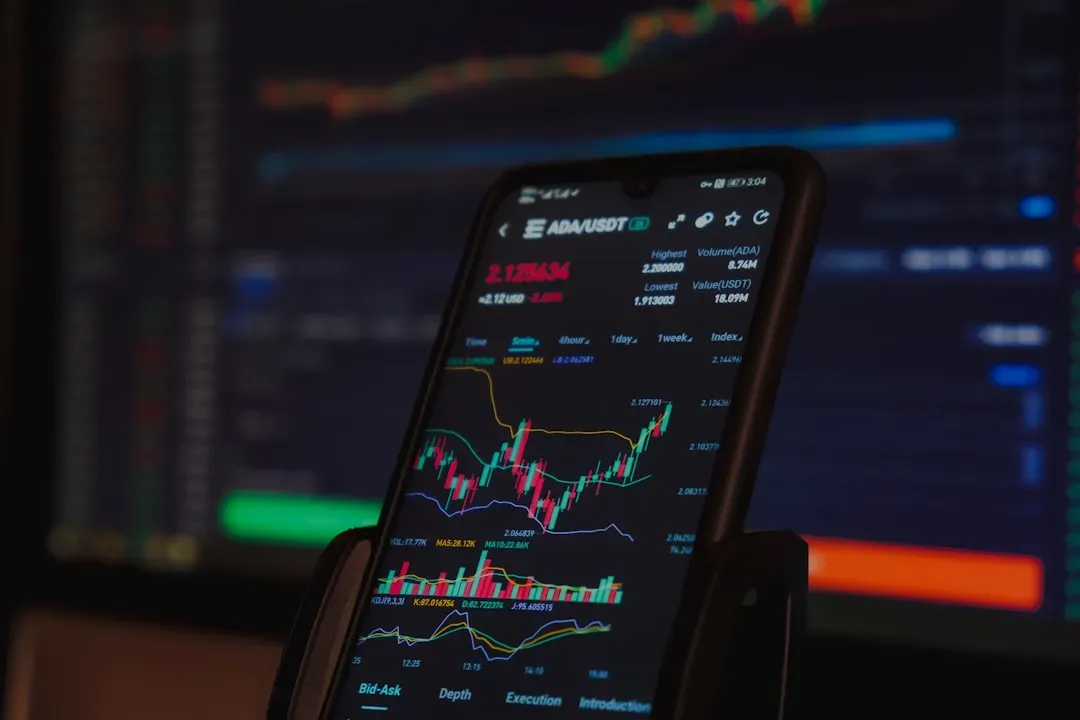
Bitcoin has been the top-performing asset class in eleven of the past fifteen years. Experts generally suggest keeping Bitcoin between one percent and five percent of a total portfolio, leaning toward the lower end if you’re within a decade of retiring. A longer runway gives you more time to recover from the forty to eighty percent drawdowns this asset has experienced in every one of its halving cycles.
Bitcoin’s price surged over 120 percent in 2024, following an even more impressive 160 percent gain in 2023. In comparison, the S&P 500 grew roughly 26 percent and 25 percent respectively over the same periods.
A 2026 report from Charles Schwab found that Bitcoin’s historical volatility fell to 42 percent in 2025, approximately half of its 2021 level, and is now lower than Tesla and Nvidia, signaling maturation and stronger crypto adoption. That is not a guarantee of smooth sailing, but it reflects a real and measurable trend toward greater market stability over time.
Understanding the Volatility Risk Before You Commit
Since 2014, Bitcoin has experienced four drawdowns in excess of 50 percent. While one of these was followed by a quick, six-month recovery, the three largest drawdowns averaged an approximately 80 percent decline. Patient investors were ultimately rewarded in each case, but in three of the four major corrections, Bitcoin’s price took nearly three years to recover.
Whether crypto is an appropriate investment for your 401(k) depends in large part on how far away you are from retirement. Typically, as you near retirement, you shift your portfolio to safer asset classes, and if you’re heavily invested in crypto and its value crashes in your early retirement years, you could be forced to liquidate other investments to make ends meet.
Partner offer
A 30-year-old with decades until retirement can absorb a multi-year lockup period or a severe drawdown. A 60-year-old five years from drawing down their account cannot. This is arguably the most important single sentence in the entire debate about crypto in retirement plans.
The Rise of Bitcoin ETFs and What They Offer Retirement Savers

The SEC approved the listing and trading of spot Bitcoin exchange-traded products in January 2024, a milestone that helped move crypto closer to the traditional investment world. That approval opened a practical door for millions of ordinary retirement savers who did not want the complexity of a self-directed IRA but still wanted exposure to digital assets.
As of January 30, 2026, spot Bitcoin ETPs collectively held nearly 1.3 million Bitcoin, accounting for roughly six percent of the circulating supply. These vehicles have been a success by most measures, with assets under management for the leading product surpassing $75 billion in under two years.
While you can invest in cryptocurrencies directly and hold them in a special IRA, it could make a lot of financial sense to simply invest in cryptocurrency through exchange-traded funds. These funds own the cryptocurrency and charge a relatively modest fee to manage the fund. They safeguard their coins and are easy to purchase through a typical online brokerage. By investing in cryptocurrency ETFs, you can enjoy the price appreciation of cryptocurrency without paying the sometimes-hefty costs of a self-directed IRA.
The GENIUS Act and the New Stablecoin Framework

On July 18, 2025, President Trump signed into law the Guiding and Establishing National Innovation for US Stablecoins Act, the GENIUS Act, legislation that establishes a regulatory framework for payment stablecoins. It is the first federal legislation on digital assets to be enacted since Trump’s executive order aiming to make the US the “crypto capital of the world.”
Payment stablecoins, privately issued digital assets designed to maintain a one-to-one backing with reserve assets like the U.S. dollar, now have clear regulatory parameters, consumer protections, and oversight mechanisms. The GENIUS Act requires 100 percent reserves and implements disclosure requirements similar to those in traditional banking.
With stablecoins now regulated and required to be collateralized by cash-like instruments, banks and financial institutions can feel more confident about using stablecoins for accelerating trade settlement for both traditional and tokenized securities. The GENIUS Act’s passing will also impact fintech and traditional financial services more broadly. For retirement savers, this matters because regulated stablecoins open up new possibilities for low-volatility digital asset holdings inside tax-advantaged accounts.
Tokenized Assets: The Next Wave in Retirement Portfolios

The next wave of crypto retirement trends will include tokenized versions of traditional assets and new blockchain-based financial products. These include tokenized real-world assets such as real estate, treasury bonds, or commodities represented on blockchain networks, as well as on-chain fixed income products that work like digital bonds and offer stable returns.
A balanced portfolio might include a small allocation to Bitcoin, a slightly larger allocation to tokenized bonds, and the rest in traditional equities and funds. This type of blended approach reflects the future of Crypto IRAs: integrated, transparent, and data-driven.
The addition of digital assets to retirement accounts represents one of the biggest shifts in personal finance since the creation of the IRA itself. That’s not hype. It’s a structural change that advisors, employers, and individual savers are all slowly catching up to, at very different speeds.
How Much to Allocate and What to Watch Out For
Per research that corroborates earlier Fidelity findings, the biggest improvement in risk-adjusted returns comes from allocating the first one percent of a portfolio’s total value to Bitcoin. Assuming a diversified sixty-forty mix of stocks and bonds beforehand, adding that small Bitcoin allocation boosted annual returns on the order of two percent, but only increased the portfolio’s maximum drawdown by around half a percent.
One important thing to recognize is that Bitcoin’s risk does not scale linearly with your allocation; it accelerates. According to Fidelity research, replacing one percent of a 60/40 portfolio with Bitcoin contributed about 2.7 percent of total portfolio volatility, but a five percent allocation contributed 17.8 percent, potentially enough additional volatility to make an experienced investor uncomfortable.
Volatility in crypto can produce sharp price swings, so position sizing and discipline are crucial. Unlike bank deposits, crypto is not federally insured, which makes the quality of your custodian a central factor in managing risk. Knowing those two realities going in is far better than learning them mid-drawdown.
Conclusion: Catching Up Without Getting Ahead of Yourself

In 2026, crypto has secured its place in mainstream retirement planning. Bitcoin is held in sovereign wealth funds and corporate treasuries, spot ETFs are available at every major brokerage, and millions of Americans now have some form of digital asset exposure in their retirement accounts.
Crypto works best as part of a complete retirement strategy, not as a standalone bet. Taking small, consistent steps today can help you benefit from the future of crypto IRAs as the market matures and opportunities expand.
The investors who will look back on 2026 as a turning point aren’t those who went all in. They’re the ones who asked the right questions early, sized their positions honestly, used the right legal structures, and understood that building retirement wealth with digital assets is still, fundamentally, about the long game. The catch-up isn’t about speed. It’s about getting the framework right while there’s still time to let it compound.
Partner offer
Planning a trip to Vegas?
Compare hotel rates and show tickets on VEGAS.com.