Death has a way of interrupting manuscripts. Sometimes a writer leaves behind a few chapters, sometimes a stack of notes, and sometimes a whole world with nobody left to guide it. Publishers, families and fellow authors have often stepped in to finish what was started.
The results vary a lot. Some completions feel like faithful tributes, while others are best read as a different writer’s answer to an open question. These seven cases show how differently the job can go.
The Mystery of Edwin Drood by Charles Dickens
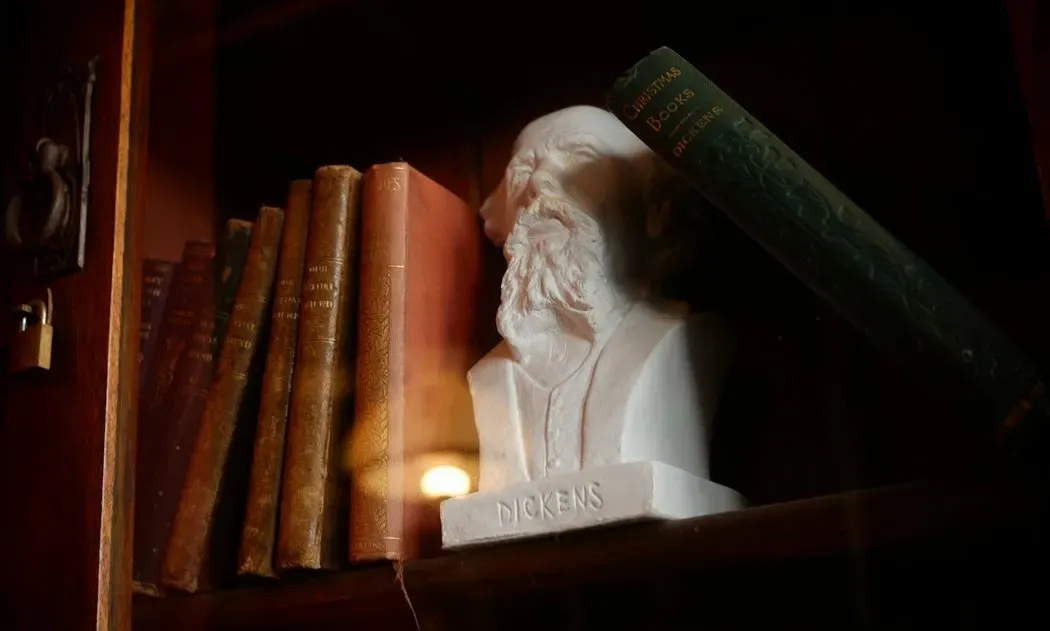
Dickens died in June 1870 with only about half of this serial novel written. Six of the twelve planned monthly installments had appeared. The story centers on a young man who vanishes, and Dickens never revealed what happened to him.
Many writers have tried to supply an ending. An early and notorious attempt, published in 1873 by Thomas Power James, claimed to rely on spiritual guidance from Dickens himself. Later efforts include Leon Garfield’s 1980 completion. Because Dickens left so few clues, every ending is partly a guess.
Sanditon by Jane Austen
Austen began this novel in early 1817 and stopped in March, when her health failed. She died that July, leaving roughly a dozen chapters about a seaside town hoping to become a fashionable resort. It is lively and satirical, and it stops mid story.
Relatives and later novelists have added their own endings over the years. One well known version came out in 1975 from Marie Dobbs, writing as Anne Telscombe. In 2019, ITV adapted the fragment into a television series, with Andrew Davies expanding it far beyond what Austen wrote.
St. Ives by Robert Louis Stevenson

Stevenson was still working on this adventure when he died in December 1894 in Samoa. It follows a French prisoner of war who escapes and makes his way across Britain during the Napoleonic era. The pace is brisk, and the book was clearly meant to be one of his lighter, swashbuckling efforts.
Arthur Quiller-Couch, a critic and fellow novelist, wrote the closing chapters. The finished book appeared in 1897. Quiller-Couch worked from Stevenson’s plans, which is why the ending feels consistent with the rest.
The Buccaneers by Edith Wharton
Wharton was writing this story of American heiresses seeking husbands in English society when she died in 1937. It was published unfinished in 1938. The tone is lighter than much of her earlier work, and some readers see it as a late change in direction.
In 1993, the scholar Marion Mainwaring completed the novel, using Wharton’s notes as a guide. A BBC television version followed in 1995. A new adaptation arrived on Apple TV+ in 2023, which has kept the book in front of fresh audiences.
Thrones, Dominations by Dorothy L. Sayers

Sayers started this Lord Peter Wimsey mystery in the 1930s. It follows Wimsey and Harriet Vane as newlyweds, which was a rare chance to see the couple after the romance of the earlier books. She set the draft aside and never returned to it.
Jill Paton Walsh, a novelist who admired Sayers, completed the book, and it was published in 1998. She was working from surviving material rather than writing from scratch. Walsh later wrote further Wimsey novels, including A Presumption of Death in 2002.
Micro by Michael Crichton

Crichton died in November 2008 with a technothriller still in progress. The premise sends a group of graduate students to Hawaii, where they are shrunk to tiny size and left to survive in the rainforest. It carries the familiar Crichton mix of science and suspense.
Richard Preston, known for his science writing and nonfiction thrillers, finished the book from the files Crichton left behind. It was published in 2011. The choice of Preston made sense, since his own work leans on the same kind of research heavy storytelling.
The Wheel of Time by Robert Jordan

Robert Jordan died in September 2007 while working on what he hoped would be the final volume of his huge fantasy series. He had shared the planned ending with family and colleagues. His wife and editor, Harriet McDougal, chose Brandon Sanderson to complete the story.
Sanderson worked from Jordan’s notes and some written scenes. What was meant to be one last book grew into three, The Gathering Storm in 2009, Towers of Midnight in 2010 and A Memory of Light in 2013. Together they brought the long running series to its conclusion.