Science is supposed to be orderly. A hypothesis, a test, a result. Repeat until you have an answer. Reality, though, is messier and often more interesting than any textbook suggests. Some of the most important discoveries in human history arrived not because a scientist was right, but because they were wrong in exactly the right way, at exactly the right moment.
Such discoveries can occur when scientists alter experimental conditions, miscalculate, or stumble upon new phenomena while searching for something entirely different. What separates these stories from simple mistakes is what happened next: a prepared mind, willing to pause and ask why the experiment failed the way it did. These are eight of those stories.
1. Penicillin: A Ruined Culture Plate That Changed Medicine

Fleming’s legendary discovery of penicillin occurred in 1928, while he was investigating staphylococcus. Before he left for a two-week vacation, a petri dish containing a staphylococcus culture was left on a lab bench and never placed in the incubator as intended. Somehow, a Penicillium mold spore had been accidentally introduced into the medium. Fleming’s actual hypothesis had nothing to do with mold. He was chasing bacterial behavior, and a contaminated dish was supposed to be a failure.
Fleming thought a rogue mold was simply spoiling his bacterial cultures, a nuisance to be trashed and forgotten. His sharp eye noticed something odd: the bacteria around the mold had vanished. That unplanned observation led him to Penicillium notatum, the source of penicillin – the very first true antibiotic. Penicillin is estimated to be responsible for saving over 500 million lives since its discovery, becoming the first successful and scalable way to effectively treat a bacterial infection.
2. Radioactivity: Bad Weather, Good Science

After learning about Roentgen’s discovery of X-rays, Becquerel began looking for a connection between the phosphorescence he had already been investigating and the newly discovered rays. He thought that the phosphorescent uranium salts he had been studying might absorb sunlight and reemit it as X-rays. To test this idea, which turned out to be wrong, he wrapped photographic plates in black paper so that sunlight could not reach them.
The weather in Paris did not cooperate; it became overcast for the next several days. Thinking he couldn’t do any research without bright sunlight, Becquerel put his uranium crystals and photographic plates away in a drawer. On March 1, he opened the drawer and developed the plates, expecting to see only a very weak image. Instead, the image was amazingly clear. The next day, March 2, Becquerel reported at the Academy of Sciences that the uranium salts emitted radiation without any stimulation from sunlight. The radioactivity of uranium was discovered in 1896 by Henri Becquerel who, starting from a wrong idea, progressively realized what he was observing.
3. Viagra: The Drug That Failed in the Right Direction
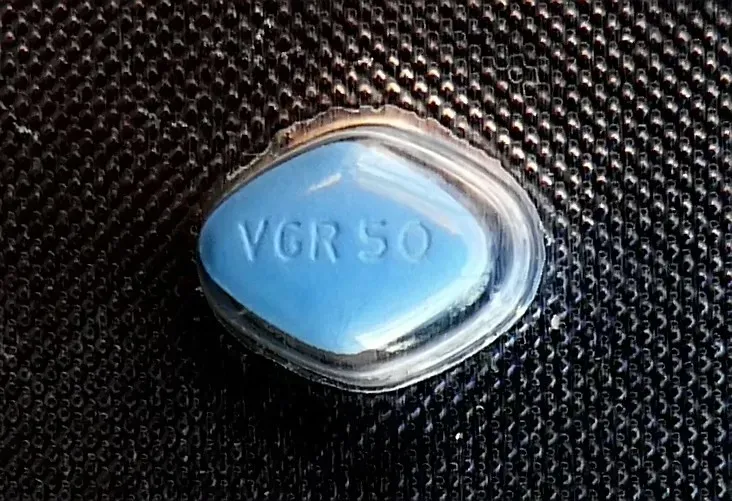
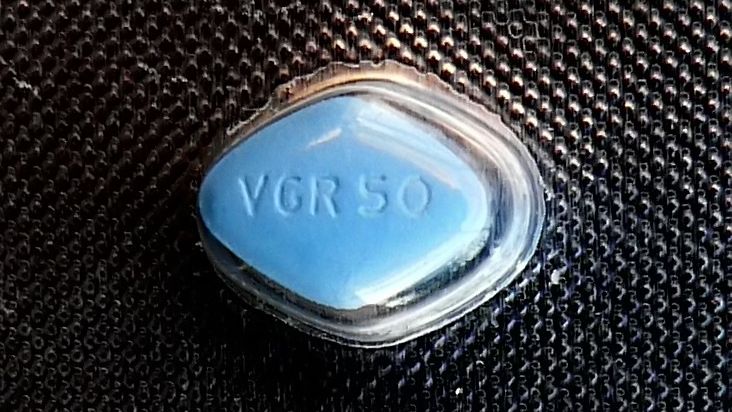
In the late 1980s and early 1990s, scientists at Pfizer were developing a drug codenamed UK-92480, aiming to inhibit the enzyme phosphodiesterase type 5 (PDE5). Their hypothesis was that by blocking PDE5, they could increase levels of cyclic guanosine monophosphate, leading to the dilation of coronary arteries and improved blood flow to the heart, thereby relieving angina. The hypothesis was clear, ambitious, and medically sound. It just turned out to be pointed at the wrong tissue.
Phase I clinical trials under the direction of Ian Osterloh suggested the drug had little effect on angina, but it could induce marked penile erections. Pfizer therefore decided to market it for erectile dysfunction, rather than for angina; this decision became an often-cited example of drug repositioning. The drug was patented in 1996 and approved for use in erectile dysfunction by the FDA on 27 March 1998, becoming the first oral treatment approved to treat erectile dysfunction in the United States. Ironically, PDE5 is less abundant in heart tissue compared to penile tissue, which explains the drug’s poor performance for angina but remarkable success for ED.
4. Vulcanized Rubber: A Clumsy Accident on a Hot Stove

In 1839, Charles Goodyear was looking for a way to fix the current flaws of rubber, which solidified and cracked in winter, and melted in the summer heat. Goodyear discovered vulcanized rubber quite by accident when he happened to spill a mixture of rubber, sulfur, and lead on a hot stove. The mixture charred and hardened, but the rubber was still malleable enough to be usable. Goodyear had no intention of making anything that day. He was still searching for a formula, not testing one.
He had expected it to melt into a mess, but instead it turned into a durable leather-like substance that resisted heat and freezing. It also turned out to be elastic and waterproof, which was perfect for many applications. Vulcanized rubber became a standard material used in all sorts of manufactured products, including vehicle tires. He patented his vulcanization process in 1844, long before the age of automobiles. Years later, in 1898, the men who started the Goodyear Tire and Rubber Company named it after the man who made their business possible.
5. Teflon: When an Empty Gas Cylinder Held a Surprise
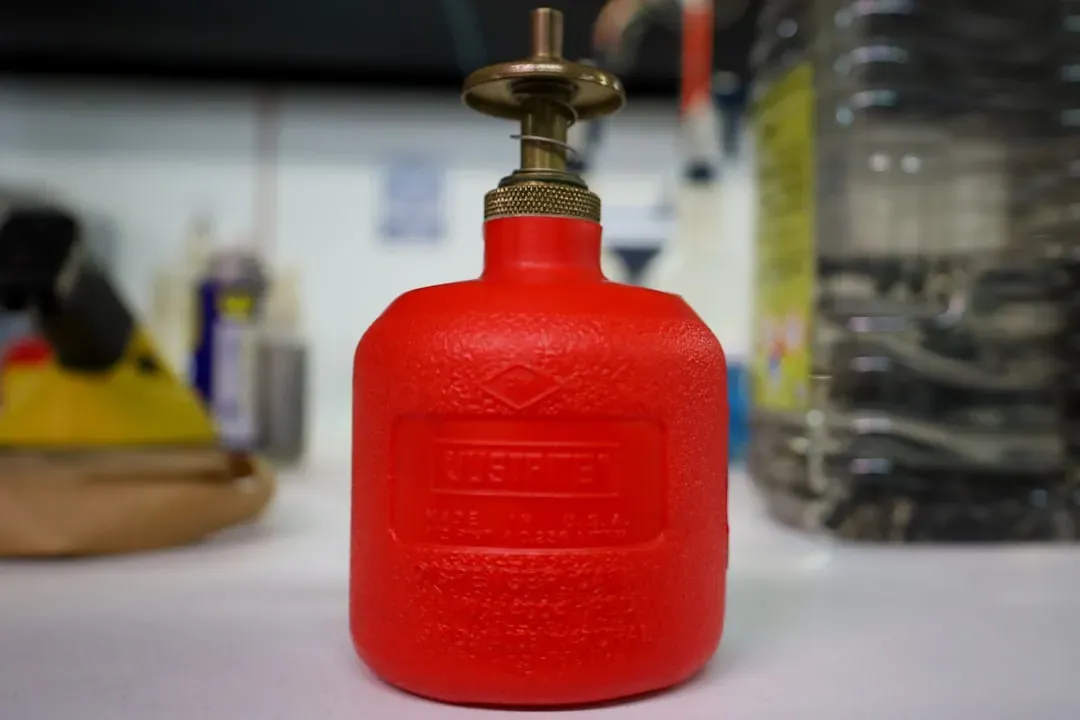
In 1938, chemist Roy Plunkett was working at DuPont, attempting to create new refrigerants. While experimenting with tetrafluoroethylene gas, he noticed that one of his pressurized cylinders no longer released gas. When he cut it open, he found a strange, slippery white powder coating the inside. This substance was polytetrafluoroethylene, later marketed as Teflon. Teflon proved to be incredibly resistant to heat and chemicals, and its nonstick properties made it perfect for cookware.
The TFE gas had polymerized into a substance with remarkable properties. It was incredibly slippery, highly resistant to heat and chemicals, and virtually inert. This substance was trademarked as Teflon. Initially used for military applications like the Manhattan Project, it eventually found its way into non-stick cookware and countless other applications from spacecraft to medical implants. Nobody had been trying to make anything non-stick. The goal was refrigeration, and the real prize was hiding inside a malfunctioning cylinder.
6. The Microwave Oven: Radar Research Meets a Chocolate Bar

Percy Spencer was an engineer working for Raytheon in the 1940s, developing radar technology for the military. One day in 1945, he was standing near an active magnetron – a vacuum tube that generates microwaves for radar – when he noticed something odd. The chocolate bar in his pocket had melted. Spencer’s hypothesis was about radar performance, not cooking. The candy was simply in the wrong pocket at a very fortunate moment.
He brought popcorn kernels into the lab and placed them near the magnetron – they popped. He tried an egg next – it exploded. He realized that microwaves could heat food quickly by agitating water molecules. Within a year, Raytheon had filed a patent for the first microwave oven. The first commercial microwaves were massive – six feet tall, weighing 750 pounds, and costing $5,000. Eventually the technology was miniaturized and became one of the most common appliances in modern kitchens.
7. Post-it Notes: A Failed Glue That Found Its Calling

The adhesive behind Post-it notes was discovered in 1968 by Spencer Silver, a researcher at 3M Laboratories, who was actually looking for a stronger adhesive than what was currently available. Instead, he found a weaker one, an adhesive that stuck to objects but could be pulled off without damaging them or leaving a residue. What he ended up with was the opposite of his goal – a low-tack adhesive that stuck lightly to surfaces and could be removed without leaving residue. The product didn’t meet its original goal, and 3M initially considered the project a failure.
Art Fry sang in a church choir and hated how his bookmark kept falling out of the hymnal. During a particularly boring sermon in 1974, he remembered Silver’s glue. He had a lightbulb moment and realized that weird adhesive could make perfect bookmarks that stuck without damaging pages. Today, 3M produces over 50 billion Post-it Notes annually, with more than 600 variations sold in over 100 countries. A glue too weak to do its original job turned out to be exactly right for a job nobody had thought of yet.
8. Saccharin: Dinner Revealed What the Lab Did Not
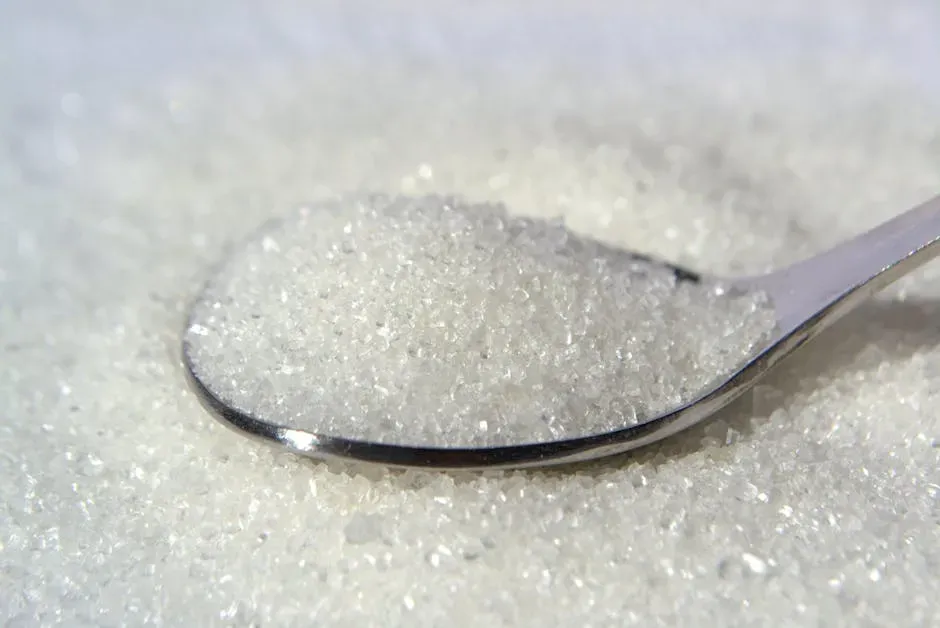
The discovery of the world’s first artificial sweetener happened because Russian chemist Constantin Fahlberg forgot to wash his hands. In 1879, after a day spent reacting coal tar with phosphorous, ammonia, and other chemicals, he realized at home that his hands tasted sweet. Fahlberg had been investigating coal tar chemistry with no intention of finding a food additive. He was looking for something else entirely, and sweetness was the last thing on his mind.
Tracing the source back to his experiments, Fahlberg realized he had accidentally synthesized saccharin, the world’s first artificial sweetener. This accidental invention paved the way for sugar substitutes used in countless foods and beverages. Saccharin went on to become one of the most widely used sugar substitutes in history, particularly during wartime sugar shortages and later in the diet food industry. It all started because a chemist sat down to eat without washing up first.
What connects all eight of these stories is not luck alone. On occasion, the result that is contrary to the hypothesis is groundbreaking, and critical thinking on the part of the scientist can recognize the importance of the unexpected results. The accident opens the door, but it takes a prepared and curious mind to walk through it. Every wrong hypothesis in this list carried within it the seed of a far more important question than the one it set out to answer.