Every finished record on a shelf has a story, but some albums fought through years of delays, lawsuits, mental breakdowns, and even a change of heart from the artist who made them. A few of the most acclaimed records in modern music came within a hair’s breadth of staying locked away forever. What follows are eight cases where the gap between “almost” and “actually” made all the difference.
Prince’s The Black Album
Prince had a finished, mastered, ready to ship record in December 1987, the raw funk follow up to Sign o’ the Times known only by its stark black sleeve. The untitled sixteenth studio album by Prince, referred to as The Black Album, was scheduled for release in December 1987 but was canceled at Prince’s request after promotional copies had been issued. He pulled it days before release after deciding the record carried a darker energy than he wanted associated with his name.
After Prince became convinced that the album was “evil”, he ordered it to be withdrawn a week before its release date. Prince recalled all copies and abandoned the entire project, leaving roughly 100 European promotional copies in circulation, and several American copies that would be widely bootlegged in the coming years. It took seven years and pressure from his own record contract before the public finally got an official copy, when the album was officially released on November 22, 1994, by Warner Bros. Records.
My Bloody Valentine’s Loveless
Kevin Shields set out to make a shoegaze record and nearly took down his record label in the process. Loveless began the lengthy process of recording in London in 1989, with Creation Records optimistic that the album would be done within weeks. Instead, it took the band two years to finish all 11 tracks. The sessions became infamous for their scale and cost.
The band hired nineteen different studios and several engineers during the album’s prolonged recording, with its final production cost rumoured to have reached £250,000. Shields has since pushed back on the mythology, insisting in interviews the real figure was closer to a third of that number. Whatever the true cost, after its release, Creation owner Alan McGee dropped the band from the label as he found Shields too difficult to work with, a factor alleged to have contributed to the label’s eventual bankruptcy. The album still made it out in November 1991 and is now regarded as one of the defining records of its era.
The Avalanches’ Wildflower
The Avalanches followed their sample-heavy debut with sixteen years of near silence, and the reasons were more complicated than simple perfectionism. Various circumstances led to a gap of more than a decade and a half between 2000’s Since I Left You and Wildflower, circumstances which included the three-year-long auto-immune illness of core member Robbie Chater, along with cabin fever-inducing studio perfectionism and virtually endless sample clearance. Clearing thousands of samples for legal use turned into its own multi-year project.
The band even hired a specialist just for the paperwork. An expert sample-clearer, Pat Shannahan, spent five years trying to make sure the music on what would become Wildflower was within copyright laws, which even involved writing to Paul McCartney and Yoko Ono to get permission to use a sample of the Beatles’ Come Together. Some material never survived the process at all, since one sample from ‘Euphoria’, a 1973 song by Michael Jackson, proved too expensive to clear and so the Avalanches track featuring it had to be taken off the album. Wildflower finally arrived in July 2016, closing a gap that had become something of a running joke in music journalism.
D’Angelo’s Black Messiah
D’Angelo’s third album spent so long in limbo that many fans assumed it would never surface. R&B and funk singer D’Angelo released his first album since 2000’s Voodoo, which went on to win a Grammy the following year, after a fourteen year wait. The delay stretched across multiple attempts at comebacks and false starts throughout the 2000s and early 2010s.
What finally pushed the record out the door was not a label deadline but current events. The label RCA had originally planned to drop the album sometime in early 2015, but following the volatile situation in Ferguson, Missouri, and the grand jury decision not to indict the officer involved in the shooting death of Michael Brown, D’Angelo decided to push up the album’s release. Black Messiah dropped with almost no warning in December 2014 and was immediately treated as a landmark return.
Partner offer
Fiona Apple’s Extraordinary Machine
Fiona Apple actually finished this album years before anyone outside her camp heard it. The album had been shelved since its completion in May 2003 due to the label not hearing any obvious singles. That silence created an unusual problem: a genuinely completed record sitting unreleased while its creator moved on creatively.
Fans eventually forced the issue. In June 2004, two songs from the project leaked on the internet, the title track and a rough mix of “Better Version of Me,” and by early 2005 a group of die hard Apple fans organized around a website called “Free Fiona,” lobbying Epic to issue the record. Apple ultimately chose to rework the material rather than release the leaked version outright, and Extraordinary Machine was released by Epic Records in the United States on October 4, 2005.
Guns N’ Roses’ Chinese Democracy
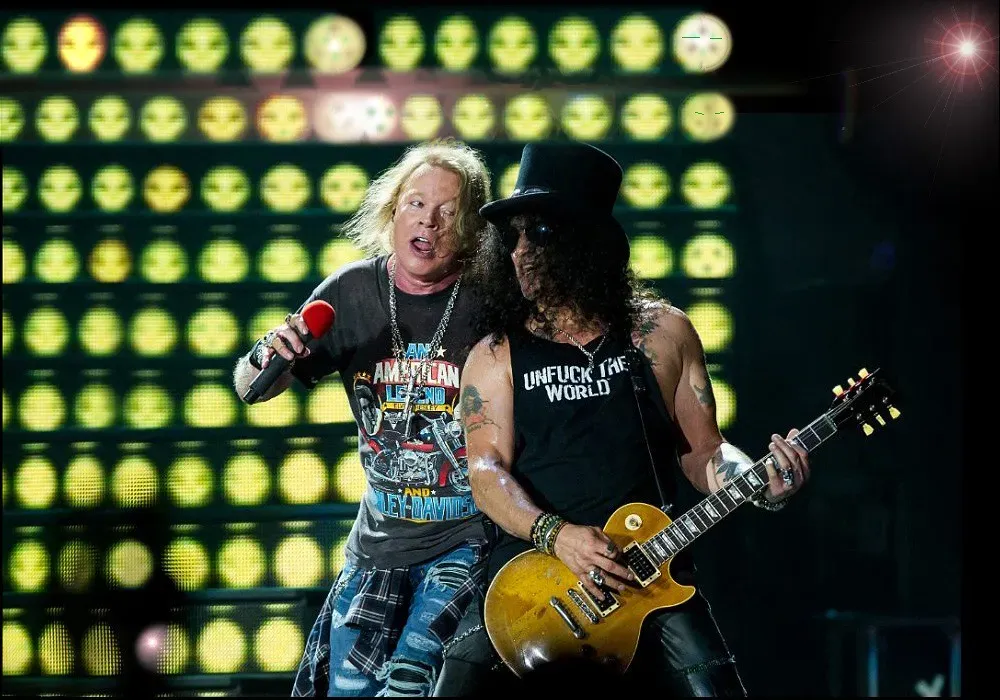
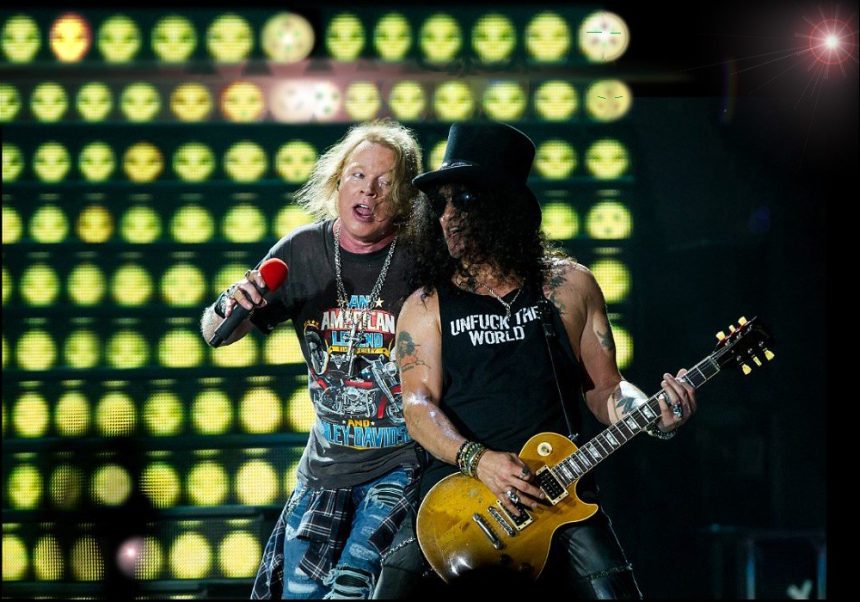
Few albums in rock history became as synonymous with delay as Chinese Democracy. Axl Rose began work on it in the mid nineties as the intended follow up to the Use Your Illusion albums, but lineup turnover, studio experimentation, and shifting creative direction pushed the project through more than a decade without a finish line in sight. By the time it eventually reached shelves in November 2008, virtually none of the musicians who started the sessions were still involved, and the album had become a punchline for unfinished business almost as often as it was discussed as music.
The eventual release proved almost anticlimactic given how long fans had waited. Reviews were largely respectful rather than rapturous, acknowledging the ambition of the record while noting that no single album could fully satisfy expectations built up over fifteen years of speculation. Its release nonetheless closed one of the longest running sagas in popular music, and it remains a reference point whenever another artist’s album disappears into extended limbo.
The Beach Boys’ Smile

Brian Wilson conceived Smile as an ambitious answer to the era’s most experimental pop records, working with lyricist Van Dyke Parks on material far stranger than anything the Beach Boys had released before. Internal tension, disagreement from bandmate Mike Love over the album’s direction, and Wilson’s deteriorating mental health during the sessions caused the project to collapse before completion in 1967. The tapes sat unfinished and largely unheard by the public for decades, spoken of mostly in bootlegs and music mythology.
Wilson eventually revisited the material on his own terms, completing and releasing a solo version titled Brian Wilson Presents Smile in 2004, nearly forty years after the original sessions began. The original Beach Boys recordings themselves later followed as The Smile Sessions box set in 2011, finally giving listeners access to the source material that had shaped so much speculation. Few albums have carried such a long gap between conception and public release.
Frank Ocean’s Blonde
Frank Ocean spent years working under a contract with Def Jam that he grew increasingly unhappy with, and by the mid 2010s his long promised follow up to Channel Orange had become one of the most anticipated and delayed releases in contemporary music. Rather than deliver the album through the label relationship he wanted to exit, Ocean released a visual album called Endless in August 2016 to satisfy his contractual obligation to Def Jam. Days later, he independently released Blonde outside of that same contract, a maneuver widely reported at the time as a deliberate way to retain creative and financial control.
The strategy worked. Blonde arrived to widespread critical acclaim and commercial success despite years of uncertainty about whether it would ever surface in the form Ocean intended. The episode became a notable example of an artist using contract structure itself as leverage to get a finished album released on his own terms rather than the label’s.
Taken together, these eight records share a common thread: none of them arrived because a release schedule simply ran its course. Each one needed a lawsuit resolved, a health crisis survived, a legal loophole found, or a real world event to force the artist’s hand. That so many of them went on to become landmark releases says something about how little the difficulty of a record’s birth has to do with its eventual worth.Partner offer
Planning a trip to Vegas?
Compare hotel rates and show tickets on VEGAS.com.