
Most of us pick up a coffee, glance at the sky, talk about karma, or call a colleague a guru without giving it a second thought. These feel like ordinary English words. They are. Yet each one carries a passenger from the ancient world, a ghost of a language that no one has spoken as a native tongue for centuries, sometimes millennia.
Language is less like a river and more like geological strata. Every layer contains evidence of something that came before it. The eight languages below are largely gone, yet they’ve left traces that shape the way billions of people communicate every day. Their echoes are hiding in plain sight.
1. Latin: The Empire That Never Really Left

Once the language of emperors, scholars, and soldiers, Latin is now called a “dead” language. Yet its phrases slip into our conversations and paperwork, sometimes without us even noticing. You’ll find it in legal documents, medical diagnoses, scientific names, and in casual speech. Phrases like “carpe diem,” “et cetera,” and “per se” have become so embedded in English that many speakers don’t even register them as foreign.
Latin has arguably had the most significant influence on English, especially in terms of vocabulary. Many English words have Latin roots, particularly in scientific, medical, legal, and religious contexts. Words like “animal,” “factor,” “major,” “terra,” and “virus” are all Latin in origin. According to the American Heritage Dictionary, a substantial portion of English words can be traced back to Latin origins. Even the grammar of formal English carries Latin fingerprints.
2. Old Norse: The Viking Imprint on Modern Speech

The earliest Viking activity in England consisted of coastal raids, but by the 870s, the Danes had traded sword for plow and were settled across most of Northern England in an area governed by treaties known as the Danelaw. England even had Danish kings from 1018 to 1042. However, the Norman Conquest in 1066 marked the end of the Viking era and virtually erased Danish influence in almost all aspects of English culture, but one: its effect on the development of the English language.
Words like “law,” “egg,” “sky,” “window,” and even the pronouns “they,” “them,” and “their” can be traced back to Old Norse. Among the most surprising Viking influences on English are the third-person plural pronouns: they, them, and their. These come directly from Old Norse, replacing the Old English equivalents. This linguistic shift may have helped avoid confusion with similar-sounding singular pronouns like “he” and “him,” especially as dialects mingled. The Norse forms gained traction in areas of Viking settlement and gradually spread throughout the country.
3. Old English (Anglo-Saxon): The Bones Beneath Modern Speech

Old English is the earliest recorded form of the English language, spoken in England and parts of Scotland between roughly 450 and 1150 by the Anglo-Saxons. It developed after the collapse of Roman Britain in the early 5th century and was heavily influenced by Germanic languages. To modern ears, Old English looks almost incomprehensible on the page. Yet its most fundamental words never went anywhere.
Simple, powerful words like “wife,” “child,” “night,” and “strong” all come straight from Old English. It’s in our phrases, too: “woe is me” and “at death’s door” have dramatic roots that reach back over a thousand years. The British Library points out that Old English literature, like the epic poem “Beowulf,” shaped the storytelling traditions and idioms that still color our language. It’s not history at a remove. It’s the skeleton English still walks on.
4. Ancient Greek: The Scholar’s Language Hidden in Plain Sight
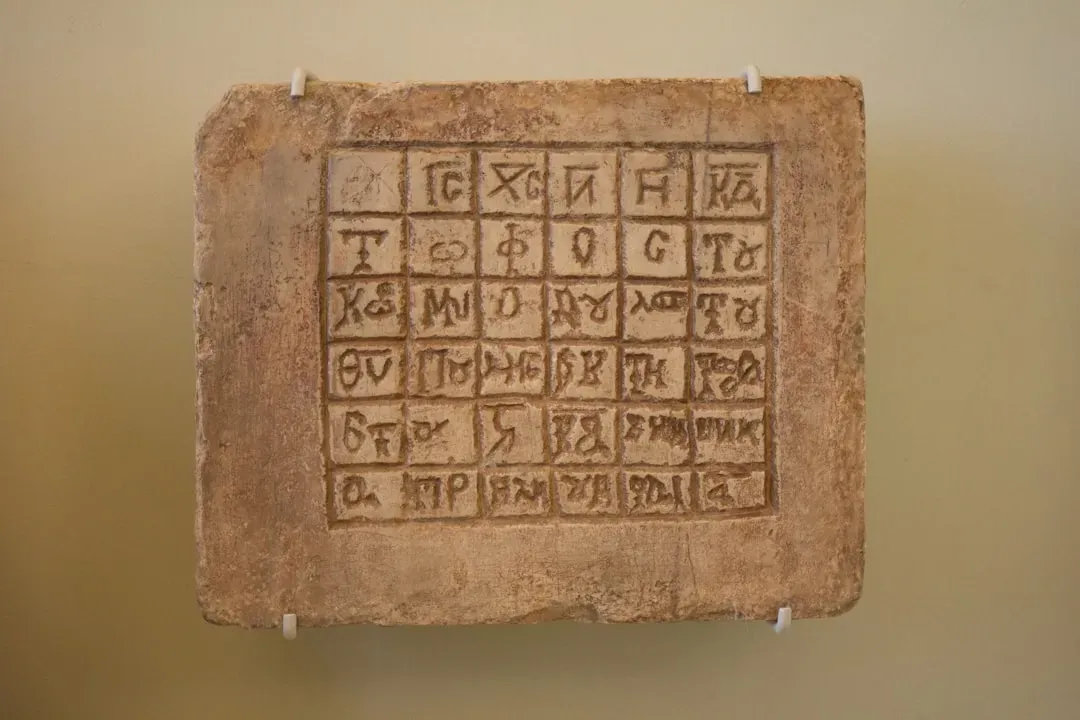
Ancient Greek, often considered the language of scholars, has profoundly influenced English. Like Latin, its impact is most noticeable in scientific, philosophical, and artistic vocabulary. Words such as “democracy,” “philosophy,” “rhythm,” “chronic,” and “dinosaur” all have Ancient Greek roots. The language reached English not just through direct borrowing but through centuries of academic transmission, as scholars writing in Latin drew heavily on Greek.
The Greek influence is particularly evident in the many English words derived from Greek mythology, such as “herculean,” “odyssey,” and “muse.” Some of the most famous philosophers in the world, like Socrates, Aristotle, Plato, and Homer, lived in Ancient Greece. Classical researchers still use this language. Many scientific terminologies, just like Latin, are written in Ancient Greek. Every time someone talks about an “echo” or calls a policy “draconian,” they’re borrowing from a civilization that flourished more than two millennia ago.
5. Sanskrit: The Ancient Language Living in Modern Wellness Culture

Sanskrit is one of the oldest documented languages in human history, with roots tracing back to approximately 1700 to 1200 BCE in the Indian subcontinent. It belongs to the Indo-European language family, sharing linguistic ancestry with Latin, Greek, and Persian, and served as the sacred language of Hinduism, Buddhism, and Jainism. Although Sanskrit is no longer spoken as an everyday language, it remains powerfully alive through yoga.
Words like karma, guru, mantra, and chakra have crossed fully into general English usage, well beyond yoga studios. The Sanskrit word “guru” directly translates as “substantial or grave.” In Buddhism and Hinduism, a guru refers to a spiritual teacher. In modern English usage, we consider a guru as an expert or influential teacher, such as “a management guru.” The Sanskrit word “pandita” translates into “learned,” and the word “pundit,” once referring to an Indian legal scholar, currently means a person who gives opinions in an authoritative manner, usually through mass media.
6. Aramaic: The Sacred Language Woven Into Religious Everyday Speech
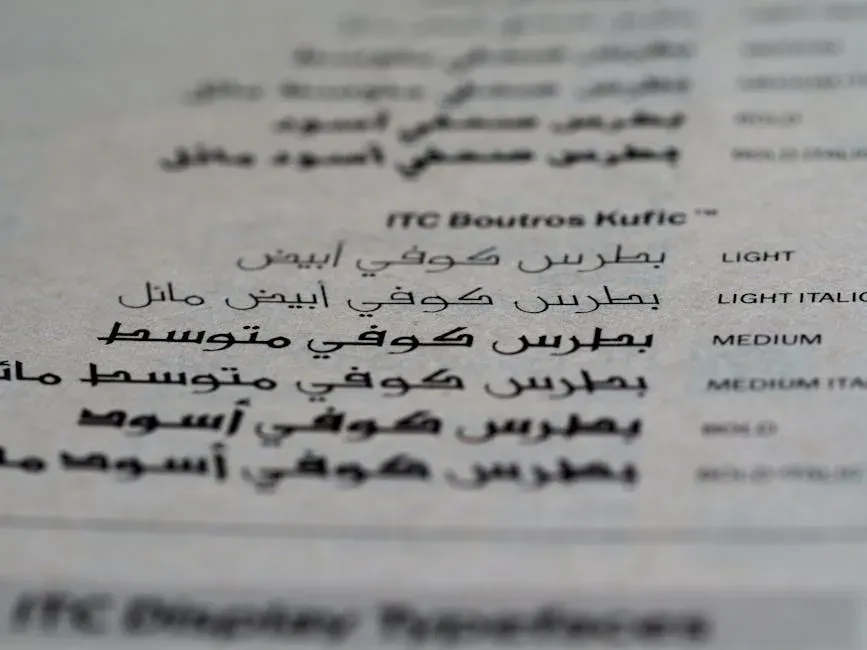
There are Aramaic speakers today, but none from the country it originated from, Aram, which fell to the Assyrians in ancient times. Ironically, despite its destruction, Assyrians even used Aramaic as a second language because of its status as the lingua franca in the Middle East. The reason for its dying state was the diaspora of its speakers. For centuries, Aramaic was one of the most widely spoken languages in the ancient Near East, used in diplomacy, trade, and daily life across a vast region.
The word “Abba,” meaning “father,” is an Aramaic gift used in prayers and religious teachings around the world. The Biblical Archaeology Society notes that Aramaic is key for understanding ancient religious manuscripts. It’s a language that’s almost disappeared, but its most sacred words continue to shape faith and devotion. Words and phrases embedded in Christian scripture and liturgy, from “amen” to the greeting forms in early texts, carry Aramaic origins that billions of people encounter weekly.
7. Gaulish: The Extinct Celtic Language That Shapes Words You Use Today

Gaulish is an extinct Celtic language spoken in parts of Continental Europe before and during the period of the Roman Empire. In the narrow sense, Gaulish was the language of the Celts of Gaul, covering what is now France, Luxembourg, Belgium, most of Switzerland, Northern Italy, and parts of the Netherlands and Germany. Children born during the Roman occupation spoke Gaulish at home and Latin out in the community, but by the time they grew up, Latin was the dominant language. By the end of the 6th century, Gaulish had been entirely replaced by Latin everywhere in Gaul, except in very small towns.
French now has roughly 150 to 180 known words of Gaulish origin, most of which concern pastoral or daily activity. If dialectal and derived words are included, the total is about 400 words. The Gaulish-derived “ambactus,” meaning servant or vassal, evolved into the French “ambassadeur” and entered English as “ambassador.” Although Gaulish was doomed to die out and be replaced by Latin, it did endure as a vernacular language for a few centuries. During that time, its speakers made a mark on the vocabulary of the newcomer, and left quite a lexical legacy in English.
8. Middle English: The Overlooked Bridge Language Full of Living Phrases
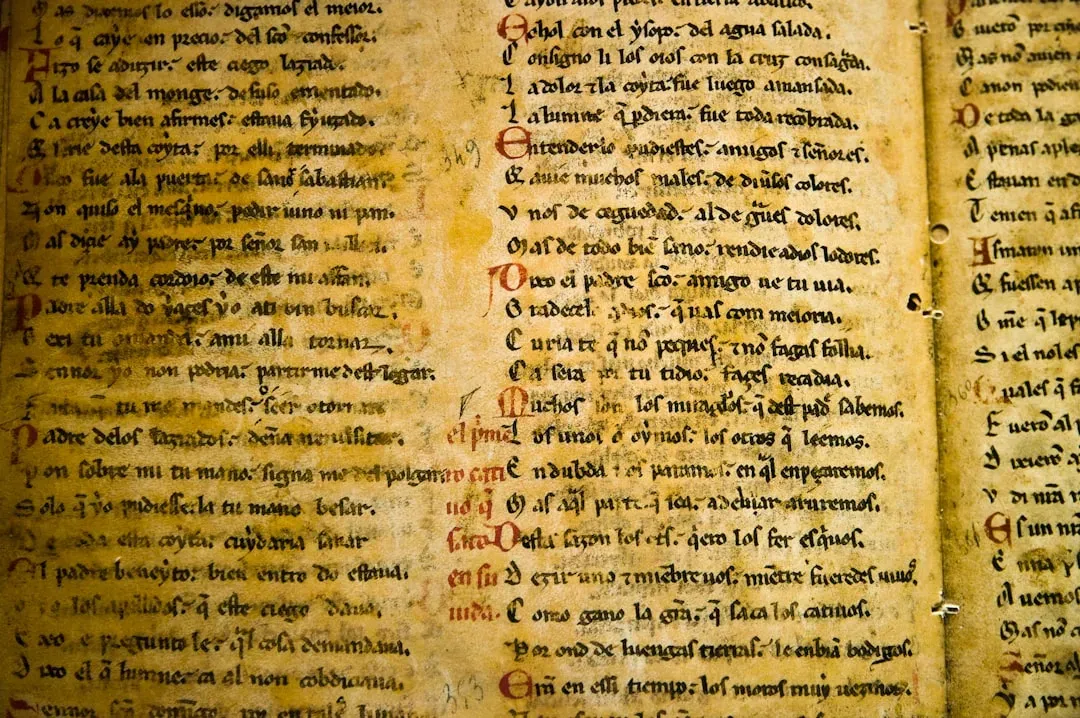
Middle English sits in the middle of English history, a melting pot of Old English, French, and Latin influences after the Norman Conquest. Even though it sounds strange to our ears today, its phrases live on. The saying “every cloud has a silver lining” is an optimistic phrase that traces back to this era. The works of Geoffrey Chaucer, especially “The Canterbury Tales,” are bursting with idioms and storytelling techniques that shaped modern English.
Historians agree that the transition into what is now known as Middle English began after the Norman Conquest of 1066, when the upper classes replaced Old English with Anglo-Norman. Though this shift only lasted a few centuries, it had a lasting impact on the development of the English language as we know it today. Expressions around justice, courtesy, romance, and governance that feel entirely natural in modern English often trace directly back to this transitional period, when French formality collided with Germanic directness and produced something genuinely new.
What’s striking about all eight of these languages is not just their age, but their persistence. They didn’t survive because scholars preserved them in libraries. They survived because ordinary people kept using the words, passing them forward in conversation, prayer, trade, and song, until the words became so natural that no one thought to question where they came from. Language, it turns out, has a very long memory.