There’s something unsettling about spending three hundred pages inside the head of someone who does terrible things and feels perfectly fine about it. Villain narrators force readers into an uncomfortable intimacy, asking us to understand, even briefly sympathize with, a perspective we’d normally recoil from. The best of these novels don’t excuse their narrators’ actions so much as expose the twisted logic that makes those actions feel justified from the inside. What follows is a look at eight novels where the villain isn’t just a character lurking in the shadows of the plot. They’re the ones telling the story, shaping every word, and daring readers to keep listening.
1. Lolita by Vladimir Nabokov
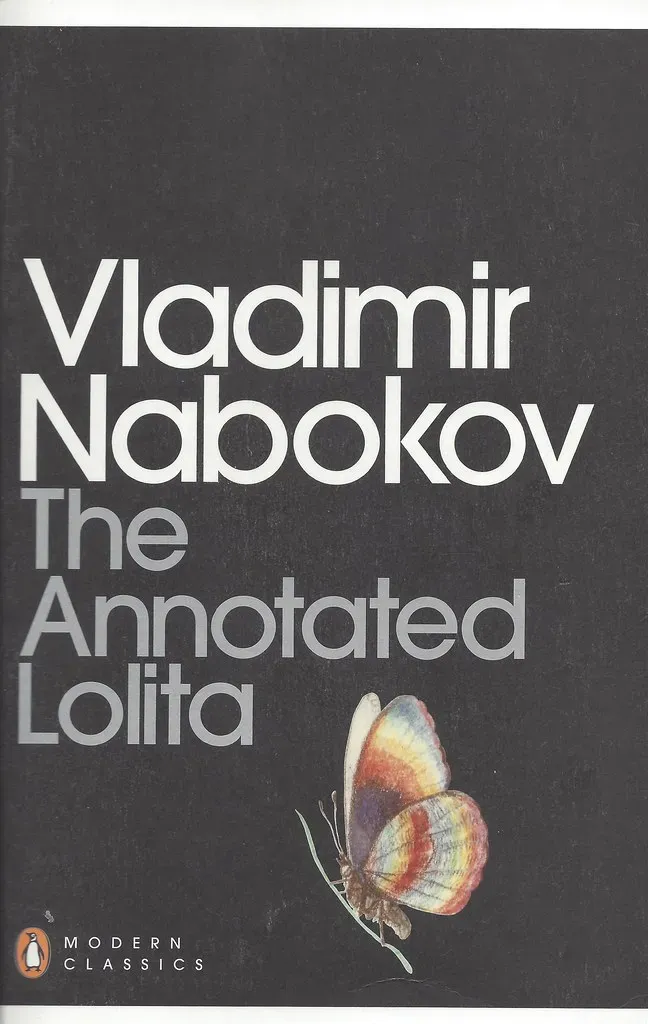
Humbert Humbert remains one of literature’s most infamous narrators, a man who uses elaborate, seductive prose to disguise the horror of what he’s actually confessing. Nabokov wrote the novel in 1955, and it has never stopped generating debate about how beautiful language can obscure monstrous behavior. Humbert doesn’t just tell his story, he performs it, constantly trying to win the reader’s sympathy through wit and literary allusion.
The genius and the danger of the book lie in the same place: Humbert is an unreliable narrator whose charm makes his self-justifications almost persuasive. Readers have to actively resist the pull of his voice to see Dolores Haze as the victim she is, rather than the “nymphet” he insists she was. That tension between style and substance is exactly why the novel is still taught, studied, and argued over more than seventy years after publication.
2. American Psycho by Bret Easton Ellis
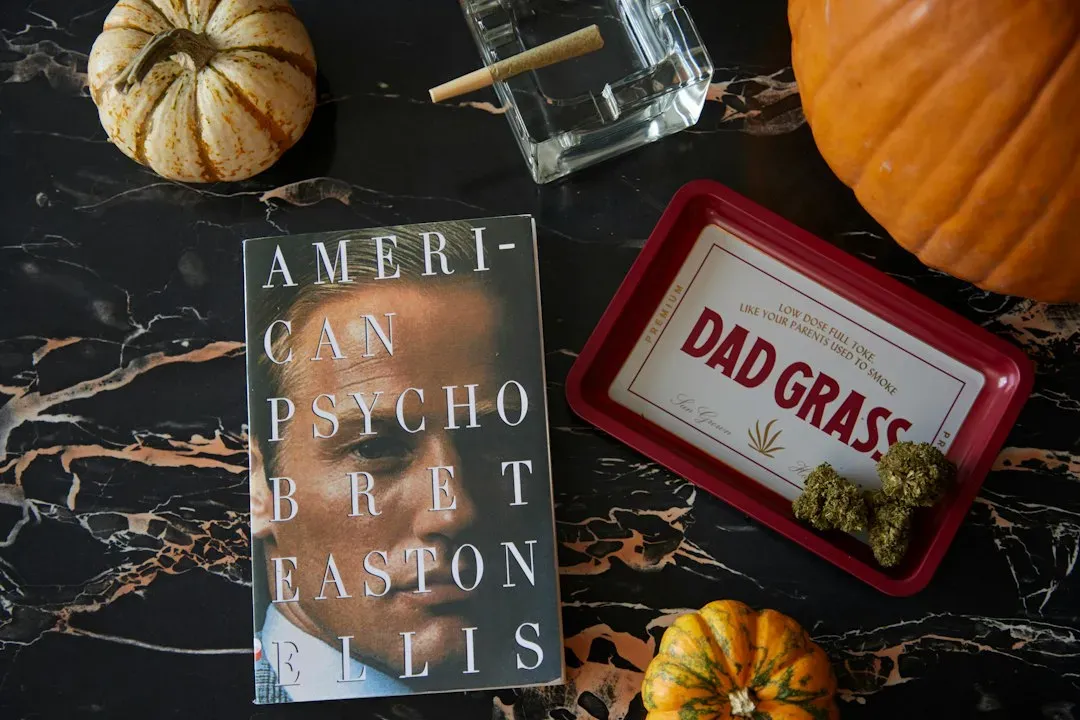
Patrick Bateman narrates his own descent into violence with the same flat, brand-obsessed detachment he uses to describe business cards and restaurant reservations. Published in 1991, the novel drew immediate controversy for its graphic content, with some critics calling for it to be banned outright. Ellis structured the book so that Bateman’s murders are described with the same clinical precision as his skincare routine, blurring the line between consumerism and psychopathy.
What makes Bateman such an effective villain narrator is the ambiguity Ellis builds into the text. Readers are never entirely sure how much of what Bateman describes actually happens versus what exists only in his fractured mind. That uncertainty turns the novel into a kind of psychological trap, one where the horror comes as much from not knowing as from what is explicitly shown.
3. The Talented Mr. Ripley by Patricia Highsmith
Tom Ripley is a con man and murderer who narrates his own crimes with a chilling absence of guilt, treating each deception as a puzzle to be solved rather than a moral failing. Highsmith published the novel in 1955, launching a series that would eventually span five books, all following Ripley’s escalating criminal career. Unlike many villain narrators, Ripley never performs remorse for the reader’s benefit, he simply moves forward, adapting to whatever identity keeps him safe and comfortable.
The novel’s lasting influence comes from how ordinary Ripley’s internal logic feels. He wants a better life, nicer clothes, more money, and he simply removes anyone who stands between him and those things. Highsmith strips away any dramatic villain monologue and replaces it with something quieter and arguably more disturbing: pure, practical self-interest.
4. Perfume: The Story of a Murderer by Patrick Süskind

Jean-Baptiste Grenouille is born with an extraordinary sense of smell and no natural scent of his own, a combination that drives him toward obsession and eventually murder in his quest to create the perfect perfume. Süskind’s 1985 novel, originally published in German, became an international bestseller and has sold over twenty million copies worldwide. The story follows Grenouille from a filthy fish market in eighteenth century Paris to the height of his olfactory genius, all narrated through his singular, almost inhuman perspective.
What sets this novel apart is how thoroughly it commits to its villain’s sensory world. Grenouille doesn’t kill out of hatred or greed in the traditional sense, he kills because he’s chasing an idea of beauty so pure it consumes everyone around him. The book asks readers to inhabit a mind so alien in its priorities that morality barely registers as a concept at all.
Partner offer
5. Grendel by John Gardner

John Gardner’s 1971 novel retells the Beowulf legend from the monster’s perspective, giving Grendel a philosophical, often darkly funny inner voice that the original epic never bothered to provide. Instead of a mindless beast, Gardner’s Grendel is a lonely, existentially tormented creature who watches human society and finds it absurd, cruel, and strangely fascinating. He terrorizes the Danes not simply because he’s monstrous, but because violence becomes his only way of engaging with a world that offers him no other role.
The novel draws heavily on philosophical ideas, particularly existentialism, filtering ancient mythology through a distinctly modern sensibility. Gardner’s Grendel spends much of the book arguing with a dragon about the meaninglessness of existence, turning a classic monster into something closer to a tragic thinker. It’s a rare example of a villain narrator whose menace comes wrapped in genuine intellectual depth.
6. Wicked by Gregory Maguire

Gregory Maguire’s 1995 novel reimagines the Wicked Witch of the West, giving her the name Elphaba and a complicated backstory that recasts her as a misunderstood outsider rather than a simple villain. The book follows her from an unusual childhood through her years at Shiz University and into her eventual conflict with the Wizard of Oz, all filtered through a perspective sympathetic to her side of the story. Maguire draws on L. Frank Baum’s original Oz books but adds political intrigue, questions about propaganda, and a much darker tone than the beloved 1939 film.
The novel’s success led to a wildly popular Broadway musical in 2003 and, more recently, a two part film adaptation, with the first installment released in 2024 becoming one of the highest grossing movie musicals ever made. Elphaba’s narrative isn’t a strict villain confession in the way Humbert Humbert’s is, but the book deliberately inverts the audience’s assumptions, asking readers to reconsider who the real villain of Oz might be. That reframing is precisely what makes it worth including among stories told from the “villain’s” side.
7. A Clockwork Orange by Anthony Burgess
Alex, the teenage narrator of Burgess’s 1962 novel, describes his crimes, his taste for what he calls “ultraviolence,” and his eventual forced rehabilitation in a slang filled dialect called Nadsat. The invented language does double duty, distancing readers slightly from the brutality while also pulling them deeper into Alex’s specific, disturbing worldview. Burgess wrote the novel partly as a response to the erosion of free will through behavioral conditioning, using Alex’s voice to question whether reforming a person by force is any better than leaving them violent.
What makes the book endure is how Alex never becomes a simple monster to be dismissed. He loves classical music, particularly Beethoven, and describes his violence with an aesthetic appreciation that unsettles readers precisely because it feels articulate and self-aware. Stanley Kubrick’s 1971 film adaptation brought the novel even wider attention, though the book’s exploration of choice and morality remains sharper in its original prose form.
8. Gone Girl by Gillian Flynn

Amy Dunne’s sections of Gillian Flynn’s 2012 thriller reveal a meticulous, manipulative mind capable of staging her own disappearance to frame her husband for murder. Flynn structures the novel so that readers initially trust Amy’s diary entries, only to discover midway through that they’ve been reading a carefully constructed lie designed to destroy someone else’s life. That narrative twist turns Amy into one of contemporary fiction’s most talked about villains, precisely because her voice is so convincing before the reveal.
The novel sold millions of copies and was adapted into a 2014 film directed by David Fincher, with Flynn herself writing the screenplay. What makes Amy’s portion of the story so effective is her total lack of remorse once her plan is exposed, she views her manipulation as a matter of intelligence and control rather than morality. Flynn gives her villain narrator confidence instead of guilt, which turns out to be far more unsettling than any traditional confession of wrongdoing.
Each of these novels takes a different approach to the same uncomfortable task: making a reader spend real time inside a mind capable of harm. Some, like Ripley and Amy Dunne, never ask for forgiveness at all. Others, like Grendel and Elphaba, complicate the very idea of villainy by giving their narrators reasons that feel, at least partially, human.Partner offer
Planning a trip to Vegas?
Compare hotel rates and show tickets on VEGAS.com.